
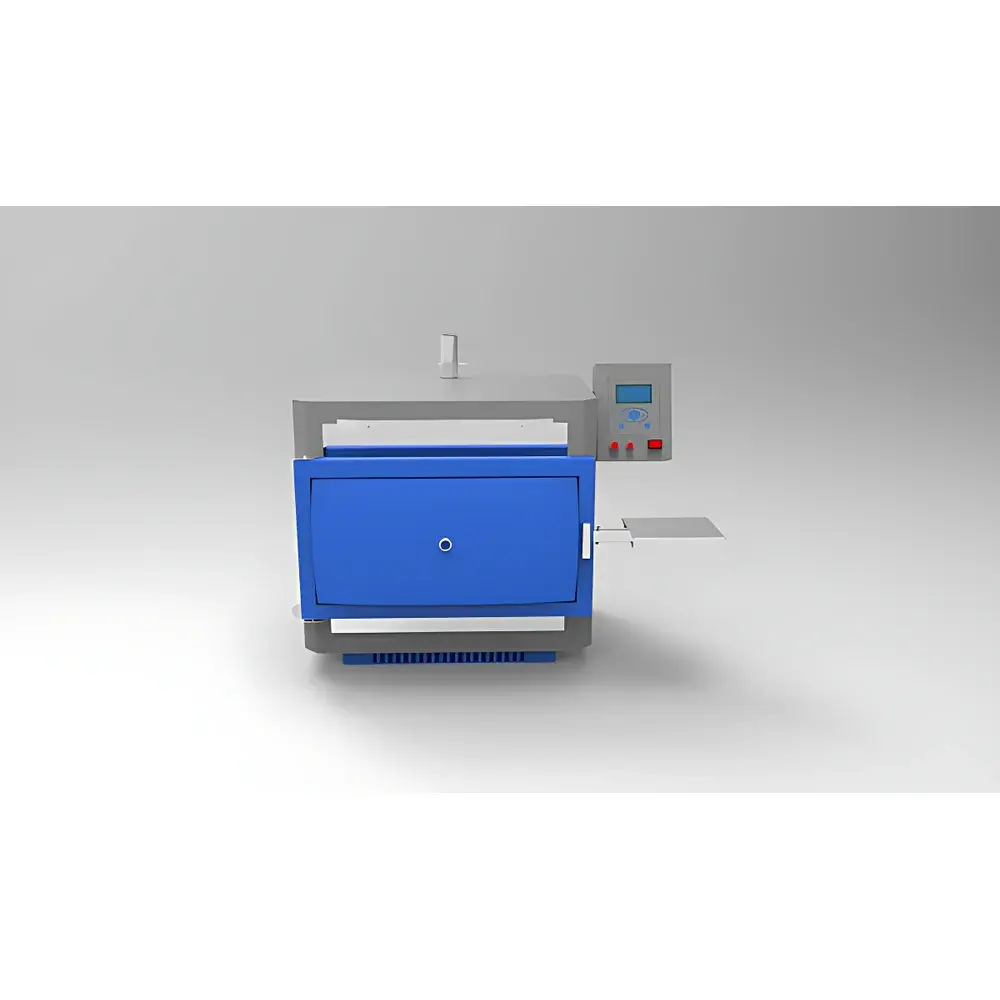
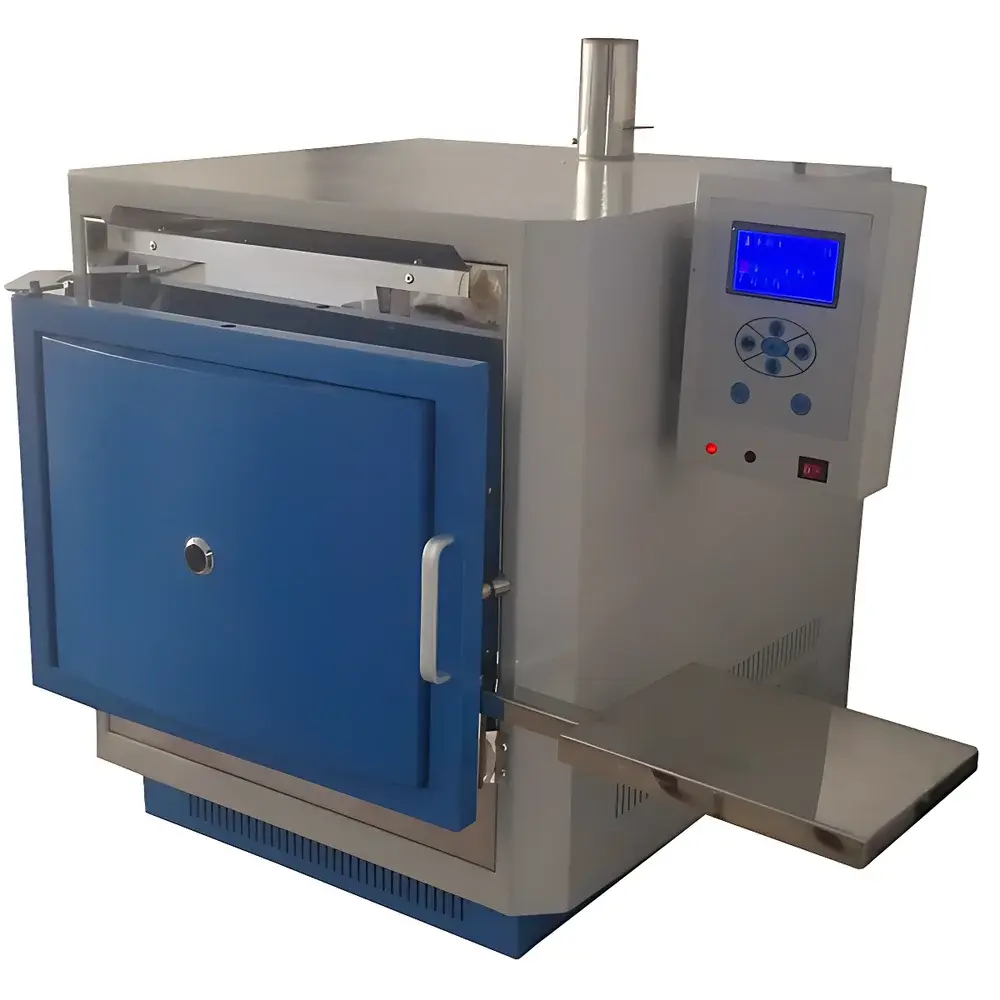
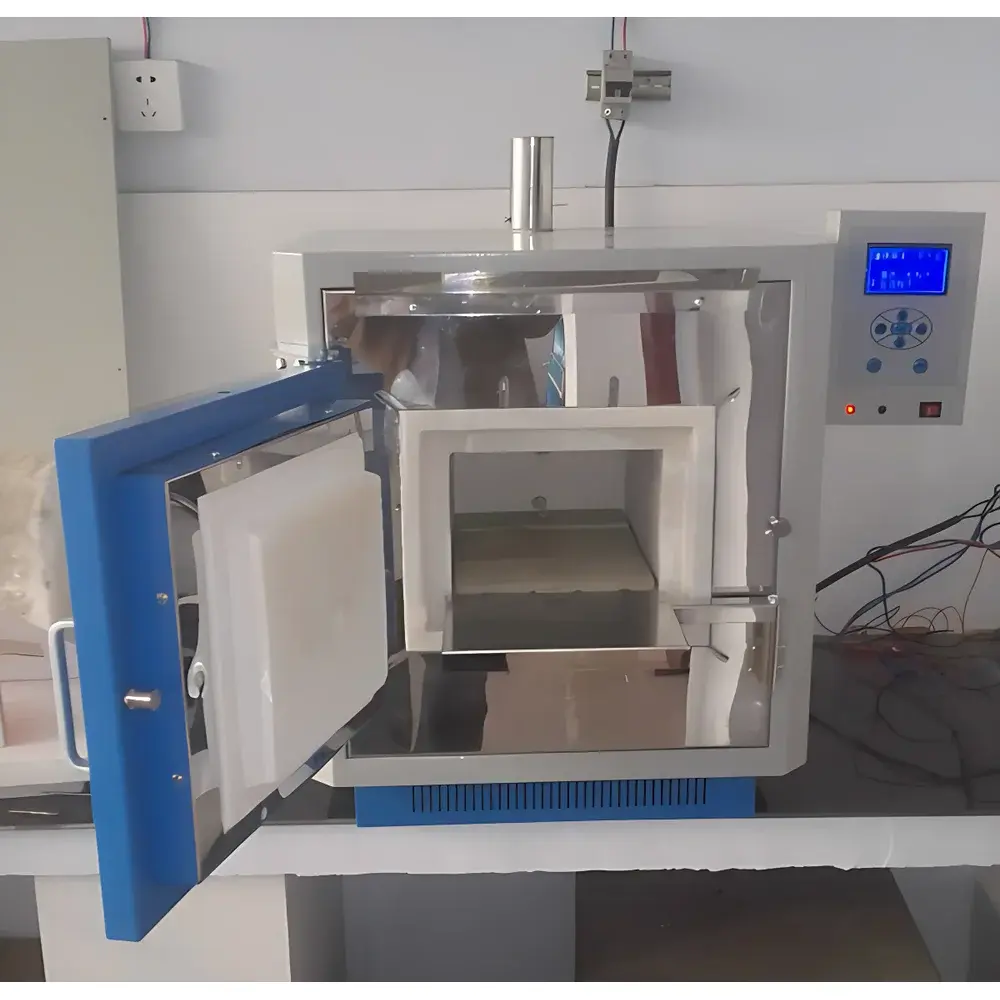
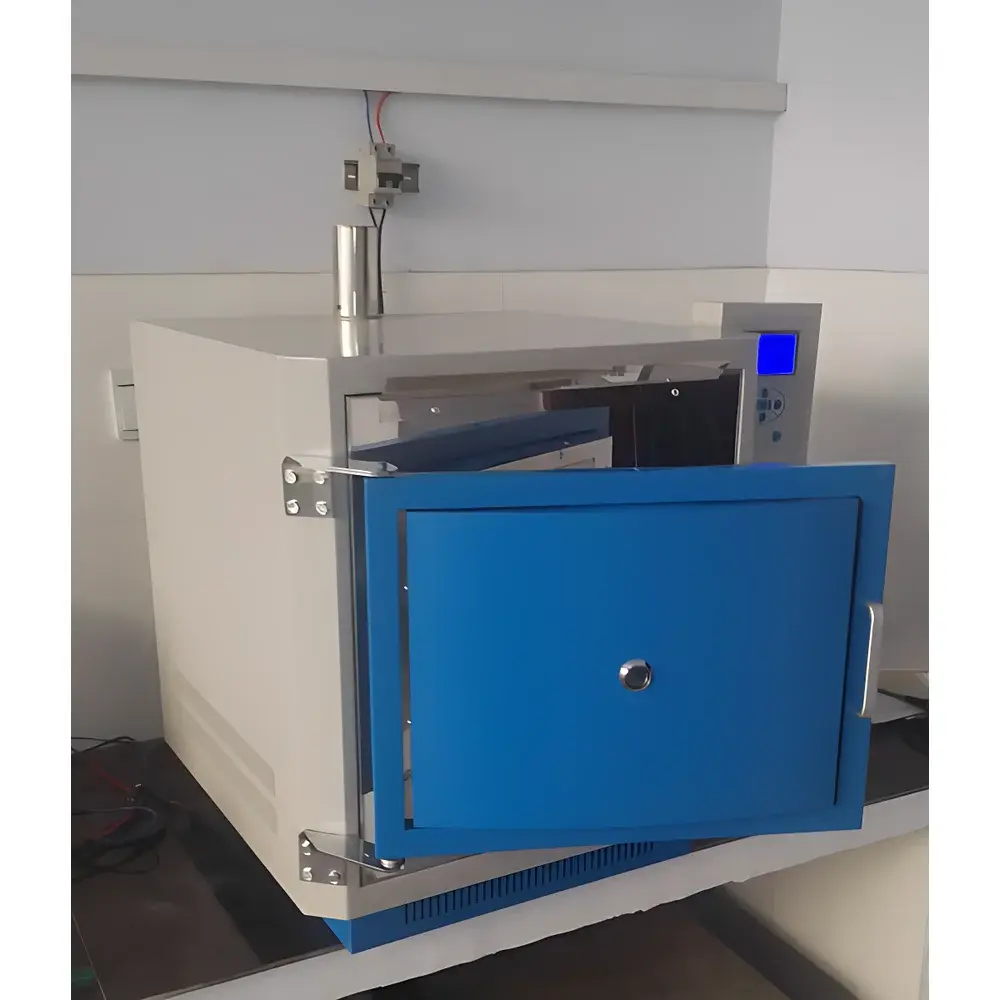
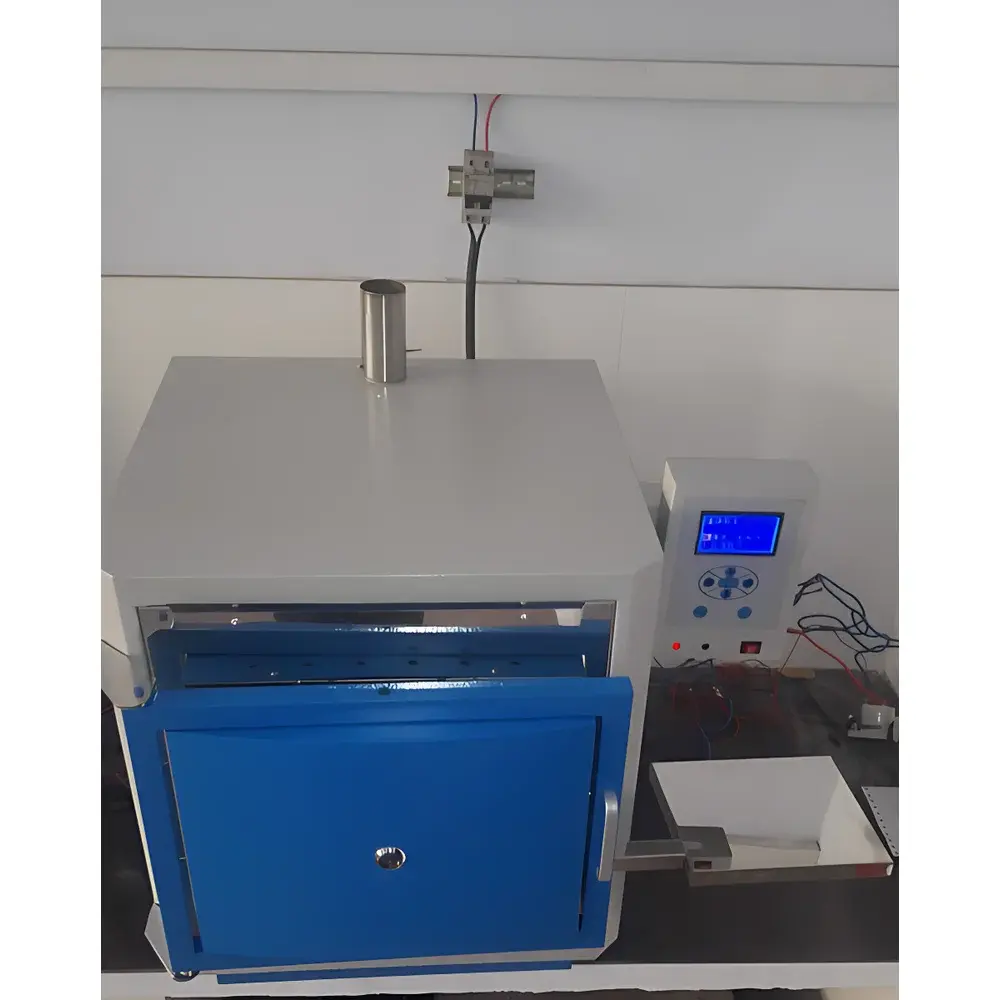
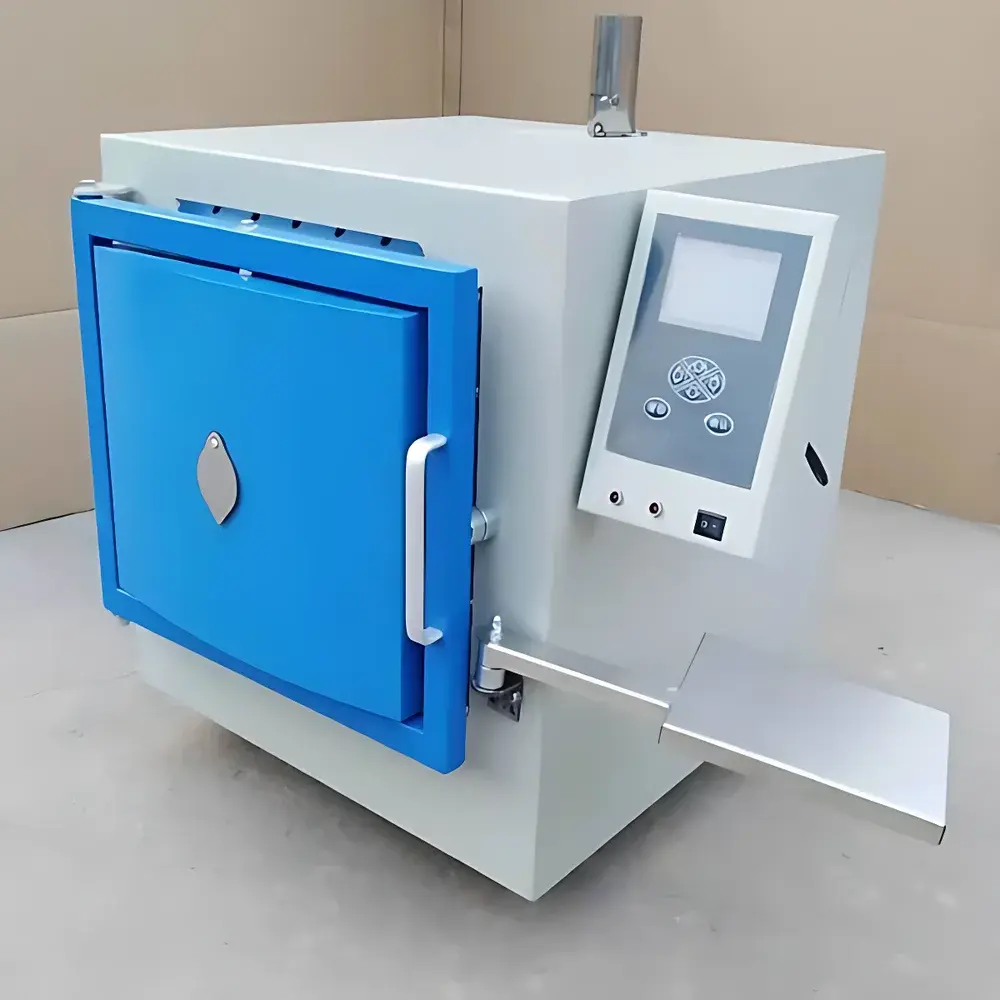
MingShen Science JXL-620 Rapid Intelligent Muffle Furnace
| Brand | MingShen Science |
|---|---|
| Origin | Henan, China |
| Model | JXL-620 |
| Type | Box-type Muffle Furnace |
| Max Temperature | 1000 °C |
| Temperature Control Accuracy | ±5 °C |
| Max Power | 3.5 kW |
| Heating Rate to Max Temp | ≤20 min |
| Heating Method | Resistance Wire (Ni-Cr Alloy) |
| Internal Chamber Dimensions | 300 × 200 × 120 mm |
| Thermal Sensor | K-type Thermocouple (NiCr-NiSi) |
| Control System | Microprocessor-based with 20-Stage Programmable Ramp/Soak Profile |
| Display | Chinese LCD with Touch Keypad |
| Insulation Material | Polycrystalline Ceramic Fiber |
| Voltage | 220 V ±10% |
| Net Weight | 55 kg |
| External Dimensions | 680 × 600 × 670 mm (L×W×H) |
Overview
The MingShen Science JXL-620 Rapid Intelligent Muffle Furnace is a high-efficiency, microprocessor-controlled box-type furnace engineered for precise thermal treatment in routine and standardized laboratory applications. Designed primarily for rapid ashing, volatile matter determination, and coke reactivity analysis—especially in coal, petroleum, cement, metallurgical, and geochemical laboratories—the JXL-620 operates on the principle of resistive heating via embedded Ni-Cr alloy heating elements within a polycrystalline ceramic fiber insulation chamber. This architecture ensures minimal thermal mass, rapid heat-up (≤20 minutes to 1000 °C), low standby power loss, and exceptional temperature uniformity across the working zone. Its control system complies with key international standard methodologies—including ASTM D3174 (ash content), ASTM D3175 (volatile matter), ISO 562 (coal—determination of volatile matter), and GB/T 212–2008 (Chinese national standard for coal proximate analysis)—enabling direct execution of standardized heating profiles such as fast ashing, slow ashing, Roasting Index (R.I.), and Gieseler plasticity testing.
Key Features
- Polycrystalline ceramic fiber furnace chamber with dual-layer Ni-Cr resistance wire embedding—optimized for thermal retention, energy efficiency, and extended service life.
- 20-stage programmable temperature ramp/soak controller with user-defined time-temperature setpoints; supports repeatable execution of multi-step thermal protocols (e.g., preheating → hold → ramp → final soak).
- High-resolution Chinese LCD interface with touch keypad—displays real-time temperature, elapsed time, target setpoint, and active program stage to minimize observational error and improve operator consistency.
- Dual-axis horizontal rotating door with integrated ceramic fiber gasket and adjustable chimney damper—ensures reproducible atmosphere control during ashing and volatile release procedures.
- Robust double-shell construction: 1.5 mm cold-rolled steel outer casing with electrostatic powder coating; inner shell reinforced for mechanical stability under thermal cycling.
- Integrated K-type thermocouple (NiCr-NiSi) with ±3 °C measurement accuracy and 1 °C digital resolution—calibrated traceable to NIST-traceable reference standards.
- Automatic preheat compensation algorithm—microprocessor dynamically adjusts initial heating rate based on ambient conditions and load history to maintain profile fidelity across repeated runs.
Sample Compatibility & Compliance
The JXL-620 accommodates crucibles and sample boats up to 300 × 200 × 120 mm internal volume, supporting standard ASTM/ISO/GB crucible formats (e.g., porcelain, alumina, silica). It is routinely deployed for solid fuel analysis per ASTM D3172, ISO 1171, GB/T 211–2017 (moisture), GB/T 212–2008 (proximate analysis), and GB/T 5447–2014 (Roga index). The furnace’s thermal stability and repeatability meet GLP-aligned validation requirements for routine QC labs. While not certified to IEC 61000-6-3 or UL 61010-1 out-of-box, its electrical design conforms to general safety principles for Class I laboratory equipment operating at 220 V ±10%, including over-temperature cutoff (hardware-independent secondary limit switch) and ground-fault protection.
Software & Data Management
The JXL-620 operates via embedded firmware without external PC dependency. All 20 program profiles—including ramp rates, dwell times, and temperature targets—are stored non-volatile memory with password-protected editing. Each run logs timestamped temperature/time data internally (buffered display only; no USB or RS-232 output). For audit readiness, users may manually record program ID, start/end time, and final ash/volatile yield in lab notebooks aligned with ISO/IEC 17025 documentation practices. Optional third-party data loggers (e.g., Omega OM-DAQPRO-5300) can be interfaced via the analog thermocouple output signal for long-term trending and 21 CFR Part 11–compliant electronic records when paired with validated software.
Applications
- Rapid and slow ashing of coal, coke, biomass, and mineral samples per ASTM D3174 and GB/T 212.
- Volatile matter determination in solid fuels using controlled inert-atmosphere heating cycles.
- Preparation of ash for subsequent elemental analysis (XRF, ICP-OES) requiring consistent residue morphology.
- Thermal gravimetric pre-treatment for catalyst support calcination and ceramic sintering R&D.
- Roasting Index (R.I.) and Gieseler fluidity testing in coal quality assessment workflows.
- Calibration verification of thermogravimetric analyzers (TGA) using reference materials with known decomposition onset temperatures.
FAQ
What is the maximum recommended continuous operating temperature?
The JXL-620 is rated for continuous operation up to 1000 °C. Prolonged use above 950 °C may accelerate aging of the ceramic fiber insulation and Ni-Cr heating elements.
Does the furnace support inert gas purging?
No built-in gas inlet or exhaust manifold is provided. Users may adapt standard quartz tube fittings externally, but this voids factory calibration and requires independent atmosphere monitoring.
Can programs be exported or backed up?
Programs reside in non-volatile memory only and cannot be exported digitally. Manual transcription into lab SOPs is required for backup and version control.
Is the temperature uniformity specified across the chamber?
Per manufacturer validation under no-load conditions, radial uniformity is ±8 °C at 815 °C (center vs. corners); axial variation is ±6 °C. Uniformity degrades with dense or oversized loads.
What maintenance is required for long-term accuracy?
Annual verification of thermocouple output against a calibrated reference thermometer is recommended. Visual inspection of ceramic fiber integrity and door seal compression should occur every 200 operating hours.



