
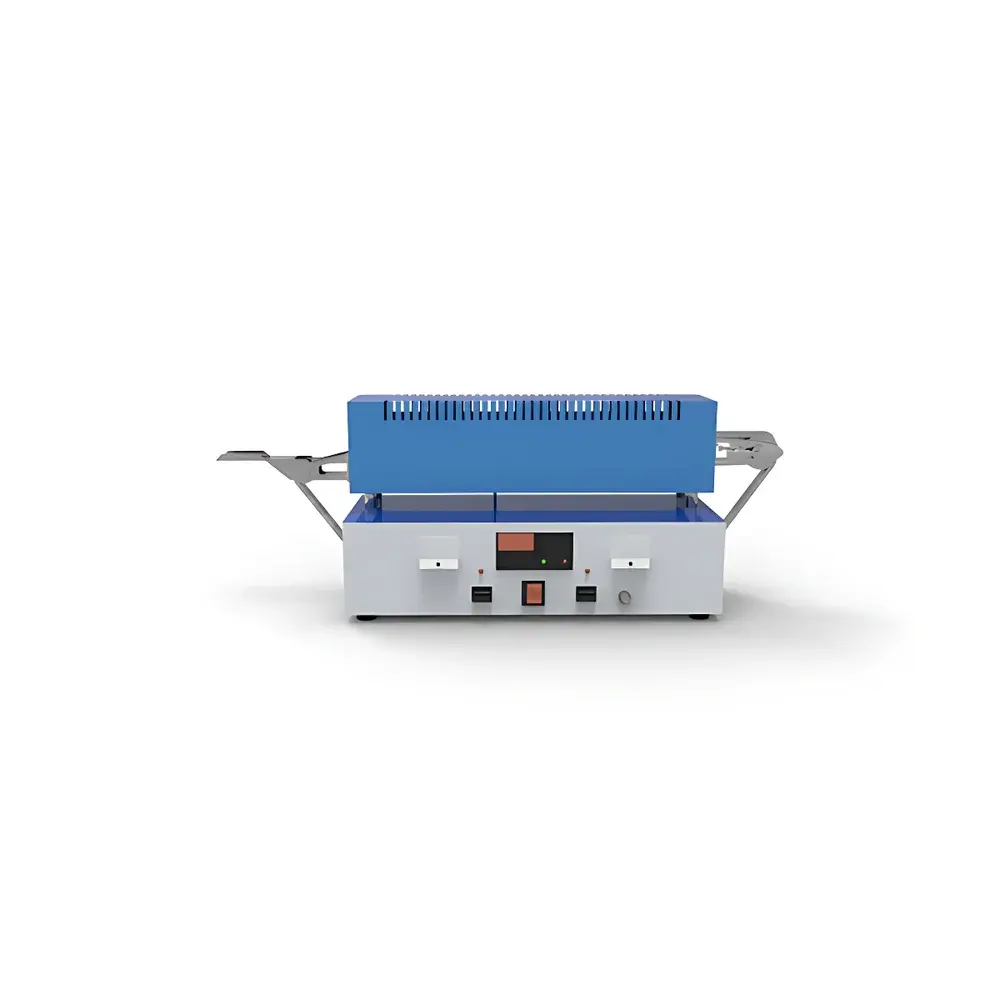
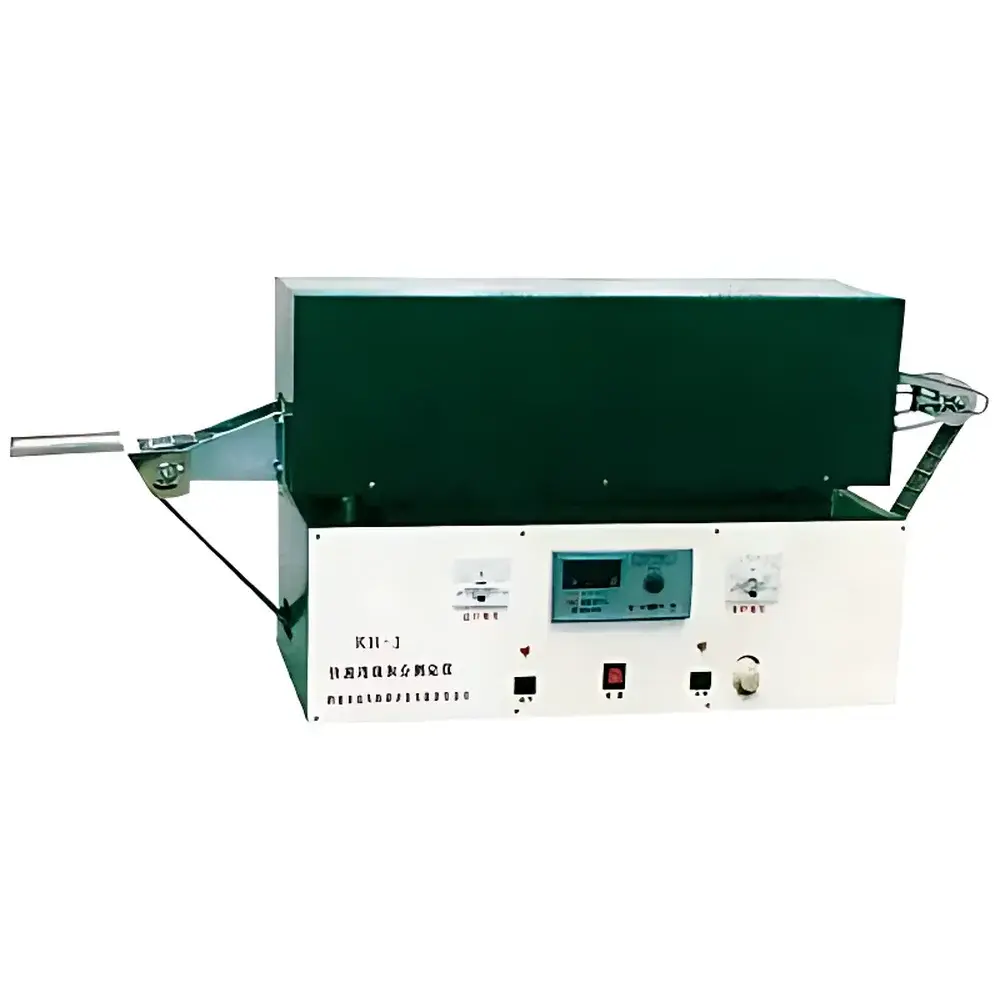
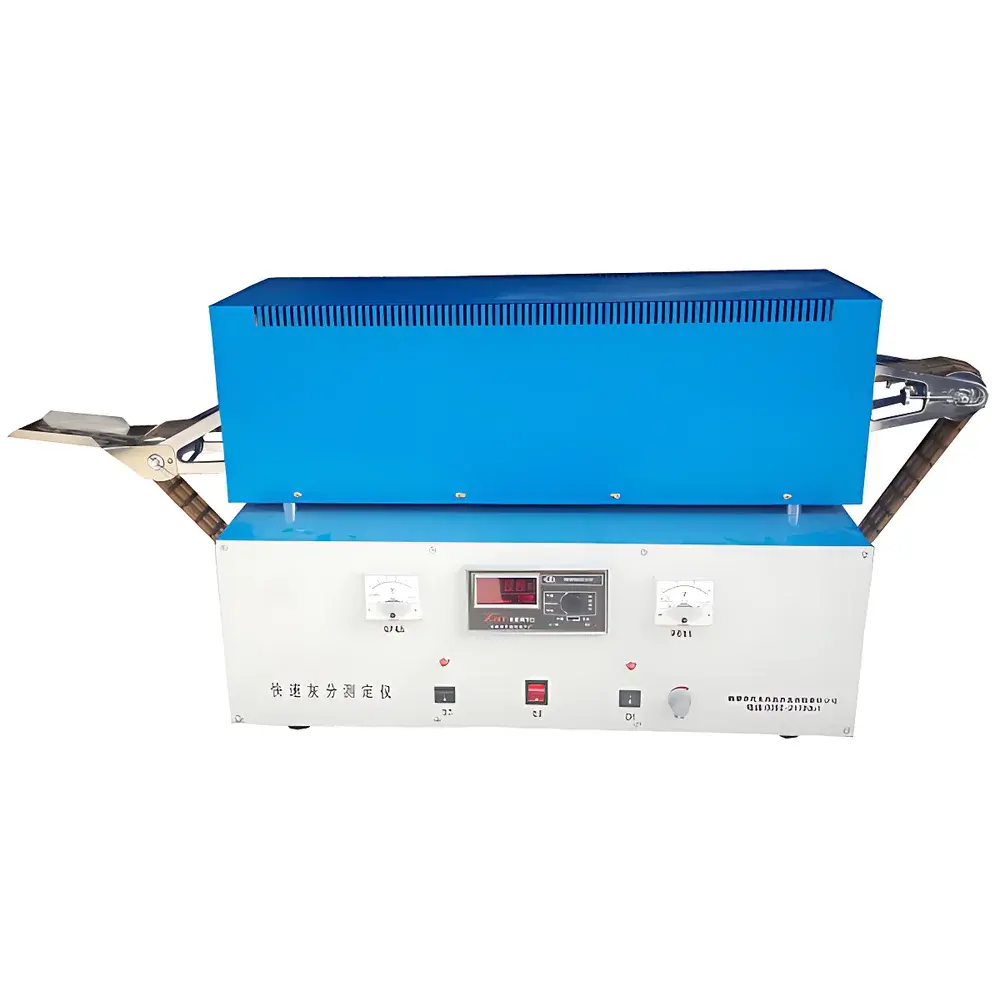
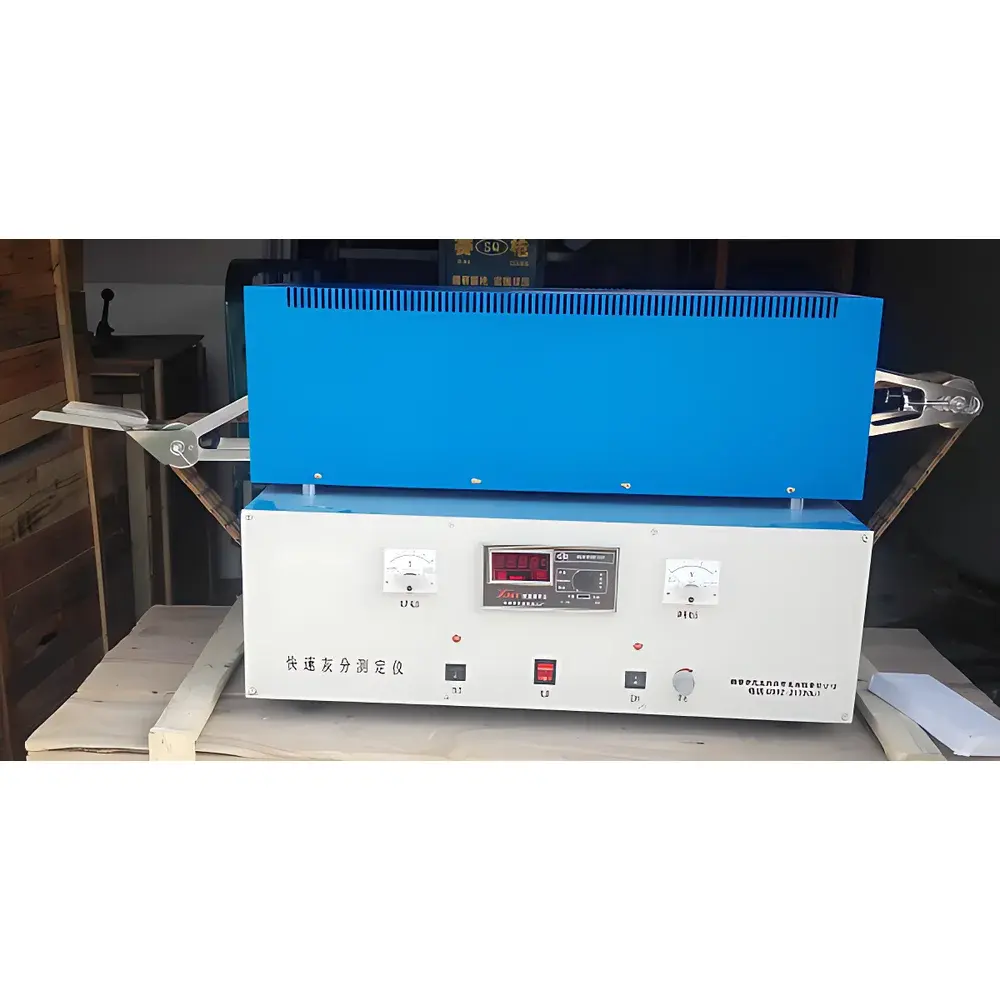
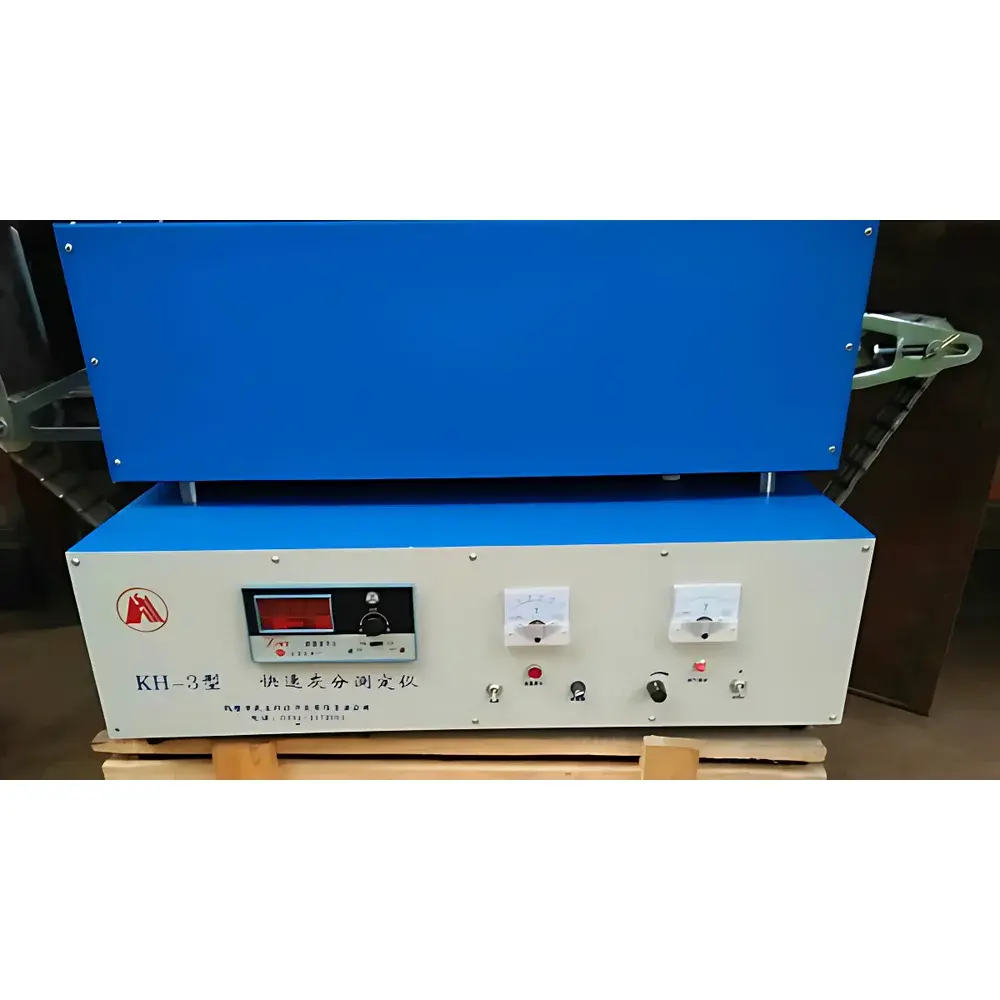
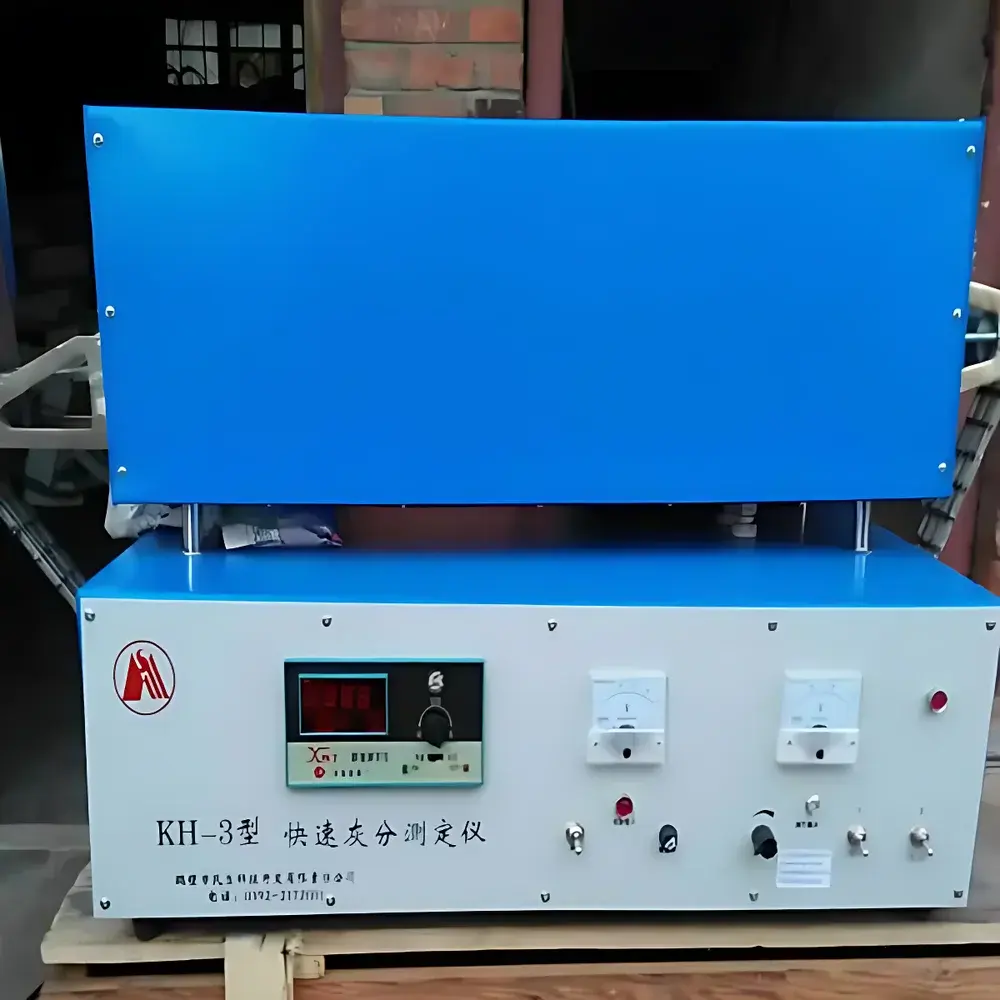
MingShen Science KH-3 Rapid Ash Content Analyzer
| Brand | MingShen Science |
|---|---|
| Origin | Henan, China |
| Model | KH-3 |
| Temperature Control Range | 100–1000 °C |
| Temperature Measurement Accuracy | Class 0.2 |
| Temperature Control Stability | ±10 °C |
| Furnace Length | 700 mm |
| Isothermal Zone Length | ≥200 mm |
| Conveyor Speed | 15–70 mm/min |
| Isothermal Uniformity at 815 °C | ±10 °C over ≥150 mm |
| Heating Time (RT → 815 °C) | ≤45 min |
| Rated Power | 3 kW |
| Supply Voltage | 220 V ± 22 V, 50 Hz ± 1 Hz |
| Dimensions (L×W×H) | 1200 × 420 × 505 mm |
| Net Weight | 70 kg |
Overview
The MingShen Science KH-3 Rapid Ash Content Analyzer is a continuous-feed, programmable muffle furnace system engineered for precise and high-throughput determination of ash content in solid fuels and industrial materials—primarily coal, coke, biomass, and mineral-based feedstocks. It operates on the principle of controlled oxidative thermogravimetry: samples are transported through a precisely maintained isothermal zone (typically 815 °C per ASTM D3174 and ISO 1171) where organic matter is combusted, leaving inorganic residue (ash) for gravimetric quantification. Unlike traditional batch-type muffle furnaces, the KH-3 employs a motor-driven stainless-steel conveyor belt to enable uninterrupted sample processing—significantly reducing operator intervention and improving analytical reproducibility across multi-sample workflows. Its design complies with the core thermal and procedural requirements of national standard GB/T 212–2008 (Chinese Standard for Coal Analysis), and its methodology is formally recognized as an approved alternative to conventional static ashing under relevant power and metallurgical industry testing protocols.
Key Features
- Microcontroller-based temperature regulation with real-time feedback control via Type K thermocouple, ensuring stable setpoint maintenance within ±10 °C across the ≥200 mm isothermal zone.
- Adjustable conveyor speed (15–70 mm/min) calibrated to deliver consistent ashing durations (15–50 min), enabling method optimization for varying sample matrices and particle sizes.
- Robust tubular furnace architecture featuring axial tilt (~5°), dual-layer ceramic fiber insulation, and open-ended configuration for uniform gas exchange and minimized thermal stratification.
- High-brightness LED digital display with dual-function interface: simultaneous readout of actual furnace temperature and user-defined setpoint; intuitive rotary controls for temperature setting, motor voltage adjustment, and operational mode selection.
- Modular front-panel assembly—housing all electronics, regulators, and instrumentation—designed for rapid removal and field service without disassembling the furnace structure.
- Energy-efficient operation: achieves 815 °C in ≤45 minutes and consumes ~33% less energy than equivalent static muffle furnaces performing identical ash determinations.
Sample Compatibility & Compliance
The KH-3 accommodates standard ceramic or platinum crucibles (e.g., ISO 5010–compliant ash dishes) placed side-by-side on the stainless-steel conveyor, supporting parallel analysis of two samples per cycle. It is validated for use with bituminous and anthracite coals, petroleum coke, lignite, activated carbon, fly ash, and metallurgical slags—provided samples are pre-dried and sized to ≤0.2 mm per ASTM D3173 and GB/T 212. The instrument’s thermal profile meets the isothermality and dwell-time specifications required by ISO 1171 (Solid Mineral Fuels — Determination of Ash), ASTM D3174 (Standard Test Method for Ash in the Analysis Sample of Coal and Coke), and China’s GB/T 212–2008. While not inherently 21 CFR Part 11 compliant (as it lacks electronic audit trail functionality), its analog/digital hybrid control system supports GLP-aligned manual recordkeeping when paired with standardized lab notebooks and calibration logs.
Software & Data Management
The KH-3 operates as a stand-alone hardware platform with no embedded software or network connectivity. All operational parameters—including setpoint temperature, motor voltage, and real-time furnace temperature—are monitored and adjusted manually via front-panel controls. Data acquisition is external: users record time-stamped temperature readings, conveyor speed settings, sample IDs, and gravimetric results using laboratory information management systems (LIMS) or paper-based SOPs. For traceability, the unit includes dedicated terminals for thermocouple connection and a fused power input—facilitating integration into auditable electrical safety records. Routine calibration of the thermocouple and digital temperature controller against NIST-traceable reference standards is recommended at least quarterly or per internal QA schedule.
Applications
- Quality control of raw coal and processed coke in thermal power plants and steelmaking facilities.
- Routine ash content verification during coal blending, procurement, and contractual specification compliance (e.g., ASTM D3174 reporting).
- Research-scale characterization of alternative solid fuels, including torrefied biomass, waste-derived fuels (RDF/SRF), and low-rank coals.
- Metallurgical process support: ash analysis of fluxing agents, refractory raw materials, and sinter feed components.
- Educational laboratories requiring robust, teachable instrumentation for fuel chemistry and thermal analysis modules.
FAQ
What is the recommended maintenance interval for the KH-3?
Perform visual inspection of conveyor alignment and furnace insulation integrity before each shift. Clean the furnace chamber with a non-metallic brush after every 10–15 runs. Calibrate the thermocouple and digital temperature controller at least once per quarter—or prior to critical certification audits.
Can the KH-3 be used for volatile matter or moisture determination?
No. The KH-3 is purpose-built for ash content analysis only. Volatile matter (ASTM D3175) and moisture (ASTM D3173) require distinct thermal profiles, atmospheres, and sample containment—necessitating dedicated instruments or multi-step protocols outside this unit’s design scope.
Is external exhaust ventilation mandatory?
Yes. Continuous fume extraction via a certified ducted hood or local exhaust system is required during operation to remove combustion gases (CO, SOx, NOx) and particulate emissions. Do not operate in unventilated spaces or near open windows that disrupt laminar airflow.
What safety certifications does the KH-3 carry?
The unit conforms to GB 4706.1 (Chinese general safety standard for electrical appliances) and IEC 61000-6-3 (EMC emission limits). It carries CE marking for electromagnetic compatibility but is not UL- or CSA-listed. Grounding of the chassis is mandatory per installation instructions.
How does the KH-3 improve throughput versus a static muffle furnace?
A single KH-3 run processes two samples simultaneously with typical ashing times of 20–30 minutes. In contrast, a standard 20-L muffle furnace requires sequential loading, 60+ minute dwell times, and cooldown intervals—yielding ~4–5× higher hourly sample capacity under comparable lab conditions.



