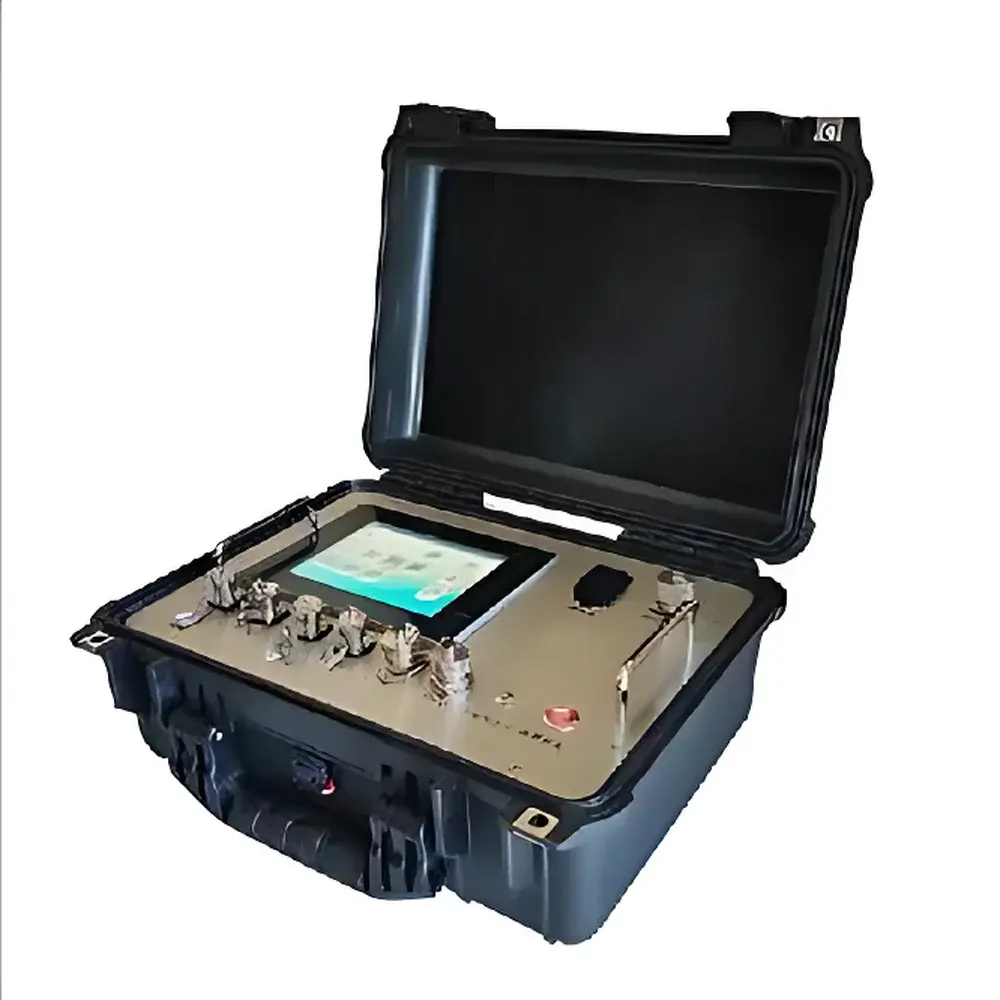
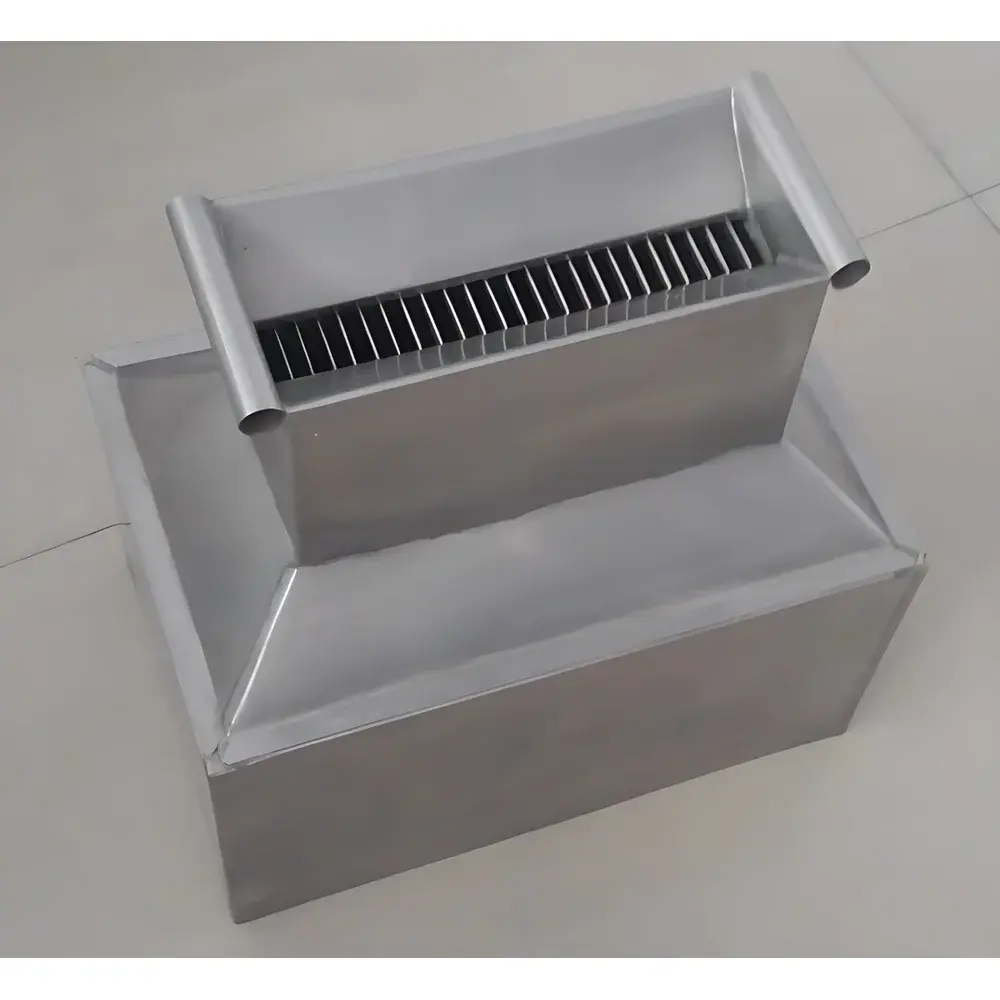
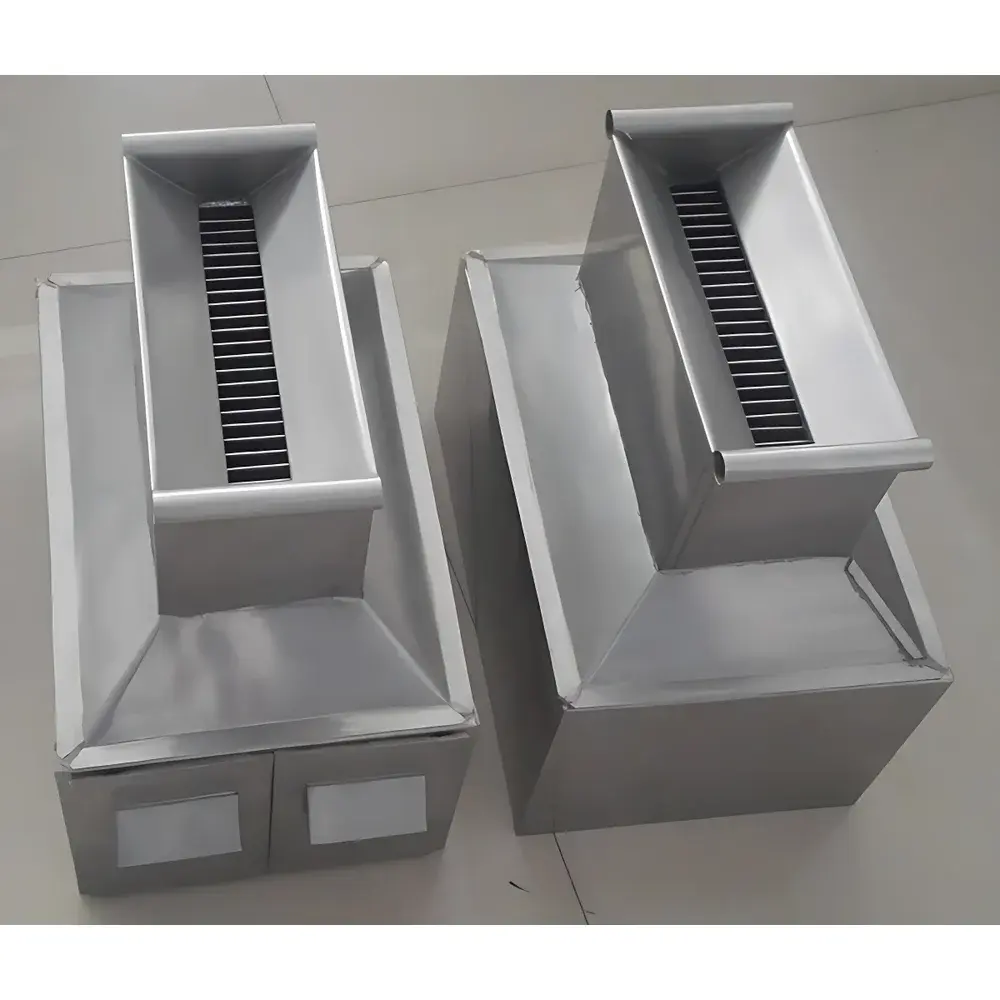
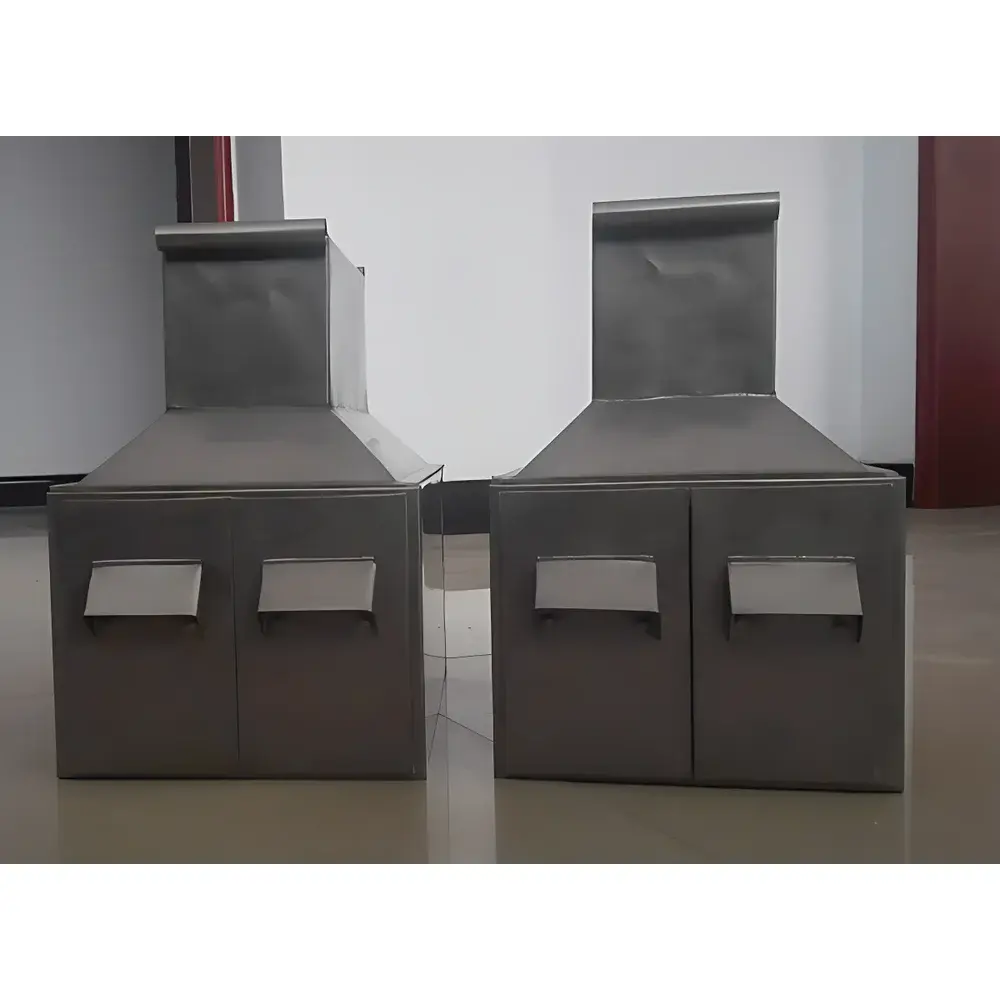
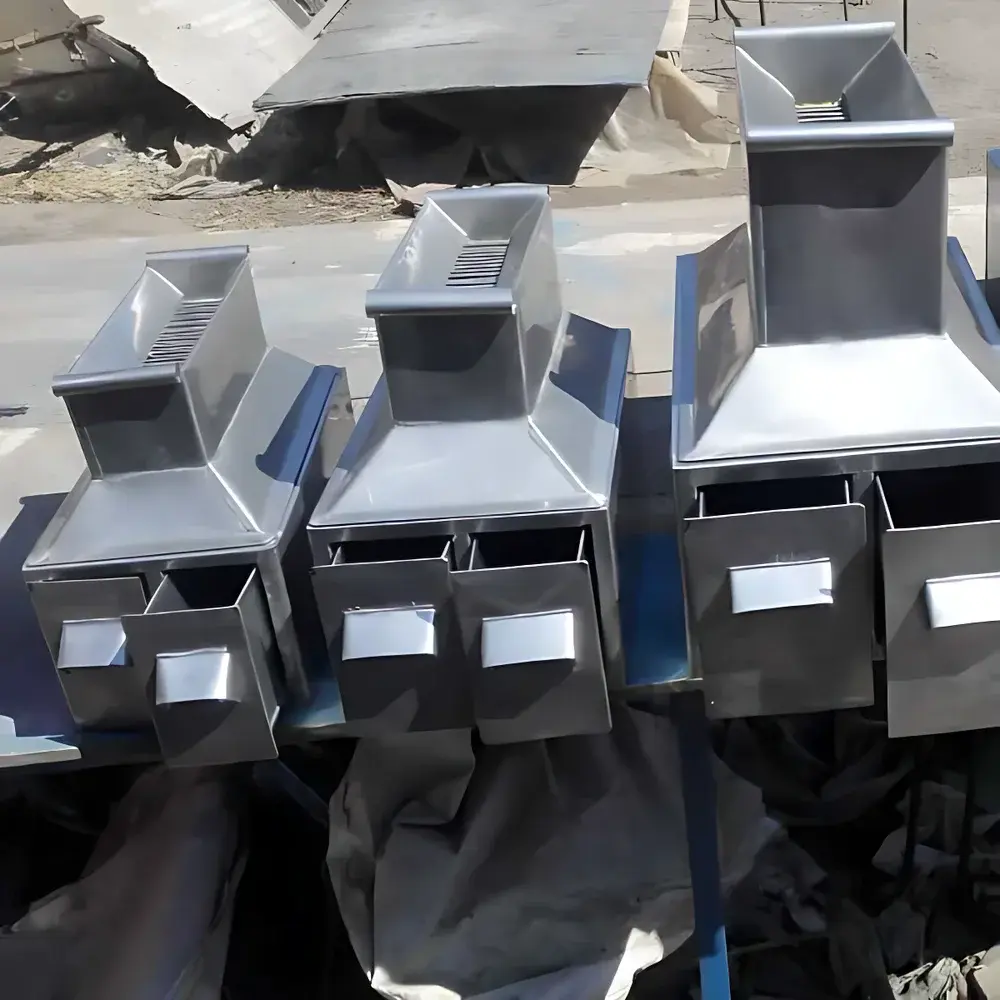
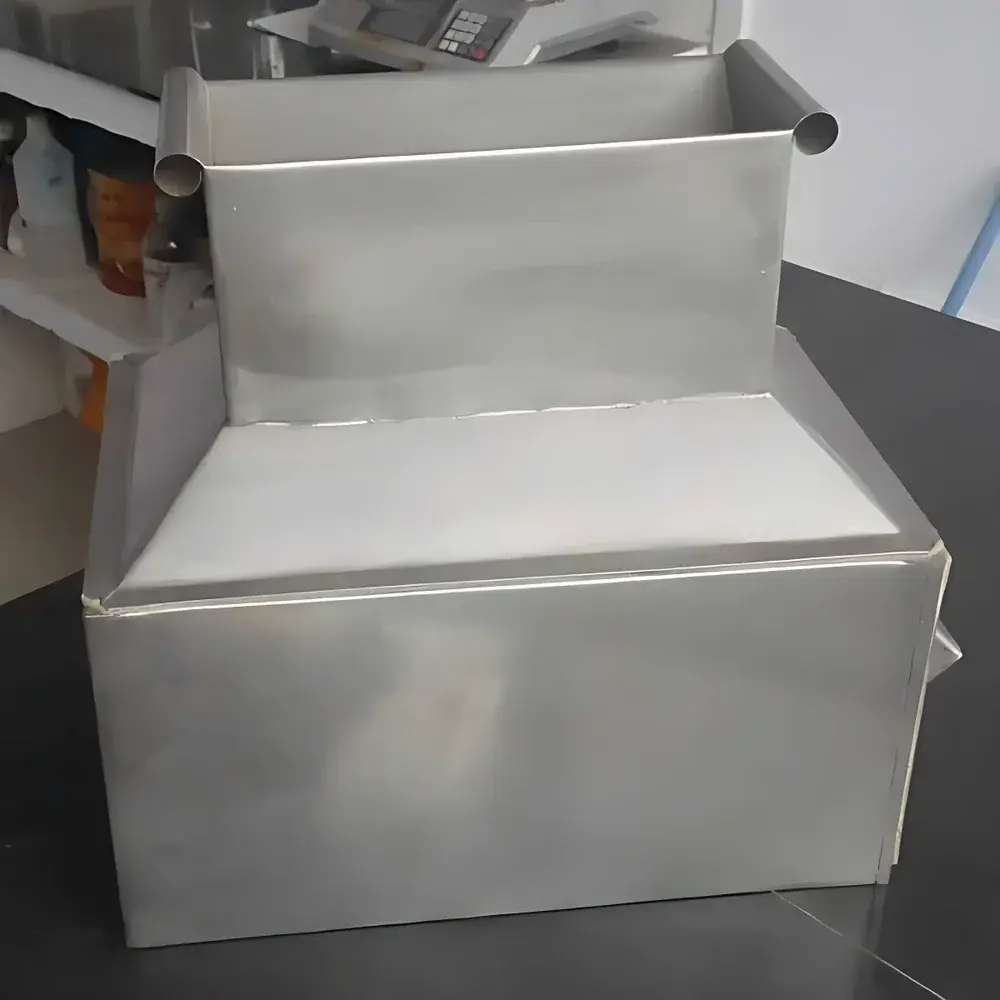
MingShen Science MFQ Series Sealed Stainless Steel Sample Divider
| Brand | MingShen Science |
|---|---|
| Origin | Henan, China |
| Manufacturer Type | Authorized Distributor |
| Country of Manufacture | China |
| Model | MFQ |
| Price Range | USD 120 – 350 |
Overview
The MingShen Science MFQ Series Sealed Stainless Steel Sample Divider is a precision mechanical sampling device engineered for reproducible, bias-free subdivision of coal and other granular bulk materials in accordance with international standard test methods. It operates on the principle of riffle splitting—where a representative sub-sample is obtained by gravity-fed passage of material through an array of equally spaced, alternating chutes—ensuring statistical equivalence between retained and discarded fractions. Designed specifically for coal preparation laboratories in mining, power generation, and commercial testing facilities, the MFQ series complies with the core geometric and operational requirements defined in ISO 13909-3 (Coal and coke — Sampling — Part 3: Mechanical sampling), ASTM D2013 (Standard Practice for Preparing Coal Samples), and GB/T 474–2008 (Method for Preparation of Coal Sample). Its sealed stainless steel construction eliminates cross-contamination, dust emission, and moisture loss during handling—critical for maintaining sample integrity in QA/QC and regulatory reporting workflows.
Key Features
- Hermetically sealed housing fabricated from 304 stainless steel—resistant to corrosion, abrasion, and chemical exposure in high-humidity or sulfur-rich coal environments.
- Chute geometry engineered per ISO 13909-3: minimum chute count of 16 total (8 per side), uniform chute width tolerance ±0.2 mm, and chute slope ≥60° to ensure free-flowing, non-bridging material transfer.
- Chute width calibrated to 2.5–3× the top particle size of the feed material (but never less than 5 mm), supporting standardized subdivision across four nominal size classes: <1 mm, <3 mm, <6 mm, and <13 mm.
- No pre-mixing required prior to division—reducing operator-induced variability and processing time while preserving inherent heterogeneity distribution.
- Modular design enables rapid cleaning and visual inspection; no moving parts or electrical components—maximizing uptime and minimizing maintenance overhead.
- Available in both GB-compliant (GB/T 474–2008) and legacy configurations, with documented dimensional traceability to national metrological standards.
Sample Compatibility & Compliance
The MFQ divider accommodates dry, free-flowing particulate solids with maximum particle size up to 13 mm and bulk density ranging from 0.6 g/cm³ (e.g., lignite) to 1.5 g/cm³ (e.g., anthracite). It is validated for use with coal, coke breeze, biomass pellets, mineral ores, and cement raw meal—provided material moisture content remains below 8% (wb) to prevent adhesion or clogging. All models meet essential requirements of ISO/IEC 17025:2017 (Clause 7.7.1 on sampling equipment qualification), support GLP-compliant documentation, and are routinely employed in laboratories accredited to CNAS (China National Accreditation Service) and UKAS (United Kingdom Accreditation Service). Device geometry and performance are verified using certified reference materials and sieve analysis protocols traceable to NIST SRMs.
Software & Data Management
As a purely mechanical sampling tool, the MFQ Series requires no embedded firmware, connectivity, or software interface. However, its operation integrates seamlessly into digital laboratory information management systems (LIMS) via standardized workflow templates. Users record division parameters—including feed mass, particle size class, chute configuration, and retained fraction weight—in electronic lab notebooks compliant with FDA 21 CFR Part 11 (audit trail, electronic signature, and data integrity controls). Calibration logs, maintenance records, and verification reports (e.g., repeatability testing per ISO 13909-5 Annex B) are maintained in structured PDF or CSV formats compatible with enterprise LIMS platforms such as LabWare, STARLIMS, and Thermo Fisher SampleManager.
Applications
- Routine sample reduction in coal quality control labs for proximate analysis (moisture, ash, volatile matter, fixed carbon), ultimate analysis (C, H, N, S, O), and calorific value determination.
- Preparation of split samples for inter-laboratory proficiency testing (PT) schemes administered by ISO/CEN or ASTM round-robin programs.
- Downstream feed preparation for automated analyzers including XRF spectrometers, ICP-OES systems, and bomb calorimeters requiring homogeneous, size-reduced input.
- Regulatory submission support for coal trading contracts governed by INCOTERMS® 2020 (e.g., FOB, CIF) where certified sampling methodology forms part of contractual compliance evidence.
- Research applications involving particle size distribution modeling, segregation behavior studies, and comminution efficiency benchmarking.
FAQ
Is the MFQ Series compliant with ASTM D2013 and ISO 13909?
Yes—chute count, slope angle, width-to-particle-size ratio, and symmetry requirements fully satisfy Clauses 7.3 and Annex A of ASTM D2013 and Sections 6.2–6.4 of ISO 13909-3.
Can the MFQ be used for materials other than coal?
It is validated for any dry, non-cohesive granular solid within the specified size and density range; however, formal validation must be performed per ISO 13909-5 for non-coal matrices.
What maintenance is required?
Daily visual inspection for chute blockage and weekly wipe-down with ethanol or isopropyl alcohol; no lubrication or recalibration is needed due to passive mechanical design.
Does it require calibration certification?
While no periodic recalibration is mandated, initial verification against GB/T 474–2008 or ISO 13909-3 dimensional tolerances is recommended and documented upon installation.
How is sample representativeness ensured?
By eliminating manual splitting bias, enforcing consistent feed trajectory (side-tilted pan + longitudinal oscillation), and ensuring equal probability of particle allocation to either collection tray—per the statistical foundation of riffle splitting theory.