
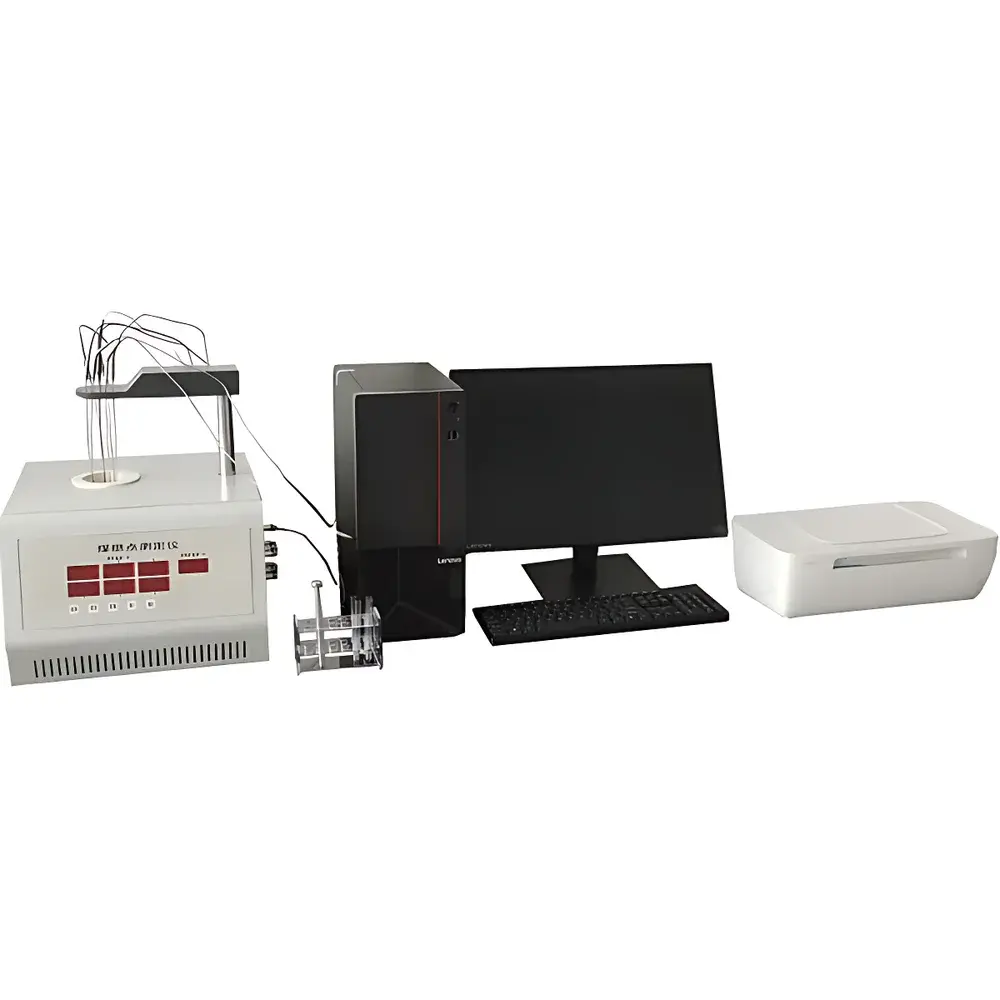
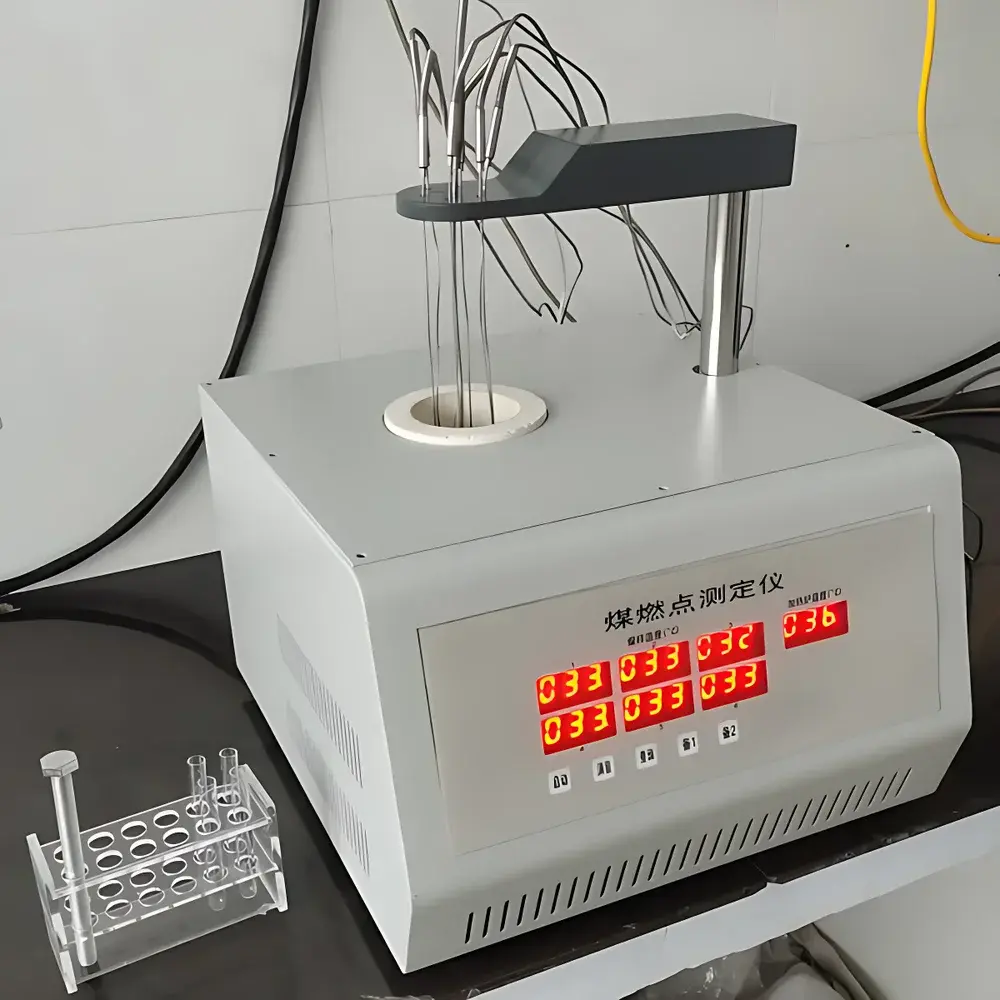
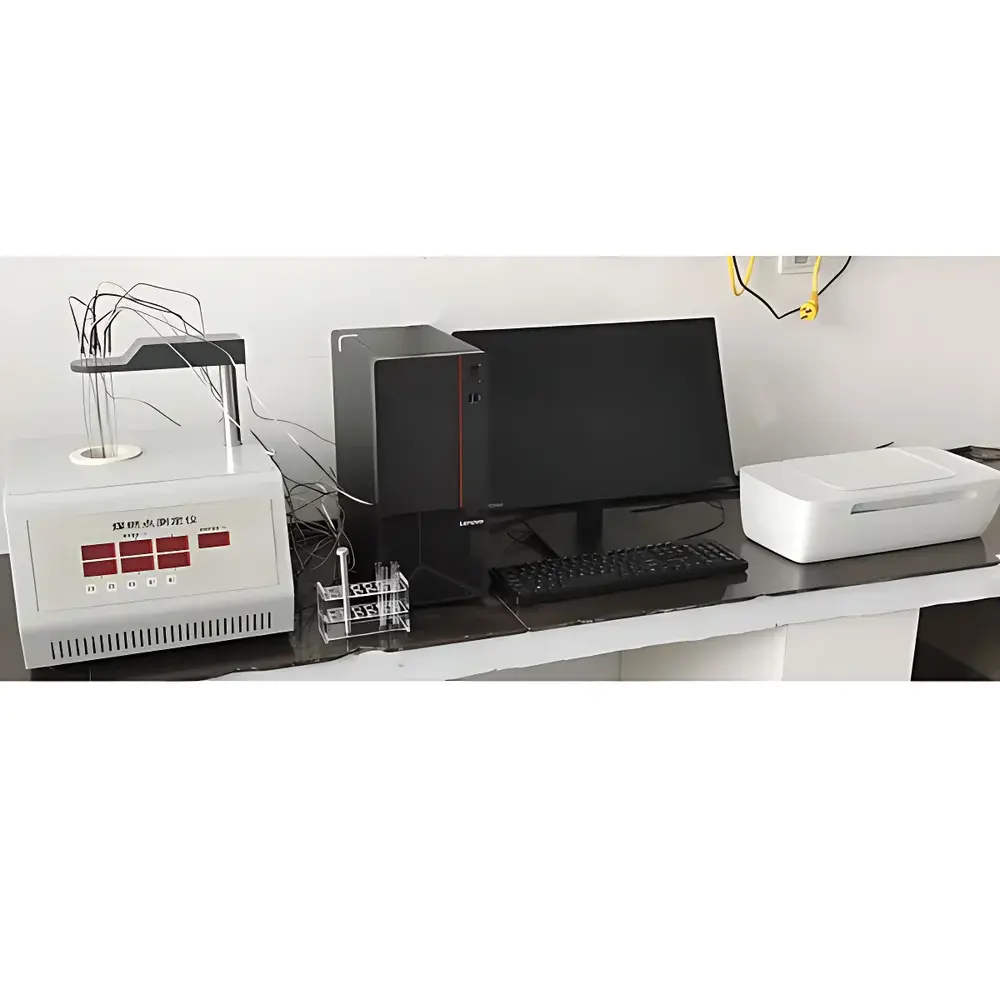
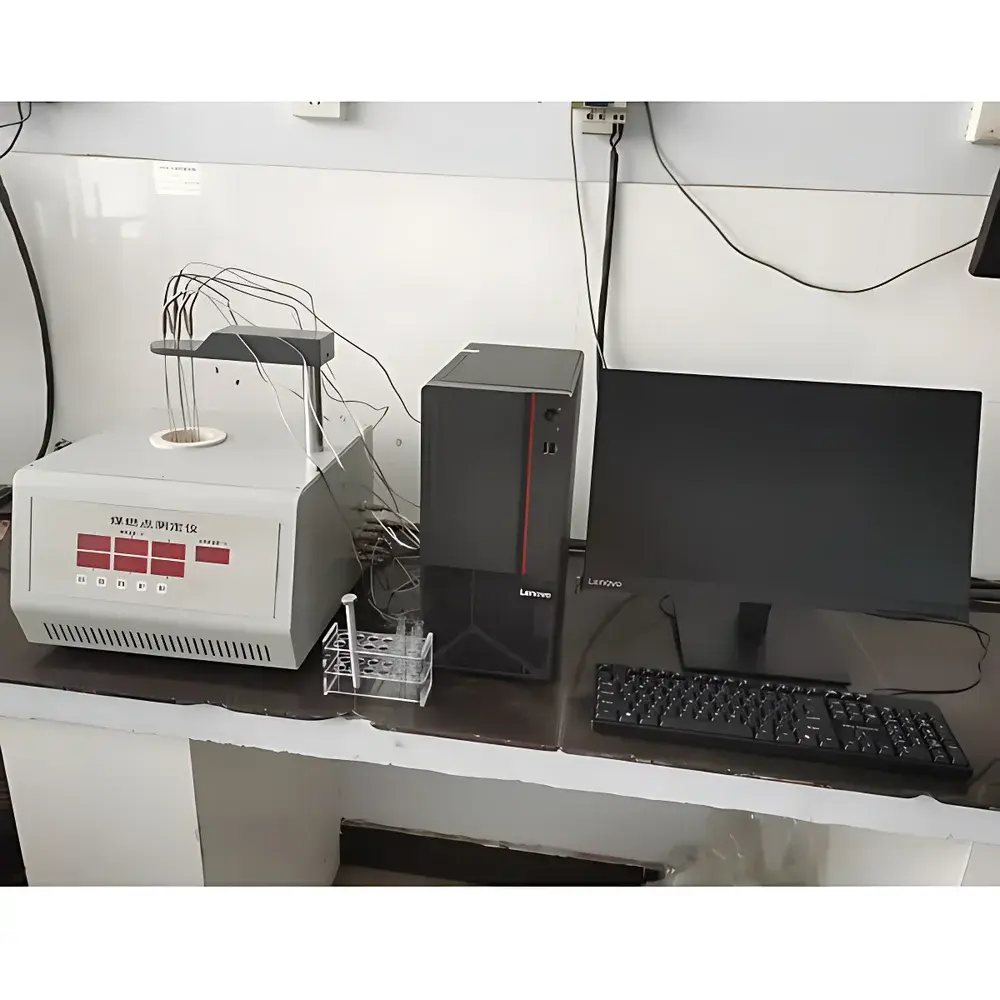
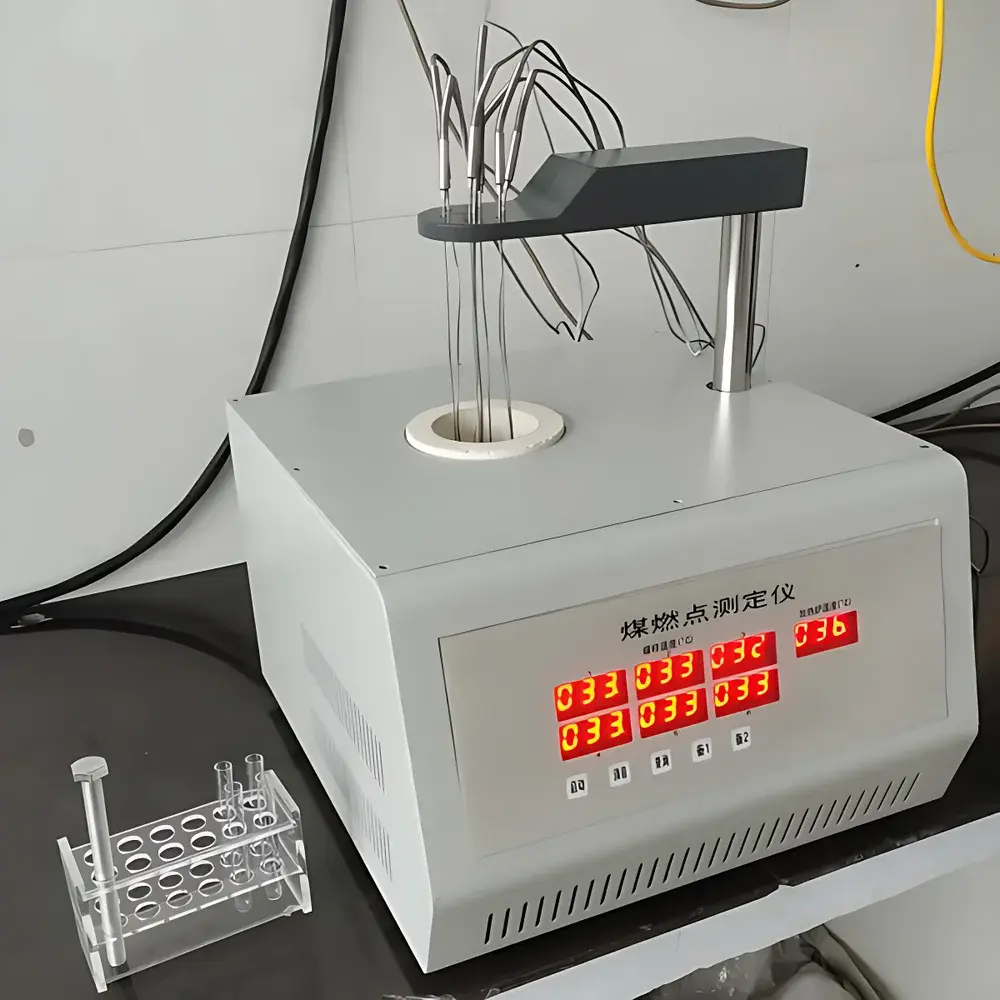
MingShen Science MRD-6M Coal Ignition Temperature Analyzer
| Brand | MingShen Science |
|---|---|
| Origin | Henan, China |
| Manufacturer Type | Authorized Distributor |
| Country of Origin | China |
| Model | MRD-6M |
| Power | 800 W |
| Temperature Range | Ambient to 500 °C |
| Resolution | 1 °C |
| Repeatability Error | ≤5 °C |
| Heating Rate | 4.5–5.0 °C/min |
| Sample Capacity | 6 samples per run |
| Operating Environment | 5–40 °C, RH ≤80% |
| Supply Voltage | 220 V ±10%, 50 Hz |
| Dimensions (H×W×D) | 350 mm × 370 mm × 240 mm |
| Weight | 15 kg |
| Compliance | GB/T 18511–2001 |
Overview
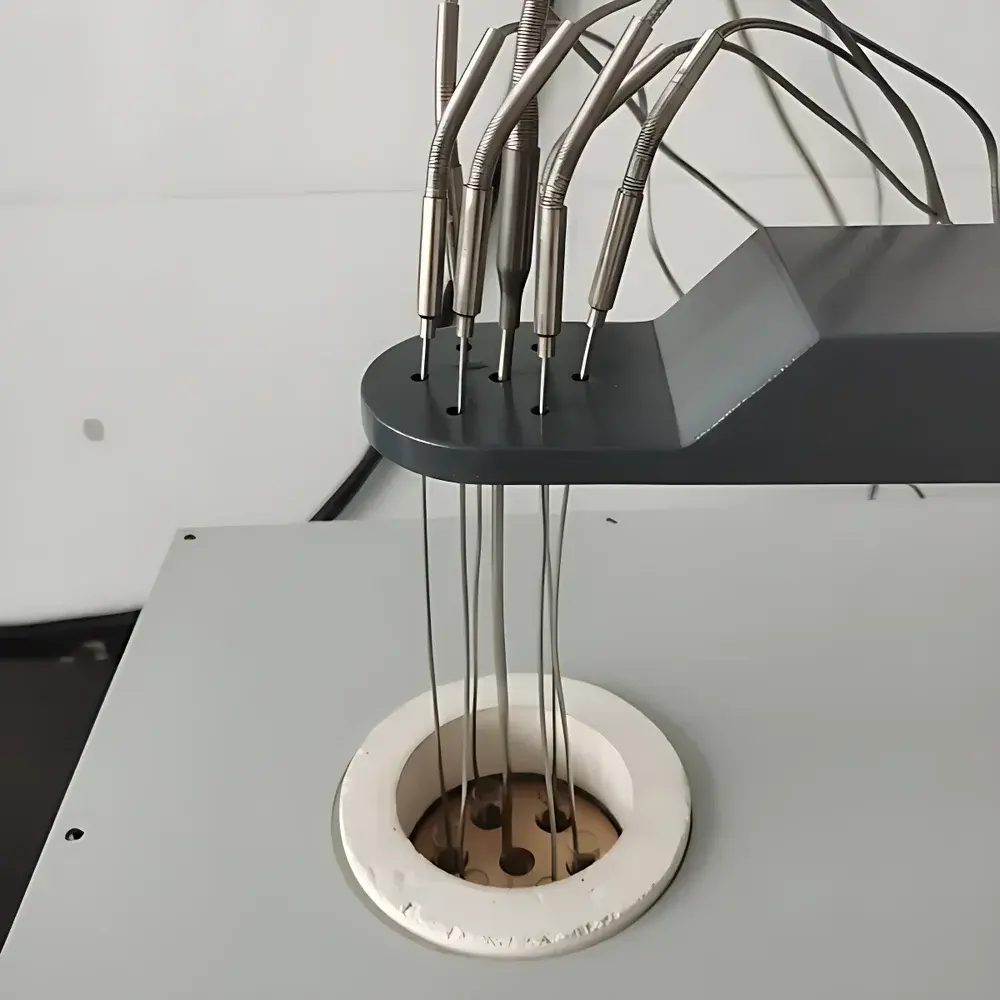
The MingShen Science MRD-6M Coal Ignition Temperature Analyzer is a dedicated thermal analysis instrument engineered for the precise determination of ignition temperature (also known as auto-ignition point or spontaneous combustion point) of coal samples under controlled, standardized heating conditions. It operates on the principle of differential thermal monitoring: a calibrated furnace heats at a constant, programmable rate while six independent thermocouples simultaneously record both furnace temperature and individual sample temperatures in parallel stainless-steel reaction tubes. The system continuously computes and plots the temperature difference (ΔT = Tsample − Tfurnace) over time. Ignition is objectively identified by a sharp, sustained exothermic deviation—typically >10 °C above baseline ΔT—indicating rapid oxidation onset. This methodology aligns with the fundamental thermal kinetics described in GB/T 18511–2001, which specifies test procedures for determining the ignition temperature of coal using the heated-tube method.
Key Features
- Simultaneous six-sample capacity with independent thermocouple channels, enabling high-throughput comparative analysis and statistical validation per ASTM D3174 and ISO 1171-compliant workflows.
- Bidirectional RS-232/USB communication between embedded controller and host PC ensures real-time synchronization of setpoint, measured values, alarms, and system status—critical for audit-ready operation.
- Automated thermal profiling: real-time generation of dual curve sets—furnace temperature vs. time and ΔT vs. time—with dynamic zoom, cursor-based point interrogation, and overlay capability for inter-run comparison.
- Integrated calculation engine compliant with GB/T 18511–2001 algorithms; automatically identifies ignition point from the inflection threshold of the ΔT curve and reports final value with timestamp, heating rate verification, and pass/fail flag against method-defined stability criteria.
- Full data persistence: raw sensor readings (Tfurnace, Tsample1–6, time stamps) are logged at 1 Hz resolution to non-volatile storage; metadata (operator ID, sample ID, calibration date, ambient conditions) is embedded in each dataset.
- Thermal architecture features PID-controlled heating element with ceramic insulation and copper thermal mass block, delivering stable ramp linearity (±0.2 °C/min) across the full 4.5–5.0 °C/min range and minimizing thermal lag between furnace and sample zones.
Sample Compatibility & Compliance
The MRD-6M accommodates standard 10-mm OD quartz or borosilicate glass reaction tubes (supplied), suitable for pulverized coal samples with particle size ≤0.2 mm (per GB/T 211–2017 preparation requirements). Sample mass is precisely dosed at 0.100 g ±0.010 g using certified analytical balances. The instrument meets the mechanical, thermal, and procedural specifications of GB/T 18511–2001 (“Method for Determination of Ignition Temperature of Coal”). While not certified to IEC 61000-4 electromagnetic immunity standards, its design incorporates shielded signal cabling and ferrite-core filtering to mitigate interference from adjacent laboratory equipment—as recommended in Clause 6.3 of the standard. Routine verification includes NIST-traceable thermocouple calibration (Type K, Class 1) and ramp-rate validation using reference metal alloys (e.g., Sn, Zn).
Software & Data Management
The proprietary Windows-based application provides GLP-compliant operation: user authentication (role-based access control), electronic signature capture for report approval, and immutable audit trail logging (ISO/IEC 17025 Annex A.2). All datasets are stored in encrypted SQLite format with SHA-256 hash integrity checks. Export options include CSV (for LIMS integration), PDF/A-1b (archival), and EMF vector graphics (publication-ready curves). The software supports 21 CFR Part 11 readiness via optional add-on module—enabling electronic records, audit trails, and signature authentication when configured with Windows domain authentication and time-stamping service. Historical data retrieval allows filtering by date range, operator, sample ID, or pass/fail status; trend analysis tools support linear regression of ignition temperature vs. coal rank or oxidation history.
Applications
- Quality assurance in coal procurement: screening for spontaneous combustion risk in long-term stockpiles or transport.
- R&D of coal oxidation inhibitors: quantitative evaluation of additive efficacy on ignition delay.
- Coal classification and rank correlation studies: establishing empirical relationships between ignition temperature and vitrinite reflectance or volatile matter content.
- Environmental safety assessment: supporting mine ventilation planning and goaf fire prevention strategies.
- Interlaboratory method validation: serving as a reference platform for round-robin testing under CNAS-accredited programs.
FAQ
What standards does the MRD-6M comply with?
It is fully aligned with GB/T 18511–2001 and supports method adaptation for ASTM D3174 (ash content context) and ISO 1171 (ash determination framework) through configurable reporting templates.
Is external calibration required before first use?
Yes—users must perform initial thermocouple calibration using a NIST-traceable dry-block calibrator at three points (100 °C, 300 °C, 500 °C) and validate heating rate with a secondary reference thermometer per Section 7.2 of GB/T 18511–2001.
Can the system operate unattended overnight?
No—GB/T 18511–2001 mandates continuous visual observation during the critical 150–250 °C window; the instrument includes audible/visual alerts but does not replace operator presence per safety Clause 5.4.
How is data integrity ensured during power interruption?
The embedded controller maintains RAM-backed logging with last-known-good state recovery; all measurements up to the moment of outage are preserved and appended upon restart without gap or duplication.
Does the software support multi-language interfaces?
The base version ships with English and Simplified Chinese UI; additional language packs (German, Spanish, Russian) are available under OEM licensing agreements for international distributors.




