
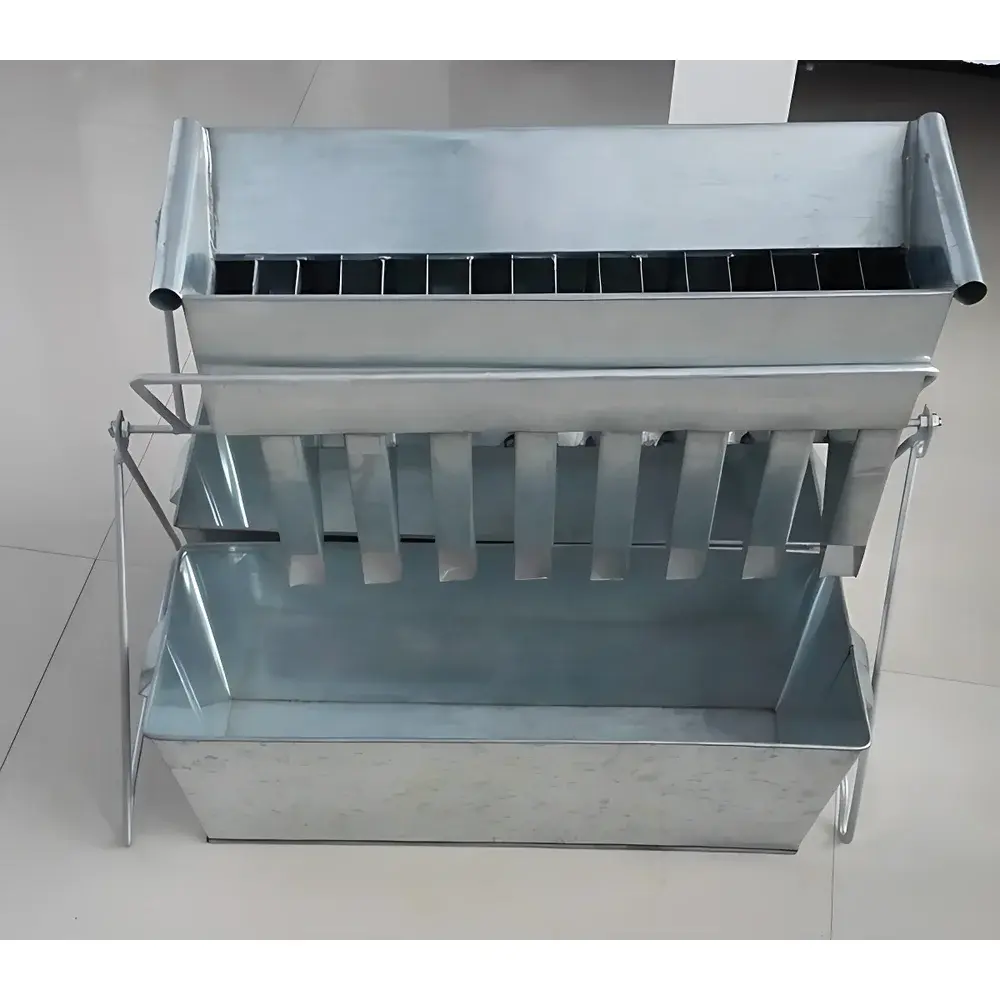
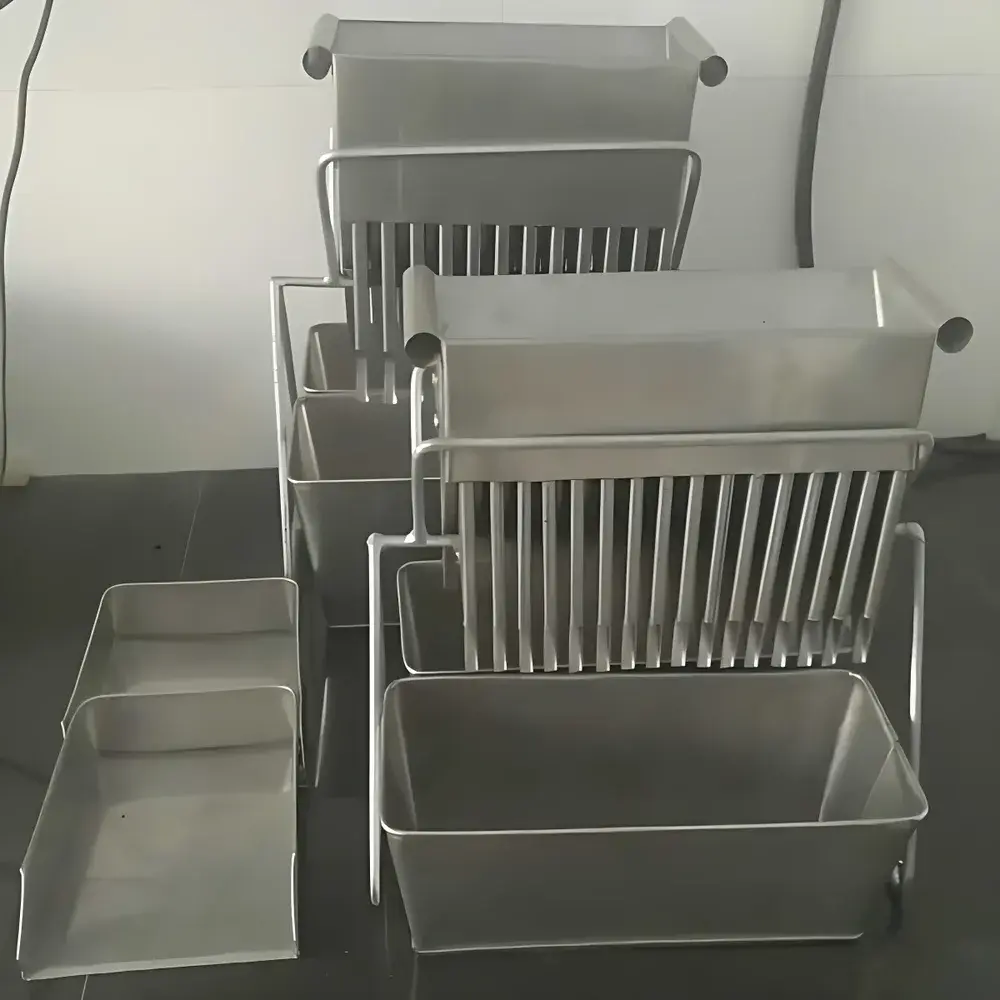
MingShen Science SFQ Series Open-Type Sample Divider
| Brand | MingShen Science |
|---|---|
| Origin | Henan, China |
| Model | SFQ Series |
| Material Options | Galvanized Steel or Stainless Steel |
| Compliance | Designed per GB/T 474–2008 (revised edition of GB 474–1996) |
| Slot Count | 16–32 slots (per side, ≥8 per side) |
| Slot Width | 5–32.5 mm (2.5–3× nominal top particle size, min. 5 mm) |
| Minimum Chute Inclination | ≥60° |
| Particle Size Handling Range | <0.5 mm to <13 mm |
| Sample Retention Mass | 1–7.5 kg depending on top size |
| Construction | Non-pressurized, gravity-fed, manual operation |
Overview
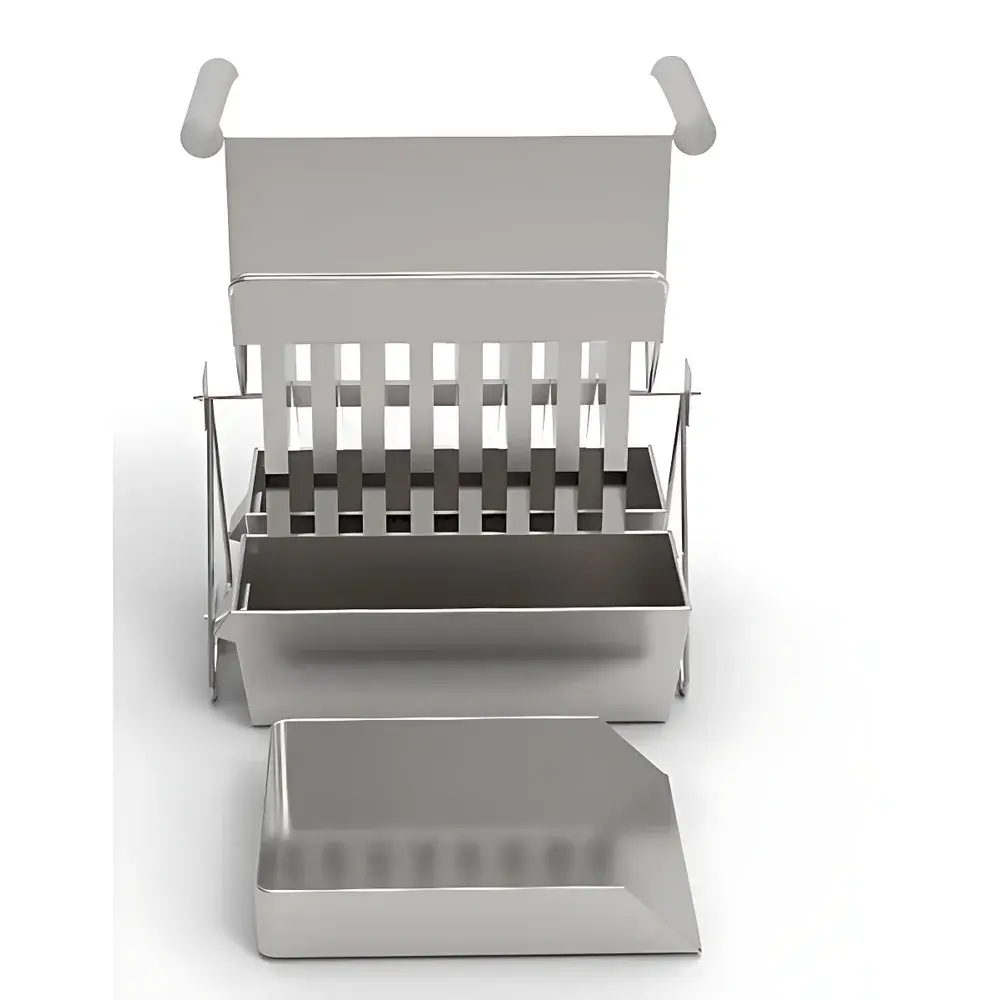
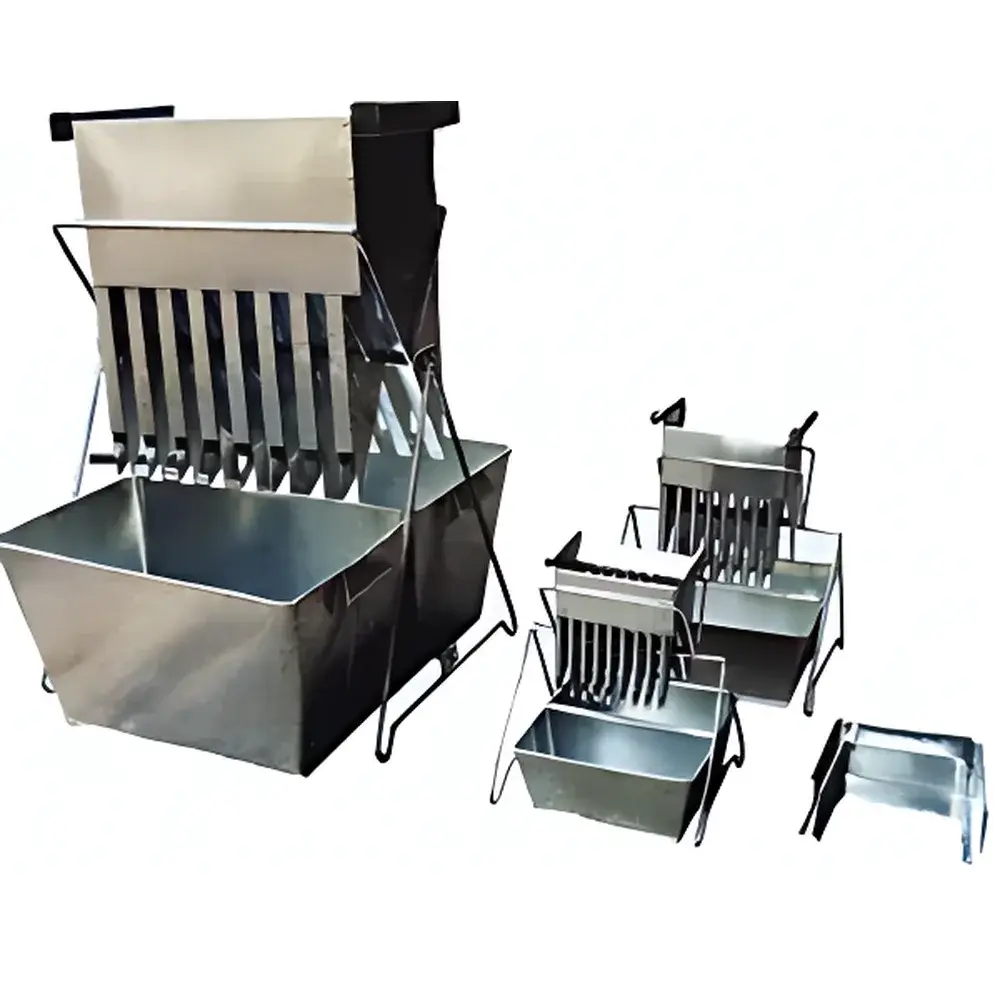
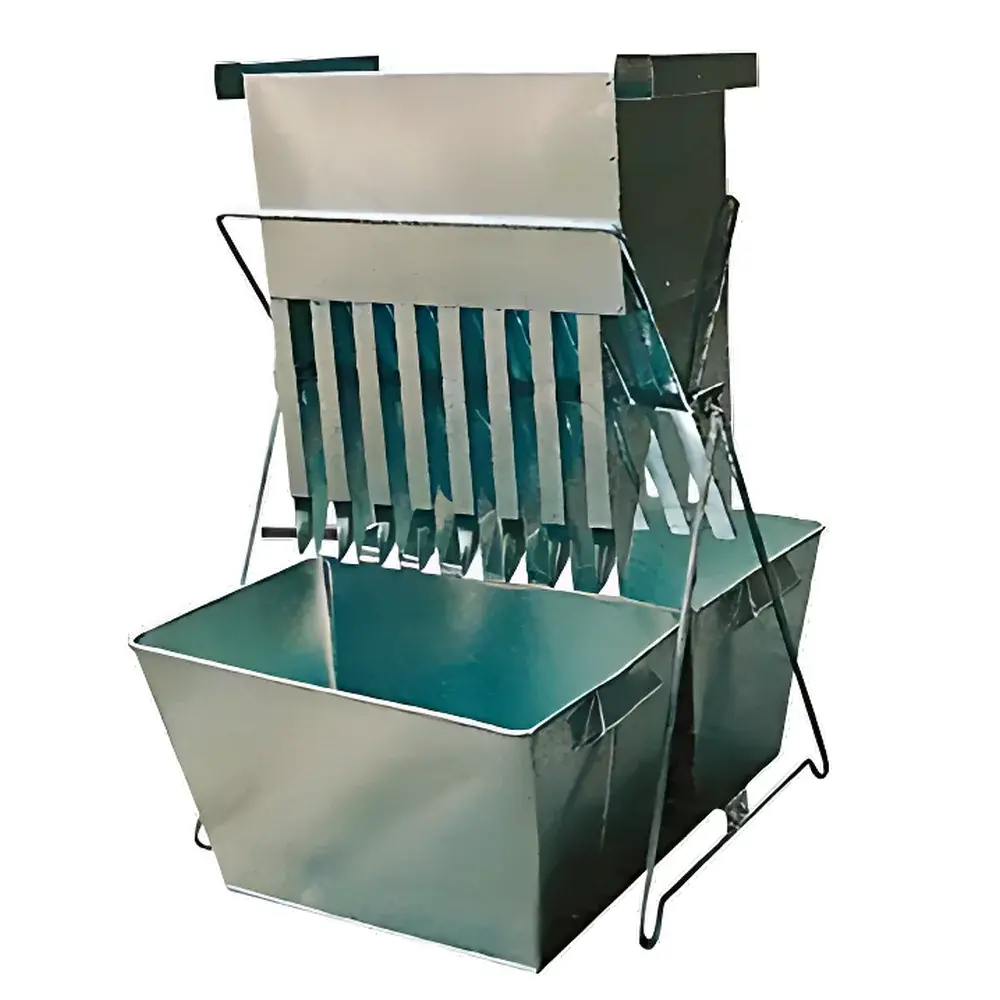
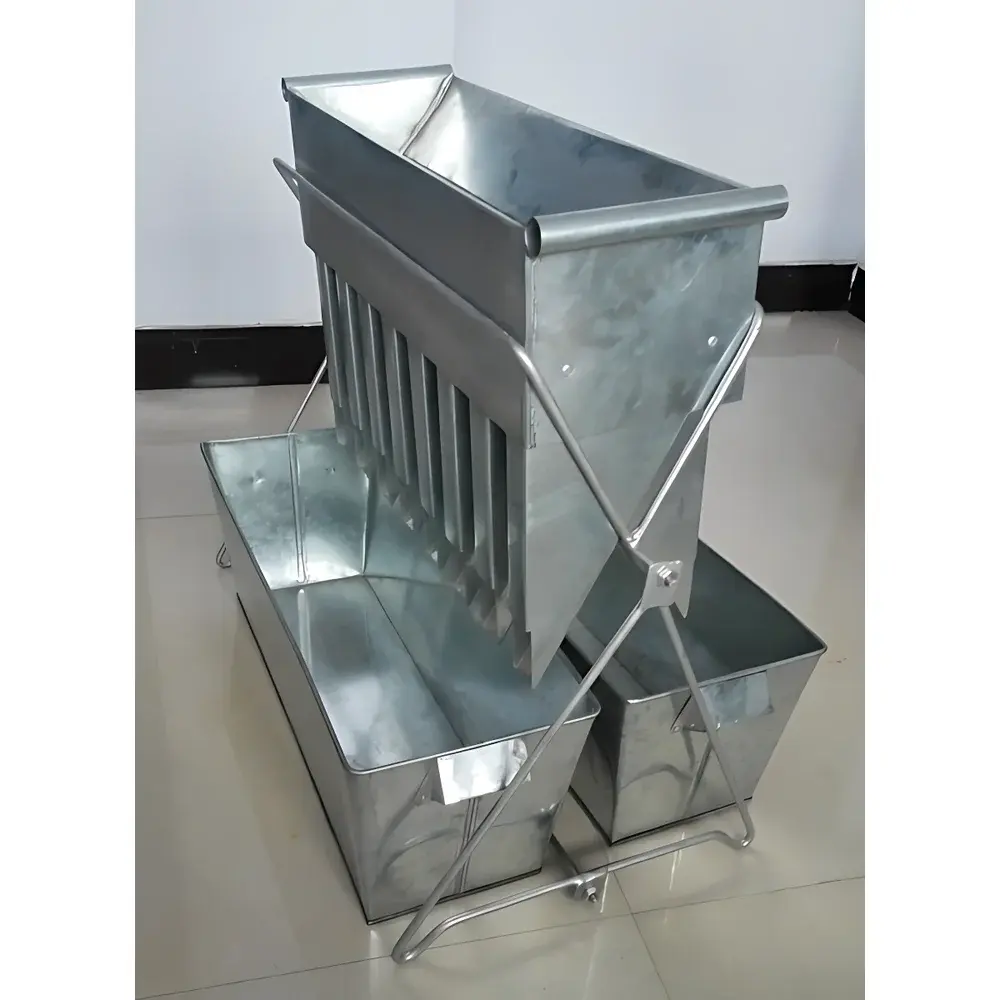
The MingShen Science SFQ Series Open-Type Sample Divider is a precision mechanical device engineered for representative subsampling of dry, free-flowing granular materials—primarily coal—in accordance with international and national standards for sample preparation. It operates on the principle of riffle splitting: bulk material is fed uniformly across a series of parallel, equally spaced chutes arranged in alternating left/right orientation; gravity-driven flow ensures statistically balanced division into two equal-mass subfractions. Unlike rotary or automated dividers, the SFQ Series relies on passive, geometry-controlled partitioning—eliminating moving parts, power requirements, or calibration drift. Its open-top design facilitates visual monitoring, rapid cleaning, and compatibility with coarse or abrasive feedstocks up to 13 mm top size. The instrument is not intended for wet, cohesive, fibrous, or highly heterogeneous materials requiring homogenization prior to division.
Key Features
- Compliance-driven design aligned with GB/T 474–2008 (equivalent in scope to ISO 13909-2 and ASTM D2013), ensuring traceable, auditable sample reduction in coal quality control laboratories.
- Dual-material construction: galvanized steel variants for cost-sensitive routine use; stainless steel (304 grade) options for corrosion resistance in high-humidity or chemically aggressive environments.
- Modular slot configuration: standardized models (No. 1–4) match defined top-size intervals (<1 mm, <3 mm, <6 mm, <13 mm); non-standard “Large/Medium/Small” variants accommodate facility-specific throughput or space constraints without compromising statistical validity.
- Precision-machined chute geometry: uniform slot width (±0.2 mm tolerance), symmetrical 60°–65° incline, and strict parity in left/right slot count (minimum 8 per side, up to 32) minimize segregation bias and ensure mass split reproducibility ≤±1.5% RSD (per GB/T 474 Annex B validation protocol).
- Tool-free disassembly: base plate, chute assembly, and collection trays separate without fasteners—enabling residue inspection, particulate removal, and GLP-compliant cleaning verification.
Sample Compatibility & Compliance
The SFQ Series is validated exclusively for dry, brittle, monodisperse-to-moderately polydisperse particulates with angle-of-repose <45° and moisture content <8 wt%. Primary applications include run-of-mine (ROM) coal, crushed anthracite, pulverized bituminous feedstock, and coke breeze. It is unsuitable for slurry, clay-rich fines, biomass pellets, or composite blends requiring mixing prior to division. All standard configurations meet mandatory requirements of GB/T 474–2008 Section 6.3 (mechanical divider specifications), including minimum slot count, width-to-particle-size ratio (2.5–3× dmax), and structural rigidity to prevent vibration-induced trajectory deviation. Documentation includes出厂 calibration certificate referencing GB/T 27025–2019 (ISO/IEC 17025) traceability pathways for dimensional verification.
Software & Data Management
This is a purely mechanical, non-electronic instrument with no embedded firmware, sensors, or digital interfaces. Sample reduction records—including lot number, feed mass, top size, retained mass, operator ID, and date/time—are maintained externally via laboratory information management systems (LIMS) or paper-based logbooks compliant with ISO/IEC 17025 and GLP Annex 3 documentation requirements. No software validation (e.g., FDA 21 CFR Part 11) applies. However, its deterministic physical operation supports full auditability: all parameters (slot dimensions, inclination, material certification) are permanently marked on nameplate and supplied in bilingual (CN/EN) technical dossier for QA review.
Applications
- Coal preparation plants: primary subsampling of conveyor belt cross-stream increments prior to proximate/ultimate analysis.
- Power generation labs: reduction of acceptance samples for calorific value (GB/T 213), ash content (GB/T 212), and sulfur determination (GB/T 214).
- Third-party testing agencies: accredited sample division under CNAS-CL01 (ISO/IEC 17025) scope for commercial arbitration.
- Research institutions: preparation of representative sub-samples for comminution energy studies, washability analysis, or mineralogical mapping.
- Education: demonstration of statistical sampling theory, heterogeneity assessment, and standard method implementation per ISO 8573 or ASTM D75.
FAQ
Is the SFQ Series suitable for materials other than coal?
It is validated only for coal and coal-like materials meeting the flowability and particle size criteria in GB/T 474–2008. Use with ores, soils, or catalysts requires prior validation per ISO 13909-2 Annex D.
Does it require periodic recalibration?
No electronic or moving components exist; dimensional integrity is verified at manufacture and remains stable. Annual visual inspection for wear/deformation (per GB/T 474 Clause 6.5) suffices.
Can it be integrated into an automated sampling line?
The open-top design precludes direct integration. For continuous systems, consider paired SFQ units with vibratory feeders and load-cell-triggered discharge—not supplied by MingShen Science.
What documentation accompanies shipment?
GB/T 474–2008 compliance statement, material certification (galvanized Z275 / SS304), dimensional test report, and multilingual user manual (EN/CN) with GB/T 474–2008 procedural annexes.
Is CE or UKCA marking available?
As a non-electrical, non-pressurized mechanical tool, it falls outside CE/UKCA scope. Conformity is demonstrated via GB/T 474–2008 and ISO 13909-2 technical equivalence statements.



