
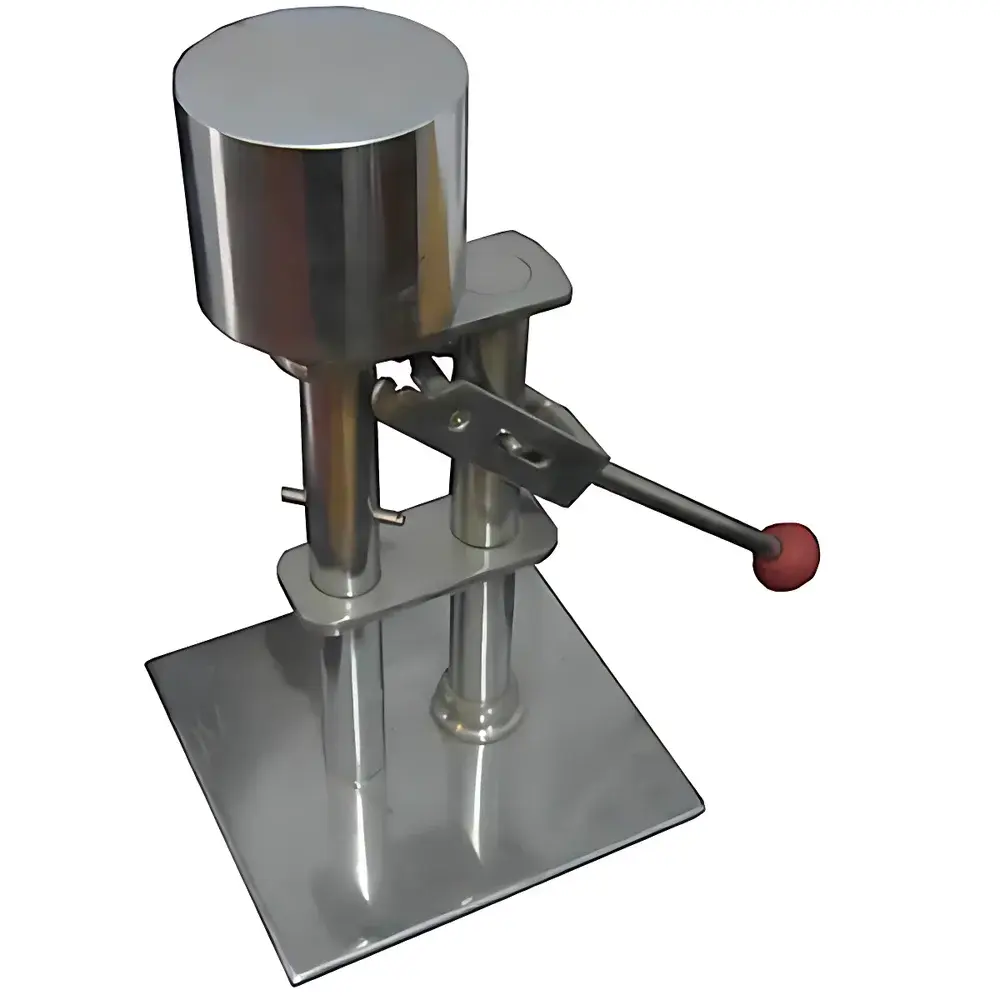
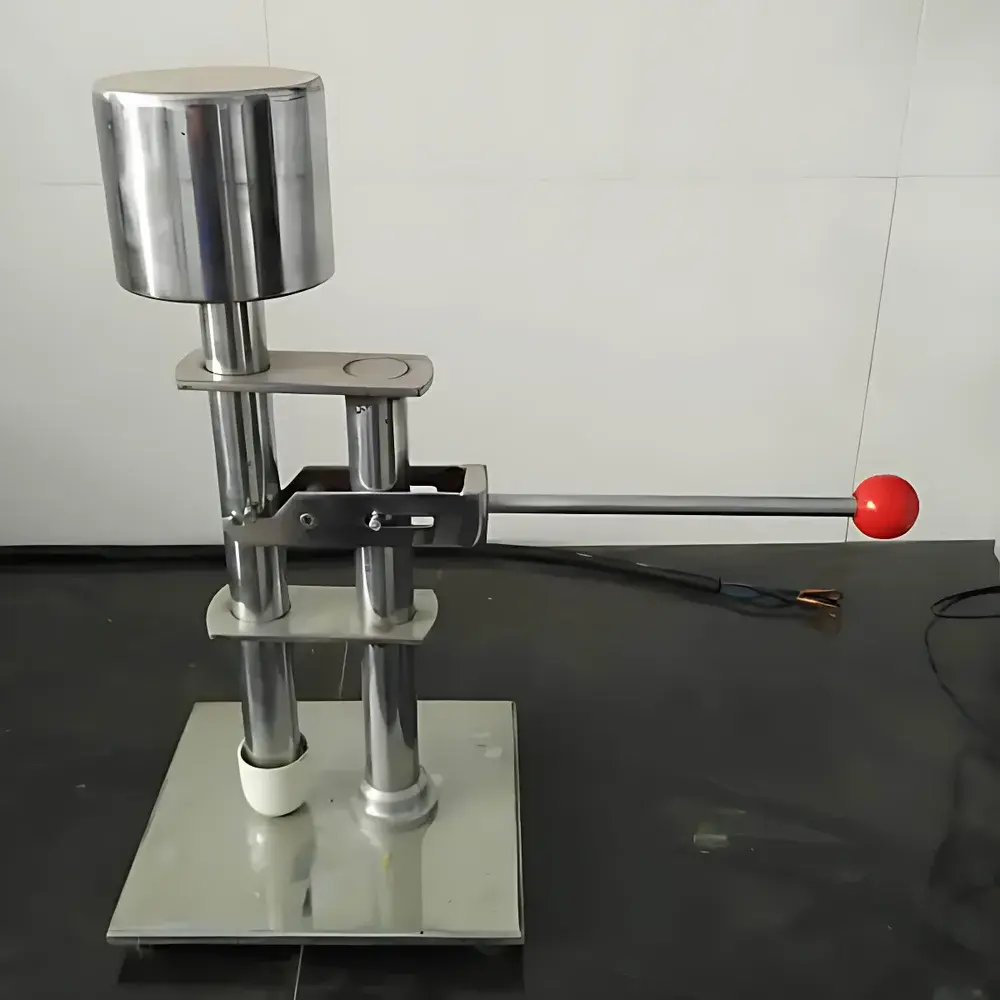
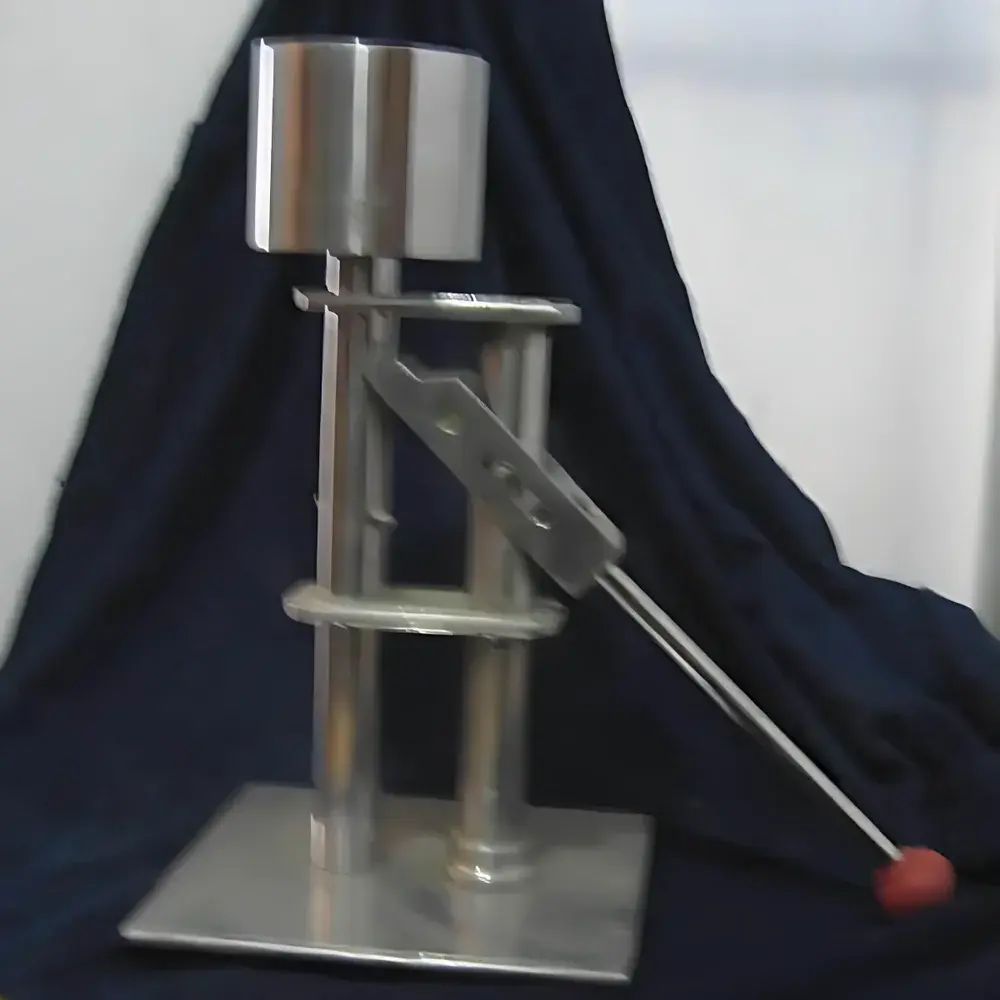
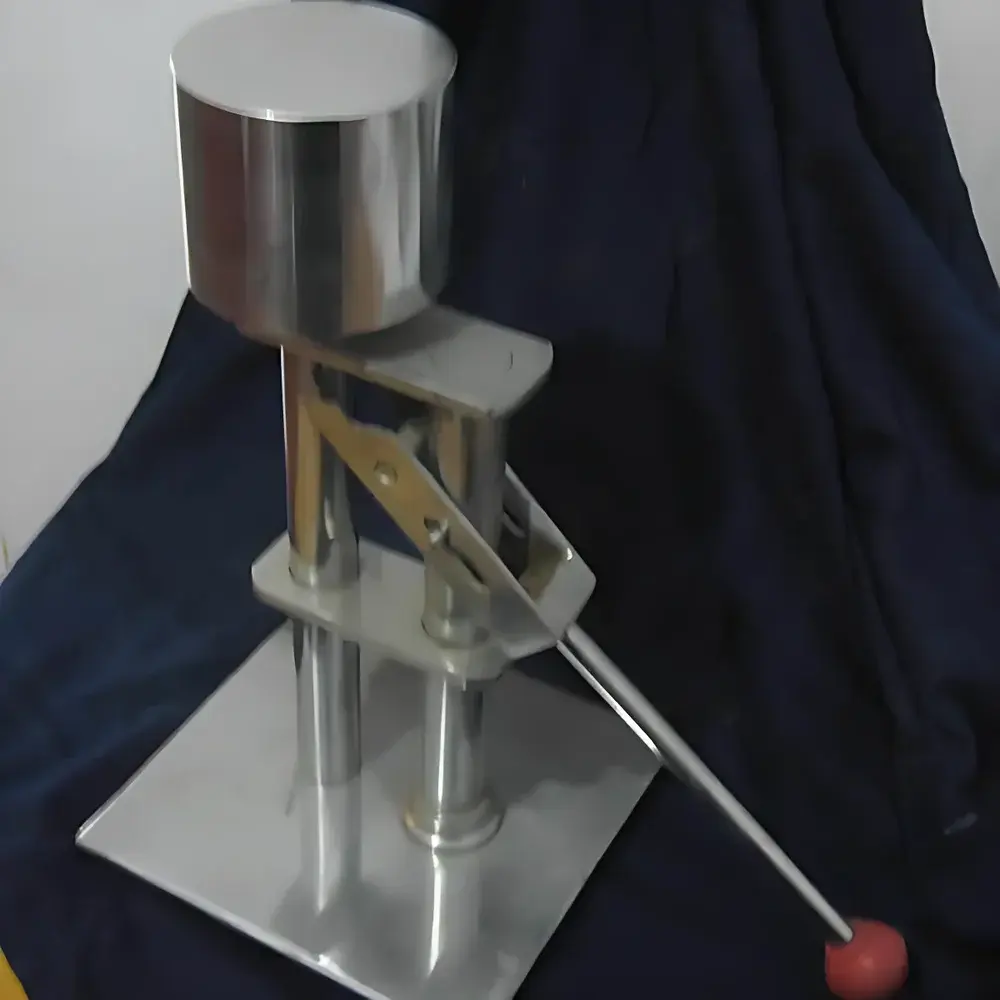
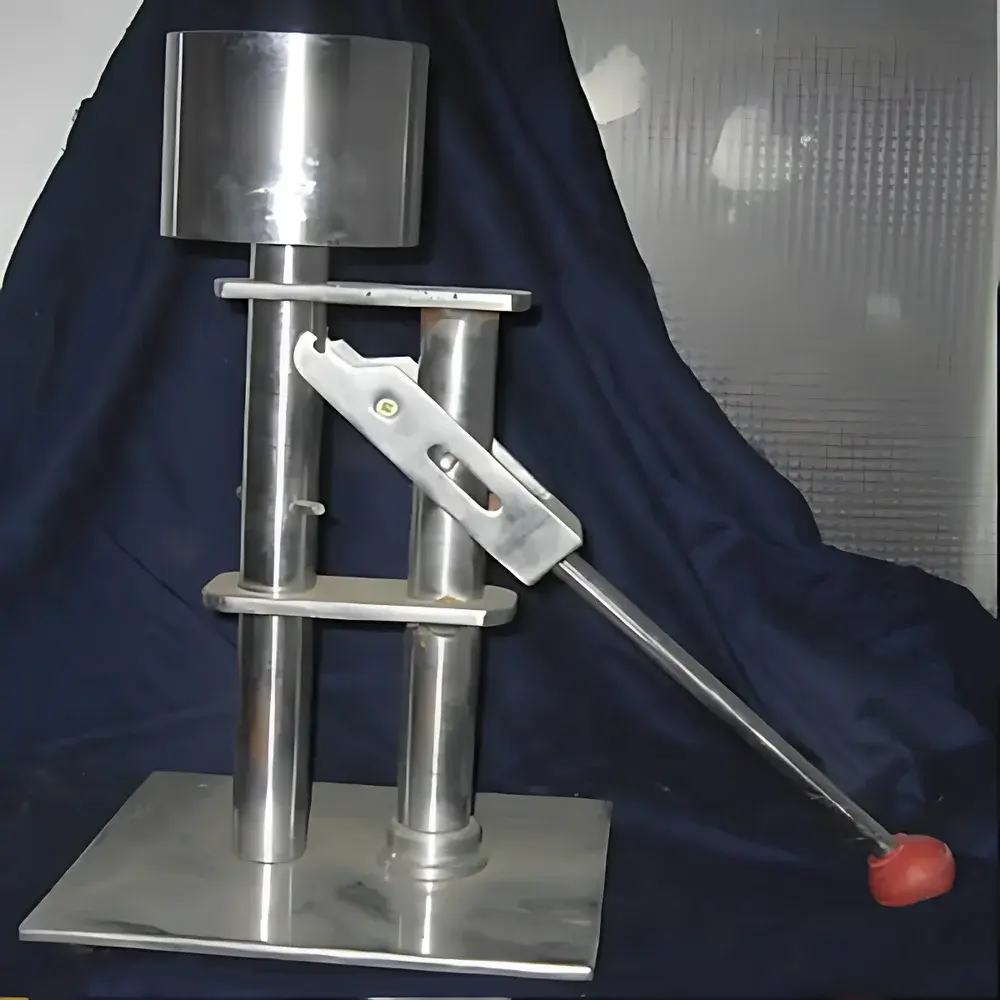
MingShen Science SS-65 Manual Static Press for Gieseler Caking Index Testing
| Brand | MingShen Science |
|---|---|
| Origin | Henan, China |
| Manufacturer Type | Authorized Distributor |
| Country of Manufacture | China |
| Model | SS-65 |
| Nominal Pressure | 6.5 kgf |
| Dimensions (W×D×H) | 220 × 220 × 420 mm |
| Weight | 12.5 kg |
| Surface Finish | Chrome-plated housing, baked-enamel weight block |
Overview
The MingShen Science SS-65 Manual Static Press is a precision mechanical compression device designed exclusively for standardized caking index (Gieseler or Roga Index) determination in coal quality laboratories. It operates on the principle of static load application—delivering a consistent, gravity-driven compressive force of 6.5 kgf (≈63.7 N) to form a uniform, dimensionally stable briquette from a precisely weighed mixture of test coal and reference anthracite. This step is critical in ASTM D5003, ISO 507, and GB/T 5447-compliant procedures, where reproducible physical compaction ensures uniform thermal behavior during subsequent carbonization in a muffle furnace. Unlike hydraulic or motorized presses, the SS-65’s manual lever-and-weight architecture eliminates pressure variability due to fluid dynamics or electronic drift—making it ideal for routine QC labs requiring long-term measurement stability, regulatory traceability, and minimal maintenance.
Key Features
- Engineered for metrological integrity: Fixed 6.5 kgf nominal load delivered via calibrated chrome-plated steel weight block, ensuring repeatable compaction force per ASTM D5003 Annex A2 requirements.
- Durable industrial construction: Housing fabricated from cold-rolled steel with decorative chromium plating; weight block finished with corrosion-resistant baked enamel—optimized for lab environments subject to humidity and chemical exposure.
- Ergonomic manual operation: Dual-lever mechanical advantage system enables smooth, controlled descent without operator fatigue; integrated stop mechanism prevents over-compression beyond specified 30-second dwell time.
- Dimensional compliance: Designed to accommodate standard 18 mm ID porcelain crucibles (e.g., ASTM D3174-compliant) with precise centering alignment to ensure uniform pressure distribution across the sample surface.
- Low-inertia design: Total mass of 12.5 kg provides inherent vibration damping—critical when handling fragile pre-carbonized samples post-furnace cooling.
Sample Compatibility & Compliance
The SS-65 is validated for use with air-dried coal samples meeting GB/T 5447–2014 and ISO 507:2020 specifications: particle size distribution of 0.1–0.2 mm comprising 20–35% of total mass, moisture content <2.0% (ad), and homogeneity verified by coning-and-quartering prior to mixing. It supports both Gieseler caking index (ASTM D5003) and Roga index (ISO 507) workflows, where the pressed briquette serves as the mechanical precursor to controlled pyrolysis at 850 ± 10 °C. The device complies with GLP documentation standards—its mechanical simplicity allows full auditability of force application parameters without software calibration logs. No electrical certification (e.g., CE, UL) is required due to its non-powered classification under IEC 61010-1 Clause 3.3.1.
Software & Data Management
The SS-65 is a standalone mechanical instrument with no embedded electronics, firmware, or data output interfaces. All operational parameters—including dwell time (30 s), applied load (6.5 kgf), and crucible positioning—are manually recorded in laboratory notebooks or LIMS-compatible worksheets per FDA 21 CFR Part 11 Annex 11 guidelines for paper-based systems. Its design intentionally avoids digital dependency to eliminate cybersecurity risks, firmware versioning conflicts, or timestamp synchronization errors common in connected lab devices. Calibration verification is performed annually using traceable deadweight standards (NIST-traceable Class M1 weights), with records retained for ≥5 years as part of QA documentation packages.
Applications
- Routine caking index testing in coal preparation plants and power station QC labs for blend optimization and procurement specification verification.
- Research-grade coal characterization in university and national institute laboratories conducting rank correlation studies between vitrinite reflectance and thermoplastic behavior.
- Reference material validation for certified coal standards (e.g., NIST SRM 1632e) where mechanical reproducibility must exceed ±0.5% RSD across inter-laboratory trials.
- Training platforms in vocational coal technology programs—demonstrating fundamental principles of compressive consolidation, thermal decomposition kinetics, and mechanical strength evaluation via drum tumbling.
- Backup instrumentation in GLP-regulated environments where redundancy against electronic failure is mandated by internal SOPs.
FAQ
What is the purpose of the 30-second dwell time during pressing?
The 30-second interval ensures complete stress relaxation within the coal-anthracite matrix, minimizing elastic rebound and achieving maximal particle rearrangement—critical for consistent coke strength development during subsequent carbonization.
Can the SS-65 be used for other coal tests beyond caking index?
No. Its geometry, force profile, and dimensional tolerances are optimized solely for ASTM D5003/ISO 507 briquette formation. It is not suitable for Hardgrove grindability or proximate analysis sample preparation.
Is periodic recalibration required?
Yes. Annual verification using NIST-traceable weights is recommended. Visual inspection of chrome plating integrity and lever pivot wear should occur quarterly per ISO/IEC 17025:2017 Clause 6.4.10.
Does the device meet FDA or EU regulatory requirements for pharmaceutical-grade coal testing?
While not classified as a medical device, its mechanical design satisfies FDA 21 CFR Part 11 Subpart B for paper-based record integrity and ISO 17025 traceability—provided lab-specific SOPs define documented weight verification and environmental control (20–25 °C, RH <60%).
How does surface finish impact analytical performance?
Chrome plating prevents iron contamination from housing corrosion, while baked enamel on the weight block inhibits carbon deposition buildup—both essential for maintaining consistent thermal mass and avoiding catalytic side reactions during high-temperature carbonization.





