
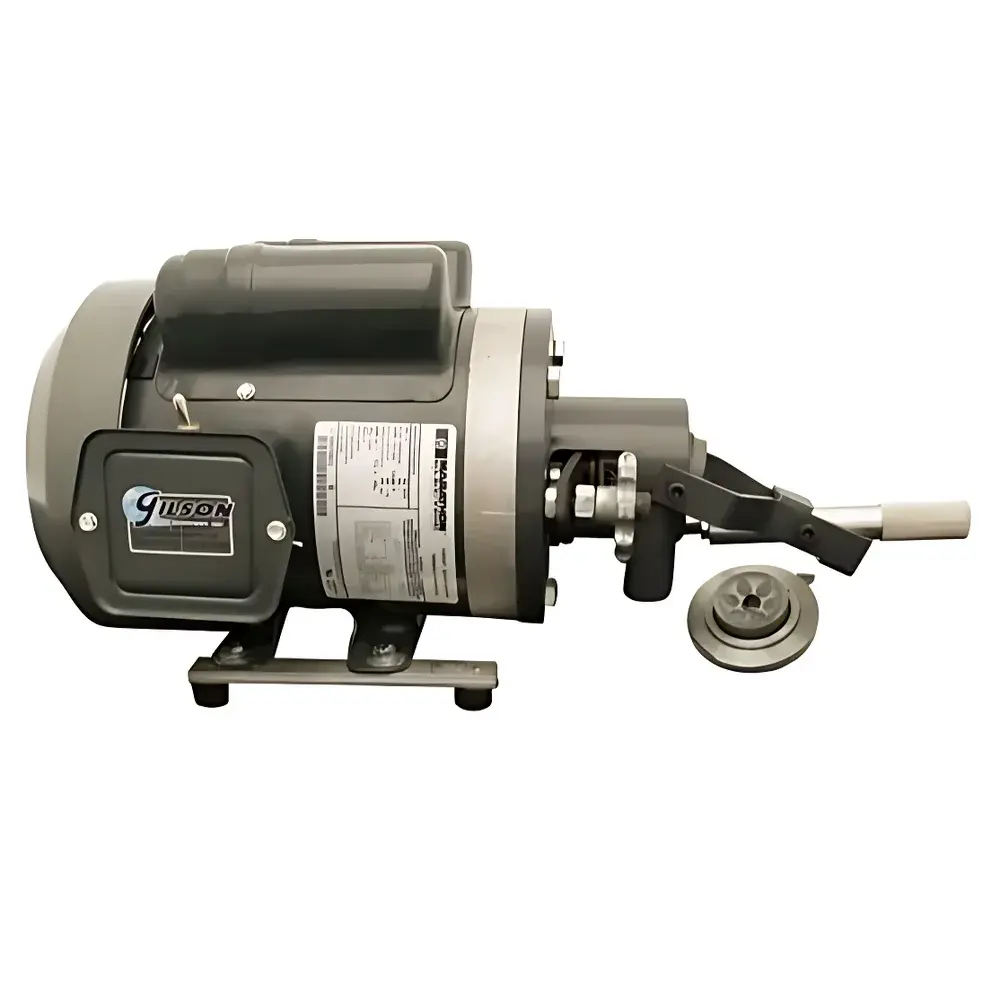
Mini-Pulverizer LC-7 / LC-7F Laboratory Benchtop Grinding Mill
| Origin | USA |
|---|---|
| Manufacturer Type | Authorized Distributor |
| Origin Category | Imported |
| Model | LC-7 (115 V / 60 Hz), LC-7F (230 V / 50 Hz) |
| Pricing | Available Upon Request |
| Grinding Capacity | 1–20 g per batch |
| Feed Size | ≤ 1/8 in (3.2 mm) |
| Final Particle Size Range | 425–106 µm (US Sieve No. 40–No. 140) |
| Grinding Plate Diameter | 41 mm (1.625 in) |
| Material | High-Density Alumina Ceramic (LCA-55) or Tungsten Carbide (LCA-56, optional) |
| Drive Motor | 1/3 HP Capacitor-Start, Rubber-Isolated Mounting |
| Bearing System | Sealed Ball Bearings |
| Direction Reversal | Manual Toggle Switch for Rotational Polarity Control |
| Expected Plate Lifetime | Up to 3,000 samples (with reversal protocol) |
Overview
The Mini-Pulverizer LC-7 and LC-7F are compact, benchtop laboratory grinding mills engineered for reproducible, controlled size reduction of solid samples in analytical, quality control, and R&D environments. Based on a cam-actuated, eccentric-plate impact-grinding principle, the unit applies high-frequency mechanical compression and shear between two precisely aligned, rotating ceramic plates—generating consistent particle size distributions without significant heat buildup or cross-contamination. Designed for discrete batch processing of 1–20 g samples, the system accommodates feed particles up to 3.2 mm and delivers final outputs ranging from 425 µm (US Sieve No. 40) down to 106 µm (No. 140), making it suitable for sample homogenization prior to XRF, ICP-OES, gravimetric analysis, or sieve-based assay validation. Its sealed bearing architecture, rubber-isolated motor mount, and manually reversible drive direction collectively minimize mechanical wear and extend operational longevity under routine use.
Key Features
- Adjustable grinding gap mechanism enabling precise control over output particle size distribution across US Sieve No. 40–140 (425–106 µm)
- Interchangeable high-density alumina ceramic grinding plates (LCA-55, standard) with optional tungsten carbide plates (LCA-56) for abrasive or ultra-hard materials including minerals, ceramics, and hardened alloys
- Manual polarity reversal switch that alternates rotational direction of the upper grinding plate—reducing asymmetric wear and extending plate service life to approximately 3,000 batches when used per recommended protocol
- Cam-driven eccentric closure system ensuring uniform pressure distribution and consistent plate contact geometry during operation
- Sealed ball bearing assembly preventing ingress of particulate debris and eliminating need for routine lubrication maintenance
- Dual-voltage configuration: LC-7 operates at 115 V / 60 Hz (North America, Japan); LC-7F at 230 V / 50 Hz (EU, UK, Australia, and most international markets)
Sample Compatibility & Compliance
The Mini-Pulverizer is compatible with dry, brittle, moderately friable solids including ores, soils, pharmaceutical tablets, polymers, catalysts, and food matrices. It is not intended for fibrous, elastic, oily, or highly hygroscopic materials. Sample recovery exceeds 95% via simple brush-out—facilitating trace-level analysis and minimizing loss in regulated workflows. The device conforms to general electrical safety standards (IEC 61000-6-2/6-4, UL 61010-1) and supports GLP-compliant documentation when integrated into validated laboratory procedures. While not intrinsically rated for hazardous locations, its low-energy, non-sparking ceramic plate interface renders it suitable for use in standard analytical laboratories handling non-explosive powders.
Software & Data Management
The Mini-Pulverizer LC-7/LC-7F is a stand-alone electromechanical instrument with no embedded microprocessor or digital interface. Operation is fully manual via front-panel toggle controls; no firmware, calibration logs, or electronic audit trails are generated. As such, it requires external procedural documentation for compliance with FDA 21 CFR Part 11, ISO/IEC 17025, or GMP environments. Users typically record grinding parameters—including batch ID, feed mass, plate type, reversal count, and sieving verification results—in paper or LIMS-integrated logbooks. Optional accessories such as calibrated sieve sets (ASTM E11, ISO 3310-1) and certified reference materials support method validation and ongoing performance verification.
Applications
- Preparation of homogeneous sub-samples for elemental analysis (XRF, ICP-MS, AAS)
- Particle size reduction prior to dissolution testing (USP & Ph. Eur. methods)
- Homogenization of geological core fragments for geochemical assay
- Routine QC grinding of polymer pellets, ceramic powders, and metal turnings
- Method development for ASTM D297, ISO 6506, or ISO 11267 soil characterization protocols
- Support of ISO/IEC 17025 accredited testing where mechanical grinding is specified in scope
FAQ
What is the maximum feed particle size the LC-7 can accept?
The unit accepts feed material up to 1/8 inch (3.2 mm) in maximum dimension. Oversized particles must be pre-crushed or screened prior to loading.
Can the LC-7 process wet or oily samples?
No. The Mini-Pulverizer is designed exclusively for dry, free-flowing solids. Moisture or oil content may impair plate engagement, cause caking, and accelerate wear.
How often should the grinding plates be replaced?
Under normal use with directional reversal after every 100–150 samples, high-density alumina plates (LCA-55) typically last ~3,000 batches. Tungsten carbide plates (LCA-56) exhibit significantly longer service life when processing quartz, silicon carbide, or sintered oxides.
Is the LC-7 compliant with FDA 21 CFR Part 11?
The device itself generates no electronic records. Compliance depends entirely on how operators document usage—e.g., through signed logbooks, LIMS entries, or validated SOPs referencing equipment identification, maintenance history, and performance checks.
What voltage options are available for international deployment?
The LC-7 model is configured for 115 V / 60 Hz operation; the LC-7F variant supports 230 V / 50 Hz. Both share identical mechanical specifications and accessory compatibility.



