
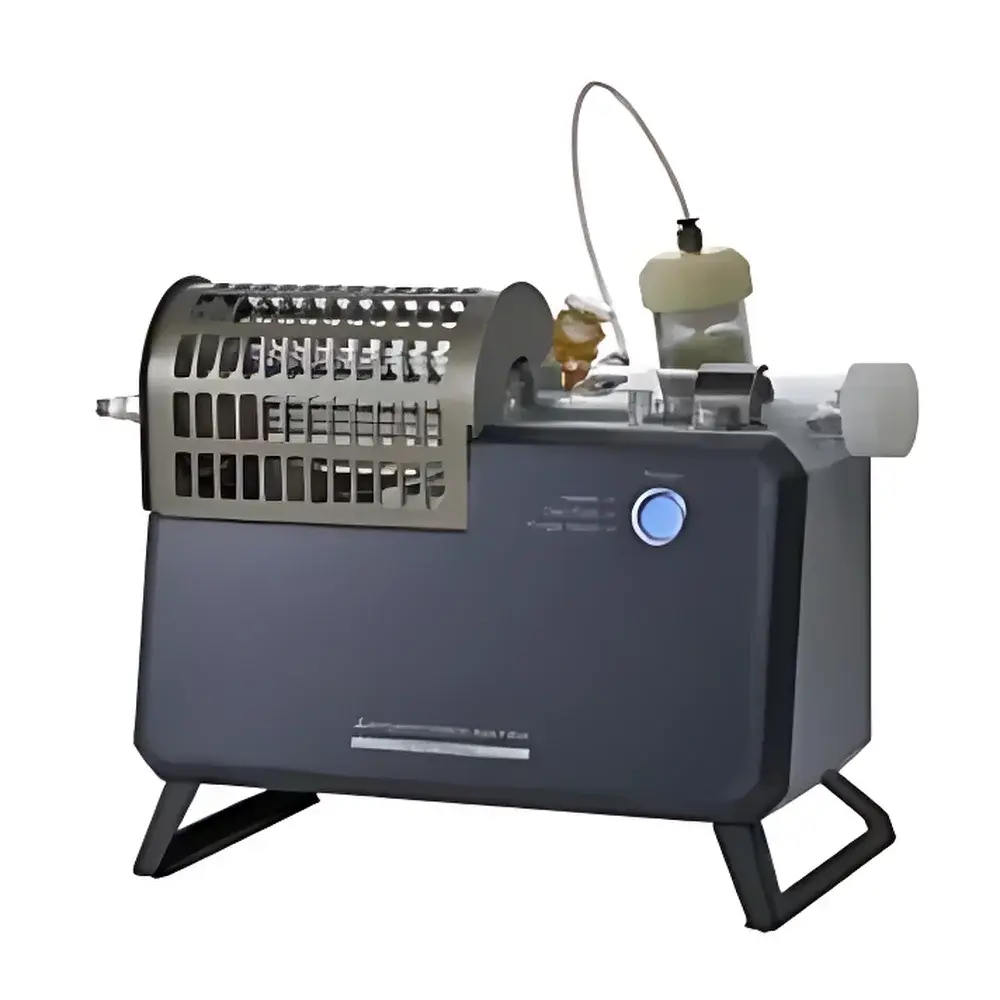
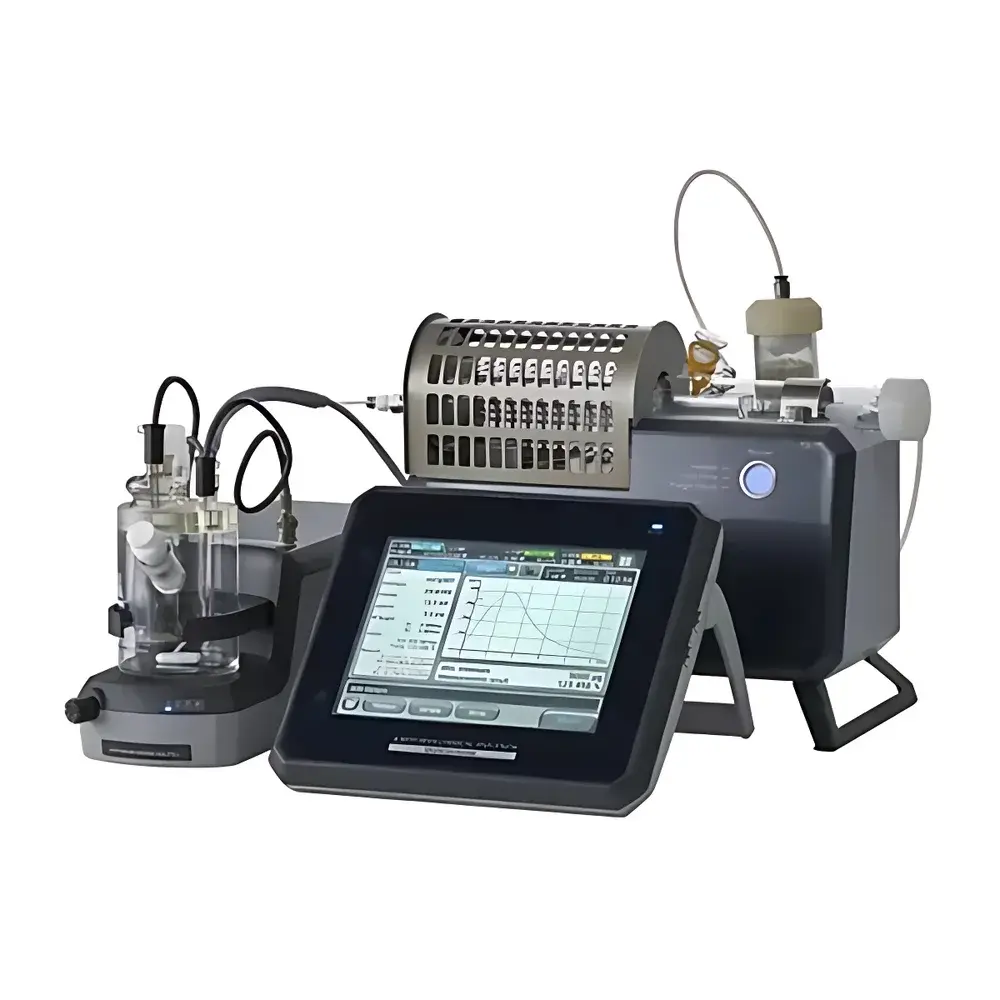
MITSUBISHI CHEMICAL VA-300 Sample Vaporization Unit for Solid Samples (Boat-Type Auto-Sampler)
| Brand | MITSUBISHI CHEMICAL |
|---|---|
| Origin | Japan |
| Instrument Type | Coulometric Karl Fischer Moisture Analyzer Accessory |
| Sample Introduction Method | Boat-type automated vaporization unit |
| Compatible Titrator | CA-310 |
| Moisture Measurement Range | 0.5 µg to 999.9999 mg |
| Measurement Resolution | ±0.1 µA |
| Accuracy | <0.3% RSD |
| Minimum Dispensing Volume | 0 µL |
Overview
The MITSUBISHI CHEMICAL VA-300 is a dedicated, temperature-controlled sample vaporization unit engineered for precise and reproducible moisture release from solid and semi-solid materials prior to coulometric Karl Fischer titration. Designed as a seamless hardware extension to the CA-310 coulometric titrator, the VA-300 operates on the principle of controlled thermal desorption: solid samples are placed in inert quartz or ceramic boats, heated under inert gas flow (typically nitrogen or dry air), and the evolved water vapor is quantitatively swept into the titration cell where it reacts stoichiometrically with iodine generated electrochemically. This two-stage separation—thermal liberation followed by coulometric detection—eliminates matrix interference common in direct titration of heterogeneous solids, enabling trace-level moisture quantification with high specificity and minimal reagent consumption. The VA-300 is not a standalone analyzer but a critical interface module that extends the CA-310’s capability to materials incompatible with conventional volumetric or direct coulometric injection methods.
Key Features
- Boat-type auto-sampling architecture with programmable heating profile (temperature range: ambient to 300 °C, adjustable in 1 °C increments)
- Inert gas purge system with mass-flow controlled nitrogen or dry air supply to prevent oxidation and ensure quantitative water transfer
- Quartz boat carrier with standardized dimensions (L × W × H: 30 × 10 × 5 mm) compatible with manual loading or optional robotic integration
- Integrated thermocouple monitoring at sample position for real-time temperature validation and GLP-compliant audit trails
- Sealed vapor transfer line with PTFE/ fused silica construction to minimize condensation and adsorption losses
- Automatic sequence control synchronized with CA-310 titration start/stop signals via RS-232 or USB interface
- Self-diagnostic routines for heater calibration, gas flow verification, and leak detection
Sample Compatibility & Compliance
The VA-300 accommodates a broad spectrum of low-volatility, thermally stable solid matrices—including polymer granules (e.g., PET, PA6, PC), battery separator films (polyolefin-based), pharmaceutical excipients (microcrystalline cellulose, lactose monohydrate), inorganic salts (LiCoO₂, Na₂SO₄), carbon black powders, liquid crystal dispersions, cured coatings, and freeze-dried biologics. Sample mass range: 1–500 mg, depending on expected moisture content and thermal behavior. The system complies with ASTM E203–22 (Standard Test Method for Water Using Volumetric or Coulometric Karl Fischer Titration), ISO 8534–2017 (Rubber—Determination of water content—Karl Fischer method), and supports 21 CFR Part 11–compliant data integrity when operated with CA-310 firmware v4.2+ and validated LIMS integration. All wetted parts are chemically inert (quartz, PTFE, borosilicate glass), ensuring no catalytic side reactions or memory effects.
Software & Data Management
Control and data acquisition are managed through the CA-310’s embedded operating system and optional PC-based KF Manager software (v6.1). The VA-300 exposes configurable parameters—including ramp rate (0.1–20 °C/min), hold time (0–120 min), final temperature, and purge gas flow rate (10–200 mL/min)—within method templates. Each analysis generates a timestamped, digitally signed record containing raw current vs. time curves, integrated coulombs, calculated water mass (µg), % w/w, RSD across replicates, and environmental metadata (ambient humidity, gas pressure). Audit trails log all parameter changes, user logins, and instrument status events. Export formats include CSV, PDF analytical reports, and XML for LIMS or ELN ingestion. Electronic signatures and role-based access control align with GMP Annex 11 and EU GMP Chapter 4 requirements.
Applications
- Quality control of hygroscopic polymer resins prior to extrusion or injection molding
- Moisture specification testing of lithium-ion battery cathode/anode materials per IEC 62660-1
- Stability-indicating assay of lyophilized monoclonal antibodies and vaccine formulations
- Regulatory release testing of pharmaceutical active ingredients (APIs) per USP <921>
- Trace water quantification in high-purity electronic-grade solvents and photoresists
- Research into dehydration kinetics of metal–organic frameworks (MOFs) and porous ceramics
FAQ
Is the VA-300 compatible with titrators other than the CA-310?
No—the VA-300 communicates exclusively via proprietary handshake protocols with the CA-310. It lacks analog voltage outputs or generic digital interfaces for third-party titrators.
Can the VA-300 handle samples that decompose below 100 °C?
Yes—its low-temperature ramping capability (down to 0.1 °C/min) allows gentle desorption of labile compounds such as hydrates or solvent adducts without thermal degradation.
What maintenance is required for long-term accuracy?
Quarterly verification of furnace temperature uniformity using NIST-traceable thermocouples and annual calibration of the mass-flow controller against certified gas standards are recommended.
Does the VA-300 support Good Manufacturing Practice (GMP) documentation?
Yes—when used with validated CA-310 firmware and KF Manager software, it provides full 21 CFR Part 11 compliance, including electronic signatures, audit trail review, and data backup/export functionality.
How is carryover prevented between analyses?
The system employs high-purity inert gas purging for ≥5 minutes post-analysis, coupled with elevated temperature hold (200 °C) and real-time current baseline stabilization before initiating the next sequence.






