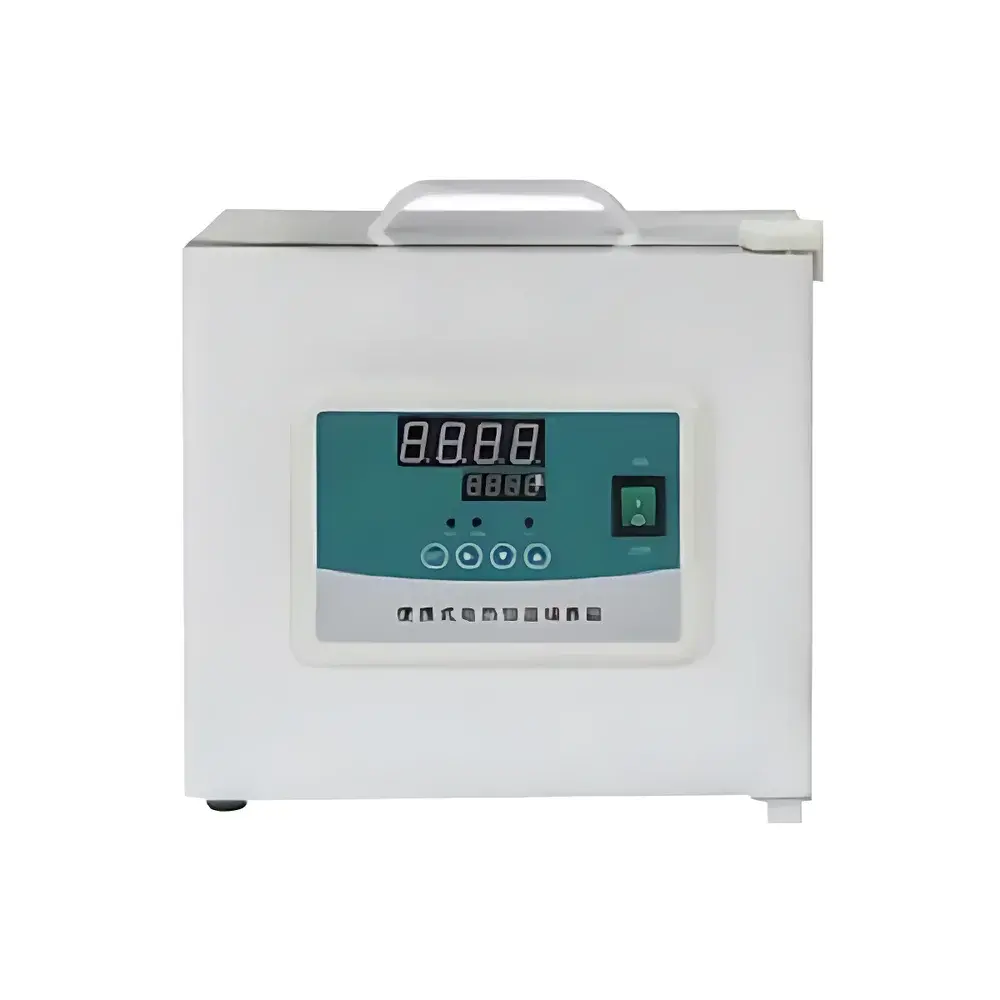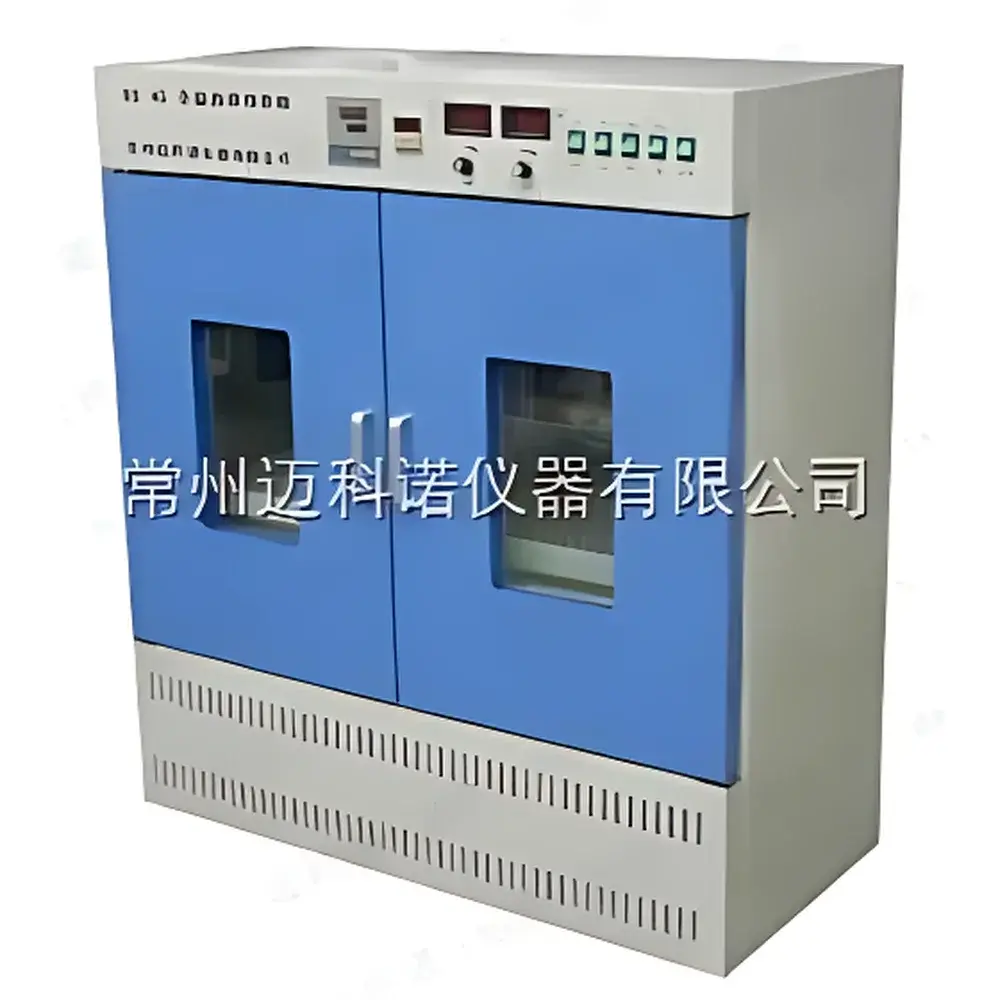
MKN BS-4G Digital Display Orbital Shaking Incubator
| Brand | MKN |
|---|---|
| Model | BS-4G |
| Type | Orbital Shaking Incubator |
| Temperature Range | 5–50 °C |
| Temperature Uniformity | ±1 °C |
| Oscillation Speed | 0–300 rpm (adjustable) |
| Orbit Diameter | 20 mm |
| Capacity | 480 L (4 independent shaking decks) |
| Heating Power | 800 W |
| Compressor Power | 180 W |
| Power Supply | AC 220 V, 50 Hz |
| External Dimensions | 1440 × 770 × 1700 mm |
| Chamber Material | Stainless Steel (304) |
| Insulation | Polyurethane foam (in-situ foamed) |
| Air Circulation | Forced-air convection with optimized ducting |
| Compliance | Designed per GB/T 23927–2009 (Chinese National Standard for Laboratory Shaking Incubators), compatible with GLP-aligned workflows |
Overview
The MKN BS-4G Digital Display Orbital Shaking Incubator is an integrated laboratory instrument engineered for precise temperature-controlled cultivation of microbial, cellular, and biochemical samples under continuous orbital agitation. It combines a dual-mode thermoregulation system—capable of both heating and refrigeration—with a robust mechanical shaker platform, enabling stable incubation across physiologically relevant temperatures (5–50 °C) while maintaining uniform thermal distribution (±1 °C) throughout the 480 L working chamber. The unit operates on the principle of forced-air convection, utilizing an internal airflow duct system to minimize thermal gradients and ensure reproducible growth conditions. Its orbital motion mechanism—featuring a 20 mm diameter circular trajectory and continuously variable speed control (0–300 rpm)—supports oxygen transfer optimization in liquid cultures without introducing shear stress associated with reciprocating or eccentric agitation. This architecture makes the BS-4G suitable for applications requiring high-fidelity environmental replication, including strain propagation, enzyme expression studies, and aerobic fermentation process development.
Key Features
- Four independently configurable shaking decks (BS-4G configuration), each supporting standardized vessel arrangements: up to 4 × 16 mm × 200 mm test tubes, 4 × 15 × 100 mL flasks, or 4 × 9 × 200 mL flasks.
- High-efficiency thermal management: stainless steel (AISI 304) inner chamber; 80 mm-thick polyurethane insulation applied via in-situ foaming for low thermal transmittance and enhanced ambient interference resistance.
- Dual-stage climate control: PTC heating element (800 W) achieves 50 °C from –5 °C ambient; sealed R134a refrigeration circuit (180 W compressor) maintains 5 °C at 32 °C ambient.
- Microprocessor-based PID temperature controller with LED digital display and real-time setpoint/actual value readout—calibration traceable to NIST-traceable reference standards.
- Universal spring-loaded flask clamping system accommodates varied vessel geometries and enables rapid reconfiguration for comparative experimental designs.
- Safety-certified operation: overtemperature cut-off, motor overload protection, door-open alarm, and automatic restart suppression after power interruption.
Sample Compatibility & Compliance
The BS-4G supports standard microbiological and cell culture vessels—including Erlenmeyer flasks, test tubes, and multi-well plates—within defined load limits per deck. Chamber geometry and airflow design comply with GB/T 23927–2009 requirements for laboratory shaking incubators, addressing thermal stability, vibration isolation, and electromagnetic compatibility. While not certified to ISO/IEC 17025 or FDA 21 CFR Part 11 out-of-the-box, its digital temperature logging capability (via optional RS-232/USB interface) permits integration into validated environments where electronic records are required under GLP or GMP frameworks. All materials in contact with the sample chamber meet USP Class VI biocompatibility criteria for stainless steel and food-grade silicone gaskets.
Software & Data Management
The BS-4G operates via embedded firmware with local parameter storage (up to 10 user-defined protocols). Optional data acquisition modules enable time-stamped export of temperature and speed profiles to CSV format for external analysis. When interfaced with laboratory information management systems (LIMS), the unit supports audit trail generation for critical parameters—including setpoint changes, runtime duration, and fault events—facilitating compliance with internal quality procedures and regulatory review. Firmware updates are delivered via secure USB flash drive; no cloud connectivity or remote access functionality is implemented, preserving network integrity in regulated laboratories.
Applications
- Microbial growth kinetics studies under controlled aeration and thermal conditions.
- Recombinant protein expression in E. coli and yeast using temperature-inducible promoters.
- Environmental microbiology assays involving soil slurry enrichment or wastewater biomass cultivation.
- Pharmaceutical stability testing of liquid formulations under agitated, temperature-cycled conditions.
- Cell line expansion for bioprocess development where oxygen transfer rate (OTR) must be decoupled from impeller geometry constraints.
- Educational laboratories conducting comparative fermentation experiments across multiple parallel conditions.
FAQ
What is the maximum allowable load per shaking deck?
Each deck supports up to 4 × 200 mL flasks (total 800 mL volume per deck) at ≤300 rpm. Load imbalance exceeding 5% between opposing fixtures may trigger automatic speed reduction.
Is humidity control available on this model?
No. The BS-4G does not include active humidification or dehumidification subsystems. For moisture-sensitive applications, supplemental desiccants or saturated salt solutions may be placed inside the chamber.
Can the unit be validated for IQ/OQ/PQ protocols?
Yes. Factory documentation includes as-delivered temperature mapping reports (per ASTM E2874) and mechanical performance verification. Users may perform operational qualification using calibrated PT100 probes and tachometers aligned to ISO/IEC 17025-accredited standards.
Does the device support external triggering or programmable ramping?
No. Ramp-and-soak profiles and external TTL triggers are not supported in the base firmware. These functions require third-party PLC integration via dry-contact relay outputs.
What maintenance intervals are recommended?
Compressor oil inspection every 24 months; condenser coil cleaning quarterly; door gasket integrity check semiannually; annual calibration of temperature sensor against a certified reference thermometer.