
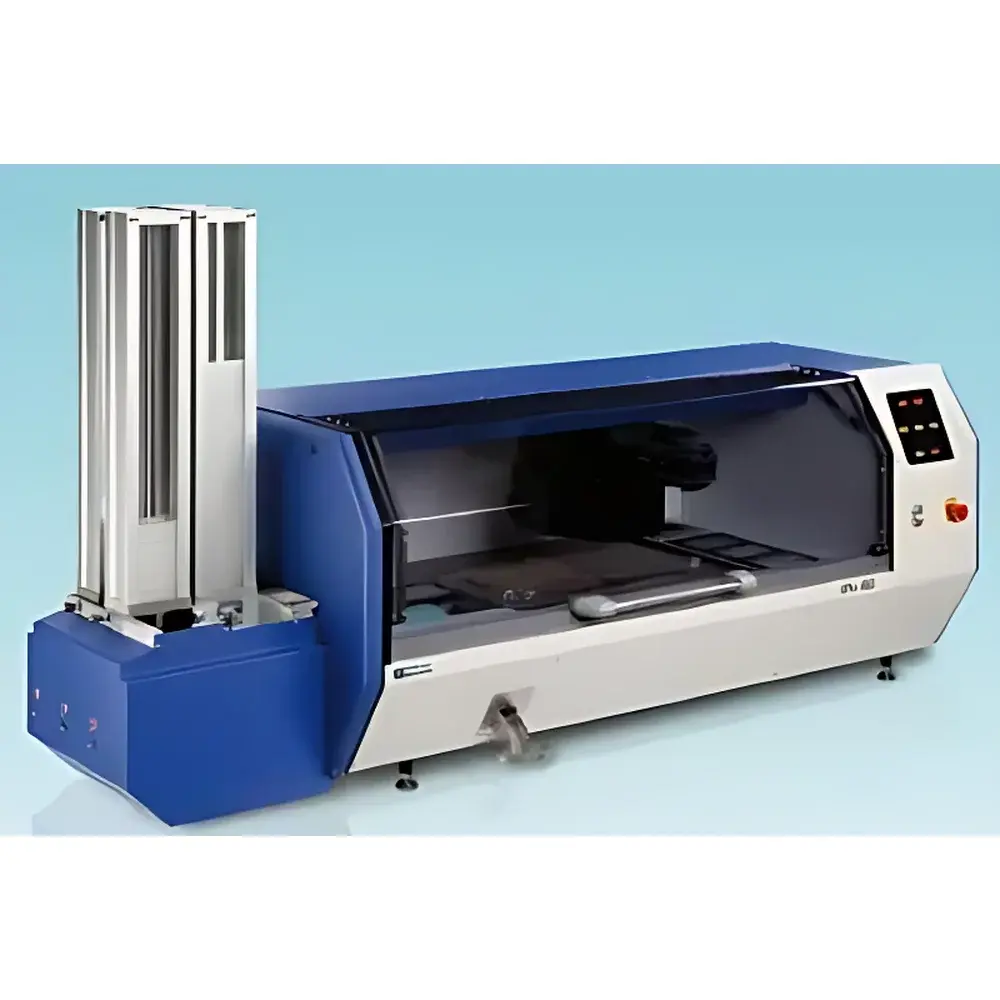
Molecular Devices QPix 400 Automated Microbial Colony Picking System
| Brand | Molecular Devices |
|---|---|
| Origin | United Kingdom |
| Manufacturer Type | Original Equipment Manufacturer (OEM) |
| Product Category | Imported Instrument |
| Model | QPix 400 |
| Instrument Type | Fully Automated Microbial Colony Screening and Picking System |
| Pricing | Available Upon Request |
Overview
The Molecular Devices QPix 400 is a high-precision, fully automated colony picking system engineered for life science laboratories requiring rigorous, reproducible, and traceable microbial clone selection. Unlike manual or semi-automated methods, the QPix 400 integrates high-resolution brightfield and multi-channel fluorescence imaging with deterministic robotic colony isolation—enabling quantitative, objective, and application-driven screening of bacterial, phage, and yeast colonies directly from solid agar media. Its core operational principle relies on digital image analysis of colony morphology and fluorescence intensity, followed by precise, air-driven pin-based physical retrieval under closed-loop height calibration. Designed for GLP-compliant workflows, the system supports end-to-end process automation—from plate inoculation (QPix 460 variant only) and colony imaging to picking, replication, re-arraying, and full digital audit trail generation.
Key Features
- High-throughput colony picking: Up to 3,000 colonies/hour in brightfield mode; up to 2,000 colonies/hour under fluorescence illumination, with >98% picking accuracy and near-zero cross-contamination risk.
- Adaptive Z-height calibration: Integrated ultrasonic agar thickness sensor dynamically adjusts pick height per colony location to ensure consistent biomass retrieval across variable agar depths.
- Modular pin tooling: Air-driven 24-, 96-, and 384-pin heads compatible with diverse colony types—including E. coli, Bacillus, Pseudomonas, and filamentous fungi—optimized for viability and transfer efficiency.
- Dedicated pin drying protocol: Proprietary halogen lamp–assisted desiccation minimizes carryover between picks and eliminates residual moisture-induced plating artifacts.
- Application-specific recognition algorithms: Software modules support morphology-based selection (compactness, aspect ratio, size, proximity) and fluorescence-intensity–gated picking (e.g., GFP/RFP/mCherry expression levels).
- Full digital traceability: Every operation—including plate coating, imaging acquisition, colony selection logic, pick coordinates, destination mapping, and re-array history—is timestamped, user-logged, and exportable in CSV/JSON formats.
Sample Compatibility & Compliance
The QPix 400 accommodates standard microbiological growth formats including QTray™ plates (96-, 384-, and 1536-well equivalents), Petri dishes, and custom agar formats up to 150 mm diameter. It supports aerobic and anaerobic isolates grown on LB, SOC, TB, M9, and selective media containing antibiotics, chromogenic substrates, or inducible promoters. The system complies with ISO/IEC 17025 requirements for testing laboratories and supports FDA 21 CFR Part 11–compliant electronic records when deployed with validated software configuration and access-controlled user roles. All mechanical and optical components meet CE and UKCA safety directives for laboratory instrumentation.
Software & Data Management
QPix Control Software v5.x provides a unified interface for experimental design, image acquisition, algorithmic colony classification, and workflow orchestration. Predefined templates align with common applications—including phage display library screening, directed enzyme evolution, synthetic biology construct validation, and transformation efficiency assessment. Image metadata (exposure time, gain, filter set, focus stack) are embedded in TIFF files. Batch processing enables parallel analysis of multiple plates with configurable pass/fail thresholds. Audit logs record all parameter changes, user actions, and instrument status events—supporting internal quality audits and regulatory inspections. Data exports integrate natively with LIMS platforms via RESTful API or flat-file ingestion.
Applications
- Protein engineering & directed evolution: Quantitative fluorescence-guided selection of clones expressing functional variants of enzymes, antibodies, or biosensors.
- Synthetic biology: High-fidelity retrieval of engineered microbial strains from combinatorial libraries, enabling rapid iteration of genetic circuits.
- Phage display screening: Automated identification and picking of E. coli colonies harboring phage particles displaying target-binding peptides or scFv fragments.
- Library construction & management: Replication, gridding, and re-arraying of clone collections into master plates, storage plates, or assay-ready arrays.
- Microbial limit testing support: Objective enumeration and isolation of viable colonies from environmental or pharmaceutical samples for downstream identification or sequencing.
FAQ
Does the QPix 400 support liquid handling?
No—the QPix 400 is dedicated to solid-phase colony imaging and picking. Liquid dispensing and plate coating functions are available exclusively on the QPix 460 model.
Can the system distinguish between satellite colonies and primary isolates?
Yes—morphological filters (e.g., minimum inter-colony distance, convex hull area, and edge sharpness) can be configured to exclude satellites during selection.
Is fluorescence calibration traceable to NIST standards?
Fluorescence intensity values are reported as relative units (RFU) calibrated against onboard reference standards; absolute quantification requires user-defined calibration curves using known fluorophore concentrations.
How is contamination prevented between picks?
Each pin undergoes a validated three-stage cleaning cycle: ethanol rinse, air purge, and halogen drying—verified by post-pick imaging and colony growth validation studies.
Can the software be integrated with enterprise LIMS or ELN systems?
Yes—QPix Control Software supports secure data export via SFTP and programmatic access through a documented REST API, enabling bidirectional synchronization with major LIMS and ELN platforms.





