
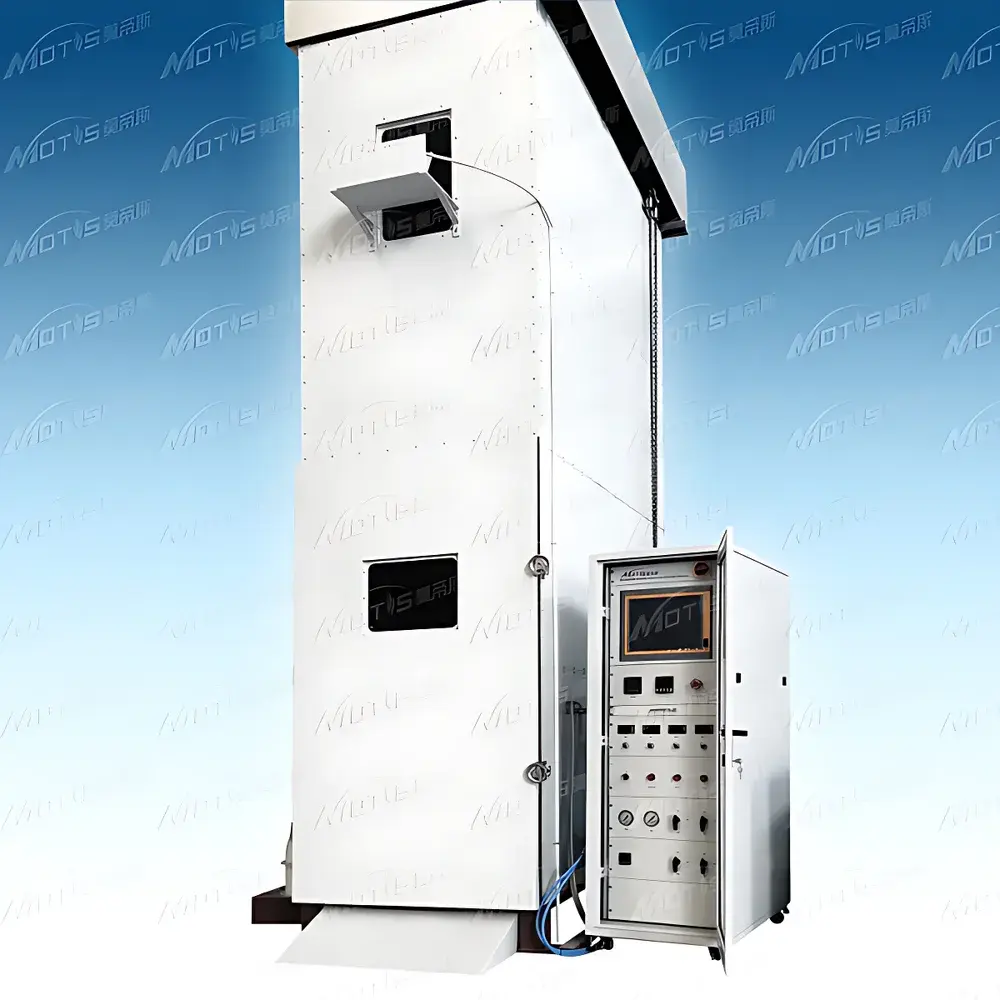
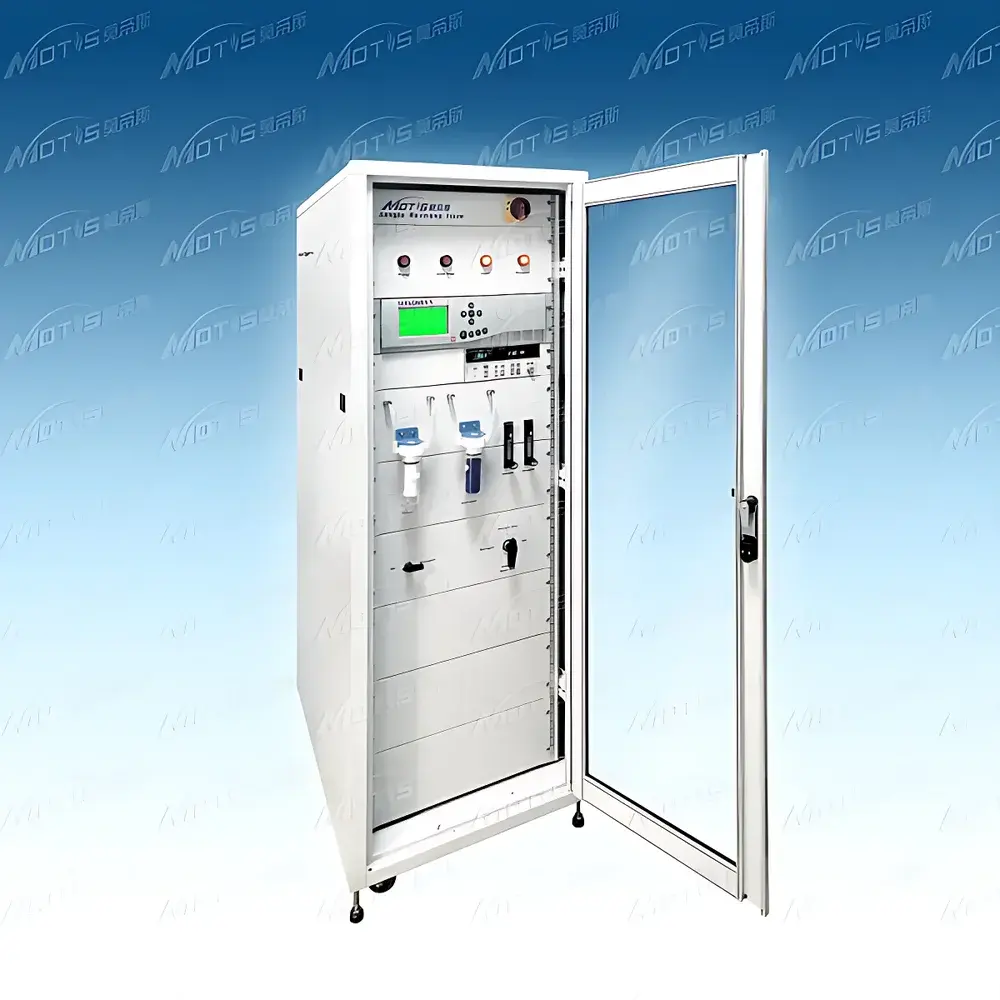
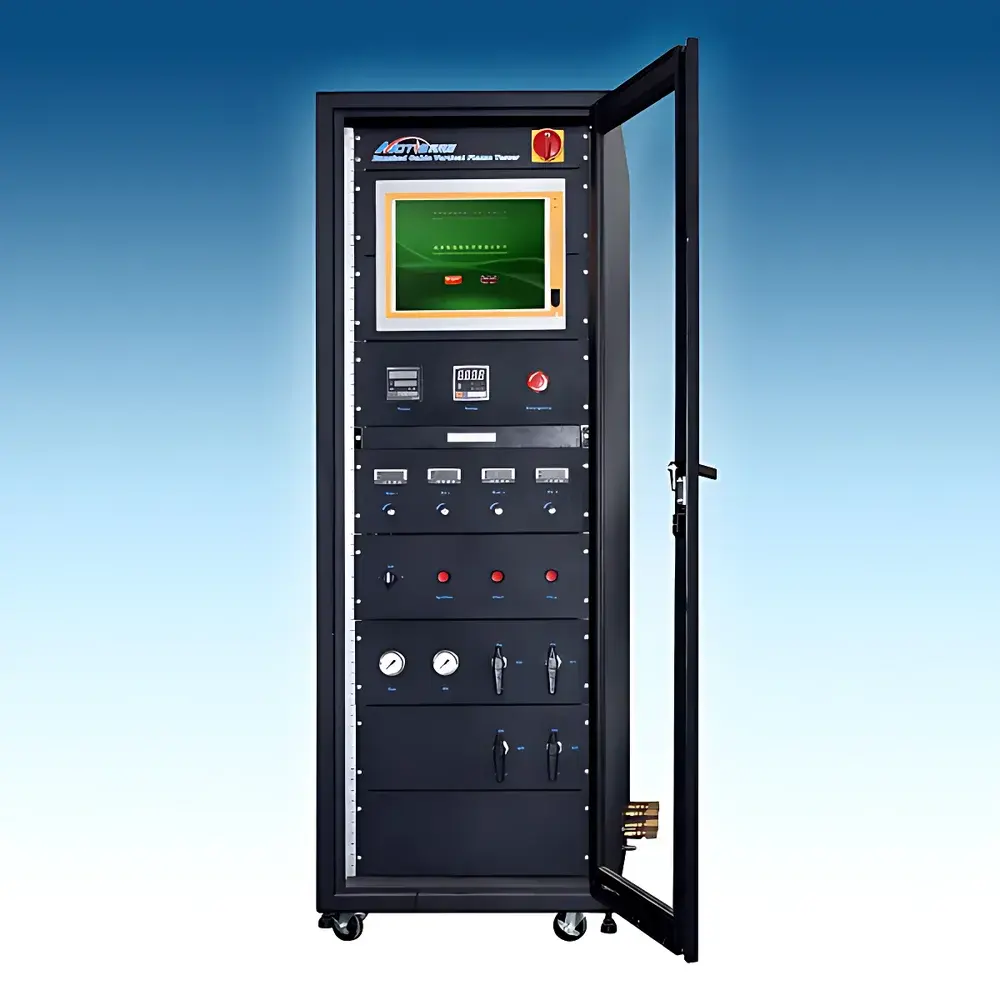
MOTIS FIPEC Cone Calorimeter System for Cable Fire Performance Testing
| Brand | MOTIS |
|---|---|
| Model | FIPEC |
| Origin | Jiangsu, China |
| Category | Cone Calorimeter / Combustion Analyzer for Cables |
| Compliance | IEC 60332-3, ISO 5660-1, ASTM E1354, GB/T 18380.33–2022 |
| Heat Flux | 25–50 kW/m² (adjustable) |
| Oxygen Analysis | Paramagnetic (Shaw-Meter 4100) |
| CO/CO₂ Analysis | NDIR |
| Smoke Measurement | White-light obscuration (0.1–2.9 OD range) |
| Data Acquisition | Advantech DAQ board with 16-bit resolution, 100 Hz sampling |
| Calibration | Dual-flux (22.5 kW & 30 kW) via propane MFCs |
| Exhaust Flow Control | PID-regulated centrifugal blower (0.025–0.08 m³/s) |
| Temperature Sensing | OMEGA K-type thermocouples (±0.5 °C accuracy) |
| Gas Sampling | PTFE-lined probe + CAST diaphragm pump + cold trap dehydration |
| Software | FIPEC-CAL v3.2 (ISO 5660-1 compliant, GLP audit trail, CFR Part 11 ready) |
Overview
The MOTIS FIPEC Cone Calorimeter System is a purpose-engineered combustion testing platform designed specifically for quantitative fire performance evaluation of bundled electrical cables and optical fiber cables under standardized intermediate-scale fire conditions. Based on the fundamental principles of oxygen consumption calorimetry—where heat release rate (HRR) is calculated from measured oxygen depletion in the exhaust stream—the system complies strictly with ISO 5660-1, IEC 60332-3, ASTM E1354, and GB/T 18380.33–2022. Unlike small-scale flame spread tests, the FIPEC replicates realistic cable tray configurations by mounting specimens vertically on a standardized steel ladder, exposing them to controlled radiant flux (25–50 kW/m²) and/or piloted ignition using calibrated propane burners (22.5 kW and 30 kW modes). This configuration enables direct measurement of critical fire growth parameters including peak HRR, time-to-ignition (TTI), total heat release (THR), fire growth rate index (FIGRA), smoke production rate (SPR), and total smoke production (TSP)—all traceable to SI units and certified reference gases.
Key Features
- Integrated conical heater with precision-controlled radiant flux (25–50 kW/m²), independently verified per ISO 5660-1 Annex A calibration procedures
- Dual-propane burner assembly with mass flow controllers (MFCs) enabling repeatable 22.5 kW and 30 kW flame calibration per IEC 60332-3 Annex B
- Paramagnetic oxygen analyzer (Shaw-Meter 4100) and dual-channel NDIR CO/CO₂ analyzers delivering ±0.1% O₂ and ±2% full-scale gas concentration accuracy
- White-light smoke density measurement system featuring tungsten-halogen source and silicon photodiode detector, calibrated with five neutral-density filters (optical density range: 0.1–2.9)
- High-fidelity data acquisition architecture: Advantech 16-bit DAQ board sampling at 100 Hz, synchronized with thermocouple (OMEGA K-type), pressure transducer, and gas analyzer outputs
- Corrosion-resistant gas sampling train: PTFE-lined probe, CAST diaphragm pump, refrigerated cold trap (−10 °C), and stainless-steel manifold ensuring integrity during halogenated cable testing
- Exhaust flow regulation via PID-controlled centrifugal blower (0.025–0.08 m³/s), maintaining constant draft velocity across test durations up to 30 minutes
Sample Compatibility & Compliance
The FIPEC accommodates bundled cable configurations up to 24 mm diameter, mounted on a 1.2 m tall, 30° inclined steel ladder conforming to IEC 60332-3-10. Specimen lengths are adjustable between 3.5 m and 4.0 m to meet regional standard requirements. The system supports both PVC-based and low-smoke zero-halogen (LSZH) cable compounds, including cross-linked polyethylene (XLPE), ethylene propylene rubber (EPR), and fluorinated ethylene propylene (FEP). All hardware and software functions comply with ISO/IEC 17025 documentation requirements. Instrument calibration records—including cone heater flux mapping, gas analyzer span checks, and flowmeter verification—are stored within the software’s secure audit trail, satisfying GLP and FDA 21 CFR Part 11 electronic record retention mandates.
Software & Data Management
FIPEC-CAL v3.2 is a Windows-based application developed in accordance with ISO 5660-1 Annex D computational algorithms. It performs real-time HRR calculation using the oxygen consumption method (ΔHc = 13.1 kJ/g O₂), integrates SPR from light extinction data using Beer–Lambert law, and computes FIGRA as peak HRR divided by time-to-peak-HRR. The software includes built-in calibration wizards for cone heater flux, gas analyzers, and mass flow controllers. All raw and processed data are saved in HDF5 format with embedded metadata (operator ID, sample ID, ambient conditions, calibration timestamps). Export options include CSV, PDF test reports (with digital signature), and XML for LIMS integration. Audit logs record every user action—including parameter changes, calibration events, and report generation—with immutable timestamps.
Applications
This system serves as a primary qualification tool for cable manufacturers seeking compliance with building codes (e.g., NFPA 262, EN 50399), railway rolling stock standards (EN 45545-2), and marine applications (IMO FTP Code). It supports R&D efforts in flame-retardant polymer formulation, where HRR reduction correlates directly with char formation kinetics and condensed-phase inhibition mechanisms. In forensic fire investigation, FIPEC-derived TTI and FIGRA values help reconstruct ignition scenarios involving cable trays in data centers or high-rise vertical risers. Regulatory bodies use its THR and TSP outputs to establish fire load thresholds for compartmentalization design in telecom infrastructure.
FAQ
What standards does the FIPEC system fully support?
ISO 5660-1 (heat release), IEC 60332-3 (bundle flame spread), ASTM E1354 (oxygen consumption calorimetry), and GB/T 18380.33–2022 (Chinese cable fire test standard).
Can the system be used for single-cable testing?
Yes—the software includes a dedicated “Single Cable Mode” that disables ladder mounting constraints and adjusts airflow profiles per ASTM D5424.
Is the gas analysis system suitable for halogenated cable emissions?
Yes—PTFE-lined sampling path, cold trap dehydration, and corrosion-resistant CAST pump ensure stable operation during HCl/HBr evolution testing.
How is data integrity ensured for regulatory submissions?
All measurements are timestamped, digitally signed, and stored with full audit trail per 21 CFR Part 11; calibration certificates are embedded in HDF5 files.
What maintenance intervals are recommended for long-term accuracy?
Oxygen sensor recalibration every 6 months; gas analyzer span checks monthly; cone heater flux verification before each test series per ISO 5660-1 Annex A.



