
MOTIS FRF Full-Scale Room Corner Fire Test Apparatus
| Brand | MOTIS |
|---|---|
| Model | FRF |
| Category | Full-Scale Fire Reaction Testing System |
| Compliance | ISO 9705:2003, GA111, GB/T 27904, GB/T 25207, GB 20286 Annex B & C |
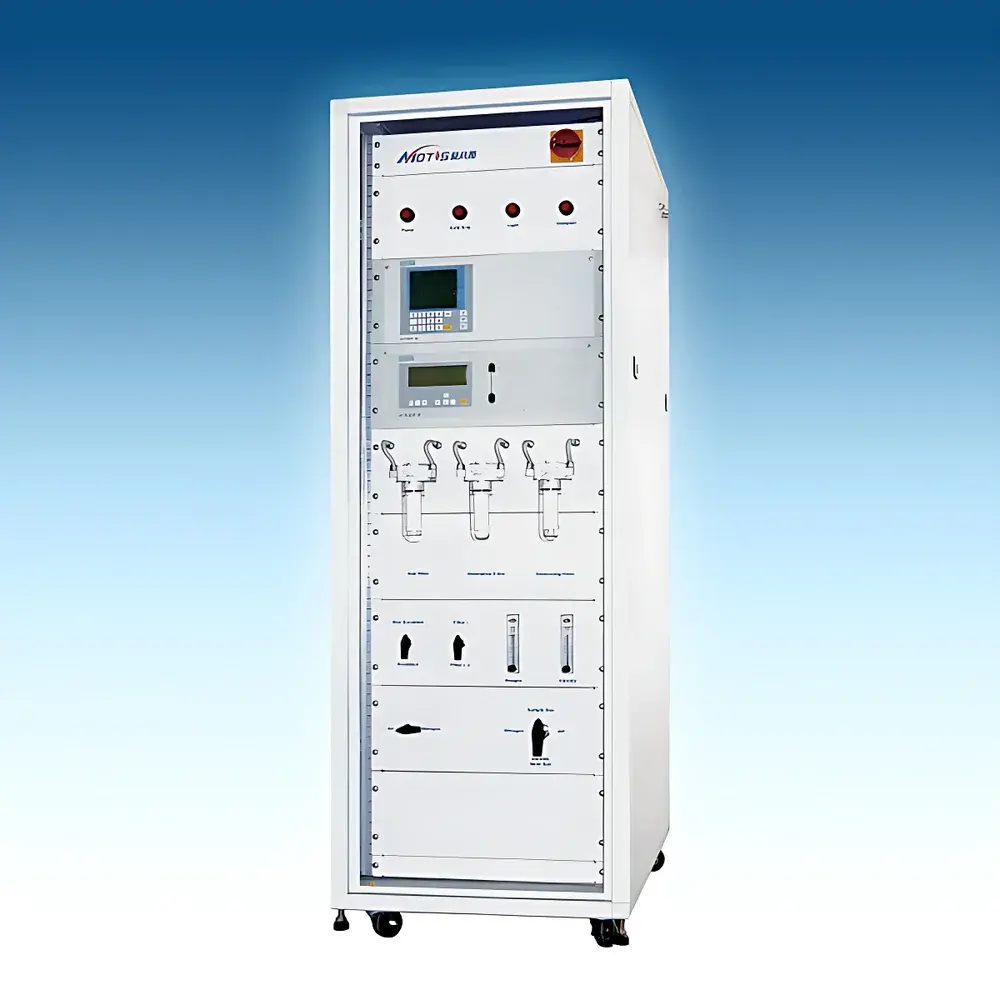
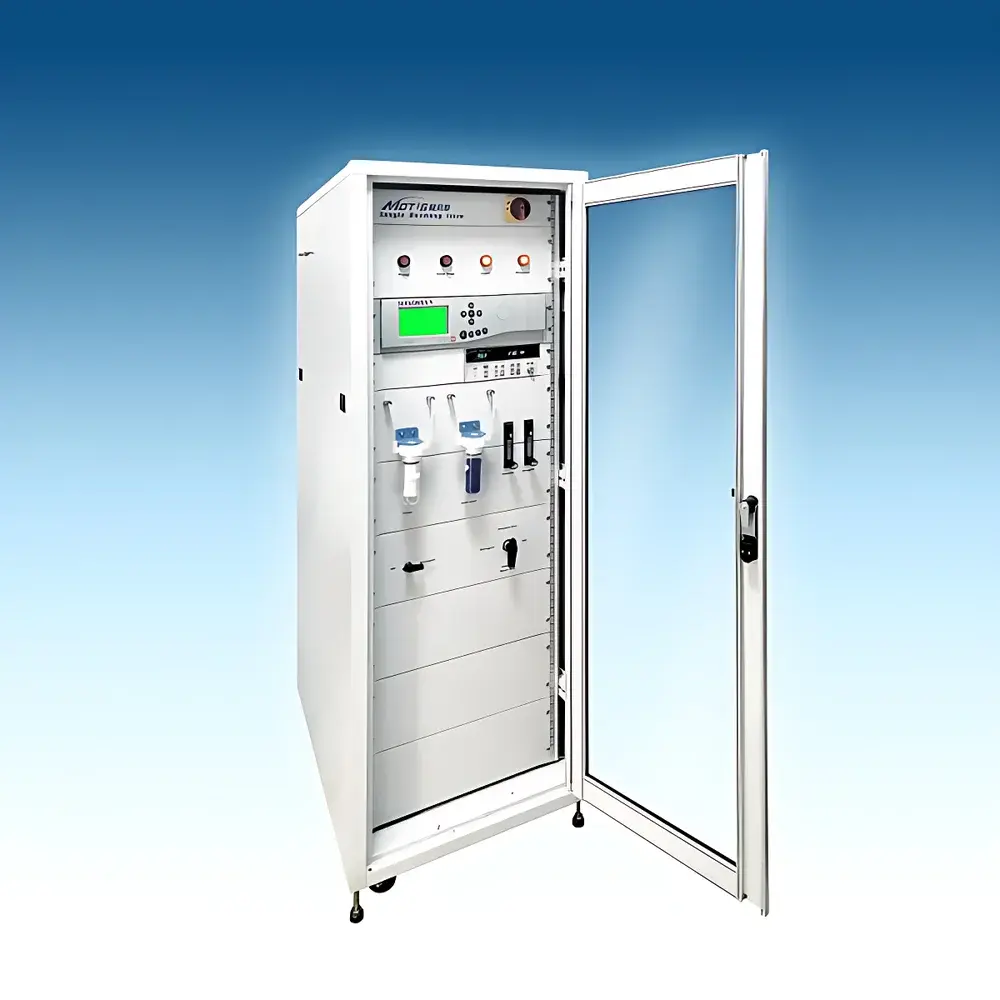
| Gas Analyzers | Paramagnetic O₂ (0–25% vol), NDIR CO₂ (0–10% vol), NDIR CO (0–1% vol) |
| Data Acquisition | 16-bit analog I/O, K-type thermocouples (−200 °C to +1500 °C), dual-head sampling pump (≤30 m transfer), chilled dew point trap, integrated control & reporting software |
| Key Outputs | Peak/average HRR & SPR (0–2/10/12/20 min), mass flow (door & duct), smoke yield, CO/CO₂ generation, flashover detection & timing, surface temperature profiles, vertical gas temperature stratification at doorway |
Overview
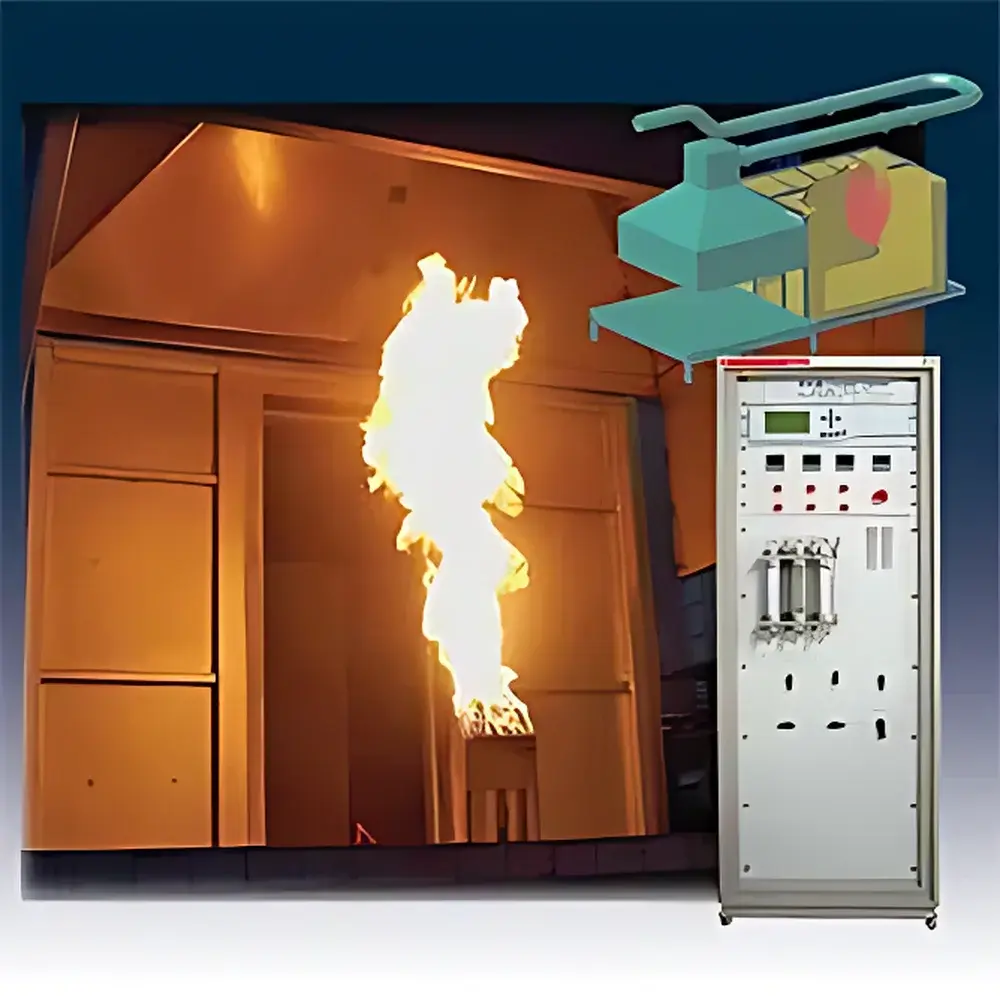
The MOTIS FRF Full-Scale Room Corner Fire Test Apparatus is an engineered fire reaction testing system designed in strict accordance with ISO 9705:2003 — the internationally recognized standard for evaluating the contribution of building interior finishes and wall/ceiling linings to fire growth under realistic room-fire conditions. Unlike bench-scale methods such as cone calorimetry, the FRF apparatus replicates a standardized corner-ignited fire scenario within a 3.6 m × 2.4 m × 2.4 m full-scale test room, where combustion initiates at the floor-wall-ceiling junction using a propane burner delivering a nominal 100 kW thermal input. This configuration enables quantification of real-world fire dynamics—including heat release rate (HRR), smoke production rate (SPR), toxic gas evolution (CO, CO₂), mass loss, flame spread, and flashover onset—under controlled ventilation conditions simulating typical residential or commercial compartment geometry.
Key Features
- Structurally rigid, insulated test chamber fabricated from non-combustible materials, conforming to ISO 9705 dimensional and construction specifications.
- Integrated paramagnetic oxygen analyzer (response time T90 ≤ 3.5 s; zero drift < 0.5% of FS/month; linearity ±1% FS) for precise stoichiometric calculation of HRR via oxygen consumption principle.
- Dual NDIR analyzers for CO₂ (0–10% v/v) and CO (0–1% v/v), employing single-beam alternating infrared detection with T90 < 30 s at 1.2 L/min sample flow and repeatability ±1% of FS.
- Automated chilled dew point trap with PID temperature controller ensures consistent moisture removal prior to gas analysis, minimizing spectral interference and sensor drift.
- High-reliability dual-head diaphragm sampling pump capable of transporting combustion effluent over distances up to 30 m to remote analytical instrumentation without significant lag or condensation.
- Modular 16-bit data acquisition system featuring synchronized K-type thermocouple inputs (−200 °C to +1500 °C), analog voltage/current channels, digital I/O, and network-enabled real-time logging.
- Preconfigured test sequencing and automated report generation compliant with ISO 9705 Clause 10 reporting requirements—including time-resolved HRR, SPR, mass flow, gas concentrations, and thermal stratification profiles.
Sample Compatibility & Compliance
The FRF apparatus accommodates full-size specimens (typically ≥ 2.4 m height × 1.2 m width) mounted on three interior surfaces (two walls and ceiling) to replicate actual installation conditions. Specimens may include wallpapers, wood-based panels, textile wall coverings, acoustic foams, insulation composites, and coated gypsum boards. All test procedures follow ISO 9705:2003 protocols for ignition source calibration, airflow control, environmental conditioning (23 °C ± 2 °C, 50% RH ± 5%), and measurement uncertainty management. The system also supports national regulatory verification per China’s GA111 (Fire Performance Classification of Building Materials), GB/T 27904 (Fire Test Methods for Surface Products), GB/T 25207 (Fire Test for Wall and Ceiling Linings), and GB 20286 Annex B & C (Fire Safety Requirements for Public Assembly Occupancies). Data traceability meets GLP-aligned documentation standards, with audit-ready calibration logs and instrument metadata embedded in every test record.
Software & Data Management
The MOTIS FRF Control & Analysis Suite provides real-time visualization of all measured parameters—including thermocouple arrays (wall, ceiling, doorway), exhaust duct velocity and temperature profiles, gas concentration trends, and calculated HRR/SPR curves. The software implements automatic flashover detection based on ISO 9705-defined criteria (e.g., sustained ceiling-layer temperature ≥ 600 °C and/or radiant heat flux ≥ 20 kW/m² at floor level). All raw and processed data are stored in vendor-neutral CSV and HDF5 formats, with optional export to ASTM E1354 or ISO 5660-1 compatible structures. Audit trails record user actions, calibration events, and configuration changes in compliance with 21 CFR Part 11 principles. Reporting modules generate PDF outputs containing mandatory metrics: peak and average HRR/SPR across four time intervals (0–2, 0–10, 0–12, 0–20 min), CO/CO₂ yields, smoke obscuration integral, doorway mass flow and vertical temperature distribution, surface temperature histories, and pass/fail assessment against classification thresholds defined in GB 20286.
Applications
- Regulatory fire safety certification of interior finish materials for public buildings, transportation infrastructure, and high-rise residential construction.
- Comparative evaluation of flame-retardant treatments, intumescent coatings, and composite material systems under realistic compartment fire scenarios.
- Validation of computational fire models (e.g., CFAST, FDS) using benchmark experimental datasets generated under ISO 9705 conditions.
- Development and optimization of fire suppression strategies, including early-warning smoke detection algorithms calibrated to real smoke generation kinetics.
- Support for fire investigation reconstructions requiring quantitative validation of ignition-to-flashover timelines and thermal exposure mapping.
FAQ
What distinguishes the FRF apparatus from bench-scale calorimeters like the cone calorimeter?
The FRF evaluates fire behavior at full scale in a geometrically representative compartment, capturing ventilation-controlled combustion, flame impingement effects, and thermal feedback mechanisms absent in small-sample tests.
Is the system suitable for testing curved or irregularly shaped wall assemblies?
Yes—custom mounting frames and adjustable anchoring fixtures allow secure installation of non-planar substrates while maintaining ISO 9705-compliant specimen orientation and gap tolerances.
How is calibration traceability maintained for gas analyzers and thermocouples?
All sensors undergo quarterly factory-traceable calibration using NIST-certified reference gases and fixed-point thermocouple calibrators; certificates and deviation reports are archived with each test dataset.
Can the system interface with third-party data acquisition or modeling software?
Yes—the DAQ system exposes OPC UA and TCP/IP APIs for bidirectional integration with MATLAB, Python-based analysis pipelines, or enterprise LIMS platforms.
Does the FRF support modified ventilation configurations beyond ISO 9705 baseline?
Yes—optional motorized damper controls and differential pressure sensors enable systematic study of ventilation-limited fire regimes, including variable door opening scenarios and forced-air injection protocols.
Related Products



