
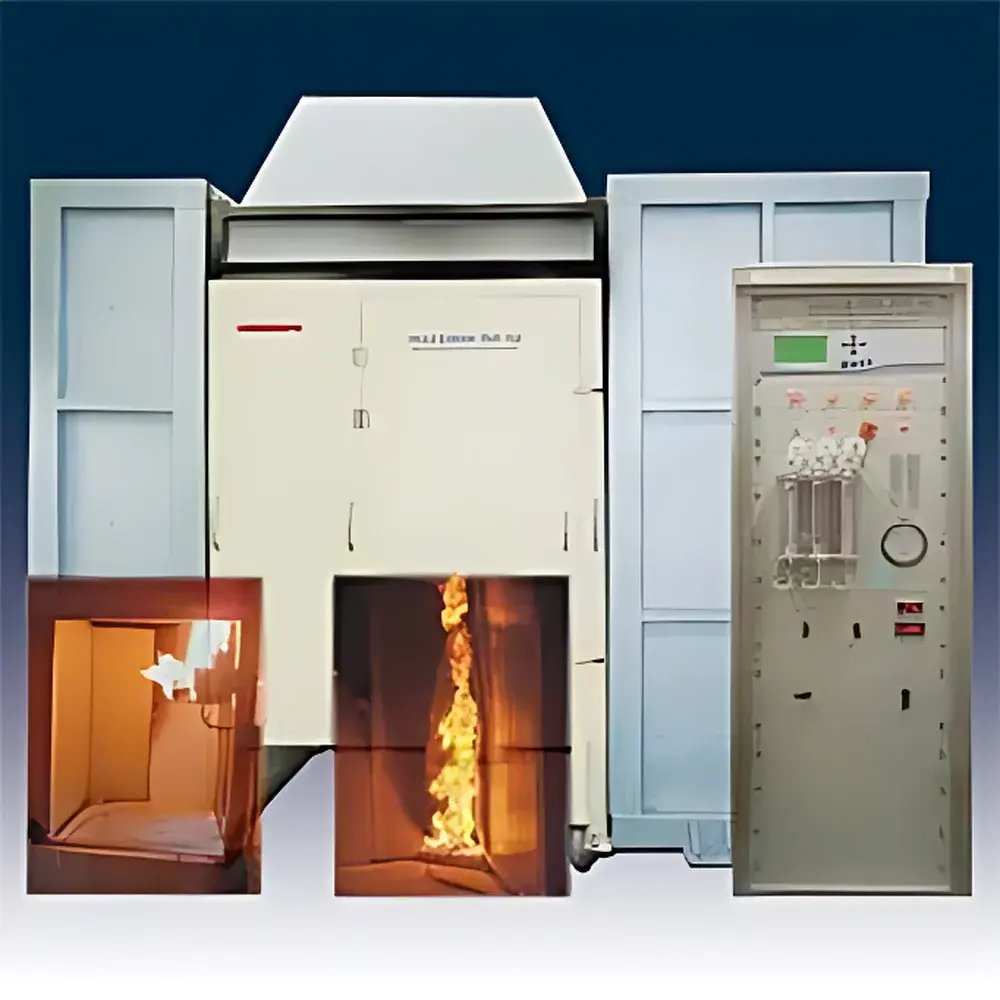
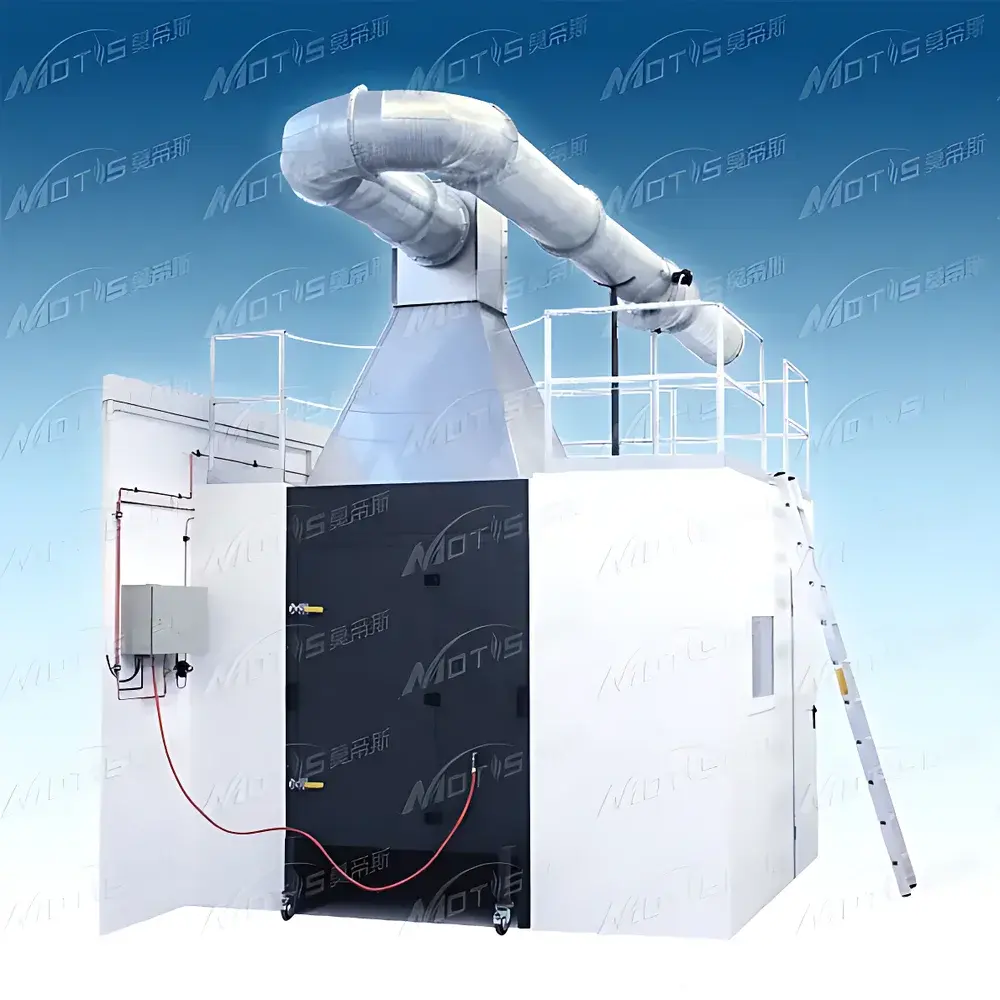
MOTIS SBI Single Burning Item Fire Test System
| Brand | MOTIS |
|---|---|
| Origin | Jiangsu, China |
| Manufacturer Type | Authorized Distributor |
| Country of Origin | China |
| Model | SBI |
| Pricing | Available Upon Request |
| Compliance | EN 13823, GB/T 20284 |
| Measurement Principle | Oxygen Consumption Calorimetry + Optical Smoke Density Analysis + Visual Flame Spread Observation |
Overview
The MOTIS SBI Single Burning Item Fire Test System is a fully integrated, standards-compliant bench-scale fire testing apparatus engineered for the quantitative assessment of non-load-bearing building products’ reaction-to-fire performance under controlled radiant and convective exposure. Based on the oxygen consumption calorimetry principle—where heat release rate (HRR) is calculated from measured oxygen depletion in the exhaust stream—the system delivers traceable, reproducible fire data essential for regulatory classification and material development. Complementing thermal metrics, it simultaneously quantifies smoke production via optical attenuation (laser-based extinction coefficient), evaluates lateral flame spread (LFS) through high-resolution video monitoring, and documents flaming droplet formation per EN 13823 Annex A. The test chamber (3 m × 3 m × 2.4 m) features a ceiling-mounted extraction hood connected to a conditioned sampling duct, ensuring stable flow dynamics and minimizing stratification effects during 20-minute exposures.
Key Features
- Full-featured EN 13823 / GB/T 20284 compliance with hardware and software alignment to Clause 6–9 requirements, including burner geometry (31 kW propane corner burner, 250 mm × 250 mm × 80 mm), sample carriage design, and instrumentation tolerances.
- Dual-mode gas analysis architecture: Siemens OXYMAT 61 paramagnetic oxygen analyzer (0–25% O₂, ±1% FS weekly drift, <3 s response) paired with U23 NDIR analyzers for CO (0–1%) and CO₂ (0–10%), all calibrated traceably to ISO 17025-accredited reference gases.
- Integrated data acquisition system capturing synchronized time-series streams from thermocouples (K-type, ±1.5 °C accuracy), differential pressure sensors (±0.5 Pa resolution), optical smoke density meters (650 nm laser, 0–100% obscuration), and mass flow controllers (±1% reading).
- Stainless-steel bidirectional Pitot probe with micro-differential pressure transducer for real-time volumetric flow validation in the exhaust duct—critical for FIGRA (Fire Growth Rate Index) and THR (Total Heat Release) calculation integrity.
- Corrosion-resistant sampling train: PTFE-lined probe assemblies, chilled dew-point trap, gas conditioning module (flow/pressure stabilization), and chemically inert pump ensure long-term reliability when analyzing acidic combustion byproducts (e.g., HCl, HF).
- Pre-validated test software with embedded calibration wizards, automated parameter derivation (FIGRA, SMOGRA, TSP, LFS time-to-edge), audit-trail logging, and export-ready reports compliant with GLP documentation practices.
Sample Compatibility & Compliance
The SBI system accommodates rectangular specimens up to 1.5 m (height) × 1.0 m (width), mounted vertically on a refractory-board-lined trolley with two perpendicular non-combustible backplates. It supports homogeneous and layered composites—including insulation boards, sandwich panels, decorative claddings, and acoustic ceiling materials—provided dimensional and mounting constraints are met. All measurements adhere strictly to EN 13823:2016+A1:2022 Annexes A–F and GB/T 20284–2022, with full traceability to national metrology institutes. Instrumentation uncertainty budgets conform to ISO/IEC 17025:2017 requirements for fire testing laboratories, and raw data files retain unprocessed sensor outputs for third-party reanalysis.
Software & Data Management
The embedded Windows-based control and analysis suite provides real-time visualization of HRR, smoke production rate (SPR), CO yield, and flame front position. Each test generates a timestamped, digitally signed dataset (.csv and proprietary binary format) containing >120 channels sampled at 1 Hz. Calibration records—including zero/span verification logs, thermocouple drift checks, and flowmeter validations—are stored with user ID, date/time, and electronic signature. The software supports 21 CFR Part 11-compliant audit trails, role-based access control (administrator/operator), and report generation aligned with CE marking technical documentation templates. Export options include PDF (with embedded metadata), Excel-compatible tables, and XML for integration into LIMS or enterprise QA systems.
Applications
This system serves fire safety engineers, product certification bodies (e.g., UL, BSI, CNAS-accredited labs), and R&D teams developing construction materials for façade systems, interior linings, and compartmentation elements. Typical use cases include pre-certification screening of mineral wool composites, comparative evaluation of intumescent coatings under identical ignition conditions, root-cause analysis of unexpected flaming droplet behavior in polymer-based panels, and generation of input data for CFD fire modeling (e.g., FDS input parameters: HRRPUA, THR, TSP). Its robust mechanical design and redundant sensor architecture ensure >95% operational uptime in high-throughput testing environments.
FAQ
What standards does the MOTIS SBI system fully support?
EN 13823:2016+A1:2022 and GB/T 20284–2022, including all mandatory instrumentation, procedural, and reporting requirements.
Is the system suitable for ISO 5660-1 cone calorimeter correlation studies?
While not a direct replacement, the SBI’s oxygen consumption methodology and gas analysis architecture enable cross-platform validation studies when combined with complementary cone calorimeter data.
Can the system be upgraded to meet future revisions of EN 13823?
Yes—hardware modularity (e.g., field-replaceable gas modules, firmware-upgradable DAQ) and software versioning ensure backward compatibility and path-to-compliance for anticipated amendments.
What maintenance intervals are recommended for critical components?
Oxygen analyzer calibration every 7 days; smoke laser alignment verification monthly; thermocouple recalibration annually per ISO/IEC 17025; full system performance verification semiannually.
Does the system include provisions for remote diagnostics or service support?
Yes—integrated Ethernet port enables secure remote connection for MOTIS application engineers to perform firmware updates, diagnostic logging, and real-time troubleshooting under customer authorization.



