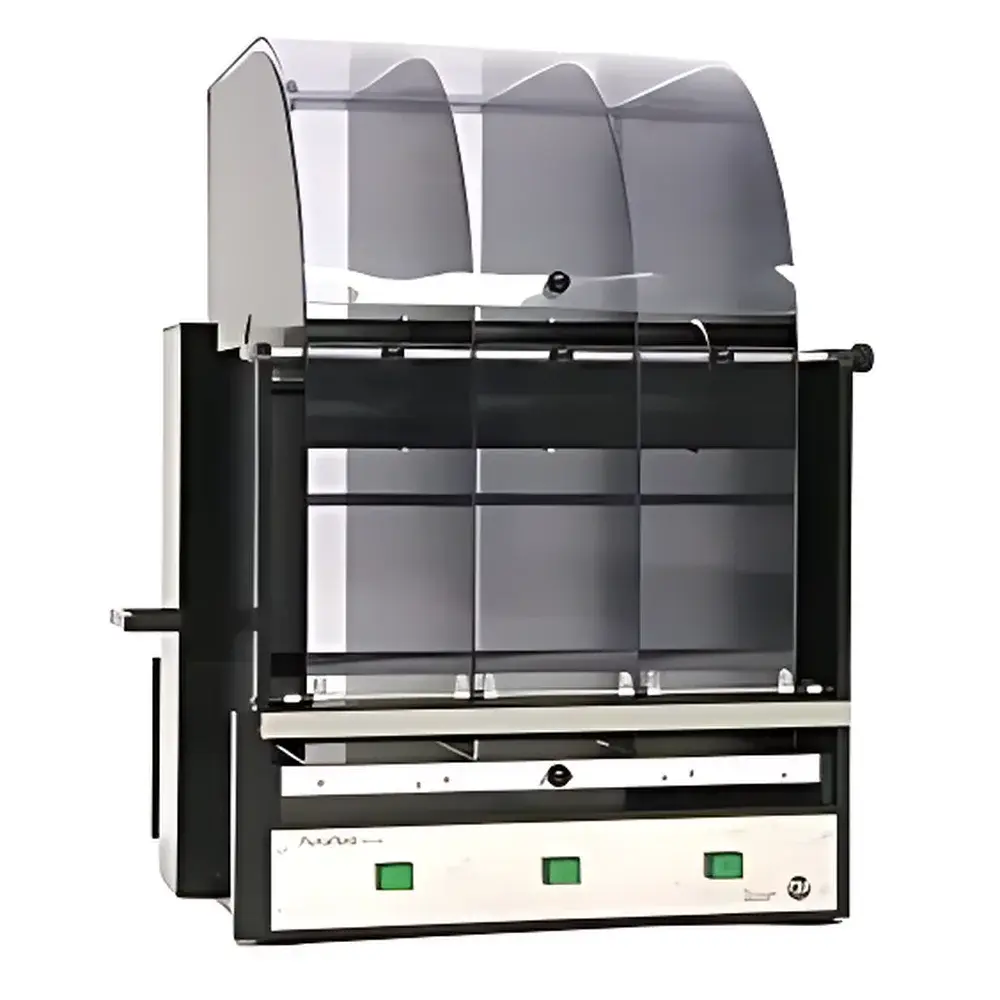
Motor Function & Performance System by TSE Systems
| Brand | TSE Systems |
|---|---|
| Origin | Germany |
| Model | Motor Function & Performance |
| Type | Integrated Behavioral Phenotyping Platform for Rodent Motor Assessment |
| Application Domain | Preclinical Neuroscience, Neurodegeneration Research, Neuromuscular Pharmacology, Toxicology Screening |
Overview
The Motor Function & Performance System by TSE Systems is a modular, research-grade platform engineered for quantitative, objective, and longitudinal assessment of motor behavior in rodents—primarily mice and rats. Grounded in ethologically relevant paradigms and biomechanical measurement principles, the system integrates multiple standardized behavioral assays into a unified hardware-software ecosystem. It does not rely on subjective scoring but instead captures high-fidelity kinematic, force, temporal, and spatial parameters using calibrated sensors, optical tracking, and load-cell technology. Designed for use in academic neuroscience laboratories, CROs, and pharmaceutical R&D units, the platform supports hypothesis-driven investigation of motor deficits associated with Parkinson’s disease, Huntington’s disease, spinal cord injury, peripheral neuropathy, muscular dystrophy, and drug-induced neurotoxicity.
Key Features
- Modular architecture: Interchangeable modules—including MotoRater (automated gait and coordination analysis), Grip Strength Meter (isometric forelimb/hindlimb force quantification), Running Wheel (voluntary activity monitoring with rpm, revolutions, distance, and bout structure), Treadmill System (speed-controlled locomotion with fatigue threshold detection), and Rotometer (quantitative circling behavior analysis following unilateral lesion models).
- High-throughput compatibility: Supports parallel testing of up to 16 animals across independent modules with synchronized timestamping and centralized data ingestion.
- Calibration traceability: All force and motion sensors comply with DIN EN ISO/IEC 17025 standards; grip strength transducers are factory-calibrated with NIST-traceable reference loads.
- Environmental control integration: Optional integration with climate-controlled enclosures (temperature, humidity, ambient light) to minimize confounding variables during long-term motor phenotyping.
- Robust mechanical design: Stainless-steel frames, IP54-rated electronics, and vibration-damped mounting ensure stability across repeated daily use in vivarium environments.
Sample Compatibility & Compliance
The system is validated for use with C57BL/6, BALB/c, CD-1, and Sprague-Dawley strains (male and female, 8–36 weeks old). Weight range support: 15–50 g (mice) and 180–500 g (rats). All behavioral protocols align with NIH Office of Laboratory Animal Welfare (OLAW) guidelines and adhere to the ARRIVE 2.0 reporting standards. Data acquisition workflows meet GLP-compliant documentation requirements, including audit trails, user access logs, and electronic signature support for regulated studies. The platform is compatible with IACUC-approved protocols for chronic implantation studies when paired with telemetry-integrated motion sensors (e.g., DSI PhysioTel HD-XL).
Software & Data Management
TSE’s BehaviorScan Suite v5.x provides unified control, real-time visualization, and automated parameter extraction. The software applies frame-by-frame motion segmentation algorithms for gait cycle identification (stance/swing phase duration, stride length, base of support, inter-limb coordination indices) and employs peak-hold force detection with 10 ms sampling resolution for grip strength trials. Export formats include CSV, HDF5, and MATLAB-compatible .mat files. For regulatory submissions, the system supports 21 CFR Part 11 compliance via optional validation packages—including IQ/OQ/PQ documentation, electronic audit trail configuration, and role-based permission management. Raw video streams (120 fps, H.264 encoding) are stored with embedded metadata (animal ID, trial timestamp, module configuration) and linked to quantitative outputs via UUID-based referencing.
Applications
- Quantification of bradykinesia and postural instability in α-synuclein transgenic mouse models.
- Dose-response evaluation of L-DOPA or dopamine agonists in 6-OHDA-lesioned rats.
- Longitudinal tracking of motor decline in SOD1G93A ALS models—correlating grip strength loss with neuromuscular junction histomorphometry.
- Assessment of exercise tolerance and recovery kinetics after chemotherapeutic agents (e.g., paclitaxel-induced peripheral neuropathy).
- Validation of gene therapy efficacy in mdx mice via treadmill endurance and gait symmetry metrics.
- Screening of novel neuroprotective compounds in MPTP-treated primates (with rodent-to-primate scaling protocols available upon request).
FAQ
Is the system compatible with third-party electrophysiology or calcium imaging rigs?
Yes—TSE provides TTL synchronization ports and LabVIEW-compatible drivers for hardware-triggered acquisition alignment with patch-clamp amplifiers, optogenetic stimulators, or miniscope recording systems.
Can data from multiple modules be time-aligned for cross-assay correlation analysis?
Absolutely. All modules share a common network time protocol (NTP)-synchronized clock; BehaviorScan automatically merges datasets using microsecond-precision timestamps.
Does the platform support automated animal identification?
Optional RFID reader integration (ISO 11784/11785 compliant) enables unattended subject recognition during wheel-running or treadmill sessions.
What level of technical support is provided post-installation?
TSE offers remote diagnostics, on-site application training (2-day standard), and annual preventive maintenance contracts with certified field engineers based in EMEA, North America, and APAC regions.
Are validation documents available for GCP/GLP-regulated studies?
Yes—validated installation qualification (IQ), operational qualification (OQ), and performance qualification (PQ) documentation packages are available under NDA, including instrument-specific uncertainty budgets and calibration certificates.