
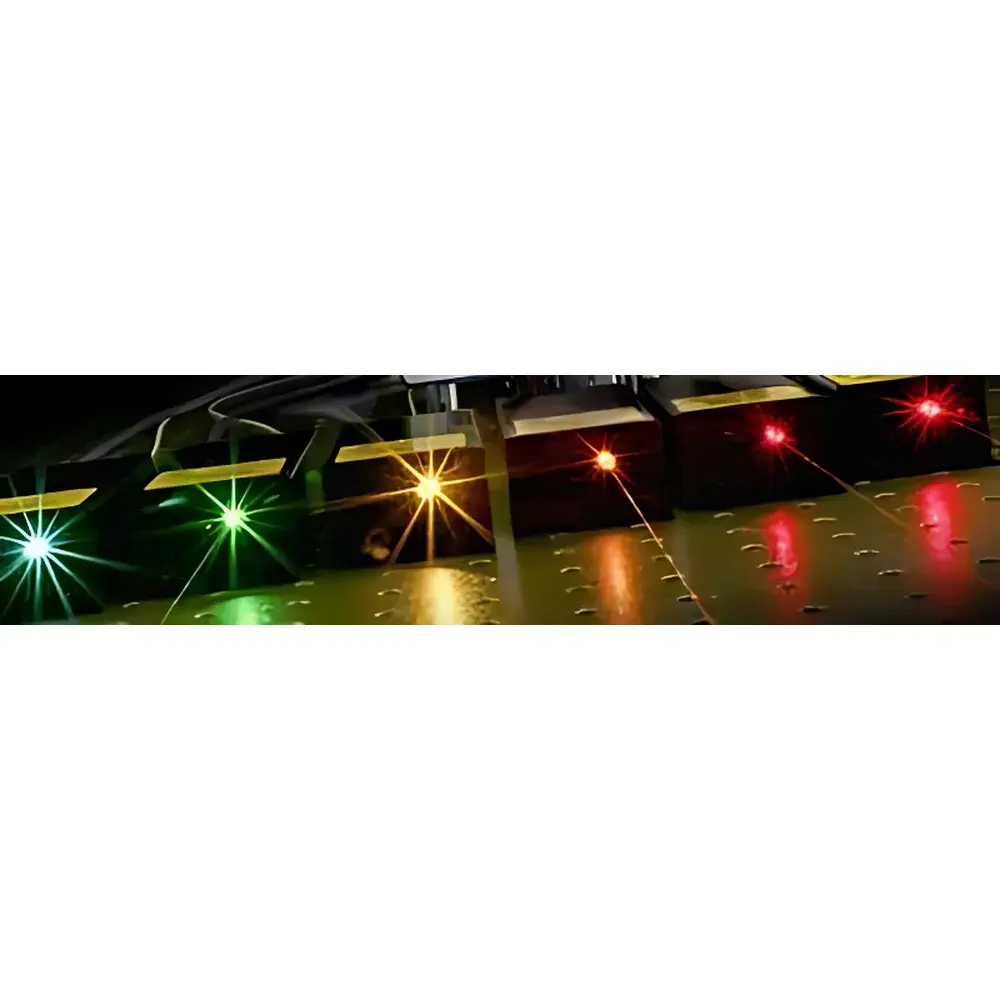
MPB VFL-P-200-514 Visible Fiber Laser
| Brand | MPB |
|---|---|
| Origin | Canada |
| Model | VFL-P-200-514 |
| Wavelength | 514 nm |
| Output Power | 200 mW (CW) |
| Operating Principle | Diode-pumped, single-frequency, polarization-maintaining fiber laser |
| Beam Quality | TEM₀₀, M² < 1.1 |
| Linewidth | < 100 kHz |
| Long-term Power Stability | < ±0.5% over 8 h |
| Warm-up Time | < 15 min |
| Cooling | Conduction-cooled, fanless |
| Dimensions | 120 × 80 × 35 mm |
| Weight | < 0.5 kg |
| Compliance | CE, RoHS, IEC 60825-1 Class 3B Laser Safety |
Overview
The MPB VFL-P-200-514 is a continuous-wave (CW), single-frequency visible fiber laser engineered for high spectral purity, exceptional amplitude and frequency stability, and robust integration into precision optical systems. Unlike conventional free-space solid-state lasers or gas lasers operating at 514 nm, this instrument leverages monolithic all-fiber architecture—built entirely from fusion-spliced, polarization-maintaining (PM) components—to eliminate sensitivity to thermal drift, mechanical misalignment, and environmental vibration. Its core gain medium is a ytterbium/erbium co-doped phosphate fiber, optically pumped by a wavelength-stabilized 976 nm pump diode. The laser cavity is defined by fiber Bragg gratings (FBGs) written directly into the PM fiber, ensuring intrinsic mode control and long-term reliability without realignment. Designed for applications demanding narrow linewidth, low relative intensity noise (RIN), and diffraction-limited beam quality (M² < 1.1), the VFL-P-200-514 delivers 200 mW of stable output at 514 nm with < ±0.5% power fluctuation over an 8-hour period—meeting critical requirements in quantum optics, holography, confocal microscopy, and metrology-grade interferometry.
Key Features
- Fully monolithic, all-fiber design with no free-space optics—eliminates alignment drift and contamination risks
- Single longitudinal mode (SLM) operation with intrinsic linewidth 55 dB
- Polarization-maintaining output with > 20 dB PER (Polarization Extinction Ratio) and fixed linear polarization axis
- Conduction-cooled, fanless thermal management enabling silent, vibration-free operation in sensitive environments
- Integrated digital controller with analog modulation input (0–5 V) and TTL-compatible enable/disable interface
- Compliant with IEC 60825-1:2014 Class 3B laser safety standards; includes interlock connector and key switch
- Compact OEM footprint (120 × 80 × 35 mm) optimized for embedded integration in spectroscopic platforms and automated test equipment
Sample Compatibility & Compliance
The VFL-P-200-514 is compatible with standard FC/APC or FC/PC fiber pigtails (SM630 or PM630) and supports direct free-space collimation via optional integrated micro-optic collimators. It operates reliably across ambient temperatures from 15 °C to 35 °C and relative humidity up to 80% non-condensing. All units undergo 100% burn-in testing and meet MIL-STD-883H mechanical shock and vibration specifications for transport and field deployment. Regulatory compliance includes CE marking per Directive 2014/35/EU (Low Voltage Directive) and 2014/30/EU (EMC Directive), RoHS 2011/65/EU, and full traceability to NIST-traceable power calibration. For regulated environments, the laser controller supports optional audit-ready logging (timestamped power, temperature, current) compliant with FDA 21 CFR Part 11 when paired with validated third-party software.
Software & Data Management
MPB provides the VFL Control Suite—a cross-platform (Windows/macOS/Linux) application built on Qt framework—for remote monitoring and parameter configuration via USB-C or RS-232. The suite enables real-time readout of diode current, TEC temperature, photodiode feedback voltage, and output power (calibrated against NIST-traceable reference). All operational data are exportable in CSV or HDF5 format. For system integrators, a documented ASCII command protocol and LabVIEW/VIs, Python SDK (PyVFL), and MATLAB Instrument Control Toolbox drivers are supplied under commercial license. Firmware updates are performed in-field via signed binary packages with SHA-256 verification—ensuring integrity and version control in GxP environments.
Applications
- Confocal and super-resolution fluorescence microscopy requiring stable 514 nm excitation with minimal photobleaching
- Optical trapping and atom cooling setups where narrow linewidth and low phase noise are essential
- Interferometric displacement sensing and gravitational wave detector prototype alignment systems
- Calibration of spectrometers, CCD/CMOS quantum efficiency measurements, and colorimetric reference sources
- Embedded illumination modules in portable Raman spectrometers and handheld biosensors
- Education and research labs needing turnkey, maintenance-free visible laser sources for undergraduate optics laboratories
FAQ
What is the typical warm-up time to achieve specified power and frequency stability?
The laser reaches full thermal equilibrium and meets all stability specifications within 15 minutes of cold start.
Can the output be modulated, and what is the maximum analog modulation bandwidth?
Yes—via 0–5 V analog input with DC–100 kHz small-signal modulation bandwidth and < 1% linearity error.
Is fiber coupling included, and what connector type is standard?
Standard delivery includes a 1.5 m PM630 fiber pigtail terminated with FC/APC connector; custom lengths and connectors available upon request.
Does MPB provide OEM support for volume integration, including custom firmware or mechanical housing?
Yes—MPB offers full OEM engineering services, including mechanical redesign, firmware customization, and batch calibration certificates with individual unit test reports.
How is laser safety enforced during integration into third-party instruments?
The unit includes a hardware interlock circuit (24 VDC fail-safe), key switch, and emission indicator LED—all compliant with EN 60825-1 Annex D for embedded Class 3B laser subsystems.





