
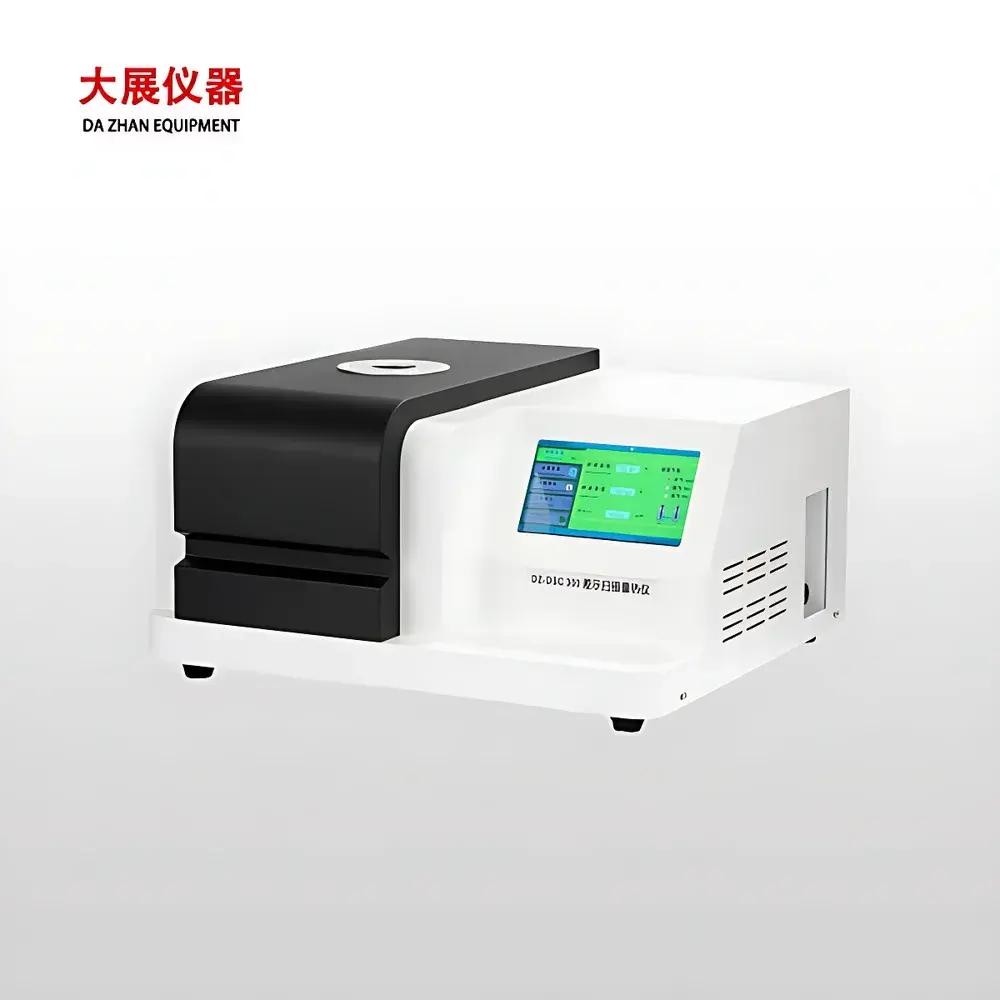
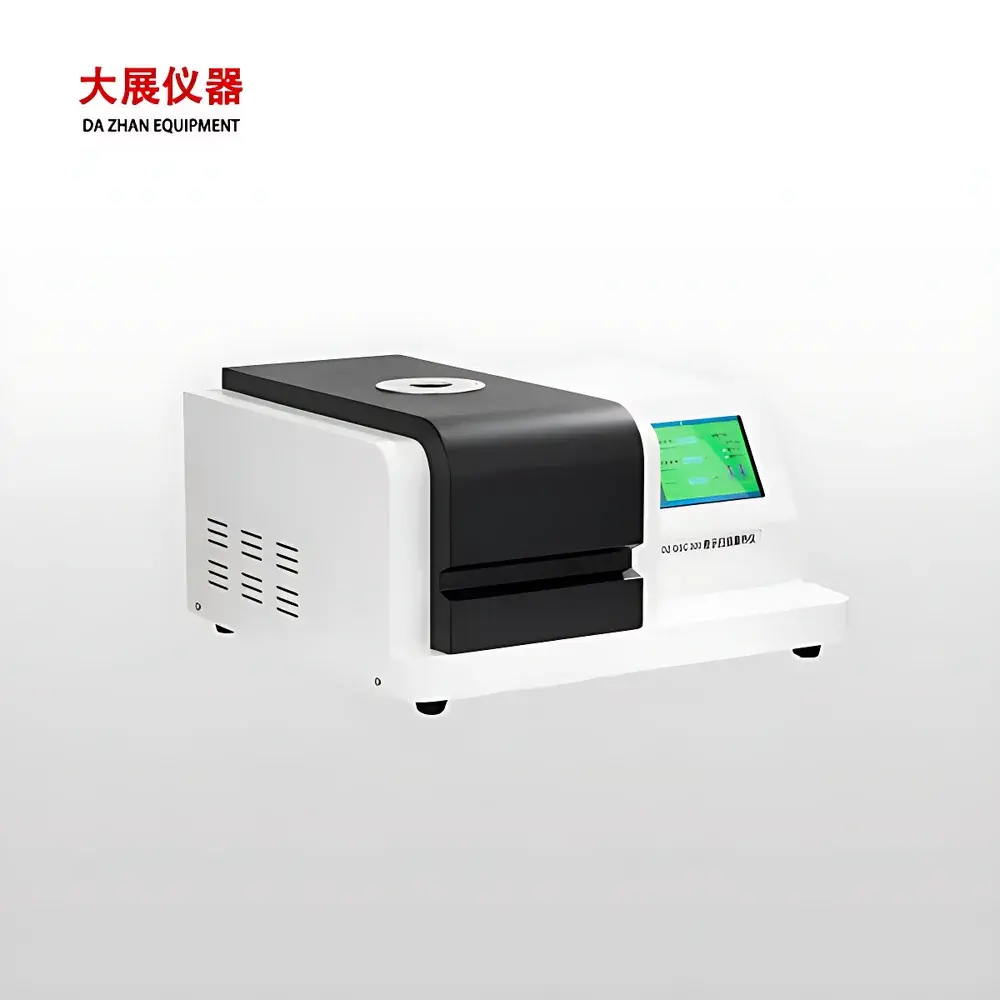
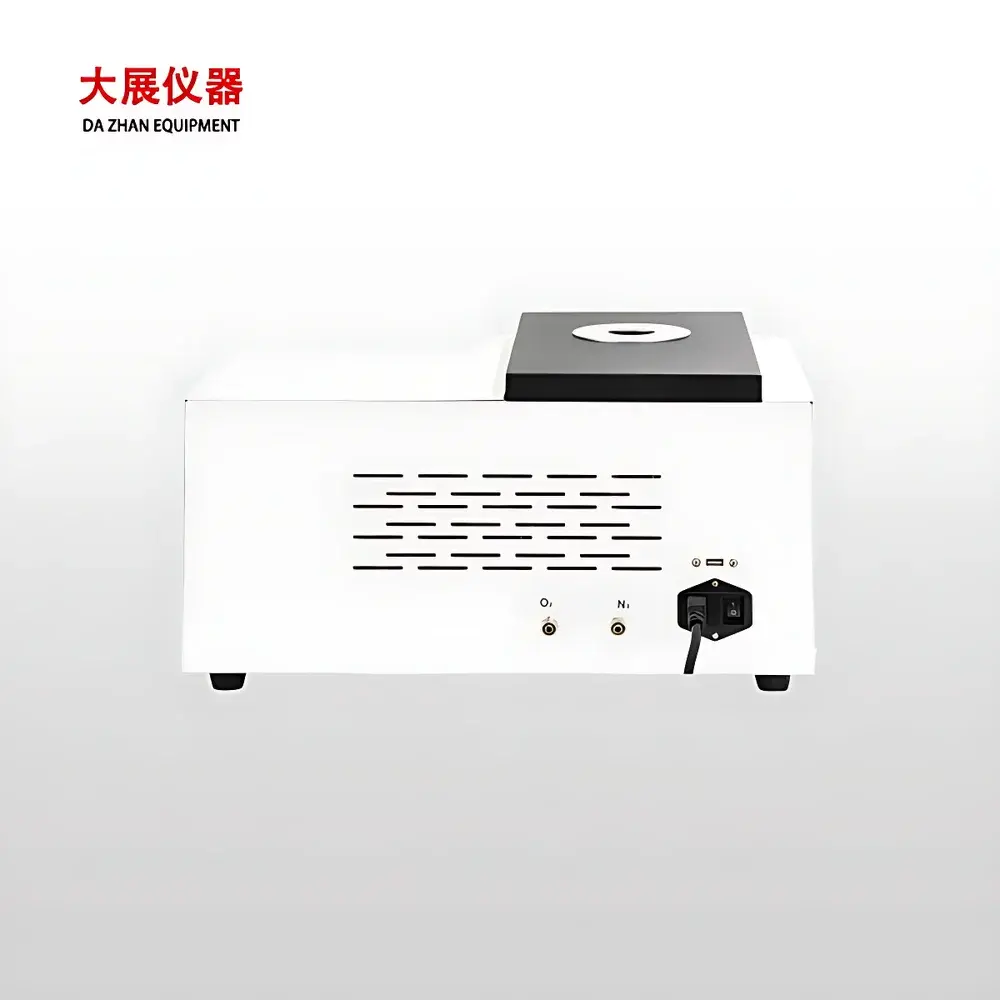
Nanjing Dazhan DZ-DSC300 High-Sensitivity Differential Scanning Calorimeter
| Brand | Nanjing Dazhan |
|---|---|
| Origin | Jiangsu, China |
| Manufacturer Type | Direct Manufacturer |
| Region of Origin | Domestic (China) |
| Model | DZ-DSC300 |
| Sample Capacity | Single-sample configuration |
| Instrument Type | Differential Scanning Calorimeter (DSC) |
| Temperature Range | Ambient to 600 °C |
| Temperature Accuracy | ±0.001 °C |
| Heating/Cooling Rate | 0.1–100 °C/min |
| Temperature Precision | ±0.001 °C |
| DSC Heat Flow Range | 0 to ±600 mW |
| Baseline Stability (Temperature Drift) | ±0.01 °C |
| DSC Resolution | 0.01 µW |
| DSC Sensitivity | 0.001 mW |
| Atmosphere Control | Dual-gas channel with automated switching |
| Gas Flow Range | 0–300 mL/min (customizable) |
| Gas Pressure Rating | ≤5 MPa |
| Power Supply | AC 220 V / 50 Hz (optional customization available) |
| Display | 7-inch 24-bit color LCD touchscreen |
| Data Interface | Standard USB port |
| Calibration Standards Included | Indium, Tin, and Lead reference materials |
| Software Features | Multi-point temperature calibration, six-segment programmable thermal protocol (heat/hold/cool), real-time baseline correction |
Overview
The Nanjing Dazhan DZ-DSC300 is a high-sensitivity differential scanning calorimeter engineered for precise quantification of endothermic and exothermic transitions in solid and semi-crystalline materials. Operating on the heat-flux DSC principle, it measures the differential heat flow between a sample and an inert reference as both are subjected to identical, programmable temperature profiles under controlled atmosphere conditions. This enables rigorous thermodynamic characterization—including glass transition temperature (Tg), melting onset and enthalpy (Tm, ΔHm), cold crystallization (Tcc), solid-solid phase transitions, oxidative induction time (OIT), and cure kinetics—across polymer science, pharmaceutical development, metallurgy, and advanced composites research. Its ambient-to-600 °C operational range, sub-millikelvin temperature accuracy, and micro-watt-level heat flow resolution make it suitable for both routine QC testing and early-stage R&D where thermal event discrimination at low energy differentials is critical.
Key Features
- Optimized furnace architecture featuring symmetrical thermal mass distribution and low-thermal-inertia sensor design, delivering enhanced baseline stability (±0.01 °C drift) and improved peak resolution for closely spaced transitions.
- Thermopile-based sensor fabricated via thermal fusion bonding—not conventional spot welding—ensuring superior signal-to-noise ratio and long-term sensitivity retention (0.001 mW detection limit).
- Programmable six-segment thermal protocols supporting independent ramp rates, dwell times, and directionality (heating, isothermal hold, cooling) within a single run—fully compliant with ASTM E1356 and ISO 11357 series requirements.
- Dual-gas manifold with electro-pneumatic valve control enables automatic switching between purge and protective atmospheres (e.g., N2/O2) during dynamic experiments, supporting oxidation stability assessments per ASTM D3895.
- Integrated 7-inch capacitive touchscreen interface with real-time curve overlay, manual override capability, and local data storage—complemented by PC-based software with audit trail logging and 21 CFR Part 11–ready user access controls.
- Shielded analog acquisition circuitry with galvanic isolation minimizes electromagnetic interference, ensuring robust performance in shared laboratory environments with RF-intensive instrumentation.
Sample Compatibility & Compliance
The DZ-DSC300 accommodates standard aluminum, gold-coated aluminum, or high-pressure stainless-steel crucibles (20–50 µL capacity), enabling analysis of powders, films, fibers, granules, and viscous resins. It supports GLP/GMP-aligned workflows through built-in calibration traceability: certified reference materials (indium, tin, lead) are supplied with NIST-traceable certificates of analysis. Temperature calibration is validated across three points (Tg, Tm, Tcc) using multi-point correction algorithms embedded in firmware. The system meets mechanical and electrical safety standards per IEC 61010-1 and is compatible with ISO/IEC 17025-accredited lab documentation systems.
Software & Data Management
Acquisition and analysis are managed via DZ-ThermalPro™ software—a Windows-native application supporting real-time baseline subtraction, peak deconvolution, kinetic modeling (e.g., Ozawa-Flynn-Wall), and comparative overlay of up to 16 curves. Raw data is stored in vendor-neutral ASCII format (.csv) with full metadata embedding (operator ID, instrument serial number, gas flow settings, calibration timestamps). Audit trails record all parameter modifications, calibration events, and user logins with immutable timestamps—enabling compliance with FDA 21 CFR Part 11 and EU Annex 11 requirements when deployed with network authentication and electronic signature modules.
Applications
- Pharmaceutical solid-state characterization: polymorph screening, amorphous content quantification, excipient compatibility studies, and lyophilized product stability assessment.
- Thermoset curing optimization: determination of gel point, vitrification temperature, and residual enthalpy to validate post-cure completeness in epoxy, phenolic, and silicone systems.
- Polymer processing guidance: identification of optimal melt-processing windows, degradation onset temperatures, and crystallinity changes induced by annealing or shear history.
- Metallurgical phase diagram validation: eutectic reaction temperatures, solidus/liquidus boundaries, and precipitation kinetics in aluminum, magnesium, and titanium alloys.
- Food science applications: starch gelatinization enthalpy, fat polymorphism transitions, and shelf-life prediction via oxidative induction time (OIT) under accelerated aging protocols.
FAQ
What calibration standards are included with the DZ-DSC300?
Indium (Tm = 156.60 °C), Tin (Tm = 231.93 °C), and Lead (Tm = 327.50 °C) reference metals are supplied with individual CoA documents traceable to NIST SRMs.
Can the instrument operate under inert and oxidative atmospheres within one experiment?
Yes—the dual-gas control system allows seamless, software-triggered switching between purge gases (e.g., N2) and reactive gases (e.g., air or O2) at defined temperature thresholds or time points.
Is the DZ-DSC300 compliant with regulatory data integrity requirements?
When configured with role-based login, electronic signatures, and audit trail export functionality, the system satisfies core technical controls required by 21 CFR Part 11 and EU GMP Annex 11 for regulated laboratories.
What is the minimum detectable heat flow change?
The instrument achieves a heat flow resolution of 0.01 µW and a sensitivity threshold of 0.001 mW, verified using low-mass indium standards under ISO 11357-1 test conditions.
Does the system support custom crucible types or high-pressure operation?
Standard configurations use 20–50 µL aluminum crucibles; optional high-pressure cells (up to 5 MPa) and hermetic gold-plated crucibles are available upon request with modified gas sealing hardware.
Related Products



