
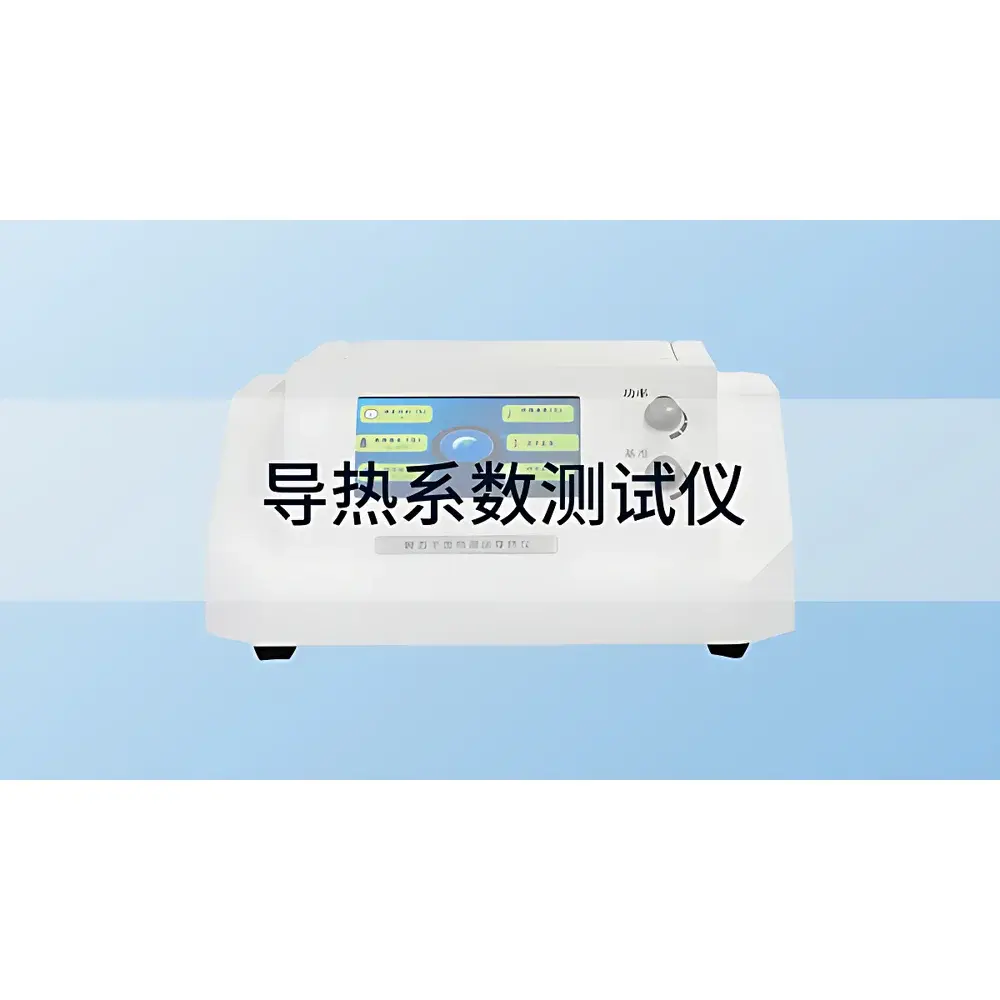
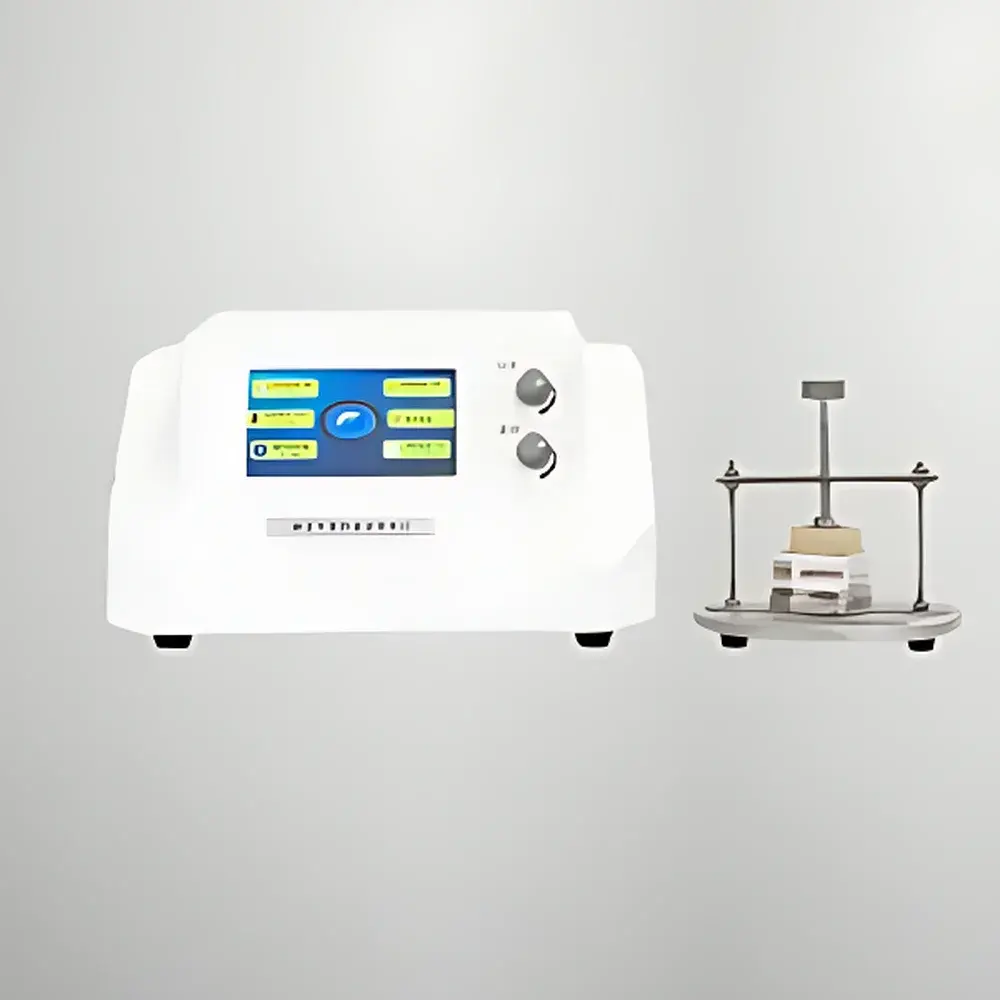
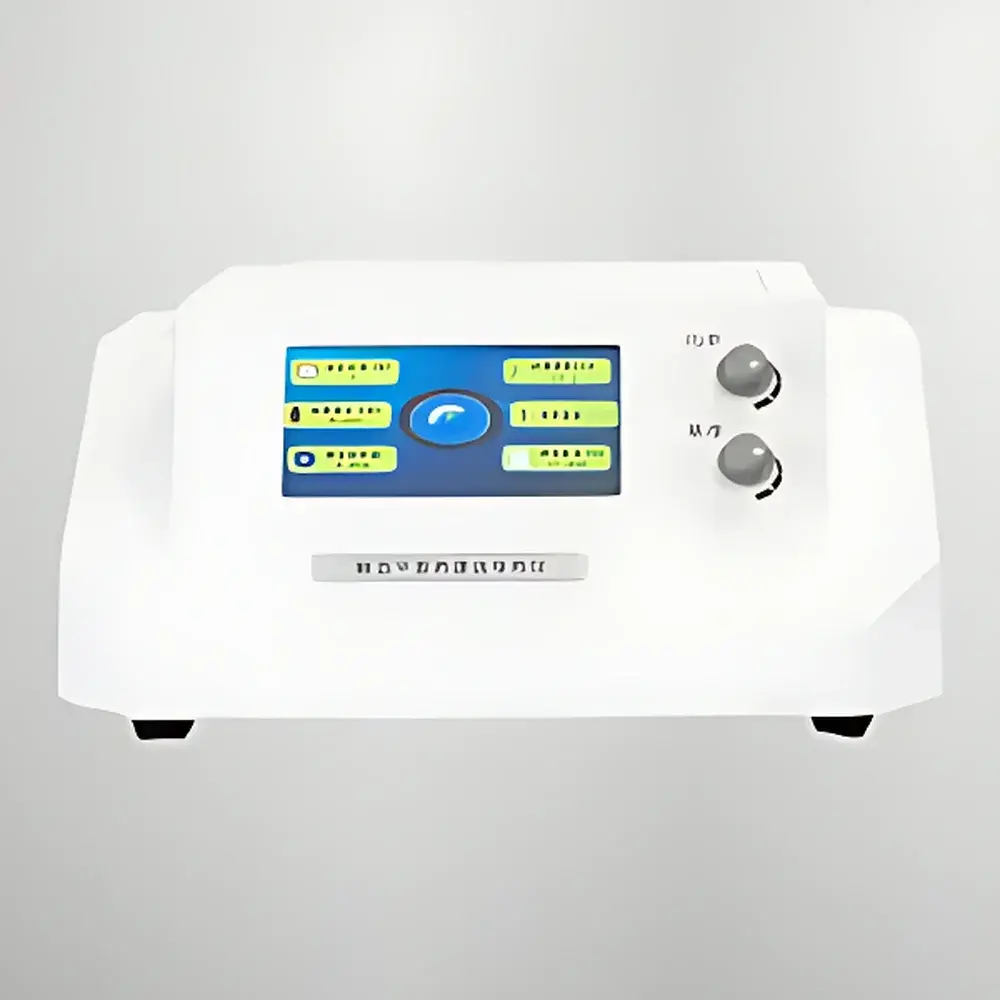
Nanjing Dazhan DZDR-S Transient Plane Source (TPS) Thermal Conductivity Analyzer
| Brand | Nanjing Dazhan |
|---|---|
| Origin | Jiangsu, China |
| Manufacturer Type | Direct Manufacturer |
| Country of Origin | China |
| Model | DZDR-S |
| Instrument Principle | Transient Plane Source (TPS) Method |
| Sample Throughput | Multiple sequential tests |
| Test Environment | Ambient temperature (RT) to 130 °C |
| Thermal Conductivity Range | 0.0001–300 W/(m·K) |
| Dimensions (L×W×H) | 440 × 390 × 220 mm |
| Sample Forms | Solids (bulk, granular, pasty), powders, liquids, gels, coatings, thin films, and insulating materials |
| Probe Options | 7.5 mm, 15 mm, and 50 mm diameter dual-spiral sensors |
| Accuracy | ±3% |
| Repeatability | ≤3% |
| Measurement Duration | 5–160 s (user-configurable) |
| Power Supply | AC 220 V, <500 W |
| Data Acquisition | High-resolution imported ADC chip |
| Control Core | ARM-based embedded microprocessor |
| Interface | Color TFT LCD touchscreen |
| Compliance | Designed for ASTM D7984, ISO 22007-2, and GB/T 32064–2015 alignment |
| Software Features | Automated calibration, real-time curve fitting, GLP-compliant data logging, CSV/PDF report export |
Overview
The Nanjing Dazhan DZDR-S Transient Plane Source (TPS) Thermal Conductivity Analyzer is an engineered solution for rapid, non-destructive thermal property characterization across a broad spectrum of material classes. Based on the internationally standardized transient plane source method (ISO 22007-2 and ASTM D7984), the instrument applies a known amount of heat to a thin, double-spiral sensor acting simultaneously as both heater and temperature sensor. The time-dependent temperature rise at the sensor surface is recorded with high temporal resolution and analyzed using inverse modeling algorithms rooted in Fourier heat conduction theory. This principle eliminates interfacial contact resistance errors inherent in steady-state guarded-hot-plate or comparative cut-bar methods—making it especially suitable for soft, heterogeneous, or low-conductivity materials where conventional contact-based techniques suffer from uncertainty amplification.
Key Features
- Triple-probe modular design (7.5 mm, 15 mm, and 50 mm diameters) enables optimized measurement geometry for diverse sample thicknesses and thermal diffusivities—no custom machining required.
- True non-destructive testing: samples retain structural integrity and may be reused across multiple test cycles without degradation or preparation artifacts.
- Minimal sample preparation: flatness requirement limited to local surface uniformity over probe footprint; no polishing, coating, or vacuum sealing needed.
- ARM-based real-time control architecture ensures deterministic timing and sub-millisecond sampling synchronization between heating pulse and thermistor response acquisition.
- Imported high-resolution analog-to-digital converter (ADC) delivers ≥18-bit effective resolution for robust signal-to-noise performance across the full 0.0001–300 W/(m·K) dynamic range.
- Intuitive 7-inch color TFT touchscreen interface with multilingual support (English default), context-sensitive guidance, and on-device result visualization including raw ΔT(t) curves and fitted thermal diffusivity/effusivity overlays.
- Integrated thermal stabilization subsystem maintains probe baseline drift <0.02 K/min during ambient-to-130 °C operation, supporting repeatable measurements under variable lab conditions.
Sample Compatibility & Compliance
The DZDR-S accommodates solids (rigid, flexible, porous, or viscoelastic), powders (with optional containment cell), liquids, gels, emulsions, thin films (<100 µm), and composite coatings. Its TPS methodology conforms to ISO 22007-2 Annex A for isotropic homogeneous materials and supports empirical extension to anisotropic and layered systems via directional probe orientation and multi-point mapping protocols. The system meets essential requirements for GLP-compliant laboratories: audit-trail-enabled software logs all operator actions, parameter changes, calibration events, and raw data timestamps. While not FDA 21 CFR Part 11 certified out-of-the-box, its data export architecture (CSV, XML, PDF) facilitates integration into validated LIMS or ELN platforms adhering to pharmaceutical and materials R&D quality standards (e.g., ICH Q5C, USP , ISO 17025).
Software & Data Management
Bundled DZDR-Control Suite v3.2 provides full instrument orchestration, including automated probe self-calibration, multi-curve batch analysis, statistical outlier detection, and customizable reporting templates compliant with internal QA documentation workflows. All raw voltage-time series are stored with metadata (operator ID, timestamp, probe ID, ambient RH/T, sample ID). Export formats include IEEE-compliant .mat files for MATLAB® post-processing, structured CSV for Excel® pivot analysis, and print-ready PDF reports featuring traceable uncertainty budgets per ISO/IEC 17025:2017 Clause 7.6.3. Remote monitoring via Ethernet TCP/IP allows integration into centralized lab infrastructure without requiring proprietary drivers.
Applications
- Quality control of thermal interface materials (TIMs), phase-change compounds, and encapsulants in electronics packaging.
- R&D screening of aerogels, foams, and mineral wool insulation for building science applications.
- Characterization of battery electrode slurries, solid polymer electrolytes, and cathode/anode composites under development.
- Thermal property validation of biomedical hydrogels, tissue scaffolds, and drug delivery matrices.
- Process optimization support for ceramic sintering, polymer extrusion, and additive manufacturing powder bed preheating profiles.
- Academic research in nanocomposites, MOFs, and thermoelectric materials where rapid iterative testing accelerates structure–property correlation studies.
FAQ
What standards does the DZDR-S comply with?
It implements the transient plane source method per ISO 22007-2 and ASTM D7984, and aligns with Chinese national standard GB/T 32064–2015 for thermal conductivity measurement of solid materials.
Can the instrument measure anisotropic materials?
Yes—by rotating the probe relative to sample crystallographic or structural axes and performing directional scans, users can derive principal thermal conductivity components when combined with orthogonal mounting fixtures (optional accessory).
Is vacuum or inert atmosphere operation supported?
The base configuration operates in ambient air; however, the sample chamber is compatible with third-party environmental enclosures (e.g., glovebox-integrated adapters or vacuum-rated sample holders) for controlled-atmosphere testing.
How is probe calibration performed?
Each probe includes NIST-traceable reference material certificates. In-field calibration uses certified poly(methyl methacrylate) (PMMA) and stainless steel standards; software auto-compensates for aging-related resistance drift using built-in reference junction monitoring.
Does the system support GMP/GLP audit trails?
Full electronic record retention—including user login sessions, parameter edits, raw data archives, and digital signatures—is enabled. Validation documentation packages are available upon request for regulated environments.



