
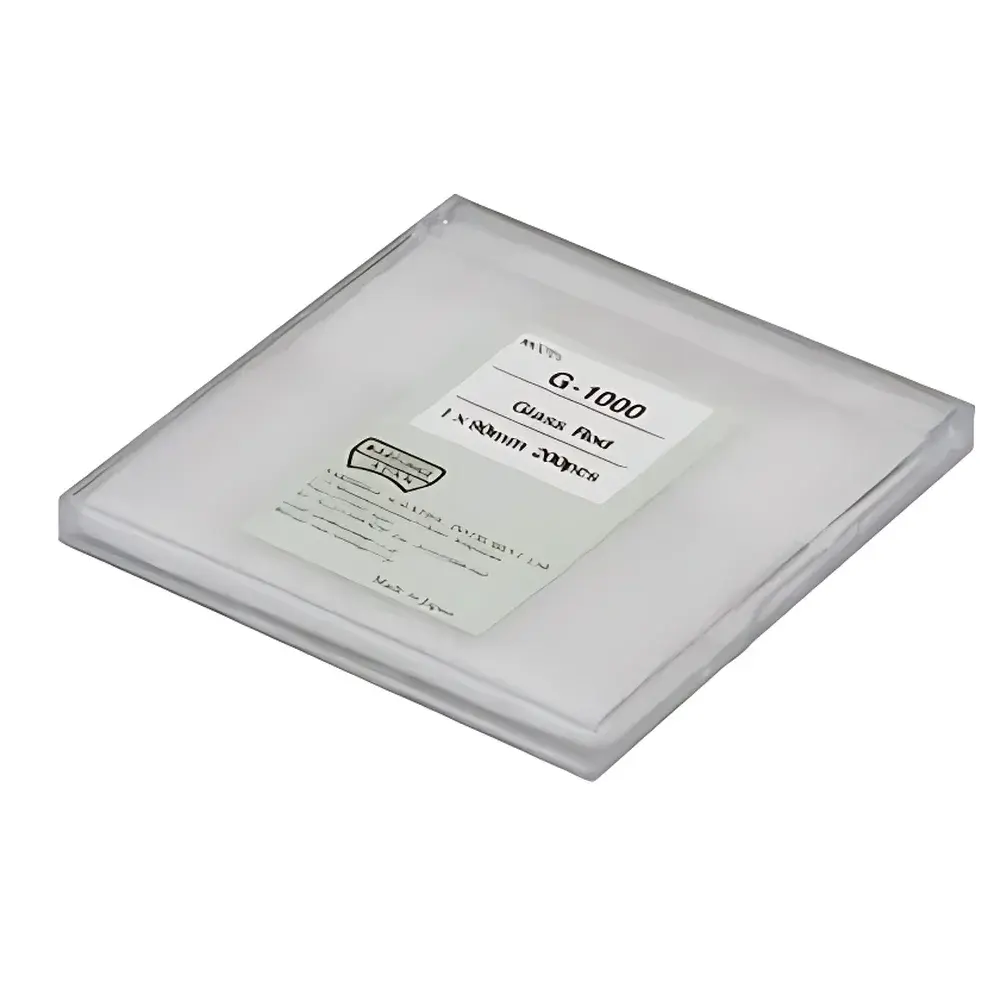
Narishige G-1000 Precision Borosilicate Glass Rod
| Brand | Narishige |
|---|---|
| Origin | Japan |
| Model | G-1000 |
| Material | High-Purity Borosilicate Glass (e.g., Pyrex-type) |
| Diameter | 1.0 mm |
| Length | 100 mm |
| Surface Finish | Optically Polished, Chemically Inert |
| End Treatment | Fire-Polished Rounded Tips |
| Compliance | ISO 8549-1 (Laboratory Glassware), ASTM E438 Type I, Class A |
Overview
The Narishige G-1000 Precision Borosilicate Glass Rod is a laboratory-grade consumable engineered for reproducible manual manipulation in microscale experimental workflows. Designed and manufactured in Japan under strict quality control protocols, this rod operates on the fundamental principle of mechanical displacement and tactile transfer—leveraging the inertness, dimensional stability, and optical clarity of borosilicate glass to enable precise physical interaction with sensitive samples without chemical interference. Unlike polymer or metal alternatives, the G-1000 eliminates risks of leaching, catalytic surface reactions, or static charge accumulation—making it indispensable in applications where sample integrity, trace-level purity, and visual monitoring are critical. Its standardized geometry ensures compatibility with micromanipulator holders (e.g., Narishige MM-89, MN-4, or equivalent), pipette pullers, and flame-polishing stations.
Key Features
- High-purity borosilicate glass composition (SiO₂ ≥ 80%, B₂O₃ ≈ 13%) providing exceptional thermal shock resistance (up to 150 °C continuous use) and low coefficient of thermal expansion (3.3 × 10⁻⁶ /K).
- Precision-dimensioned profile: nominal diameter of 1.0 mm ± 0.02 mm and total length of 100 mm ± 0.5 mm—verified per ISO 8549-1 dimensional tolerance classes for laboratory glassware.
- Optically polished surface finish (Ra < 0.05 µm) minimizing particle shedding and facilitating sterile wipe-down; fully compatible with autoclaving (121 °C, 20 min, saturated steam) and dry-heat sterilization (180 °C, 2 h).
- Fire-polished, hemispherical tips formed under controlled hydrogen-air flame conditions—eliminating micro-fractures and sharp edges while preserving structural homogeneity.
- Chemically resistant to concentrated acids (HCl, HNO₃, HF-free media), alkalis (NaOH ≤ 1 M), and organic solvents (ethanol, acetone, chloroform), meeting ASTM E438 Type I specifications for general-purpose laboratory glass.
Sample Compatibility & Compliance
The G-1000 rod is routinely employed in GLP- and GMP-aligned environments for handling biological specimens—including single-cell suspensions, oocytes, embryonic stem cells, and microbial colonies—where endotoxin-free, non-pyrogenic surfaces are mandatory. Its inert surface prevents adsorption of proteins or nucleic acids, supporting quantitative recovery in micro-volume transfers. The material complies with USP for pharmaceutical packaging components and passes ISO 10993-5 cytotoxicity testing. When used in conjunction with Narishige micromanipulation systems, the rod supports traceable workflows compliant with FDA 21 CFR Part 11 requirements when integrated into validated electronic lab notebook (ELN) platforms.
Software & Data Management
While the G-1000 itself is a passive physical tool, its integration into automated or semi-automated workflows is supported via third-party calibration and usage logging protocols. When mounted in motorized manipulators (e.g., Narishige MMO-202ND or Sutter MP-285), positional data—including insertion depth, angular orientation, and dwell time—is recorded in vendor-specific acquisition software (e.g., SutterPatch, PatchMaster). These logs can be exported in CSV or HDF5 format for audit trail generation, version-controlled archiving, and alignment with ISO/IEC 17025 documentation standards.
Applications
- Microinjection support: serving as a rigid guide or stabilizer during intracytoplasmic sperm injection (ICSI) and pronuclear injection procedures.
- Cell picking and relocation: enabling gentle mechanical isolation of adherent or suspension cells under inverted microscopy without enzymatic dissociation.
- Glass capillary preparation: functioning as a mandrel or alignment aid during multi-stage pipette pulling and heat-polishing cycles.
- Calibration verification: used as a physical reference standard for stage micrometer validation and objective magnification checks.
- In situ mixing in microfluidic chambers: facilitating localized reagent dispersion in PDMS-based devices where magnetic stirrers are incompatible.
FAQ
Is the G-1000 rod certified for sterile use upon delivery?
No—sterility is not guaranteed by default. Units are supplied clean and individually wrapped but require user-initiated sterilization (autoclave, UV exposure, or ethanol rinse) prior to aseptic applications.
Can the G-1000 be reused after cleaning?
Yes, provided it undergoes thorough decontamination (e.g., 10% sodium hypochlorite soak followed by DI water rinse and 121 °C autoclaving) and is inspected for tip deformation or surface haze under 10× magnification.
What is the maximum bending force before permanent deformation?
At room temperature, the rod exhibits elastic deflection up to ~0.8 N at mid-span (3-point bend test); exceeding this load may induce plastic deformation or fracture due to inherent brittleness of borosilicate glass.
Does Narishige provide lot-specific certificates of analysis (CoA)?
Upon request and subject to minimum order volume, Narishige Japan issues CoAs including batch number, dimensional verification report, and heavy metal extractables data per ICH Q3D guidelines.
Related Products



