
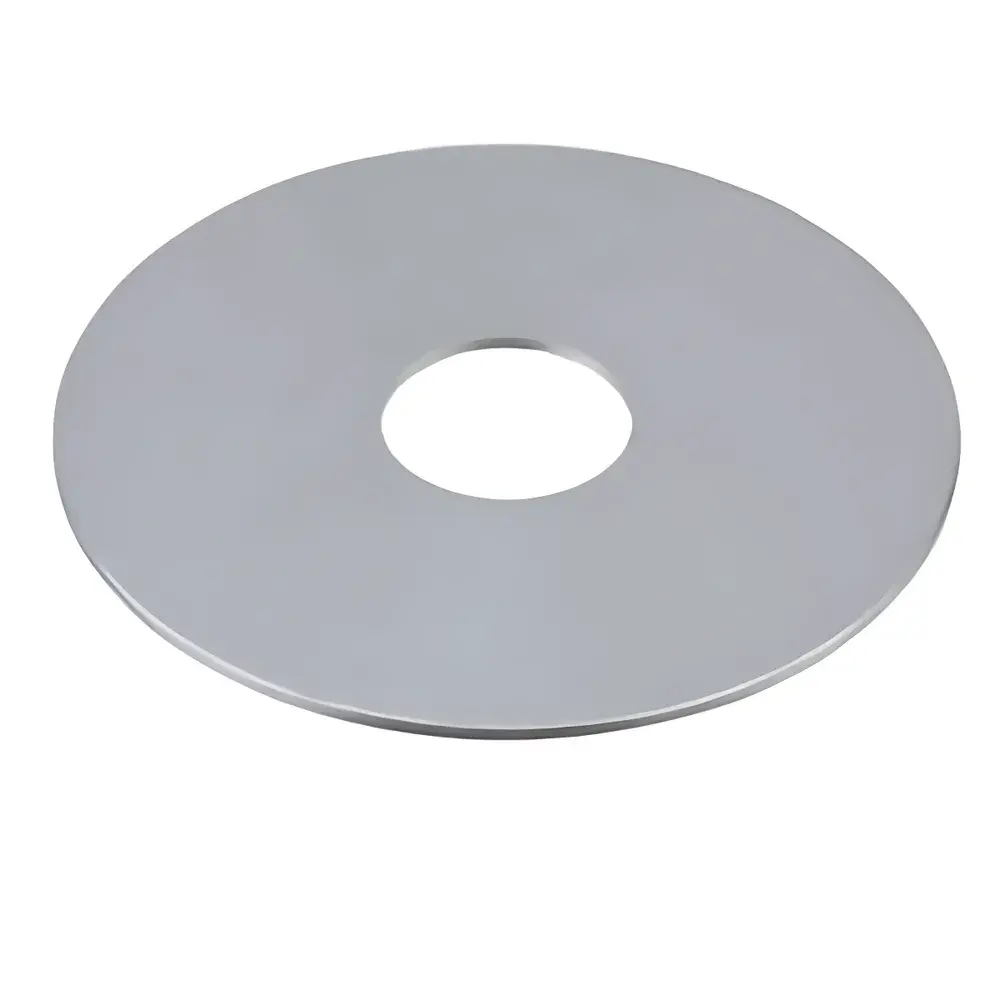
NARISHIGE CK-1A Adapter Plate for CK-1 Micromanipulator (Compatible with ITS and Olympus Microscope Stages)
| Brand | NARISHIGE |
|---|---|
| Origin | Japan |
| Manufacturer Type | Authorized Distributor |
| Origin Category | Imported |
| Model | CK-1A / CK-1 |
| Pricing | Upon Request |
| Outer Diameter | 110 mm |
| Inner Diameter | 30.5 mm |
| Thickness | 2 mm |
| Weight | 130 g |
| Stage Insert Compatibility | 110 mm Diameter Microscope Stage Opening |
| Magnetic CAT-1 Tube Holder Mounting | Directly Supported |
Overview
The NARISHIGE CK-1A Adapter Plate is a precision-engineered mechanical interface designed to integrate the CK-1 hydraulic micromanipulator into standard upright or inverted microscope platforms from ITS (Instrumentation Technology Systems) and Olympus. It functions as a rigid, concentric mounting ring that bridges the dimensional and mechanical mismatch between the CK-1’s base flange and the standardized stage insert aperture (Ø110 mm) found on many research-grade microscope stages. Unlike generic mounting solutions, the CK-1A maintains the full kinematic integrity of the CK-1 system by preserving its zero-backlash, fluid-damped motion control while enabling secure, repeatable positioning directly above the optical axis. Its design adheres to the mechanical tolerancing standards typical of high-precision microsurgery and electrophysiology instrumentation—ensuring minimal lateral play (<5 µm radial runout) and axial stability under sustained load during prolonged patch-clamp or intracellular injection protocols.
Key Features
- Precision-machined aluminum alloy construction with anodized surface finish for corrosion resistance and long-term dimensional stability
- Exact Ø110 mm outer diameter and Ø30.5 mm central bore—engineered to match the stage-insert geometry of ITS MM-400/500 series and Olympus IX73/IX83/CKX53 microscope stages
- 2 mm uniform thickness ensures optimal rigidity-to-mass ratio, minimizing resonant vibration during fine-positioning tasks
- Integrated ferromagnetic mounting zone on the upper surface enables direct, tool-free attachment of the NARISHIGE CAT-1 magnetic tube holder without additional brackets or adhesives
- Counterbored mounting holes (M3 × 0.5 pitch) align precisely with CK-1’s factory-specified base screw pattern—no modification or drilling required
- Weight of 130 g balances mechanical inertia and ease of manual repositioning during multi-axis experimental setup
Sample Compatibility & Compliance
The CK-1A adapter plate itself does not interact with biological or chemical samples; rather, it serves as a passive mechanical coupling element within a larger micro-manipulation workflow. Its use supports compliance with Good Laboratory Practice (GLP) and ISO/IEC 17025 requirements by ensuring consistent, documented instrument configuration across electrophysiology rigs, patch-clamp stations, and microinjection setups. When used in conjunction with NARISHIGE CK-1 manipulators and CAT-1 tube holders, the system meets the mechanical interface specifications referenced in ASTM F2147–22 (Standard Guide for Electrophysiological Instrumentation) and supports traceable alignment procedures per ISO 10993–1 for biomedical device testing environments. No sterilization or biocompatibility certification applies to the CK-1A, as it remains external to sample contact zones.
Software & Data Management
The CK-1A is a purely mechanical component and contains no embedded electronics, firmware, or software interface. It requires no drivers, calibration files, or digital configuration. Its role is strictly physical: to ensure deterministic spatial registration between the manipulator’s pivot point and the microscope’s focal plane. Consequently, all data acquisition, motion logging, and positional synchronization are managed entirely through the host microscope’s control software (e.g., Olympus cellSens, ITS MMS Suite) and/or third-party acquisition platforms such as pCLAMP, PatchMaster, or Spike2—none of which require CK-1A-specific integration. Audit trails related to manipulator positioning remain governed by the primary data acquisition system’s 21 CFR Part 11-compliant logging capabilities, where applicable.
Applications
- Single-cell patch-clamp recording on cultured neurons, cardiomyocytes, or organoid-derived tissues
- Microinjection of CRISPR-Cas9 ribonucleoprotein complexes into zygotes or early embryos (mouse, rat, Xenopus)
- Controlled placement of glass micropipettes for intracellular voltage or current clamp experiments
- High-resolution intravital imaging-guided microelectrode insertion in brain slice or explant preparations
- Multi-probe coordination in dual-patch or simultaneous stimulation/recording configurations using paired CK-1 systems
- Integration into automated patch-clamp platforms where stage-level repeatability is critical for robotic pipette approach sequences
FAQ
Is the CK-1A compatible with Olympus BX series microscopes?
Yes—provided the BX model is equipped with a removable stage insert of Ø110 mm diameter (e.g., BX53 with optional MM-110 stage insert). Verify compatibility via the microscope’s stage service manual or consult your Olympus field applications specialist.
Can the CK-1A be used with the CK-1B manipulator?
Yes—the CK-1A and CK-1B share identical mechanical interface dimensions and mounting specifications; both models utilize the same Ø110 mm outer profile and Ø30.5 mm central bore.
Does the CK-1A include mounting screws or fasteners?
No—the CK-1A ships as a standalone adapter plate. Standard M3 × 6 mm socket-head cap screws (included with the CK-1 manipulator) are required for secure attachment.
Is thermal expansion compensated in the CK-1A design?
The aluminum alloy (A5052-H32) used exhibits a linear coefficient of thermal expansion of 23.8 × 10⁻⁶ /°C; users operating in environments with >±2°C ambient fluctuation should allow 15 minutes of thermal equilibration before initiating sub-micron positioning tasks.
Can the CAT-1 tube holder be mounted upside-down on the CK-1A?
No—the magnetic polarity and mechanical stop geometry of the CAT-1 are optimized for downward-facing orientation only; inverted mounting compromises clamping force and risks slippage during vertical pipette withdrawal.



