
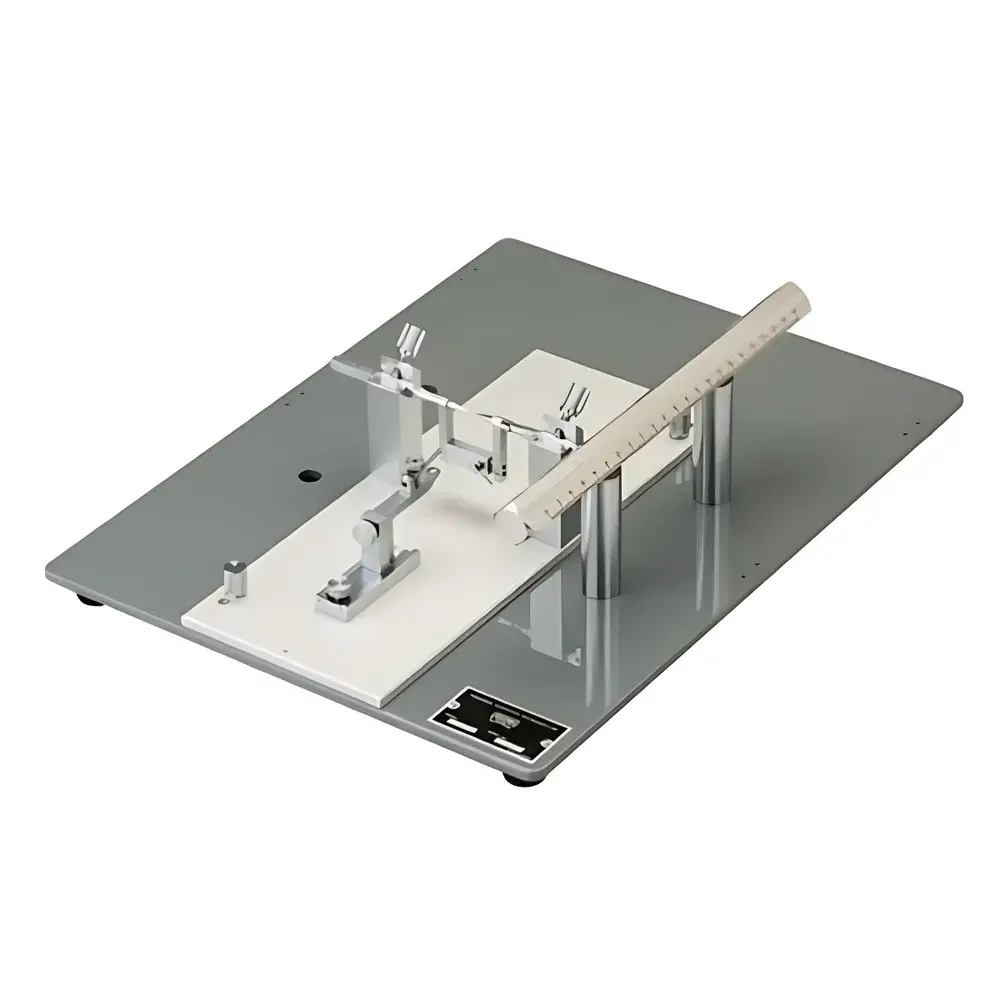
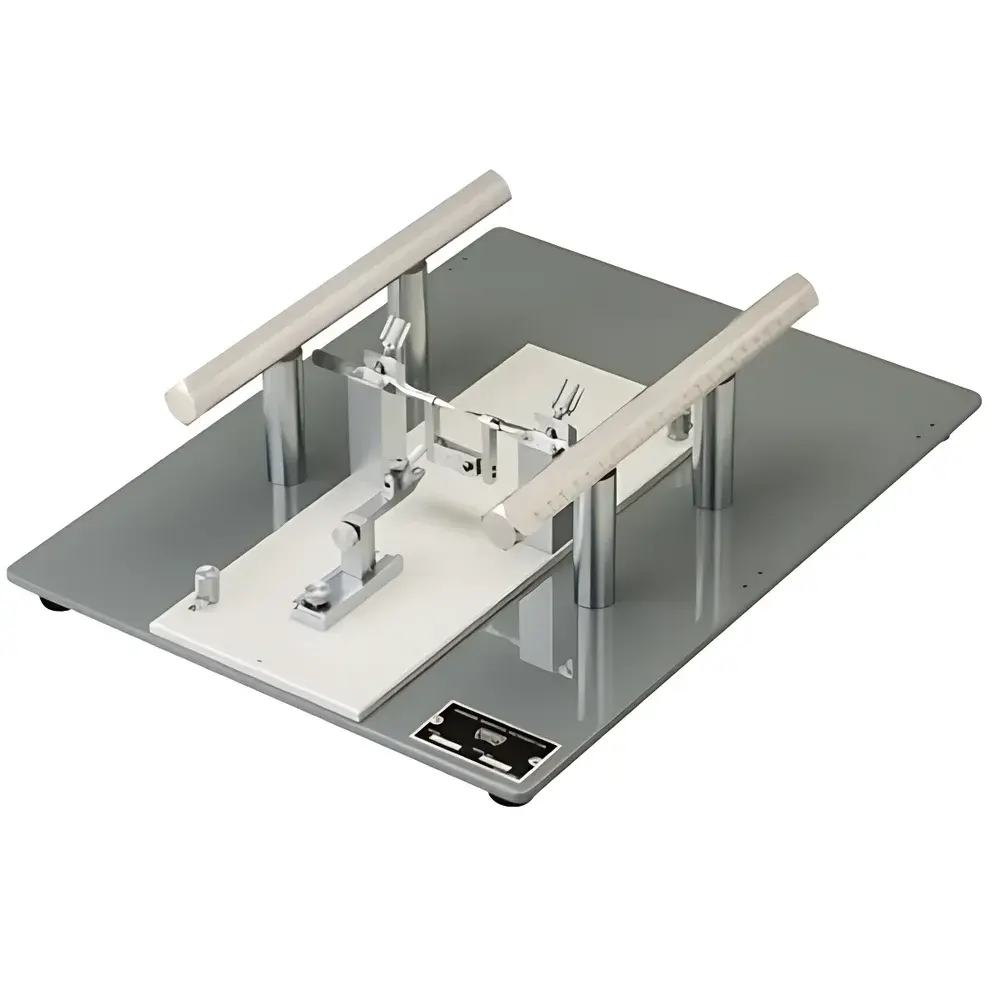
Narishige SR-5M-HT / SR-6M-HT Stereotactic Instrument for Mouse Neurosurgery
| Brand | Narishige |
|---|---|
| Origin | Japan |
| Model | SR-5M-HT / SR-6M-HT |
| Base Dimensions (W×D×H) | 400 × 300 × 110 mm |
| Weight | 8.75 kg (SR-5M-HT), 9.2 kg (SR-6M-HT) |
| Ear Bars | EB-3B (pair), EB-5N auxiliary ear bars |
| AP Frame Rails | 1 rail (SR-5M-HT), 2 rails (SR-6M-HT) |
Overview
The Narishige SR-5M-HT and SR-6M-HT Stereotactic Instruments are precision-engineered platforms designed specifically for murine neurosurgical and electrophysiological procedures requiring high spatial reproducibility and mechanical stability. Built upon Narishige’s long-standing SR-series architecture, these instruments implement a rigid three-axis micromanipulator-compatible frame system that enables accurate anterior–posterior (AP), dorsal–ventral (DV), and medial–lateral (ML) positioning of surgical tools, electrodes, or optical probes relative to standardized stereotaxic coordinates. The core principle relies on mechanical constraint of the mouse skull via calibrated ear bar and incisor bar fixation—ensuring minimal cranial movement during prolonged experiments. Both models integrate a low-profile, vibration-damped aluminum base with hardened steel guide rails and fine-pitch stainless-steel adjustment screws (10 µm resolution per full turn), delivering sub-millimeter positional repeatability under standard laboratory conditions.
Key Features
- Single-hand-operated auxiliary ear bars (EB-5N) for rapid, consistent external auditory canal engagement and tactile verification of fixation integrity;
- Slender, low-profile incisor/nose clamp (EB-3B) engineered to accommodate small adult mice (C57BL/6, BALB/c, CD-1; ~18–25 g) without airway compression or mandibular strain;
- Dual-axis coarse positioning stage (AP and DV) with engraved scale markings and locking thumbscrews for rapid gross alignment;
- Fine-adjustment micrometer dials (0.1 mm graduation, 10 µm effective resolution) for precise DV and ML targeting—compatible with Narishige MO-10, MN-151, or other third-party micromanipulators;
- Modular anterior–posterior (AP) frame rail system: SR-5M-HT includes one integrated rail; SR-6M-HT features two parallel rails, enabling simultaneous mounting of dual manipulators, laser ablation systems, or fiber-optic cannula holders;
- Non-magnetic, anodized aluminum base structure (400 × 300 × 110 mm) with recessed leveling feet and threaded mounting holes (M4) for integration into custom rigs or vibration-isolation tables.
Sample Compatibility & Compliance
These instruments are validated for use with adult laboratory mice (Mus musculus) aged 8–16 weeks and weighing 18–30 g. Skull morphology compatibility has been confirmed across common inbred and outbred strains, including C57BL/6J, FVB/N, and Swiss Webster. All contact components—including ear bars, incisor plates, and clamping mechanisms—are autoclavable (121 °C, 20 min) and compliant with ISO 13485–2016 requirements for reusable surgical instrumentation. The mechanical design adheres to ergonomic principles defined in ISO 6385:2016 (Ergonomic principles in the design of work systems), minimizing operator hand fatigue during extended stereotaxic sessions. No electrical or electronic components are integrated—ensuring intrinsic safety in MRI-adjacent or electromagnetic-sensitive environments.
Software & Data Management
As a purely mechanical stereotactic platform, the SR-5M-HT/SR-6M-HT requires no embedded firmware, drivers, or proprietary software. All coordinate referencing is performed manually using standardized atlases (e.g., Paxinos & Franklin’s *The Mouse Brain in Stereotaxic Coordinates*, 4th ed.) and physical scale readouts. However, the instrument is fully interoperable with digital workflow systems: AP rail mounting interfaces support direct attachment of motorized micromanipulators (e.g., Scientifica MP-1000, PatchStar) equipped with encoder-based position feedback and LabVIEW/Python-controllable APIs. Audit trails for procedural coordinates can be recorded externally in ELN systems compliant with 21 CFR Part 11 when paired with timestamped imaging or electrophysiology acquisition software (e.g., Spike2, Open Ephys).
Applications
- Intracranial injection of viral vectors, tracers, or cell suspensions into discrete nuclei (e.g., hippocampus CA1, striatum, prefrontal cortex);
- Chronic implantation of microdrives, tetrodes, or silicon probes for longitudinal in vivo electrophysiology;
- Craniotomy-guided optogenetic fiber placement and photostimulation protocols;
- Lesion studies using electrolytic, thermocoagulative, or chemical ablation techniques;
- Calibration and validation of intraoperative navigation systems in preclinical translational research;
- Training platform for stereotaxic technique certification under GLP-compliant animal facility SOPs.
FAQ
What is the maximum skull width accommodated by the EB-3B incisor bar?
The EB-3B nose clamp is dimensionally optimized for mice with inter-zygomatic widths ≤ 12.5 mm—verified across >95% of commonly used adult strains.
Can the SR-6M-HT support two independently controlled micromanipulators simultaneously?
Yes—the dual AP rails are spaced 42 mm center-to-center and feature identical M3.5 × 0.6 thread patterns, enabling synchronized or independent mounting of Narishige MN-151, MO-10, or compatible third-party manipulators.
Is replacement hardware (e.g., ear bars, screws) available through Narishige’s global distribution network?
All consumable and wear components—including EB-3B, EB-5N, and rail-mounting screws—are listed in Narishige’s official Parts Catalog (PN: SR-MHT-ACC-KIT) and distributed via authorized regional partners in EMEA, North America, and APAC.
Does the base include provisions for grounding or ESD protection?
No—this is a passive mechanical device with no conductive pathways; grounding is unnecessary and not specified in the design.
Are there documented maintenance intervals or calibration procedures?
Narishige recommends biannual visual inspection of rail lubrication (use only lithium-based NLGI #2 grease) and torque verification of clamping screws (0.3–0.4 N·m); no formal recalibration is required due to the absence of drift-prone sensors or actuators.



