
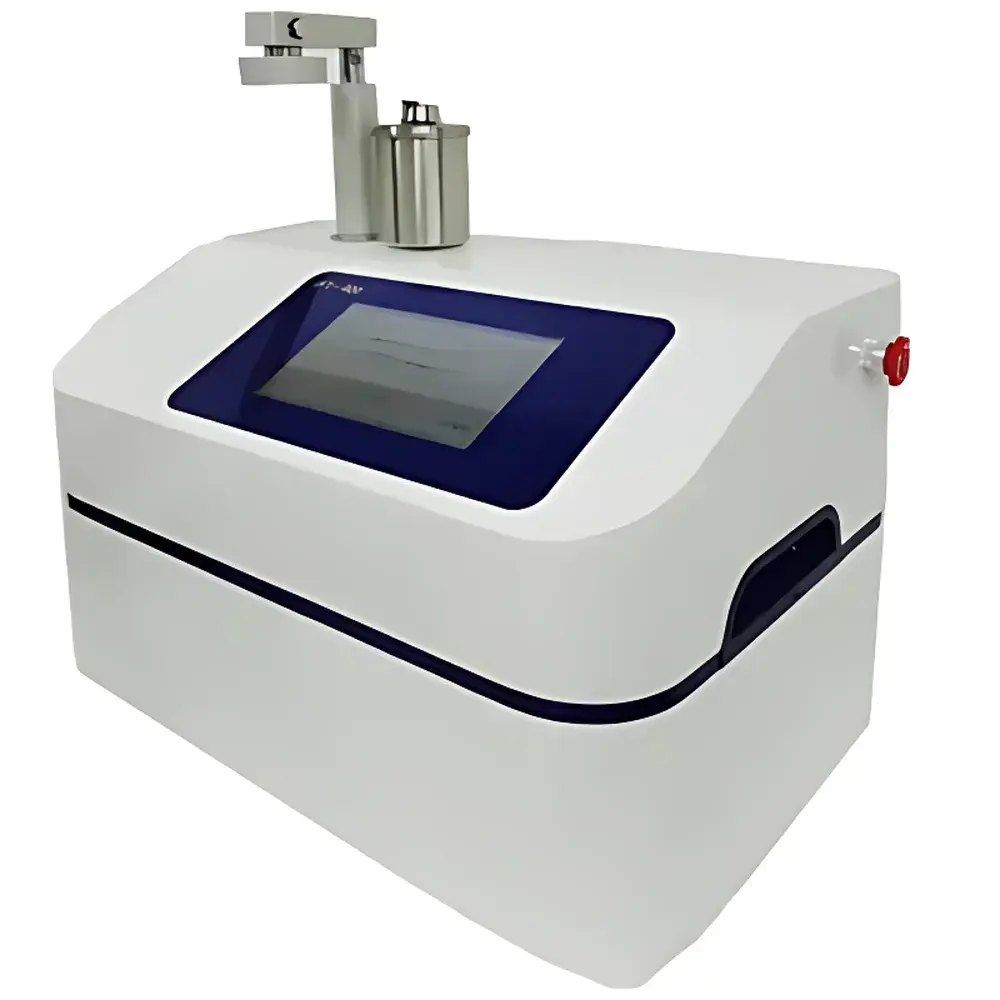
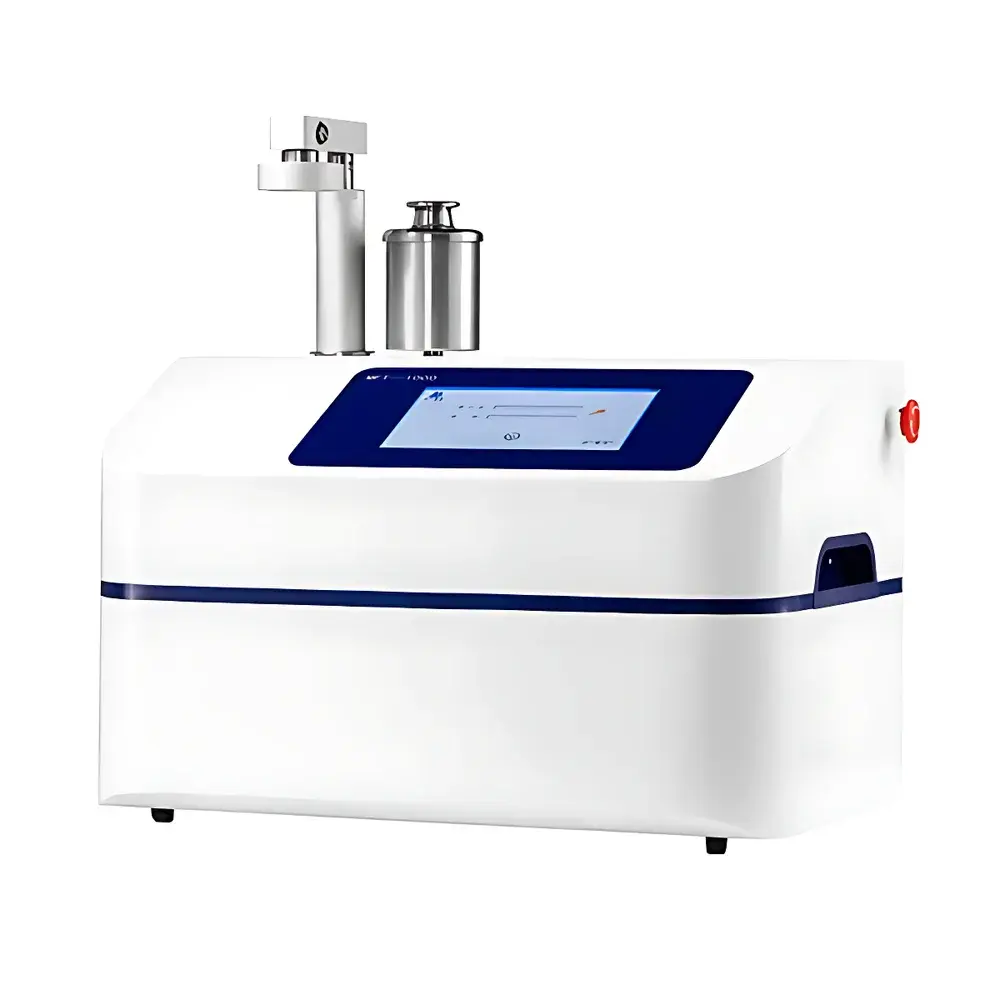
NeuronBC MFT-1000 Non-Destructive Package Seal Integrity Tester
| Brand | NeuronBC |
|---|---|
| Origin | Beijing, China |
| Model | MFT-1000 |
| Detection Principles | Vacuum Decay & Pressure Decay |
| Compliance | USP <1207>, ASTM F2338-22, FDA 21 CFR Part 11, GMP Annex 1 (2022), ISO 15378:2017 |
| Test Range | −0.1 to 1.0 MPa (selectable ranges) |
| Differential Pressure Sensor | ±2 kPa, accuracy ≤0.5% FS, resolution 0.1 Pa |
| Minimum Detectable Equivalent Orifice Diameter | 1–2 µm |
| Display | 10-inch color capacitive touchscreen |
| Power | AC 100–240 V, 50/60 Hz, ≤200 W |
| Enclosure Rating | IP54 |
| Data Retention | ≥10 years (audit trail + event logs) |
| User Management | 4-tier role-based access control with customizable permissions |
| Output Interfaces | 4–20 mA, RS485, Ethernet, USB, 12 V alarm |
| Data Export | Raw test data, metadata, configuration files via USB |
| Optional Connectivity | Wireless module (Wi-Fi/Bluetooth), OPC UA, MQTT support |
Overview
The NeuronBC MFT-1000 is a dual-mode, non-destructive seal integrity tester engineered for pharmaceutical primary packaging validation and routine quality control. It implements two orthogonal physical measurement principles—vacuum decay and pressure decay—based on the fundamental gas laws governing mass flow through micro-leak paths. Unlike probabilistic dye ingress or microbial challenge methods, the MFT-1000 delivers quantitative, traceable leakage rates (in std. cm³/s) and their corresponding equivalent circular orifice diameters (µm), enabling objective pass/fail decisions aligned with risk-based approaches defined in USP and ASTM F2338-22. Its design prioritizes regulatory readiness: full compliance with FDA 21 CFR Part 11 requirements—including electronic signatures, audit trail integrity, and secure multi-level user authentication—is embedded at the firmware and software architecture level. The instrument supports both laboratory-scale method development and production-floor deployment, accommodating variable batch sizes without compromising measurement reproducibility (RSD <2.5% across repeated tests under identical conditions).
Key Features
- Dual-sensor architecture integrating high-stability differential pressure transducers (±2 kPa, 0.1 Pa resolution) and absolute pressure sensors (−0.1 to 1.0 MPa range, ±1% FS accuracy) for simultaneous vacuum and pressure decay monitoring.
- Linux-based real-time operating system optimized for deterministic test execution, minimizing latency between pressure stabilization, data acquisition, and leak quantification.
- Automated calibration workflow for both leakage rate and equivalent orifice diameter, traceable to NIST-certified standard leak devices (included with third-party calibration certificate).
- Modular test chamber design—mounted above main chassis—enables rapid mechanical and software reconfiguration for diverse package formats: vials (glass/plastic), syringes (PFS), cartridges (cartridge-based systems), blow-fill-seal (BFS) containers, form-fill-seal (FFS) pouches, and blister packs.
- IP54-rated enclosure with Staubli quick-connect pneumatic fittings ensures operational reliability in controlled environments subject to particulate exposure and incidental moisture.
- Integrated thermal management and optimized inlet control valves deliver stable pressurization/depressurization profiles, reducing test cycle time by up to 35% versus legacy decay-based platforms.
Sample Compatibility & Compliance
The MFT-1000 validates integrity across Class I–III pharmaceutical packaging per ISO 15378:2017 and EU GMP Annex 1 (2022). Tested configurations include: Type I glass vials (2–50 mL), polymer-coated elastomeric stoppers, aluminum crimp seals, laminated foil blisters, multilayer coextruded pouches, and pre-filled silicone-lubricated syringes. All test methods are developed following ICH Q5C and Q9 principles, supporting formal validation protocols (IQ/OQ/PQ) and periodic requalification. The system’s built-in compliance engine enforces ALCOA+ data integrity standards—attributable, legible, contemporaneous, original, accurate—and generates immutable audit trails meeting FDA and EMA expectations for inspection readiness. Electronic signature capability satisfies 21 CFR Part 11 Subpart B requirements, including biometric or PKI-based signing options.
Software & Data Management
- Embedded 10-inch capacitive touchscreen interface with bilingual (English/Chinese) navigation, configurable test templates, and real-time visualization of pressure decay curves, derivative plots, and statistical trend overlays.
- Comprehensive database architecture storing raw sensor timestamps, environmental compensation parameters (temperature, ambient pressure), operator IDs, and instrument configuration states—all exportable as encrypted ZIP archives containing CSV + JSON metadata.
- Role-based access control with four hierarchical tiers (Administrator, Supervisor, Technician, Viewer), each supporting custom permission sets for method editing, result approval, audit log review, or report generation.
- Standard communication protocols: Modbus TCP, OPC UA, and MQTT enable seamless integration into MES, LIMS, and SCADA infrastructures. Optional wireless modules support TLS 1.2-secured over-the-air firmware updates and remote diagnostics.
- Onboard thermal printer provides immediate hard-copy output of test reports compliant with ISO/IEC 17025 documentation standards.
Applications
The MFT-1000 serves critical functions across the pharmaceutical product lifecycle: early-stage container-closure system (CCS) screening during formulation development; stability study monitoring (accelerated/real-time); lot release testing for sterile injectables; post-sterilization integrity verification; and root-cause analysis of failed sterility assurance. Its quantitative output directly informs CAPA investigations, supports regulatory submissions (e.g., CMC sections of NDAs/MAAs), and fulfills Annex 1 §8.46 requirements for “continuous verification” of packaging integrity. Laboratories use it for method transfer between sites, while manufacturing units deploy it for 100% inline sampling or statistical process control (SPC) using X-bar/R charts derived from exported datasets.
FAQ
Does the MFT-1000 require external calibration services after installation?
Yes—initial qualification requires on-site IQ/OQ by a certified NeuronBC Field Application Engineer, followed by annual recalibration of pressure sensors and leak standards per ISO/IEC 17025-accredited providers.
Can test methods be validated per ASTM F2338 Annex A1?
Yes—the system includes preconfigured method templates aligned with Annex A1 sensitivity verification protocols, including limit-of-detection (LOD) studies using certified reference leaks.
Is raw sensor data accessible for independent statistical analysis?
Yes—USB export includes timestamped .CSV files containing all sampled differential/absolute pressure values at 100 Hz, plus metadata describing environmental conditions and operator actions.
How does the MFT-1000 handle temperature-induced drift during long-duration tests?
Integrated PT100 temperature sensors continuously feed compensation coefficients to the decay algorithm, correcting for thermal expansion effects in test chambers and tubing per ASTM E2500-13 guidelines.
What cybersecurity measures are implemented for network-connected units?
All network interfaces enforce TLS 1.2 encryption, disable unused ports by default, and support integration with enterprise Active Directory for centralized identity management.





