
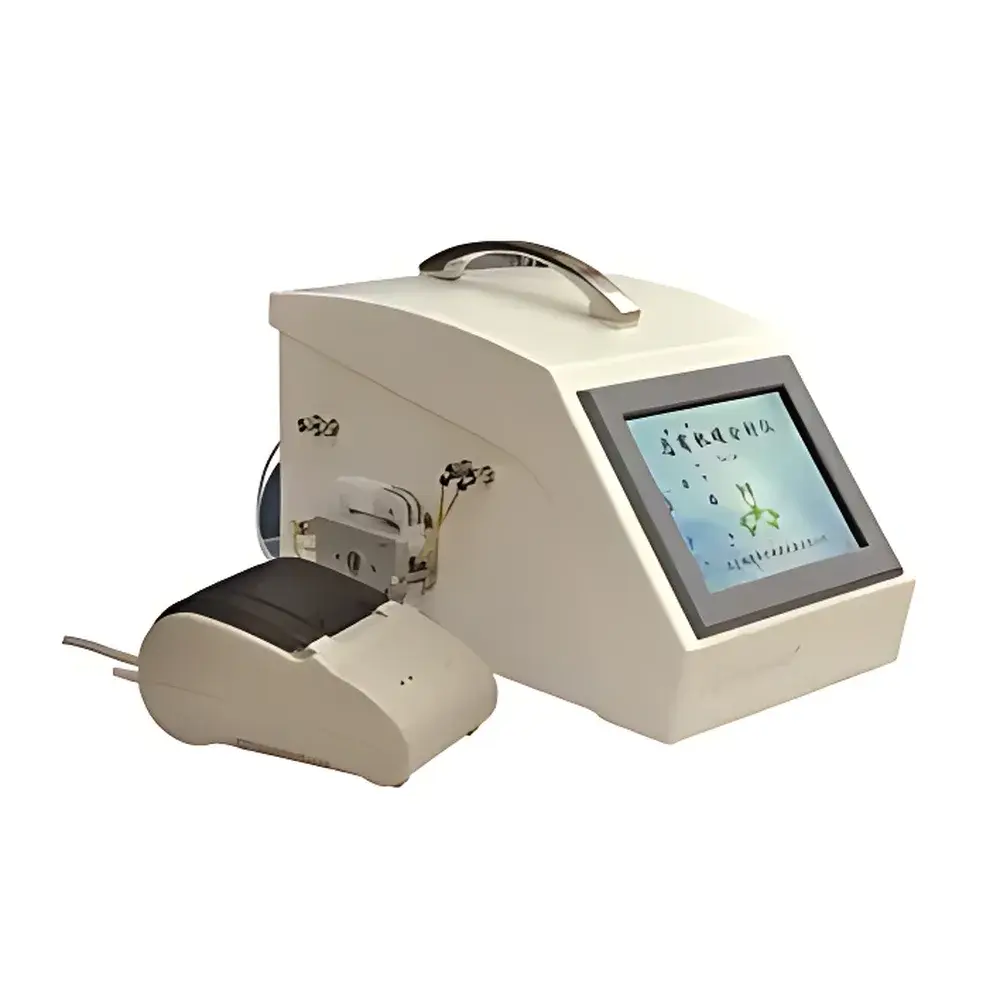
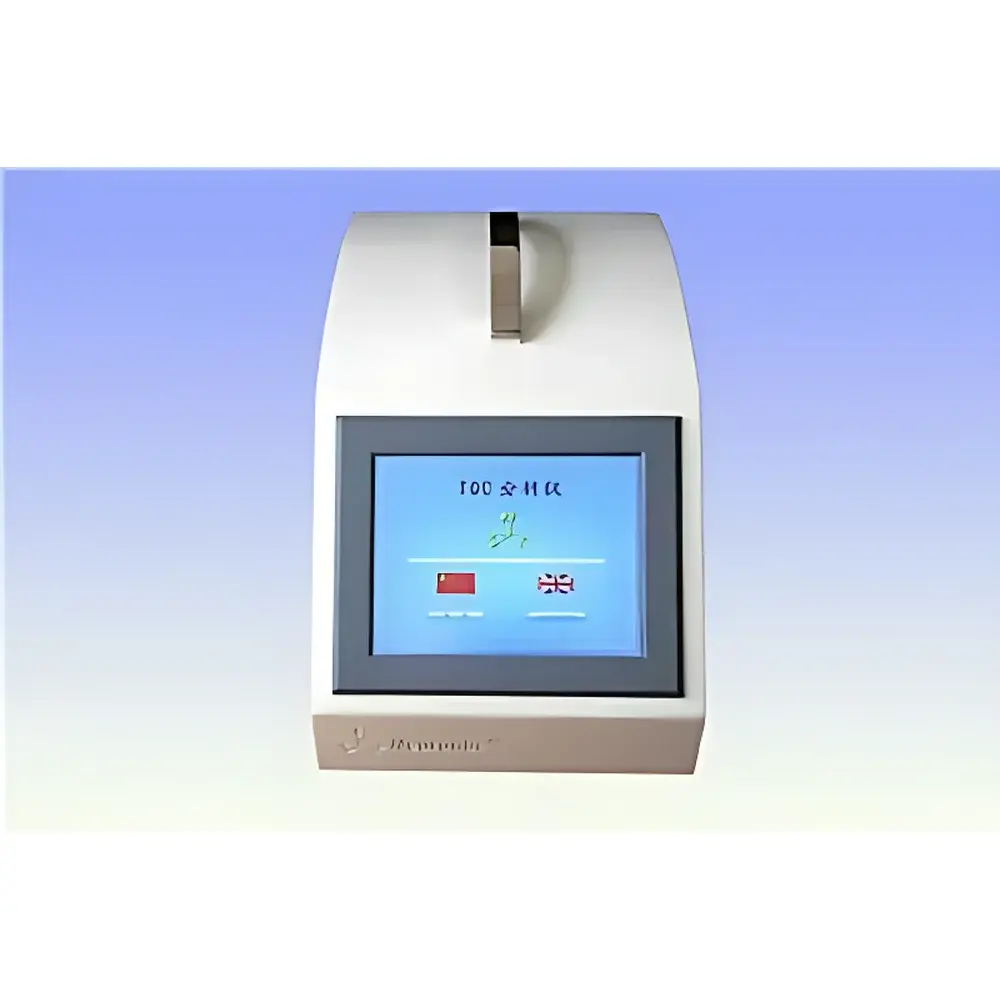
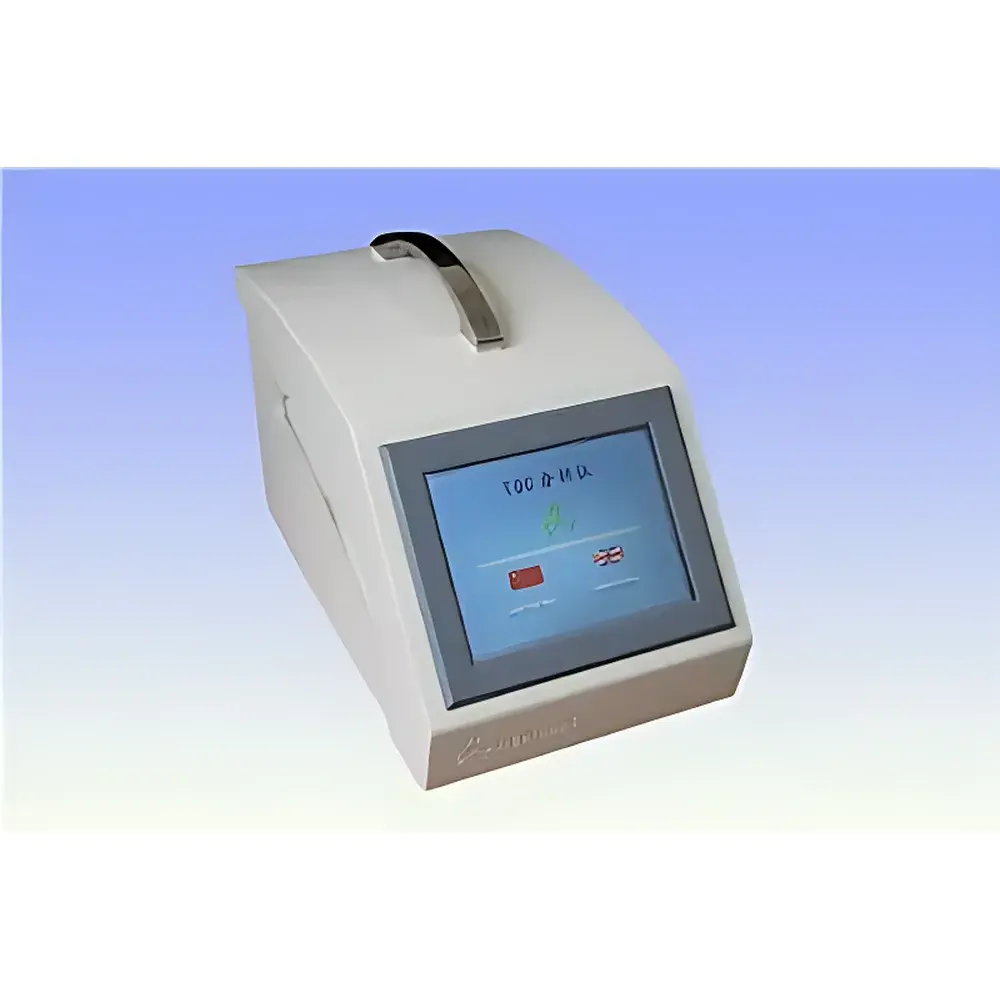
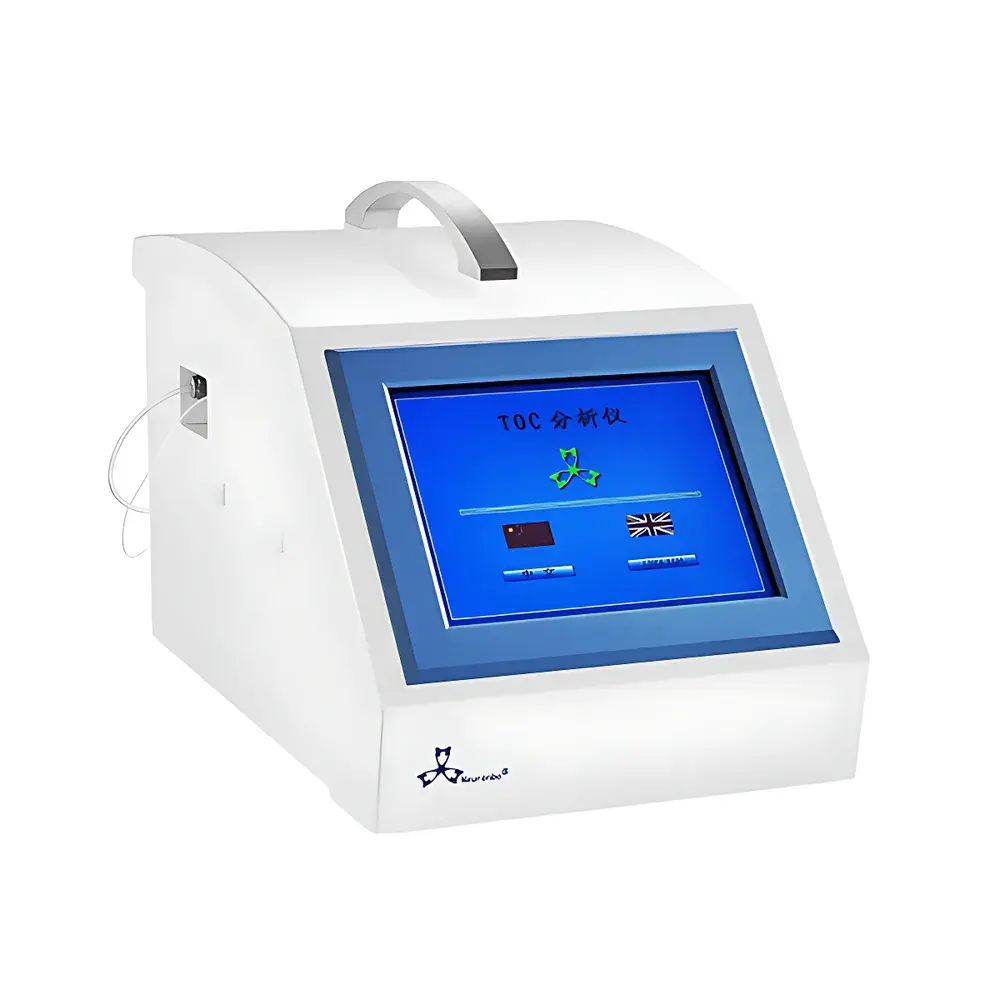
NeuronBC TA-1.0 Total Organic Carbon (TOC) Analyzer
| Brand | NeuronBC |
|---|---|
| Origin | Beijing, China |
| Model | TA-1.0 |
| Instrument Type | Laboratory TOC Analyzer |
| Detection Principle | Direct Conductivity Detection |
| Oxidation Method | UV Photolysis (185/254 nm) |
| Measurement Range | 1–1000 µg/L (ppb) |
| Accuracy | ±3% of reading |
| Detection Limit | 1 µg/L |
| Resolution | 1 µg/L |
| Repeatability | ≤3% RSD |
| Sample Temperature Range | 1–95 °C |
| Analysis Time | <5 minutes per sample |
| Display | Color TFT Touchscreen |
| Power Supply | 220 V AC |
Overview
The NeuronBC TA-1.0 Total Organic Carbon (TOC) Analyzer is a laboratory-grade, ultralow-range TOC measurement system engineered for regulatory-compliant water quality assessment in pharmaceutical, biotechnology, and high-purity industrial applications. It operates on the fundamental principle of differential conductivity measurement following selective oxidation: organic carbon in aqueous samples is quantitatively converted to CO₂ via deep-UV photolysis (185 nm + 254 nm dual-wavelength irradiation) in the presence of a catalyst-free quartz reaction chamber. The resulting CO₂ dissolves to form carbonic acid, inducing a measurable change in solution conductivity. Total Carbon (TC) is determined from UV-oxidized sample effluent; Total Inorganic Carbon (TIC) is measured from an unoxidized aliquot under identical conductometric conditions. TOC is calculated as the arithmetic difference: TOC = TC − TIC. This direct conductivity methodology eliminates reliance on carrier gases, chemical reagents, or post-oxidation gas separation modules—reducing consumables, operational complexity, and long-term cost of ownership.
Key Features
- Reagent-free, gas-free operation: No persulfate, ozone, or compressed air required—ideal for cleanroom and GMP environments where contamination control is critical.
- Catalyst-free UV oxidation: Dual-wavelength 185/254 nm low-pressure mercury lamp ensures complete oxidation of recalcitrant organics (e.g., acetate, ethanol, sucrose) without metal leaching or catalytic deactivation.
- True differential conductometric detection: Paired conductivity cells with temperature-compensated electronics deliver stable baseline performance and minimize drift over extended operation.
- Integrated touchscreen interface: 7-inch color TFT display with intuitive navigation, multi-level user authentication (operator, supervisor, administrator), and built-in electronic signature capability compliant with ALCOA+ data integrity principles.
- Portable benchtop architecture: Compact footprint (W × D × H: 320 × 350 × 220 mm) and lightweight design (<8 kg) support flexible deployment—suitable for both fixed lab stations and mobile sampling point verification.
- Real-time alarm & control output: Programmable threshold alerts (with visual/audio notification and dry-contact relay output) for out-of-specification results during routine monitoring or validation runs.
- Robust data handling: Internal flash memory stores ≥10,000 test records with full metadata (date/time, operator ID, sample ID, method name, raw conductivity values, TC/TIC/TOC, %RSD).
Sample Compatibility & Compliance
The TA-1.0 is validated for use with purified water (PW), water for injection (WFI), and clean steam condensate per USP , EP 2.2.44, and JP 17 General Chapter “Total Organic Carbon”. It meets the sensitivity and precision requirements for pharmacopeial TOC testing (detection limit ≤1 µg/L, accuracy ±3%, repeatability ≤3% RSD). Its design supports IQ/OQ/PQ execution per ASTM E2500 and Annex 11, with audit-trail-enabled firmware that logs all user actions, parameter changes, and calibration events. The system conforms to ISO 9001 manufacturing practices and is CE-marked for EMC and safety (EN 61326-1, EN 61000-6-3). No hazardous waste generation occurs during normal operation—fully aligned with green laboratory initiatives.
Software & Data Management
Data export is supported via USB 2.0 port in CSV format for LIMS integration or offline statistical analysis (e.g., Shewhart control charts, trend analysis). The embedded software enforces role-based access control (RBAC), requiring dual authentication for method modification or report deletion. All stored records include immutable timestamps, digital signatures, and revision history—satisfying FDA 21 CFR Part 11 requirements for electronic records and signatures when operated in supervised mode. Optional PC-based configuration utility allows remote firmware updates, method library management, and automated report generation (PDF/Excel) with customizable templates.
Applications
- Pharmaceutical water systems: Routine TOC surveillance of PW/WFI distribution loops, point-of-use verification, and cleaning validation rinse water analysis.
- Biotechnology process water: Monitoring of buffer preparation water, cell culture media feedstock, and final product formulation water.
- Electronics grade water: Ultrapure water (UPW) qualification in semiconductor fab facilities where organic contamination impacts wafer yield.
- Environmental compliance: Low-level TOC screening of treated wastewater effluents and groundwater monitoring wells where regulatory thresholds are sub-10 ppb.
- Food & beverage R&D: Quantification of residual sanitizers (e.g., hydrogen peroxide, peracetic acid) and organic carryover in CIP validation studies.
FAQ
Does the TA-1.0 require periodic catalyst replacement or lamp recalibration?
No. The UV lamp is rated for ≥12,000 hours of continuous operation, and the quartz oxidation reactor is chemically inert with no consumable catalysts. System performance verification is performed using certified KHP and NaHCO₃ standards—no hardware intervention needed.
Can the instrument be integrated into a SCADA or DCS network?
Yes. Optional 4–20 mA analog output and Modbus RTU (RS-485) interface enable seamless integration with plant-wide automation systems for real-time TOC trending and alarm forwarding.
Is method validation documentation available for regulatory submissions?
Yes. NeuronBC provides a comprehensive Validation Support Package including URS, FDS, IQ/OQ/PQ protocols, raw data worksheets, and summary reports aligned with ICH Q2(R2) and ASTM D5905.
What sample volume is required per analysis?
25 mL minimum per run; auto-sampling module (optional) supports unattended batch analysis of up to 40 vials.
How is carryover minimized between high- and low-concentration samples?
The flow path employs PFA tubing and electropolished 316L stainless steel components, with programmable rinse cycles (up to 5× with ultra-pure water) and automatic blank subtraction to correct for residual signal.
Related Products







