
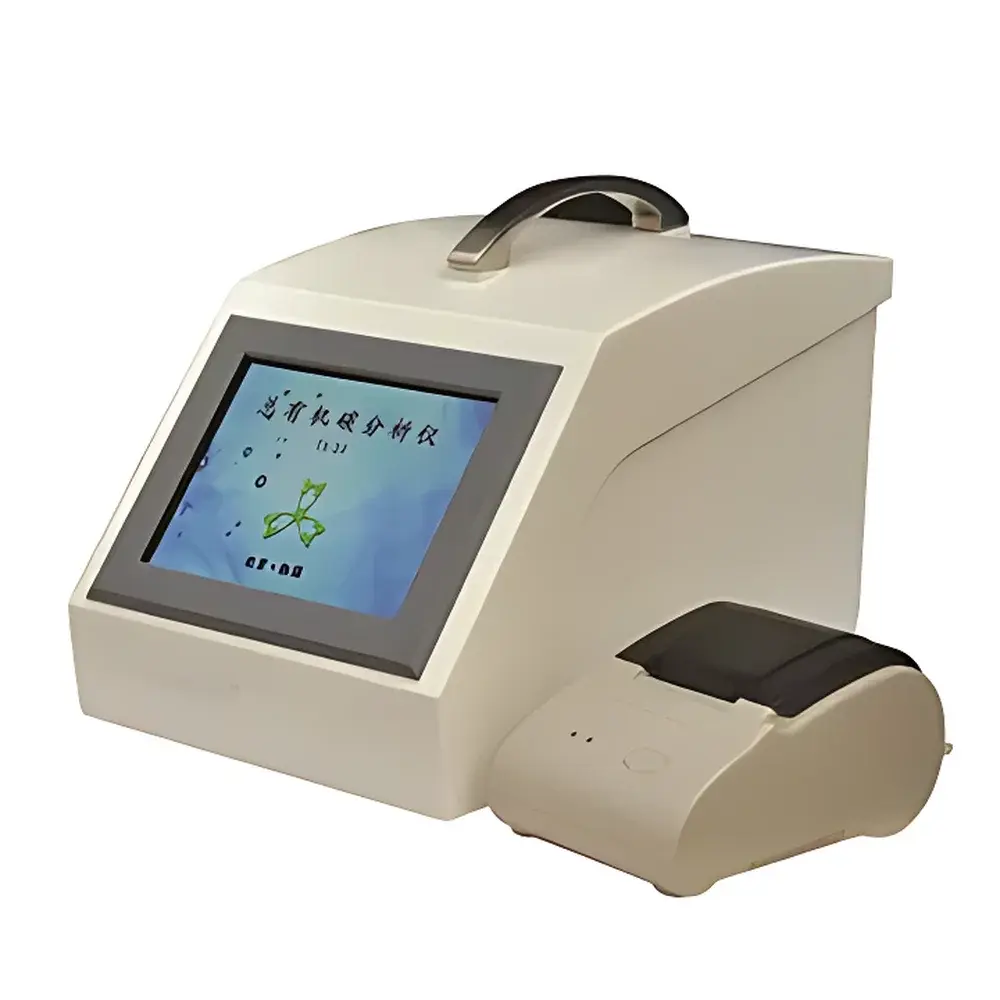
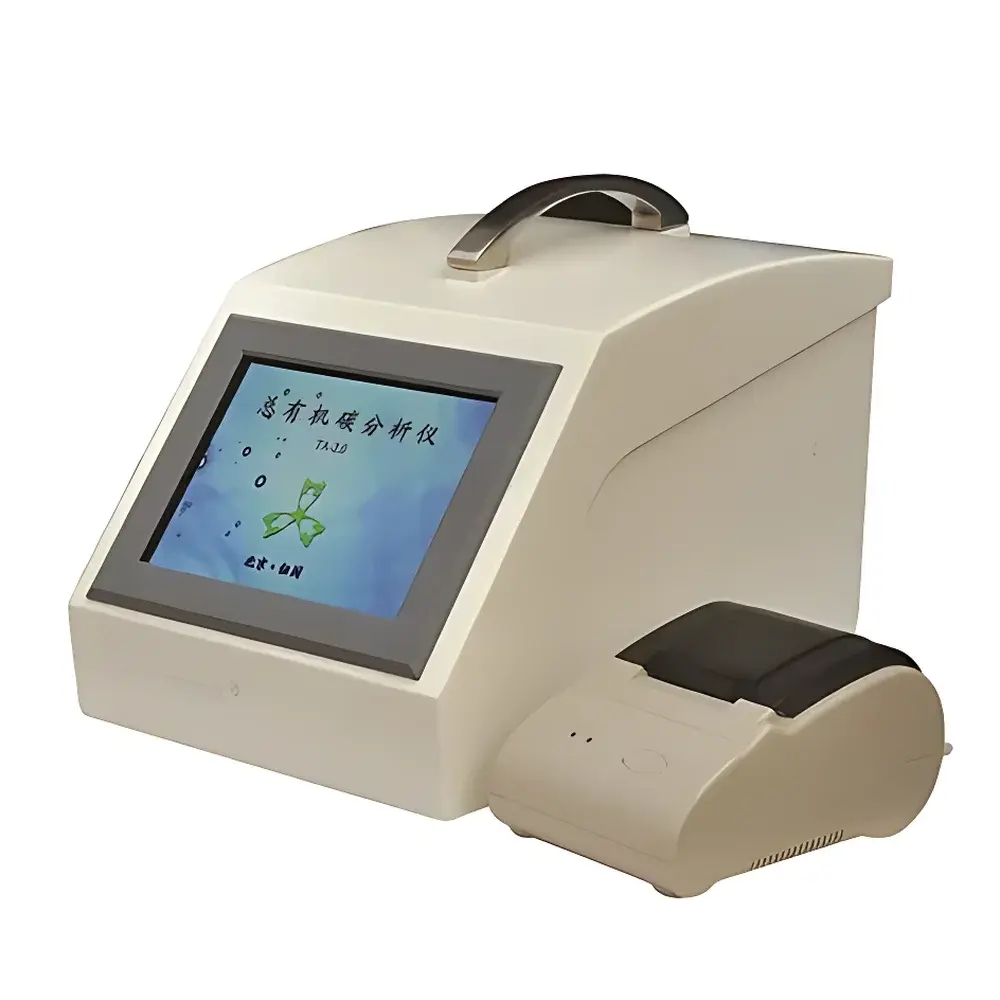
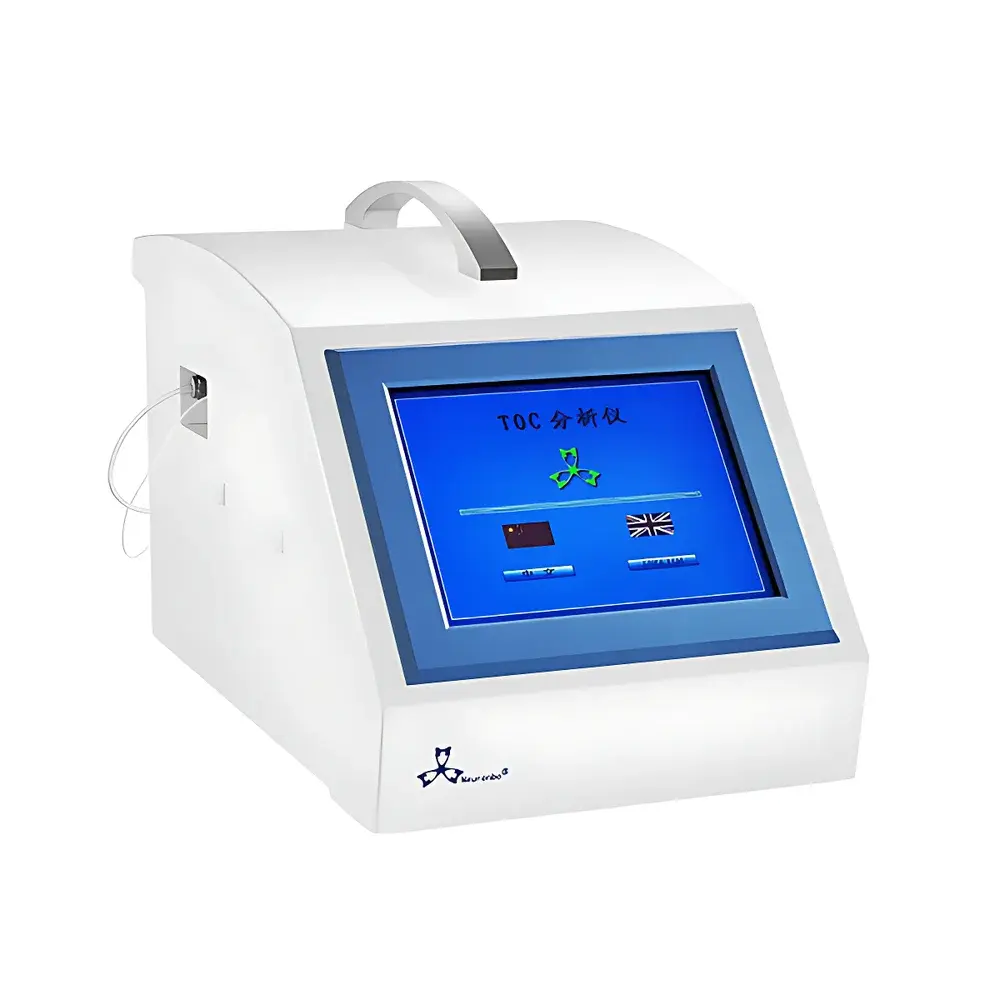
NeuronBC TA-2.0 Online & Offline Total Organic Carbon (TOC) Analyzer
| Brand | NeuronBC |
|---|---|
| Origin | Beijing, China |
| Model | TA-2.0 Online & Offline 2.0 |
| Instrument Type | Online/Offline Dual-Mode TOC Analyzer |
| Detection Principle | Direct Conductivity Measurement |
| Oxidation Method | UV Photolysis (185 nm + 254 nm) |
| Measurement Range | 1–1000 ppb (as C) |
| Accuracy | ±3% of reading |
| Detection Limit | 1 ppb (as C) |
| Repeatability | ≤3% RSD |
| Resolution | 1 ppb |
| Conductivity Detection Range | 0.055–8.000 µS/cm |
| Sample Temperature Range | 1–95 °C |
| Ambient Operating Temperature | 5–65 °C |
| Power Supply | 100–240 VAC, 50 Hz, 120 W |
| Dimensions (L×W×H) | 400 × 240 × 270 mm |
| Weight | 8.5 kg |
| Data Storage Capacity | >5000 measurement records |
| Audit Trail | 16+ event log categories with timestamped traceability |
| User Access Control | 4-tier role-based authentication (username/password) compliant with FDA 21 CFR Part 11 |
| Connectivity | Ethernet port, RS-232 serial interface, analog power output |
| Display | Color touchscreen interface |
| Data Export | USB flash drive support |
Overview
The NeuronBC TA-2.0 Online & Offline Total Organic Carbon (TOC) Analyzer is an engineered solution for precise, regulatory-compliant organic carbon quantification in ultrapure water systems used across pharmaceutical manufacturing, biotechnology, semiconductor fabrication, and clinical laboratory environments. It operates on the principle of direct conductivity detection following low-pressure ultraviolet (UV) photolysis — a non-persulfate, reagent-free oxidation method utilizing dual-wavelength UV lamps (185 nm for radical generation and 254 nm for enhanced photon absorption). This approach ensures complete oxidation of non-purgeable organic compounds to CO₂, which is subsequently measured via high-sensitivity conductivity detection after selective removal of inorganic carbon interference. The instrument supports both continuous online monitoring (up to three sampling points via optional manifold configuration) and discrete offline laboratory analysis, enabling seamless transition between process validation, routine QC testing, and cleaning verification workflows.
Key Features
- Reagent-free UV photolysis oxidation system eliminates chemical handling, storage, and associated calibration drift — reducing operational risk and maintenance burden.
- Pumpless flow architecture with precision electronic flow control ensures stable sample delivery without tubing degradation, pressure regulation hardware, or consumable pump components — enhancing long-term measurement reproducibility (≤3% RSD).
- Dual-mode operation: Configurable as either a standalone benchtop analyzer or integrated into distributed water system monitoring networks via Ethernet or RS-232.
- FDA 21 CFR Part 11–compliant software architecture featuring four-tier user privilege levels, encrypted audit trail logging (>16 event categories), and time-stamped electronic signatures.
- High-resolution color touchscreen interface with intuitive navigation, real-time trend visualization, and on-device data review capabilities.
- Robust thermal management supporting operation across 1–95 °C sample temperature range and ambient conditions from 5–65 °C — suitable for cleanroom, utility corridor, and laboratory deployment.
Sample Compatibility & Compliance
The TA-2.0 is validated for use with Type I–III purified water per ISO 3696 and USP , EP 2.2.44, and JP 2.05 standards. Its 1 ppb detection limit and linear response across 1–1000 ppb enable compliance with pharmacopeial requirements for Water for Injection (WFI) and Purified Water (PW) monitoring. The instrument’s design adheres to GMP principles for computerized system validation (CSV), including configurable alarm thresholds, automatic calibration verification prompts, and full traceability of all critical events — facilitating successful regulatory inspections under FDA, EMA, PMDA, and NMPA frameworks.
Software & Data Management
Embedded firmware supports secure data acquisition, storage, and export without third-party dependencies. All measurements are timestamped and stored locally in non-volatile memory (≥5000 records). Historical datasets can be retrieved by date/time range or event type and exported in CSV format via USB interface. Audit logs capture operator login/logout sequences, parameter changes, calibration actions, alarm activations, and system errors — each entry cryptographically signed and immutable. Optional integration with LIMS or SCADA platforms is enabled through Modbus TCP or ASCII protocol over Ethernet.
Applications
- Real-time TOC surveillance of PW/WFI distribution loops and point-of-use locations in pharmaceutical manufacturing facilities.
- Cleaning-in-place (CIP) validation and rinse water analysis during equipment qualification studies.
- Ultrapure water quality assurance in semiconductor fab utilities and photolithography tool feed lines.
- Environmental monitoring of reclaimed water effluent and pretreatment system performance assessment.
- Research-grade TOC profiling in academic and contract research laboratories requiring trace-level sensitivity and regulatory documentation integrity.
FAQ
Does the TA-2.0 require acidification or sparging prior to analysis?
No — the direct conductivity method eliminates the need for acid addition or nitrogen sparging, simplifying operation and minimizing contamination risk.
Can the instrument be validated per IQ/OQ/PQ protocols?
Yes — comprehensive validation documentation packages, including URS, FRS, DQ, and protocol templates aligned with ASTM E2500 and Annex 11, are available upon request.
Is remote diagnostics supported?
Remote firmware updates and diagnostic access are available via secure SSH tunneling when deployed behind enterprise firewalls with appropriate IT governance controls.
What is the recommended calibration frequency?
Initial calibration verification is performed at installation; subsequent verification is advised every 72 hours of continuous operation or before each critical batch release test — configurable within the system scheduler.
How does the system handle high-conductivity samples?
An integrated conductivity compensation algorithm dynamically adjusts baseline correction across the full 0.055–8.000 µS/cm range, ensuring accuracy even in variable background conductivity environments.
Related Products







