
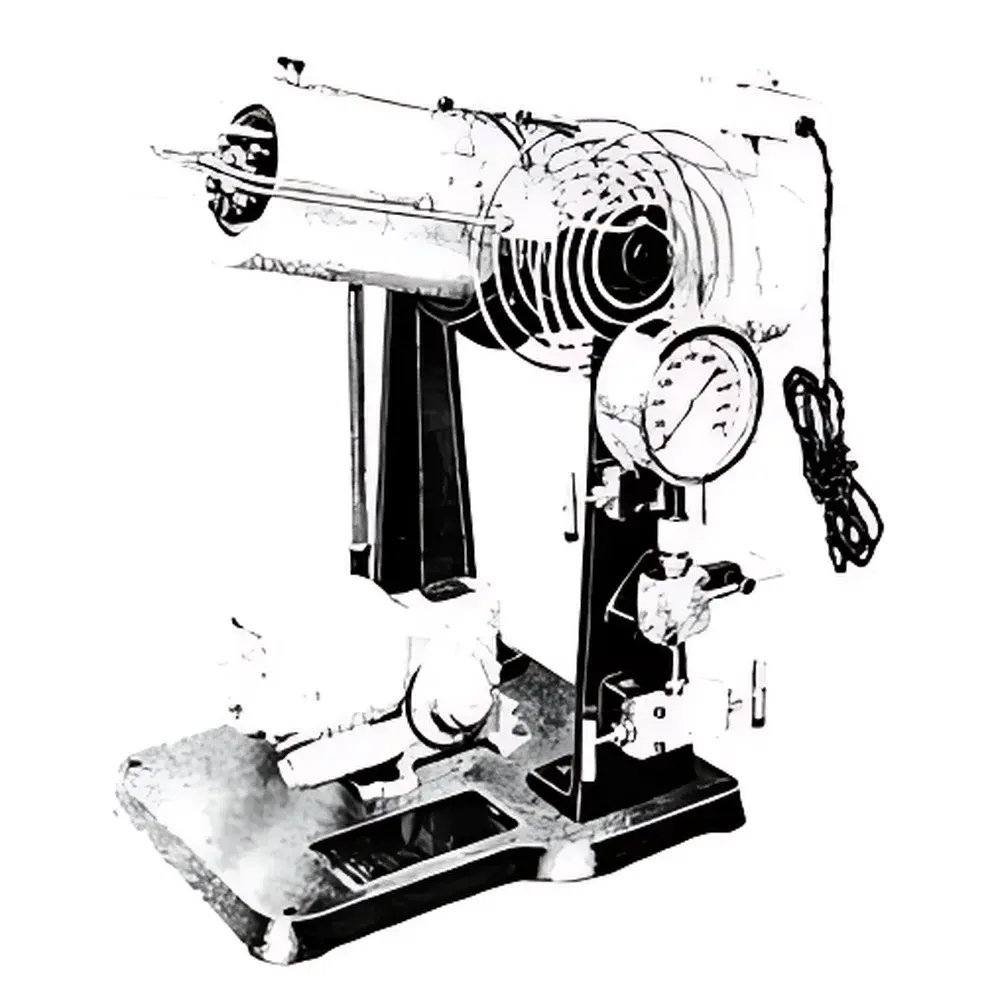
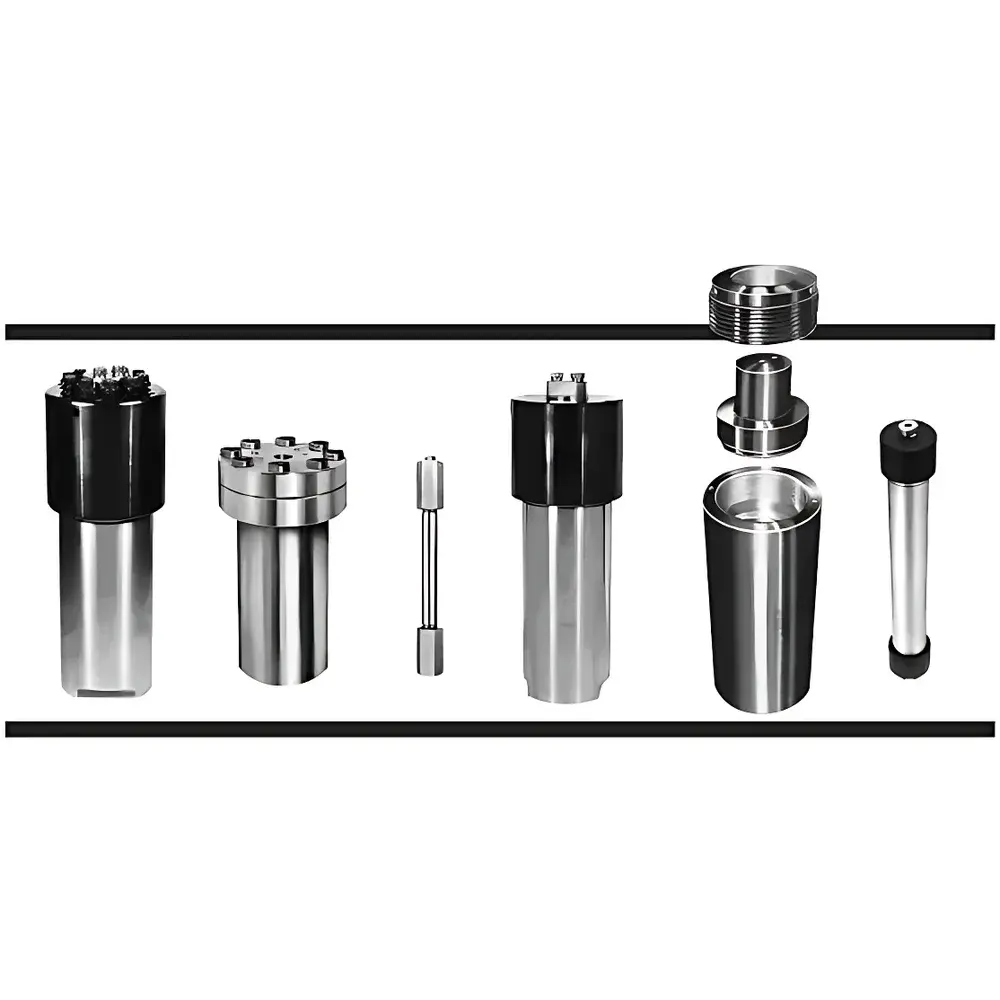
Newport Scientific Laboratory High-Pressure Reactor System
| Brand | Newport Scientific |
|---|---|
| Origin | USA |
| Manufacturer Type | Authorized Distributor |
| Origin Category | Imported |
| Model | Lab-Scale High-Pressure Reactor Series |
| Price | USD $50,000 |
| Usable Volume Range | 23–4520 mL |
| Construction Material | Modular Corrosion-Resistant Alloy with Interchangeable Liners |
| Operating Pressure | Up to 139 MPa (20,000 psi) |
| Vacuum Capability | 46–139 MPa (absolute, gauge-referenced) |
| Oscillation Angle | 30° |
| Oscillation Frequency | 36 cycles/min |
| External Drive Motor | Integrated AC Servo |
| Pressure Gauge | Dual-scale Analog + Digital Output |
| Heating Jacket | Segmented Resistive Heating with Independent Thermal Zones |
| Liner Options | Removable Pyrex® Glass, Electroless Nickel-Coated Stainless Steel, or Custom Alloy Liners |
Overview
The Newport Scientific Laboratory High-Pressure Reactor System is an engineered platform for controlled kinetic and thermodynamic studies under extreme pressure conditions—up to 139 MPa (20,000 psi)—with precise mechanical agitation, thermal management, and corrosion-resistant sample containment. Designed around Couette-type oscillatory mixing and modular pressure boundary architecture, the system enables reproducible small-volume (<4.5 L) reaction monitoring without compromising seal integrity or thermal uniformity. Its core operational principle relies on low-amplitude, high-frequency angular oscillation (30°, 36 cycles/min) driven by an external servo motor—eliminating rotating shaft penetrations and thereby mitigating primary leakage pathways common in stirred autoclaves. This makes it especially suitable for early-stage catalytic screening, gas-liquid equilibrium measurements, and rapid process parameter mapping where statistical repeatability and material compatibility are critical.
Key Features
- Oscillatory agitation mechanism: 30° swing amplitude at 36 cycles per minute—mechanically isolated from pressure boundary; eliminates dynamic seal wear and cross-contamination risks.
- Modular liner system: Interchangeable liners include borosilicate glass (Pyrex®), electroless nickel-plated stainless steel, and custom alloy variants—each fitted with a calibrated vent port to equalize pressure across the liner wall and prevent delamination.
- Segmented heating jacket: Two-zone resistive heating for 4-3/8″ OD reactors; asymmetric element layout ensures radial thermal uniformity without simultaneous full-power activation—reducing thermal stress and improving temperature ramp control (±0.5°C stability over 24 h).
- Thermally decoupled mounting: Reactor rests only on its base within the jacket; independent expansion coefficients between vessel and heater shell prevent binding or misalignment during thermal cycling.
- Scalable geometry: Compatible with reactor bodies ranging from 23 mL (2″ OD × 8″ depth pre-test unit) to 4520 mL (standard lab scale); all share identical flange interface standards and instrumentation ports (1/4″ NPT, 3/8″ VCR).
- Integrated pressure monitoring: Dual-range analog/digital pressure transducer with overpressure cutoff (settable up to 140 MPa) and real-time RS-485 output for synchronization with data acquisition systems.
Sample Compatibility & Compliance
The system supports heterogeneous, multiphase, and highly corrosive chemistries—including halogenated solvents, supercritical CO₂, H₂S-rich streams, and acidic catalyst slurries—through its configurable liner strategy. Pyrex® liners comply with ASTM E438 Type I, Class A specifications for laboratory glassware and are routinely validated for use in USP extractables testing. Metal-lined configurations meet ASME BPVC Section VIII, Division 1 requirements for pressure boundary components and are certified for operation under ISO 4744:2019 (high-pressure equipment safety). All reactors undergo hydrostatic proof testing at 1.5× maximum allowable working pressure (MAWP) prior to shipment, with traceable calibration records provided per ISO/IEC 17025:2017 guidelines. The design accommodates GLP-compliant audit trails when integrated with validated SCADA software.
Software & Data Management
While the base configuration operates via manual setpoints and analog readouts, optional digital integration includes Newport Scientific’s ReactorLink™ firmware (v3.2+), which supports FDA 21 CFR Part 11–compliant electronic signatures, audit logging, and role-based access control. Data streams—including pressure, jacket temperature, oscillation phase angle, and external thermocouple inputs—are timestamped and exported in CSV/CSV-T format compatible with MATLAB, Python pandas, and LIMS platforms. Firmware updates are delivered via secure HTTPS endpoint with SHA-256 signature verification; no cloud dependency is required for local deployment.
Applications
- Catalytic hydrogenation kinetics under elevated H₂ partial pressures (10–100 MPa)
- Supercritical fluid reaction engineering (e.g., scCO₂-mediated esterifications)
- Hydrothermal synthesis of metal-organic frameworks (MOFs) and nanomaterials
- Gas solubility and phase-equilibrium determination (PVTx characterization)
- Rapid screening of ligand-metal interactions in homogeneous catalysis
- Accelerated aging studies for polymerization inhibitors and stabilizers
FAQ
Can this reactor be used for exothermic reactions requiring active cooling?
Yes—optional cryogenic jacket adapters (liquid N₂ or chilled glycol) are available for reactors with ≥100 mL volume; maximum cooling rate is 1.2°C/min at 25 MPa.
Is the Pyrex® liner rated for thermal shock during rapid depressurization?
Liners are qualified for ≤150°C ΔT/min under controlled venting protocols; rapid quenching requires pre-qualification per ASTM C1525.
What validation documentation accompanies each unit?
Each reactor ships with a Certificate of Conformance, hydrotest report, material test reports (MTRs) per ASTM A240/A276, and calibration certificates traceable to NIST SRM 2460/2461.
Does the oscillation mechanism affect torque measurement accuracy?
No torque sensing is implemented—the system is not designed for rheological quantification; agitation serves solely for homogenization and mass transfer enhancement.
Are replacement liners supplied with recalibration of pressure transducers?
Liner replacement does not require transducer recalibration; however, annual recalibration is recommended per ISO/IEC 17025 and documented in the maintenance logbook.
Related Products



