
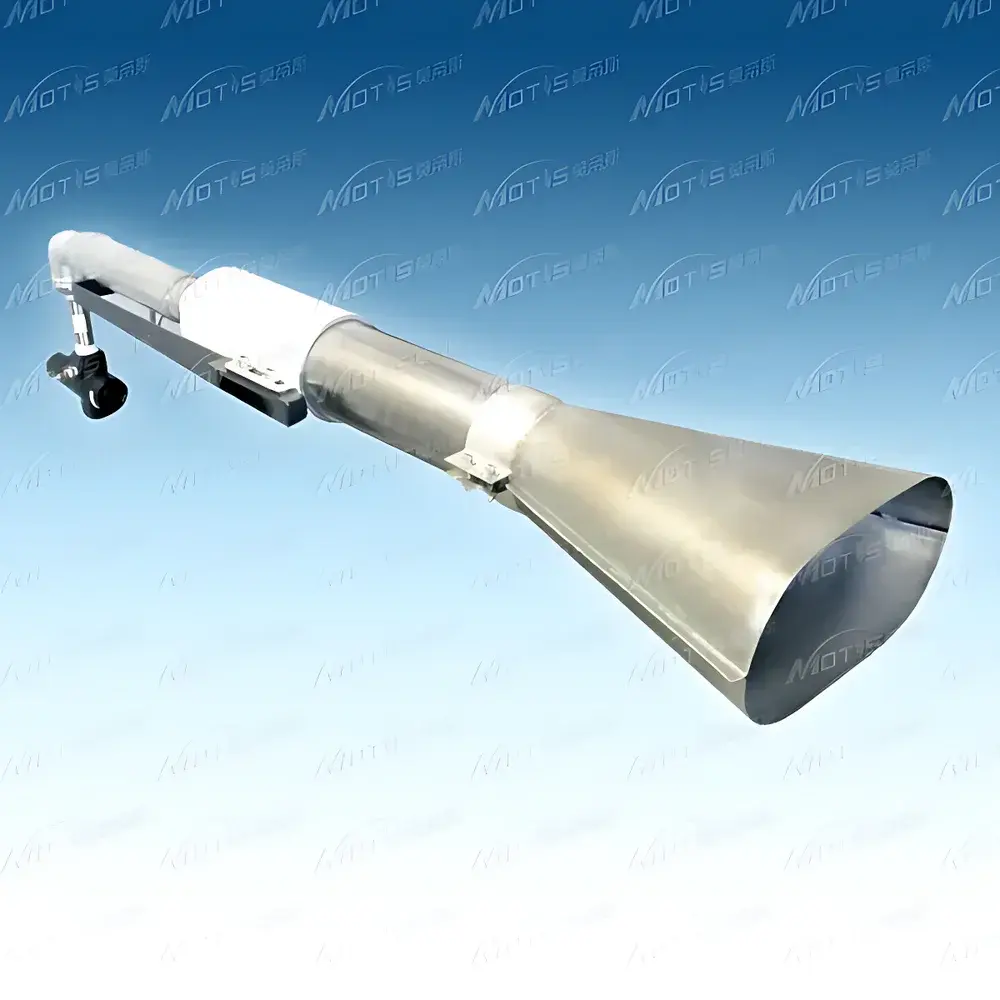
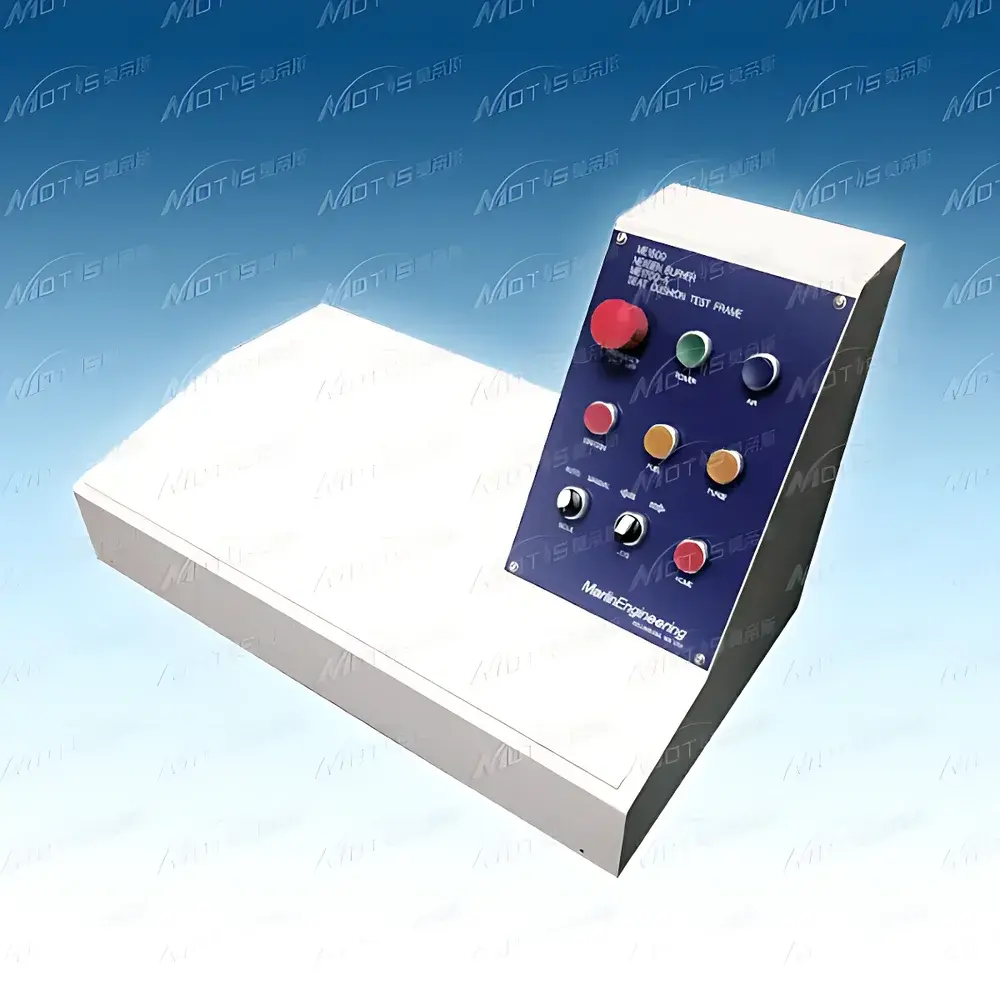
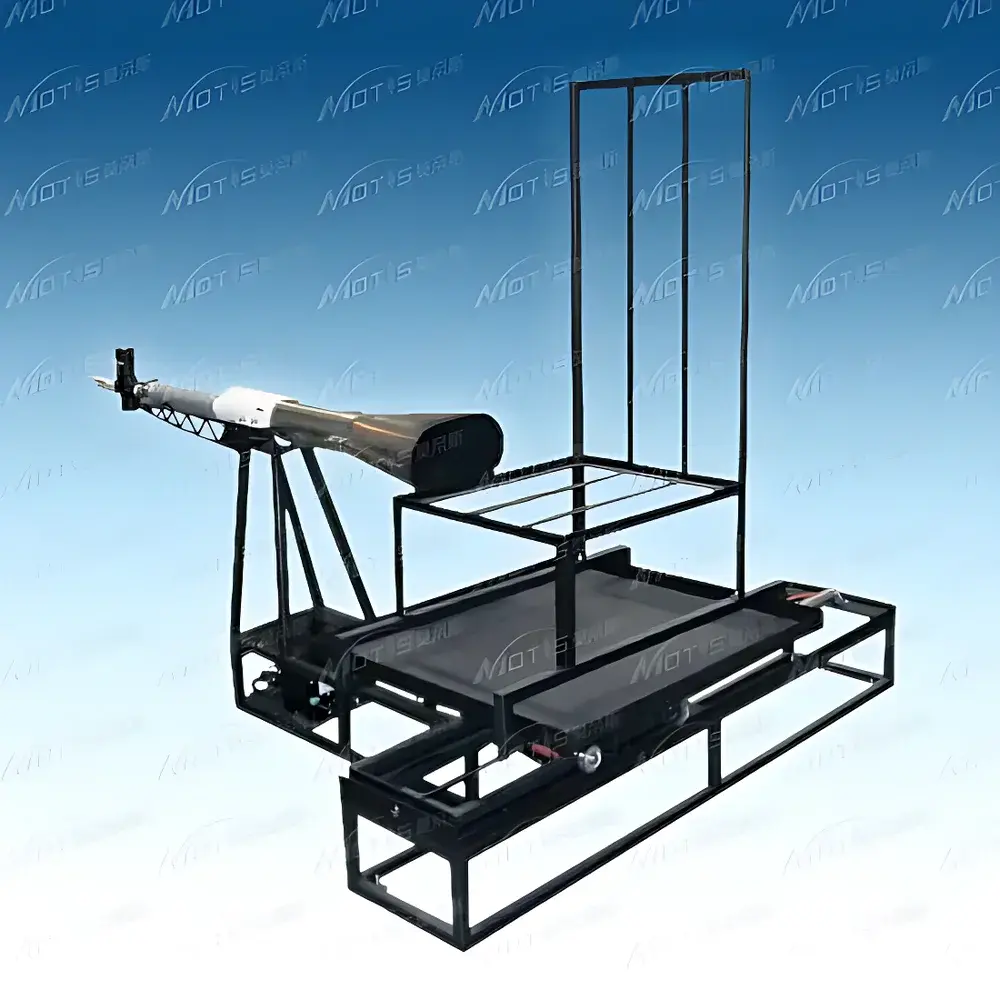
NexGen Aviation Fuel Burner by MEI / Marlin Engineering Model ME1500-1/3
| Brand | MEI / Marlin Engineering |
|---|---|
| Origin | USA |
| Manufacturer Type | Authorized Distributor |
| Origin Category | Imported |
| Model | ME1500-1/3 |
| Pricing | Upon Request |
Overview
The NexGen Aviation Fuel Burner (Model ME1500-1/3) is a FAA-qualified, precision-engineered combustion test apparatus designed to replicate standardized flame exposure conditions for aviation material flammability evaluation. Developed under FAA guidance to replace discontinued legacy burners—including the Park DPL 3400, Lennox OB-32, and Carlin 200 CRD—the NexGen system retains proven aerodynamic and combustion principles while incorporating enhanced instrumentation, modular adaptability, and forward-compatible architecture for future regulatory alignment. It operates on controlled stoichiometric combustion of aviation turbine fuel (Jet A or equivalent) with regulated compressed air, generating a stable, repeatable impinging flame with defined thermal output characteristics. Its primary function is to serve as the ignition source in vertical and horizontal flammability assessments mandated under U.S. Federal Aviation Regulations (FAR) and corresponding international civil aviation standards.
Key Features
- High-temperature, corrosion-resistant alloy conical burner tube engineered for long-term thermal stability and dimensional integrity under repeated 2000 ± 50 °F (1093 ± 28 °C) flame exposure.
- Integrated combustion subsystem comprising precision-machined fuel nozzle, aerodynamically optimized swirl stabilizer (turbulator), spark-ignition electrode, dual-pressure fuel rail, and acoustically damped enclosure with integrated silencer and acoustic impedance elements.
- Real-time monitoring and control of critical combustion parameters: fuel pressure (via calibrated analog gauge), fuel temperature (via PT100 sensor), air supply pressure (adjustable regulator), and inlet air temperature (monitored via thermocouple).
- Dual independent temperature conditioning system: two insulated ice-bath reservoirs (≥ 0.14 m³ each) for active thermal stabilization of both fuel and combustion air—ensuring consistent fluid properties across test cycles.
- Modular airflow management: adjustable air damper enabling precise volumetric flow control at ≈ 1.89 m³/min (67 CFM) at standard conditions; fuel flow regulated to 0.126 L/min (0.033 gal/min) via calibrated pressure-reducing valve.
- Thermal containment system: FAA-compliant insulating blanket assembly for shielding fuel lines and structural supports from radiant heat, minimizing parasitic thermal drift and enhancing operator safety.
- Flame performance certified to deliver minimum incident heat flux ≥ 10.6 W/cm² at specified standoff distances, validated per ASTM E119 and ISO 834 calibration protocols.
Sample Compatibility & Compliance
The NexGen Burner is configured to support standardized specimen mounting fixtures required for FAR Part 25 compliance testing. It interfaces seamlessly with test rigs for seat cushion assemblies, thermal/acoustic insulation blankets, cargo compartment liners, flexible and rigid ducting, electric motor housings, and electrical connector housings. Validated test configurations meet FAA Advisory Circular AC 25.853-1, AC 25.855-1, AC 25.863-1, and AC 25.867-1 requirements. Internationally, it supports harmonized execution of EN 14783, ISO 6941, and BS EN 13501-1 methodologies. Domestic Chinese aviation standards—including MH/T 6086, HB 7263, MH/T 6041, GB/T 25352, and HB 7044—are implemented via configurable nozzle geometry, air/fuel ratio tuning, and fixture-specific standoff distance calibration.
Software & Data Management
The NexGen Burner operates as a hardware-critical component within a broader flammability test platform. While the burner itself is manually operated and analog-instrumented per FAA acceptance criteria, its integration into automated test systems is supported via 4–20 mA and 0–10 V analog signal outputs for fuel pressure, air temperature, and fuel temperature. When deployed in GLP- or GMP-regulated laboratories, data acquisition is typically performed using compliant DAQ systems (e.g., National Instruments cDAQ or Keysight DAQ970A) configured with audit-trail-enabled software adhering to 21 CFR Part 11 requirements. All calibration records, maintenance logs, and operational parameter logs must be retained for minimum five-year archival per FAA Order 8110.4C and EASA AMC 20-22.
Applications
- Vertical burn testing of aircraft seat cushions per FAR 25.853(a)(1) and ISO 6941.
- Burn-through resistance evaluation of thermal/acoustic insulation materials (FAR 25.855).
- Fire resistance validation of cargo compartment liner panels (FAR 25.855 and FAR 25.863).
- Flame propagation testing of flexible and rigid air distribution ducts (FAR 25.867).
- Ignition resistance assessment of electric motor casings and high-voltage connector housings exposed to fuel-rich environments.
- Developmental fire modeling input for CFD-based flame spread simulations requiring empirically validated boundary conditions.
FAQ
Is the NexGen Burner certified directly by the FAA?
The NexGen Burner is FAA-accepted as a qualified replacement device per FAA Notice N 8900.421 and associated type design approval documentation. It is not independently “certified” but qualifies as an approved test apparatus when installed, calibrated, and operated per AC 25.853-1 Appendix B procedures.
Can it be used for non-aviation applications such as automotive or rail fire testing?
While physically capable of generating comparable thermal fluxes, its configuration, calibration traceability, and documented validation are specific to FAR/CS-25 and related aviation standards. Use in other sectors requires full re-validation against applicable ISO, EN, or SAE standards.
What calibration intervals are recommended?
Fuel and air pressure gauges require quarterly verification against NIST-traceable references; thermocouples and RTDs must be checked before each test series; burner alignment and flame geometry must be verified daily using FAA-specified copper slug calorimetry per AC 25.853-1 §B.3.3.



