
Night N Adaptive Optics System
| Brand | Night N |
|---|---|
| Origin | Russia |
| Model | Night N |
| Beam Diameter Input | 500 mm |
| Wavelength Range | 400–1100 nm |
| Wavefront Sampling Grid | 20 × 20 points |
| Sampling Frequency | 100 Hz |
| Maximum Wavefront Correction | 30λ @ 632.8 nm |
| Correction Accuracy | λ/10 @ 632.8 nm |
| Operating Voltage | 100–120 V & 200–240 V AC |
Overview
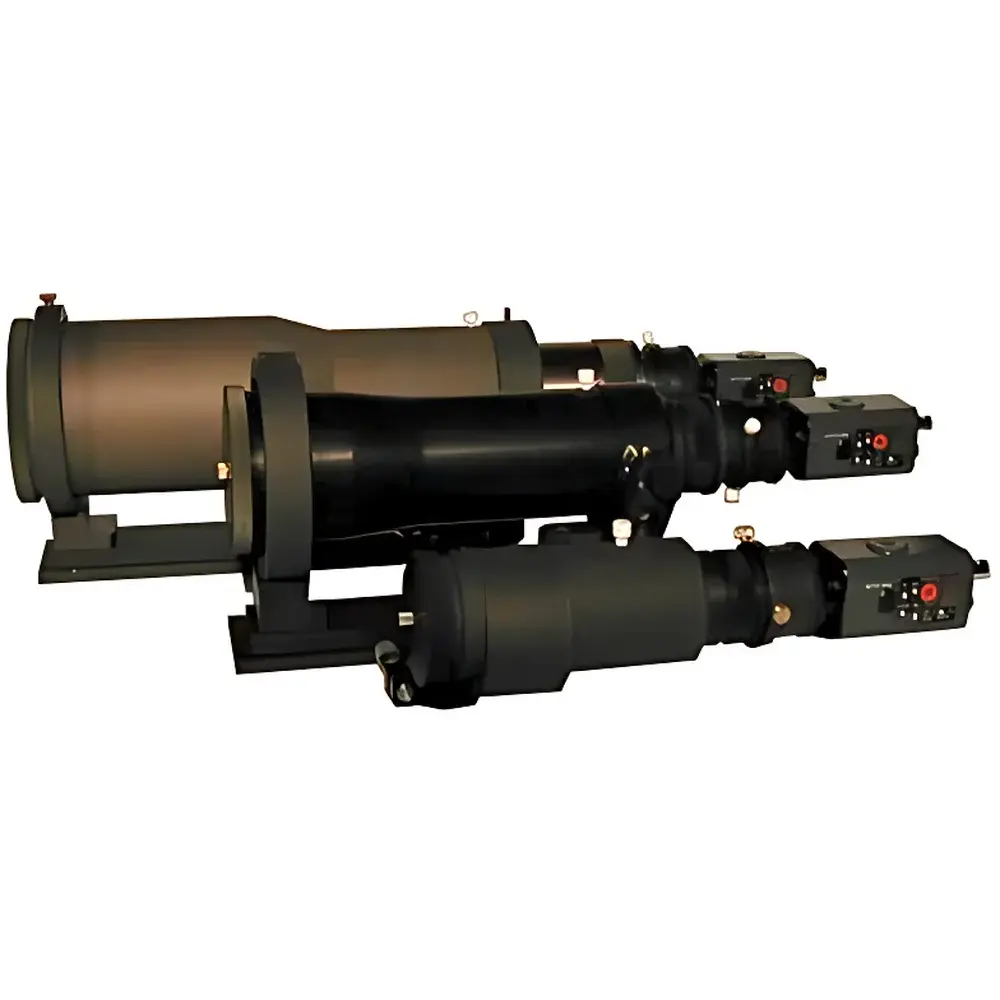
The Night N Adaptive Optics (AO) System is a turnkey, high-fidelity wavefront correction platform engineered for precision optical metrology, laser beam shaping, and real-time aberration compensation in research and industrial applications. Based on the Shack-Hartmann wavefront sensing principle and closed-loop piezoelectric deformable mirror (DM) actuation, the system delivers deterministic, repeatable wavefront control across the visible to near-infrared spectrum (400–1100 nm). Its 20 × 20 subaperture sampling grid enables spatially resolved wavefront reconstruction with sub-λ/10 RMS accuracy at 632.8 nm—meeting the resolution requirements for high-numerical-aperture microscopy, ultrafast laser pulse compression, and astronomical adaptive optics testbeds. Designed for integration into existing optical benches or vacuum-compatible enclosures, the Night N system operates independently of ambient vibration or thermal drift due to its robust mechanical architecture and hardware-synchronized timing engine.
Key Features
- Integrated Shack-Hartmann wavefront sensor with high-quantum-efficiency CMOS detector optimized for 400–1100 nm operation
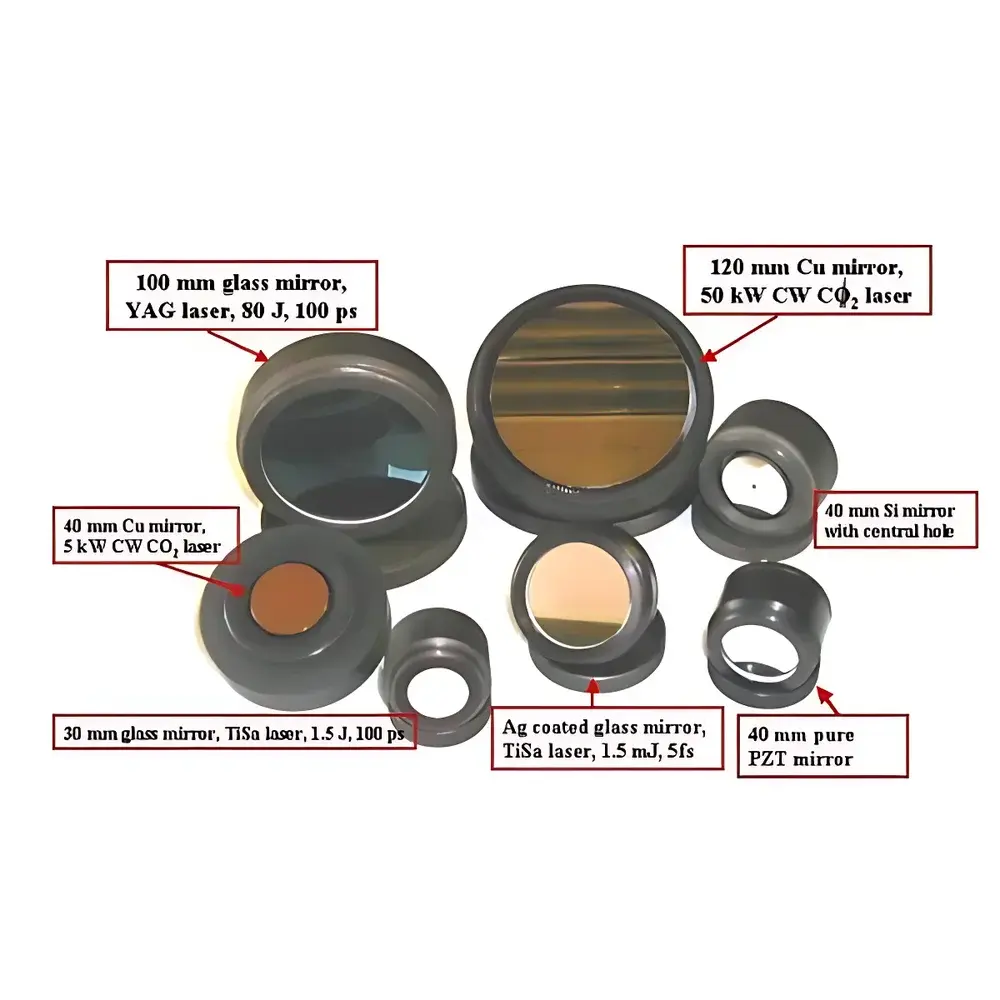
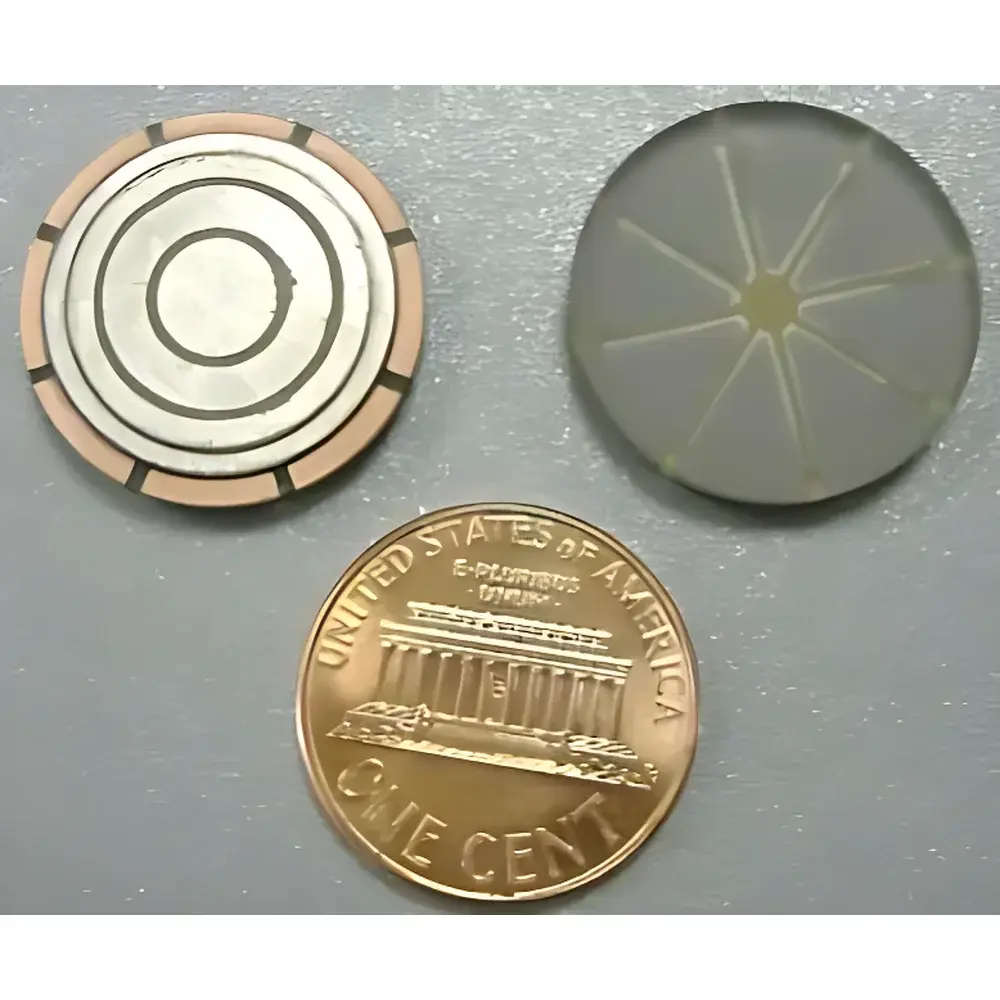
- Piezoelectric deformable mirror with ≥37 actuators (20 × 20 sampling grid mapped to actuator topology), delivering >30λ peak-to-valley stroke at 632.8 nm
- Real-time closed-loop control at 100 Hz frame rate, with configurable loop gain, integrator time constant, and modal filtering
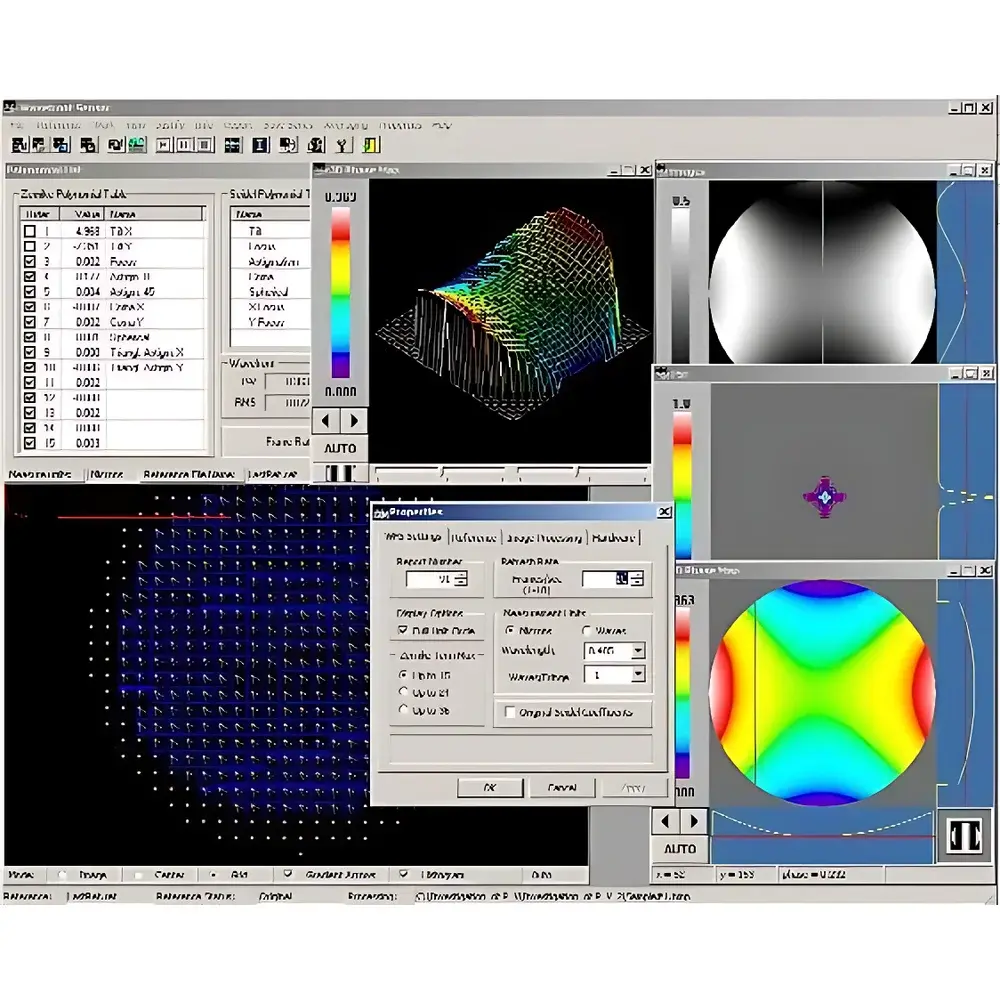
- Onboard wavefront analysis engine computing PV, RMS, Zernike decomposition (up to 36 terms), gradient maps, and edge voltage distribution
- Dual-voltage power supply compatibility (100–120 V / 200–240 V AC, 50/60 Hz), enabling deployment in both North American and European laboratory infrastructures
- Hardware-triggered synchronization interface (TTL I/O) for external laser pulsing, camera gating, or interferometric reference acquisition
Sample Compatibility & Compliance
The Night N system accepts collimated or weakly focused input beams up to 500 mm in diameter, supporting both free-space and fiber-coupled configurations via optional kinematic mounts and SM1/SM2 adapter kits. All optical components comply with ISO 10110 surface quality standards (scratch-dig 20–10), and the DM’s bimorph piezoceramic stack conforms to IEC 61800-5-1 for safe high-voltage actuation. The system supports GLP-compliant operation through audit-trail-enabled software logging (user actions, parameter changes, calibration timestamps). While not pre-certified for FDA 21 CFR Part 11, its data export architecture (HDF5, CSV, TIFF) and metadata embedding facilitate validation under ISO/IEC 17025 or ASTM E2500-21 for analytical instrument qualification.
Software & Data Management
The proprietary Night N Control Suite runs on Windows 10/11 (64-bit) and provides full GUI-based configuration of all hardware subsystems. Core functions include reference wavefront capture and nonvolatile storage, dynamic response characterization of the DM (step-response and frequency sweep), real-time visualization of control voltages per actuator, and overlay of Zernike coefficient evolution over time. All wavefront datasets retain embedded calibration metadata (wavelength, pupil scaling, sensor gain, DM flatness map). Export formats include IEEE 754-compliant binary arrays (for MATLAB/Python postprocessing) and annotated TIFF stacks compatible with commercial optical design software (e.g., Zemax OpticStudio, CODE V). Software updates are delivered via secure HTTPS channel with SHA-256 signature verification.
Applications
- Compensation of thermal lensing and misalignment-induced aberrations in high-power laser cavities and amplifier chains
- Wavefront optimization in confocal and multiphoton microscopy systems to restore diffraction-limited resolution in thick tissue specimens
- Beam quality assessment and M² factor measurement (optional add-on module) for industrial fiber lasers and diode-pumped solid-state sources
- Development and validation of novel wavefront reconstruction algorithms (e.g., sensorless AO, deep learning–based phase retrieval)
- Testing of segmented mirror control strategies for next-generation space telescope prototypes
- Optical coherence tomography (OCT) system enhancement via dispersion compensation and aberration correction in retinal imaging
FAQ
What is the maximum supported beam diameter, and can it be extended beyond 500 mm?
The system is calibrated and validated for input beams up to 500 mm in diameter. Larger beams require custom relay optics and recalibration of the Shack-Hartmann lenslet array; contact technical support for feasibility assessment.
Is the deformable mirror compatible with vacuum environments?
The standard DM is rated for operation in dry nitrogen or cleanroom air. Vacuum-compatible variants (with outgassing-tested adhesives and feedthrough-rated cabling) are available upon request with lead-time extension.
Does the software support third-party hardware integration (e.g., cameras, motion stages)?
Yes—via TCP/IP socket API and DLL-based SDK (C/C++, Python bindings included), enabling synchronized control with external devices meeting NI-VISA or GenICam protocol standards.
Can the system operate in open-loop mode for static aberration correction?
Yes. Open-loop operation is fully supported, including loading pre-characterized DM voltage maps and applying them without sensor feedback.
What calibration certificates are provided with shipment?
Each unit ships with a factory calibration report documenting wavefront sensor linearity (±0.02λ RMS deviation), DM stroke uniformity (≥92% actuator-to-actuator consistency), and system-level repeatability (≤λ/15 RMS over 8-hour thermal soak).





