
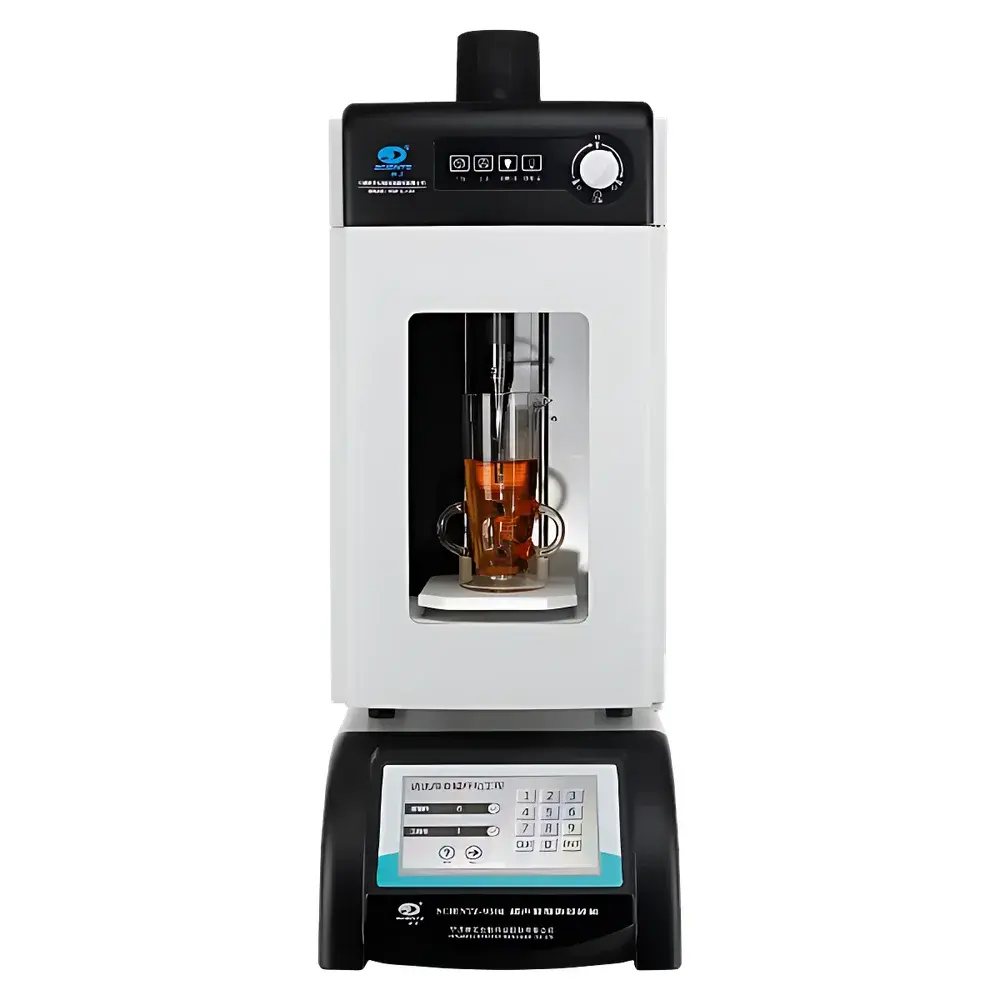
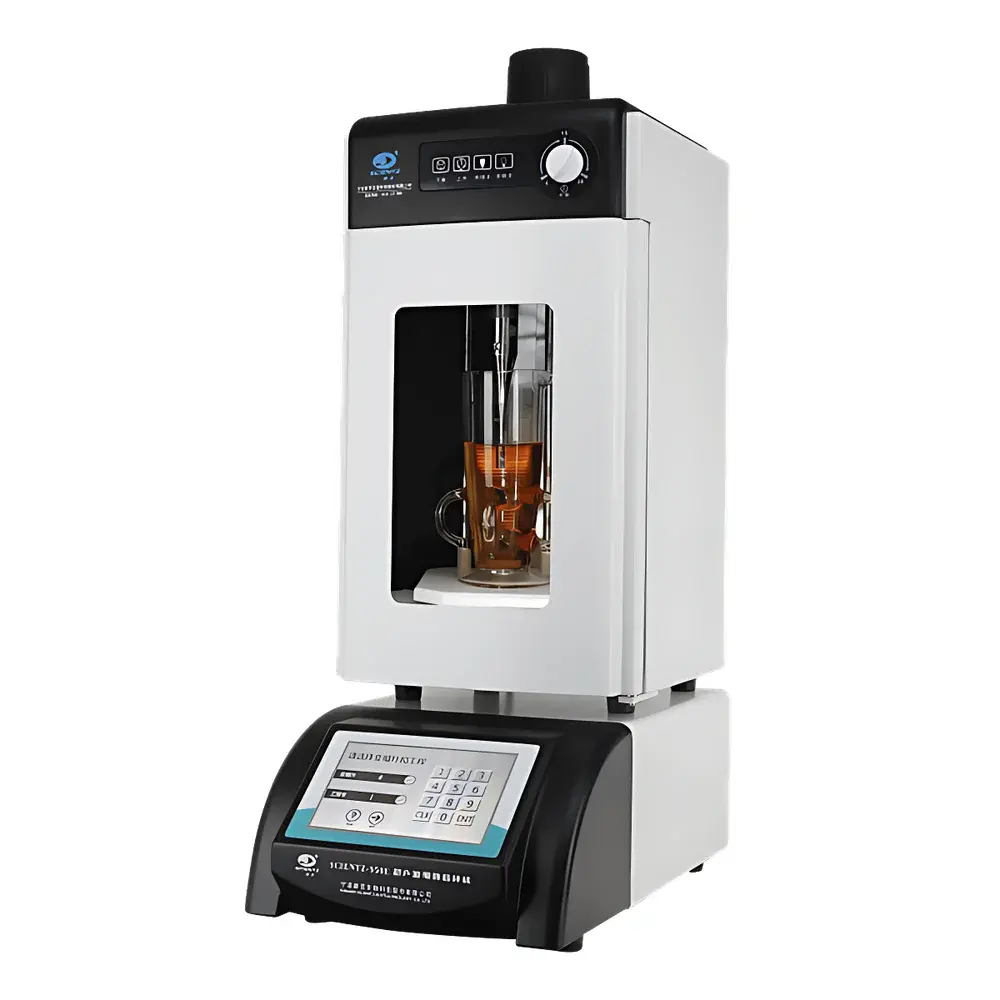
Ningbo Scientz SCIENTZ-650E Intelligent Ultrasonic Cell Disruptor
| Brand | Ningbo Scientz |
|---|---|
| Origin | Zhejiang, China |
| Manufacturer Type | Direct Manufacturer |
| Instrument Type | Ultrasonic Cell Disruptor |
| Ultrasonic Power Range | 5–650 W (continuously adjustable) |
| Operating Frequency | 20–25 kHz (auto-tracking & adaptive) |
| Temperature Control Range | 0–99 °C |
| Sample Volume Capacity | 100 µL–500 mL |
| Multi-sample Processing Capability | Yes |
| Safety Features | Overtemperature, overload, and time-out alarms |
| Control Interface | Remote network connectivity (Ethernet/RS232) |
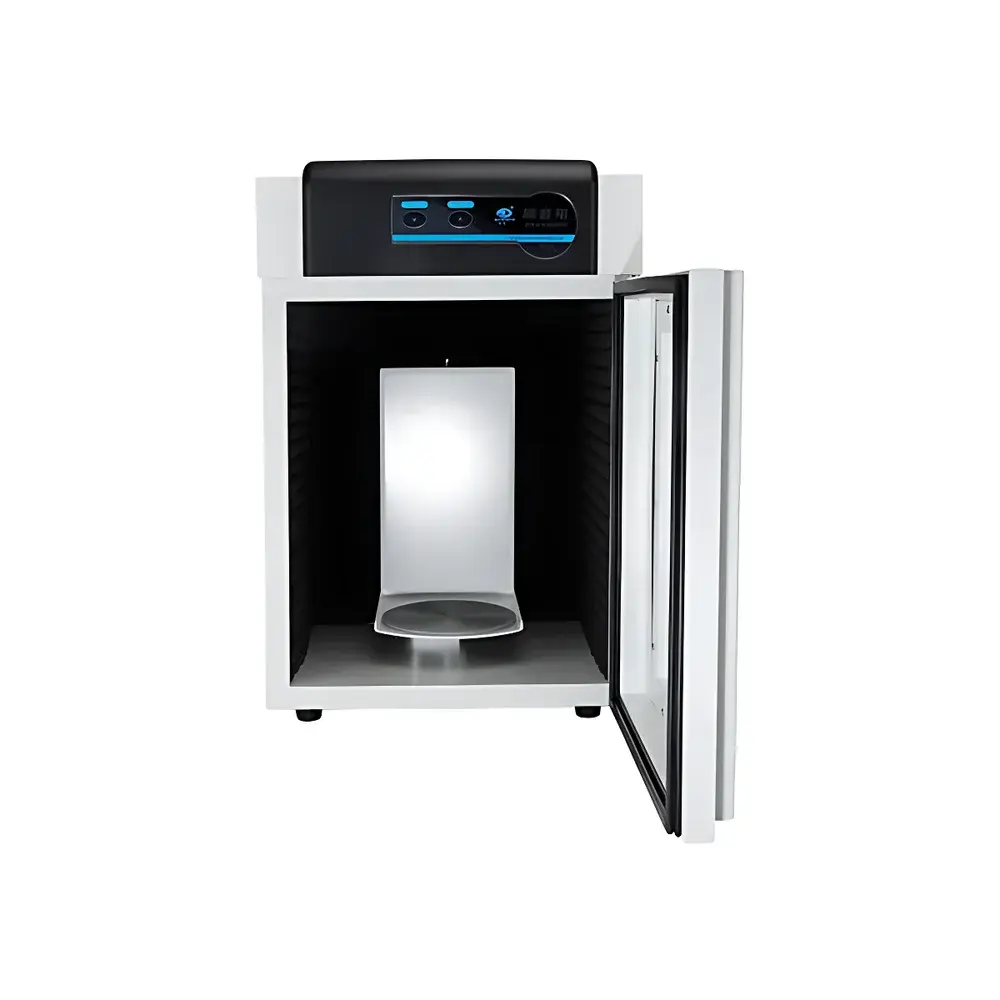
| Design | Stackable benchtop configuration with transparent front access panel and internal LED illumination |
Overview
The Ningbo Scientz SCIENTZ-650E Intelligent Ultrasonic Cell Disruptor is an engineered solution for controlled, reproducible lysis of biological samples across research, pharmaceutical development, and bioprocessing laboratories. It operates on the principle of high-intensity ultrasonic cavitation: an electrically driven piezoelectric transducer converts electrical energy into mechanical vibrations at 20–25 kHz, which are amplified and transmitted via a titanium alloy horn (sonotrode) into the liquid medium. This generates transient microbubbles that undergo rapid expansion and violent collapse—producing localized shockwaves, extreme shear forces (>10⁶ Pa), and microstreaming effects sufficient to disrupt membranes of cells, bacteria, spores, viruses, and subcellular organelles without significant thermal denaturation when temperature is actively regulated. Unlike bead-beating or enzymatic methods, ultrasonic disruption delivers rapid, scalable, and chemically non-invasive lysis—making it ideal for preserving labile biomolecules such as native proteins, nucleic acids, and post-translational modifications.
Key Features
- Intelligent frequency auto-tracking: Maintains optimal resonance under variable load conditions (e.g., viscosity changes, sample volume shifts) to ensure consistent energy delivery and prevent transducer overheating.
- Precise power modulation: Linear 5–650 W output control enables fine-tuned optimization for sensitive samples (e.g., primary neurons) or robust matrices (e.g., yeast cell walls).
- Integrated temperature management: Peltier-cooled jacketed vessel support and real-time digital monitoring (0–99 °C range) mitigate thermal degradation during prolonged sonication—critical for chromatin immunoprecipitation (ChIP) and RNA integrity preservation.
- Motorized vertical positioning system: Eliminates manual height adjustment; ensures repeatable probe immersion depth and acoustic coupling across users and experiments.
- Network-enabled remote operation: Supports Ethernet and RS232 interfaces for integration into LIMS environments and centralized lab instrument management platforms.
- Dual-layer safety architecture: Includes hardware-based overtemperature cutoff, current-sensing overload protection, timed shutdown, UV-C irradiation (254 nm) for chamber sterilization between runs, and electromagnetic door lock with user-authenticated access.
Sample Compatibility & Compliance
The SCIENTZ-650E accommodates heterogeneous sample types—including mammalian and insect cell suspensions, bacterial cultures (Gram-positive and Gram-negative), plant tissues, fungal mycelia, and environmental biofilms—across volumes from 100 µL (microcentrifuge tube adapters) to 500 mL (jacketed beakers). Its open-system design allows compatibility with standard laboratory glassware and disposable vessels. The instrument meets general requirements for Good Laboratory Practice (GLP) and supports audit-ready workflows through timestamped protocol execution logs and user-access tracking. While not certified to ISO/IEC 17025 or FDA 21 CFR Part 11 out-of-the-box, its programmable parameters, password-protected settings, and electronic record retention facilitate compliance documentation for regulated applications in QC/QA labs and preclinical R&D.
Software & Data Management
The built-in controller firmware supports creation, naming, and storage of up to 20 distinct operational protocols—including duty cycle (% ON/OFF), total duration, ramp profiles, and temperature setpoints. All executed runs are logged with date/time stamps, operator ID, protocol name, and final status (completed, interrupted, or fault-triggered). Optional PC software (Scientz-Ultrasonics Suite v3.x) provides graphical real-time monitoring of power output, frequency drift, and temperature deviation; export of CSV-formatted datasets for statistical analysis; and batch protocol deployment across multiple instruments in core facilities. Data files adhere to FAIR principles (Findable, Accessible, Interoperable, Reusable) and can be archived in institutional repositories compliant with NIH or ERC data policies.
Applications
- Nucleic acid shearing for next-generation sequencing library preparation (including ATAC-seq and ChIP-seq)
- Preparation of soluble protein extracts for Western blotting, ELISA, and mass spectrometry
- Disruption of extremophiles and spore-forming organisms for metagenomic analysis
- Extraction of intracellular metabolites and secondary plant compounds
- Dispersion and functionalization of nanomaterials (e.g., carbon nanotubes, graphene oxide, metal–organic frameworks)
- Accelerated solvent extraction of soil and sediment matrices for environmental contaminant profiling
- Homogenization of viscous biopolymer solutions (e.g., alginate, chitosan) for drug delivery formulation
FAQ
What sample containers are compatible with the SCIENTZ-650E?
Standard borosilicate glass tubes (1.5–50 mL), polycarbonate cryovials, and jacketed stainless-steel or glass beakers (up to 500 mL) are supported. Custom horn adapters are available for microplate-based sonication.
Can the instrument perform continuous sonication without operator intervention?
Yes—programmed protocols support unattended operation with automatic start/stop, safety-triggered shutdown, and audible/visual alerts upon completion or fault detection.
Is the ultrasonic output calibrated traceable to national standards?
The transducer power output is factory-calibrated using calorimetric reference methods per ASTM E2810-11. Certificate of Conformance is provided with each unit; NIST-traceable calibration services are available upon request.
How does the auto-frequency tracking improve reproducibility?
It compensates for impedance mismatches caused by changing sample composition or temperature, maintaining stable acoustic coupling and minimizing standing-wave node formation—thus reducing run-to-run variability in lysis efficiency.
Does the system support GMP-compliant documentation?
While the base configuration does not include electronic signature or audit trail modules required for full 21 CFR Part 11 compliance, the logging architecture is extensible via third-party validation packages used in pharmaceutical quality control laboratories.





