
NIP CON SMART Intelligent Nip Width Measurement System by SHANG ZHUN
| Brand | SHANG ZHUN |
|---|---|
| Origin | Germany |
| Model | NIP CON SMART |
| Measurement Range | 0–35 mm |
| Accuracy | ±0.1 mm |
| Sensor Dimensions | 140 mm × 22 mm × 3 mm |
| Handheld Unit | 150 mm × 80 mm × 40 mm |
| Tablet (10.1") | 260 mm × 160 mm × 15 mm |
| Power | Li-Polymer 3.7 V / 1260 mAh |
| Data Export | PDF, Digital Storage |
| Compliance | Designed for ISO/IEC 17025-aligned calibration workflows and GLP-compliant documentation |
Overview
The NIP CON SMART Intelligent Nip Width Measurement System is an engineered solution for precision contact zone (nip) characterization in roll-to-roll industrial processes—particularly in printing, coating, laminating, and converting machinery. It operates on the principle of direct mechanical displacement sensing: two ultra-thin, high-stability capacitive or resistive sensors are inserted symmetrically into the nip region between a rigid and a compliant roller pair. As the rollers converge under defined load, the physical deformation of the soft roller generates a measurable contact width—the “nip width”—which correlates directly with line pressure distribution, uniformity, and process repeatability. Unlike indirect estimation methods (e.g., torque-based or deflection modeling), NIP CON SMART delivers traceable, real-time, absolute width values referenced to calibrated sensor geometry and thermal drift compensation algorithms. Its design adheres to metrological best practices for in-situ industrial measurement systems, supporting both routine setup verification and periodic performance validation in production environments governed by ISO 9001, ISO 12647 (graphic technology), and internal GMP/GLP protocols.
Key Features
- Real-time digital display of absolute nip width (0–35 mm) with ±0.1 mm resolution, compensated for sensor insertion offset via embedded firmware calculation
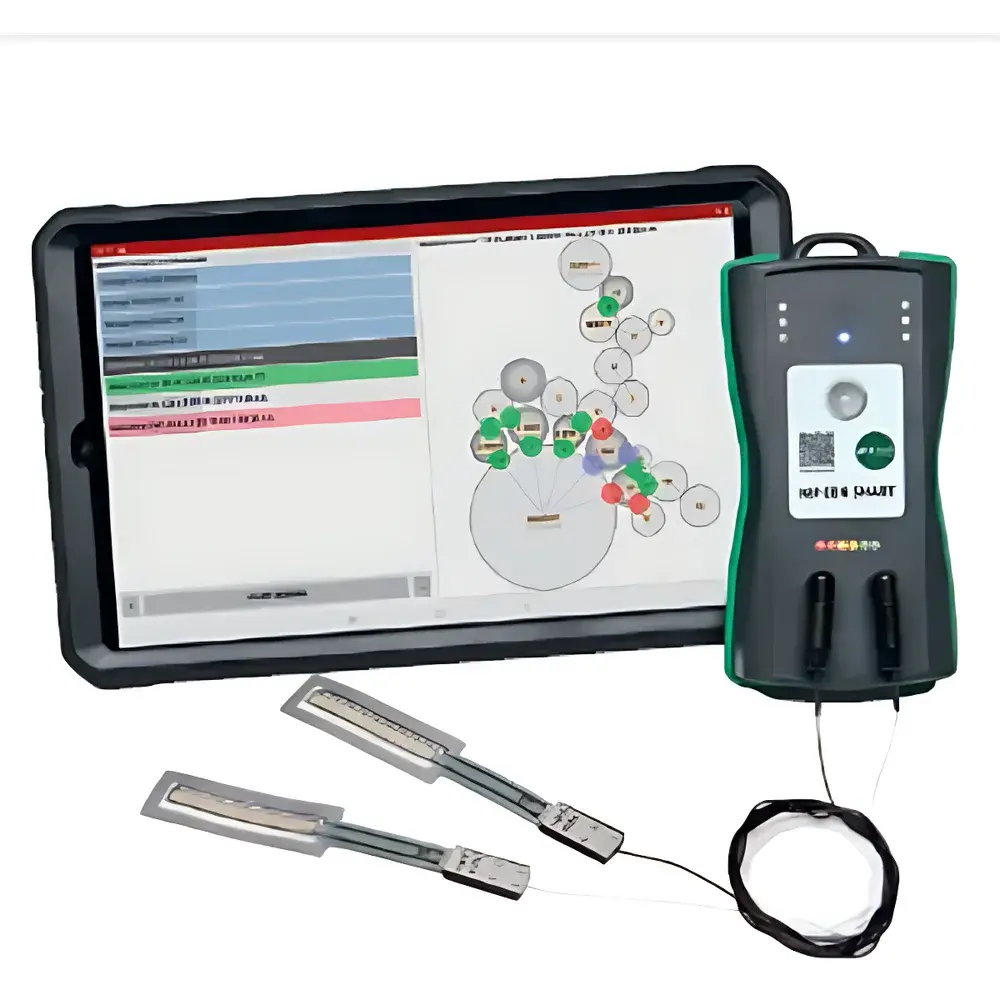
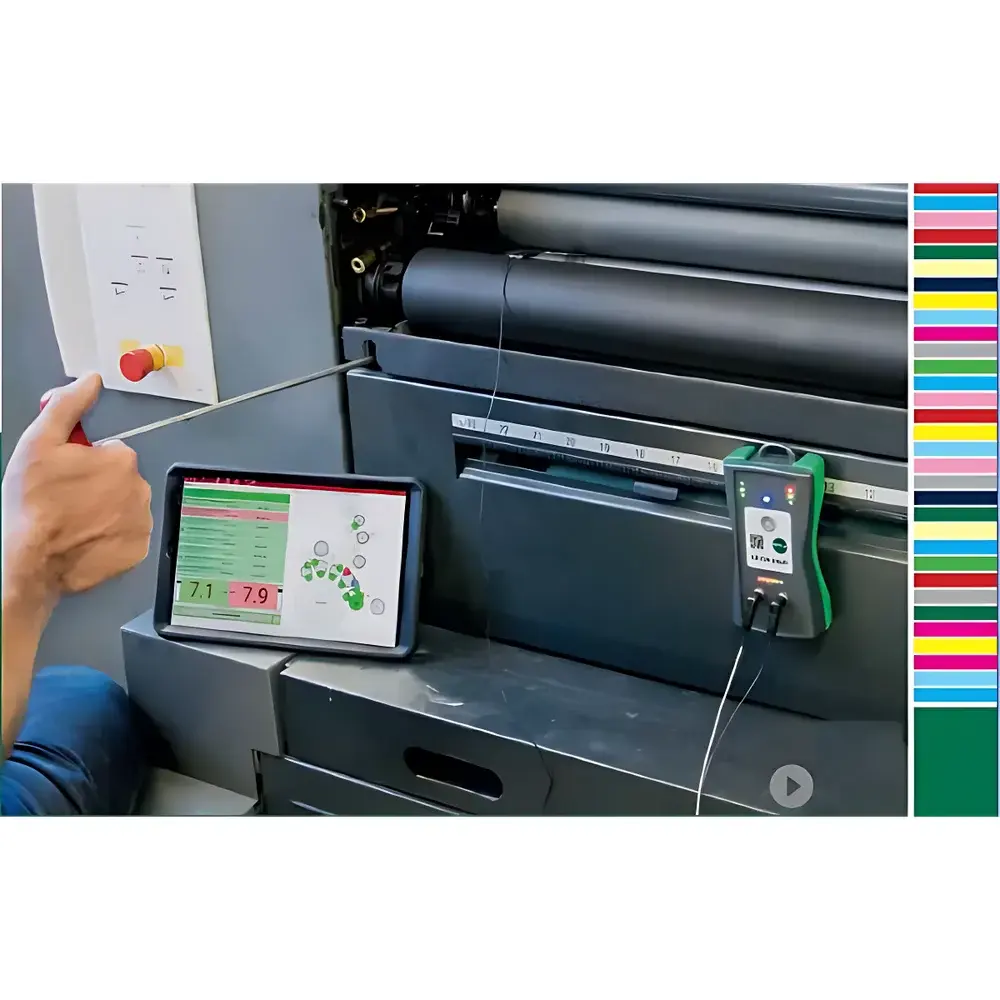
- Lightweight, ergonomic handheld unit (150 × 80 × 40 mm) and ultra-slim sensors (140 × 22 × 3 mm) enabling single-operator deployment without disassembly or downtime
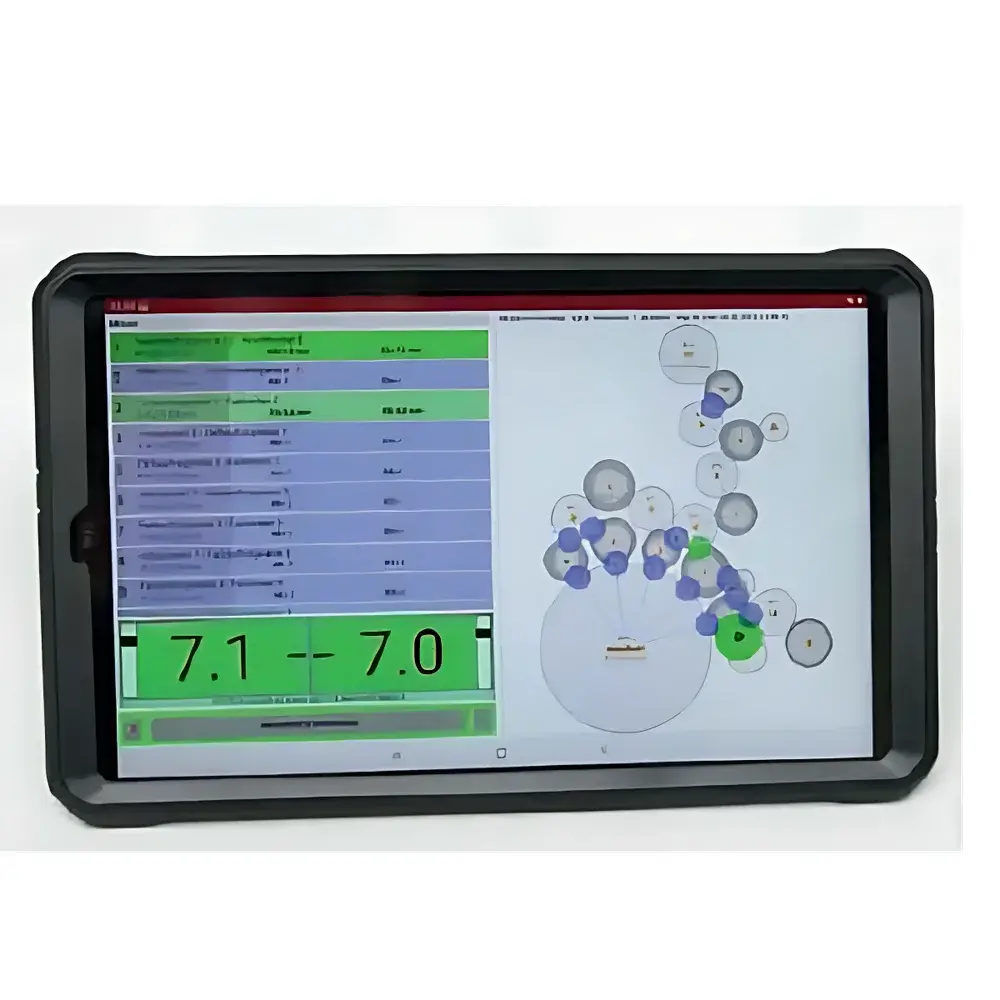
- Integrated 10.1-inch rugged tablet with touchscreen GUI for guided workflow execution—supporting customer-defined setup sequences, tolerance bands, and pass/fail logic
- On-device data handling: measurement history stored locally with timestamp, operator ID, and machine ID; exportable as PDF reports or CSV-compatible digital archives
- Dual-mode operation: full-featured NIP CON SMART system with PC-based configuration software; or standalone NIP CON SMART compact variant for rapid field checks without external computing
- Battery-powered architecture (3.7 V / 1260 mAh Li-Po) providing ≥8 hours of continuous measurement cycles per charge, suitable for shift-based factory use
Sample Compatibility & Compliance
The system is validated for use with hard rollers of unrestricted diameter and soft rollers up to 300 mm in diameter, featuring elastomeric coverings with Shore A hardness between 20 and 60 and rubber layer thicknesses from 5 to 20 mm. Sensor placement is optimized for proximity to adjustable bearing housings, ensuring minimal interference with operational roller dynamics. All hardware components comply with CE marking requirements for electromagnetic compatibility (EMC Directive 2014/30/EU) and low-voltage safety (LVD Directive 2014/35/EU). Firmware and data management routines support audit-ready documentation: timestamped records include measurement metadata (sensor serial numbers, calibration expiry, environmental temperature), satisfying traceability requirements under ISO/IEC 17025 Clause 7.7 and FDA 21 CFR Part 11 for electronic records where configured with user authentication and audit trail logging.
Software & Data Management
Configuration and advanced analysis are performed using Windows-based NIP CON Configuration Suite, which enables definition of multi-step measurement procedures—including sequential nip scans across axial positions, dynamic tolerance mapping, and comparative trending against historical baselines. The software supports import/export of calibration certificates and allows linkage to enterprise MES or CMMS platforms via standardized OPC UA or RESTful API interfaces (optional module). On-device storage retains ≥10,000 measurement events with full metadata. PDF report generation includes graphical representation of width profiles, statistical summaries (mean, std dev, min/max), and annotation fields for technician comments—formatted to align with internal quality documentation standards.
Applications
- Pre-print press commissioning: verifying nip uniformity across drum length prior to ink engagement, eliminating test runs and solvent-based cleanup
- Coating line optimization: correlating nip width profiles with wet film thickness consistency and drying uniformity
- Laminator maintenance: detecting asymmetric bearing wear or roller crown deviation through axial width variance analysis
- Quality assurance audits: generating objective, repeatable evidence for internal process capability studies (Cp/Cpk) and customer-facing technical documentation
- R&D validation: quantifying the effect of elastomer formulation changes (hardness, durometer, resilience) on contact mechanics under controlled load conditions
FAQ
How is sensor insertion offset compensated during measurement?
The system performs automatic geometric correction by subtracting the known physical thickness of both sensors from the raw gap reading, yielding true nip width independent of insertion depth.
Can measurements be performed while the machine is running?
No—measurements require static, unloaded roller positioning to ensure mechanical stability and sensor integrity; however, total setup time is typically under 5 minutes per station.
Is recalibration required between uses?
Field recalibration is not needed for daily operation; annual traceable calibration against NIST-traceable slip gauges is recommended and supported by SHANG ZHUN’s authorized service centers in Europe and Asia.
Does the system support multi-point axial profiling?
Yes—via programmable scan sequences defined in the PC software, enabling up to 20 discrete axial positions per measurement cycle with synchronized data tagging.
What environmental conditions affect measurement accuracy?
Operating ambient temperature range is 10–40 °C; measurements outside this range require thermal stabilization per ISO 29553 guidance, and relative humidity should remain below 80% non-condensing to preserve sensor longevity.




