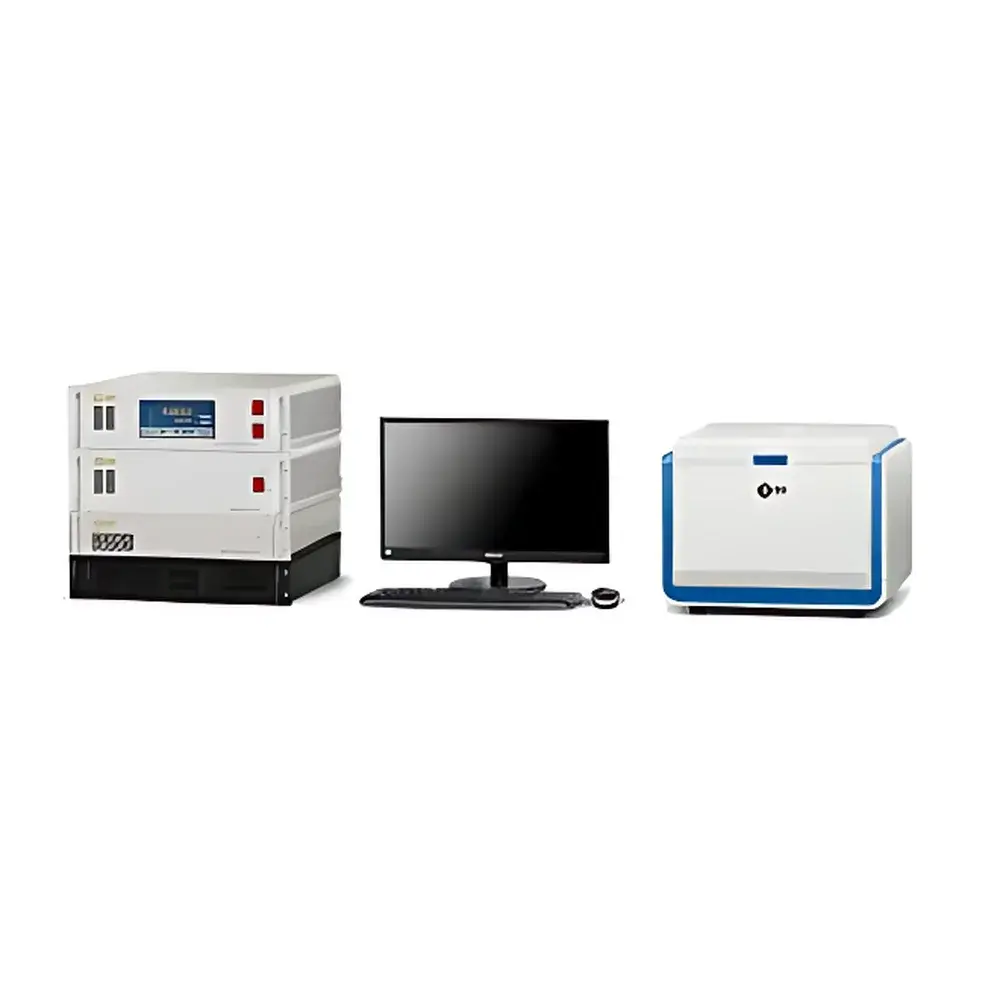
NIUMAG EDUMR-I Benchtop Low-Field Nuclear Magnetic Resonance Imaging System
| Brand | NIUMAG |
|---|---|
| Origin | Jiangsu, China |
| Manufacturer Type | Authorized Distributor |
| Country of Origin | China |
| Model | EDUMR-I |
| Pricing | Available Upon Request |
| Magnet Type | Permanent Magnet |
| Static Field Strength | 0.5 ± 0.08 T |
| Probe Coil Diameter | 15 mm |
| Effective Sample Volume | Ø12.5 mm × H25 mm |
| Image Linearity (x/y/z) | >90% |
| Spatial Resolution | <0.08 mm |
Overview
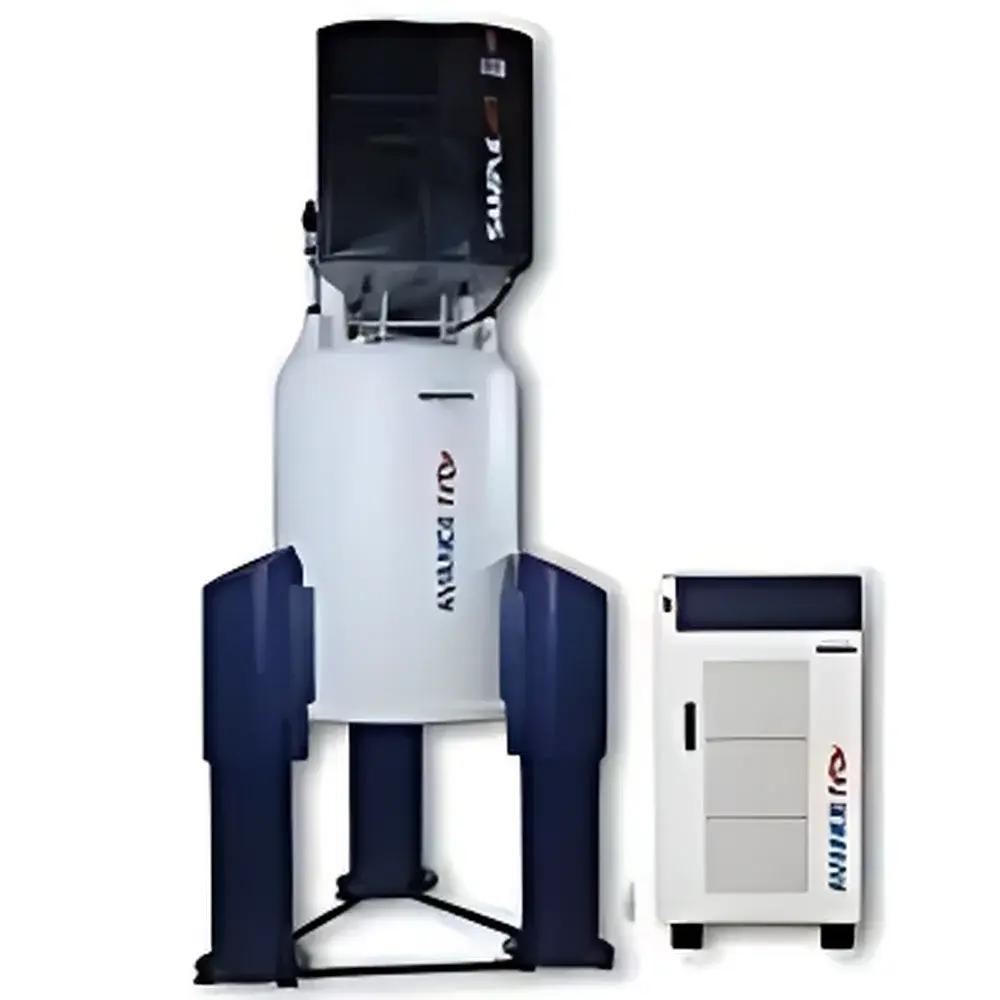
The NIUMAG EDUMR-I is a compact, benchtop low-field nuclear magnetic resonance (NMR) imaging system engineered specifically for pedagogical and foundational research applications in physics, biomedical engineering, and medical imaging education. Unlike clinical MRI scanners operating at high field strengths (1.5–3.0 T), the EDUMR-I utilizes a stable permanent magnet delivering a homogeneous static magnetic field of 0.5 ± 0.08 T—sufficient to generate measurable NMR signals while maintaining operational safety, accessibility, and cost-efficiency for academic laboratories. Its design adheres to the fundamental principles of pulsed NMR and spin-echo-based imaging, enabling hands-on instruction in Larmor precession, RF excitation, gradient encoding, k-space traversal, and Fourier-based image reconstruction. The system replicates core hardware subsystems found in clinical MRI—including shim coils, gradient coils, RF transmit/receive circuitry, and quadrature detection—providing students with authentic exposure to MRI architecture without requiring hospital-grade infrastructure or regulatory clearance.
Key Features
- Hardware Openness: Fully accessible mechanical and electronic architecture supports disassembly, reassembly, and real-time probing with oscilloscopes and multimeters—ideal for electronics labs, instrumentation courses, and engineering practicums.
- Software Openness: Native access to raw k-space data (complex-valued, time-domain signal matrices) enables custom reconstruction algorithms, filter design, motion correction, and deep learning–based denoising experiments in MATLAB, Python (NumPy/SciPy), or Julia environments.
- Educational Modularity: Configurable pulse sequences—including continuous-wave (CW) NMR mode, spin-echo (SE), and gradient-echo (GRE)—facilitate progressive learning from basic resonance phenomena to advanced 2D/3D imaging protocols.
- Benchtop Integration: Compact footprint (W × D × H ≈ 450 × 400 × 300 mm) and low power consumption (<300 W) allow deployment in standard teaching labs without dedicated RF-shielded rooms or chilled water systems.
- Calibration & Validation Tools: Includes reference phantoms (e.g., doped water, agarose gels, multi-compartment arrays) for quantitative assessment of SNR, geometric distortion, slice profile, and spatial linearity per ISO/IEC 17025-aligned lab practices.
Sample Compatibility & Compliance
The EDUMR-I accommodates non-invasive, non-ionizing analysis of solid and liquid samples within its cylindrical sensitive volume (Ø12.5 mm × 25 mm height). Compatible specimens include aqueous solutions, polymer gels, plant tissues, food matrices, porous rock cores, and anthropomorphic phantoms. While not intended for human or animal scanning, its electromagnetic emissions comply with IEC 61000-6-3 (EMC emission limits) and IEC 61000-6-1 (immunity requirements). All firmware and acquisition software are designed to support audit-ready logging per GLP/GMP-aligned educational quality management systems; raw data files retain embedded timestamps, operator ID, sequence parameters, and hardware configuration metadata.
Software & Data Management
The EDUMR-I runs on a Linux-based real-time acquisition platform with a web-accessible GUI (HTML5/JavaScript) for remote experiment control. Data export is supported in DICOM (conformance class MR Image Storage SOP Class), NIfTI-1, and HDF5 formats—ensuring interoperability with OsiriX, 3D Slicer, FSL, and AFNI. Built-in scripting interfaces (Python API) allow automated batch acquisition, parameter sweeps, and integration into Jupyter-based lab notebooks. Audit trails record all user actions—including sequence edits, calibration events, and data exports—with SHA-256 hashing for integrity verification, satisfying traceability requirements under ISO/IEC 17025 Clause 7.7 and FDA 21 CFR Part 11 Annex A (electronic records).
Applications
- Undergraduate and graduate laboratory instruction in quantum mechanics, electromagnetism, signal processing, and medical physics.
- Capstone projects involving RF coil design, gradient amplifier characterization, or real-time image reconstruction optimization.
- Biomedical engineering curriculum modules on MRI safety, artifact analysis, contrast mechanisms (T1/T2 mapping), and diffusion-weighted imaging fundamentals.
- Interdisciplinary research in materials science (e.g., pore-size distribution in catalysts), food science (moisture migration kinetics), and agricultural engineering (seed viability assessment).
- Continuing professional development for clinical MRI technologists seeking foundational reinforcement prior to vendor-specific certification programs.
FAQ
Is the EDUMR-I suitable for human imaging?
No. It is strictly a non-clinical, educational instrument designed for phantom and ex vivo sample studies. It does not meet regulatory requirements for diagnostic use under FDA 21 CFR Part 892 or EU MDR Annex I.
Can third-party pulse sequences be loaded?
Yes. The system supports user-defined sequence definitions via XML-based protocol files, enabling implementation of custom RF/gradient timing diagrams and reconstruction pipelines.
What level of magnetic field homogeneity is achieved over the imaging volume?
Passive shimming achieves ≤10 ppm RMS variation across the central 10 mm diameter spherical volume, sufficient for teaching-level spectroscopy and structural imaging.
Does the system include compliance documentation for academic accreditation?
Yes—technical specifications, calibration certificates, EM compatibility test reports, and software validation summaries are provided to support ABET, EUR-ACE, or national higher education quality assurance audits.
Is remote maintenance and software update supported?
Yes. Secure SSH access and Over-The-Air (OTA) firmware updates are available under institutional IT policies, with version-controlled release notes and rollback capability.