
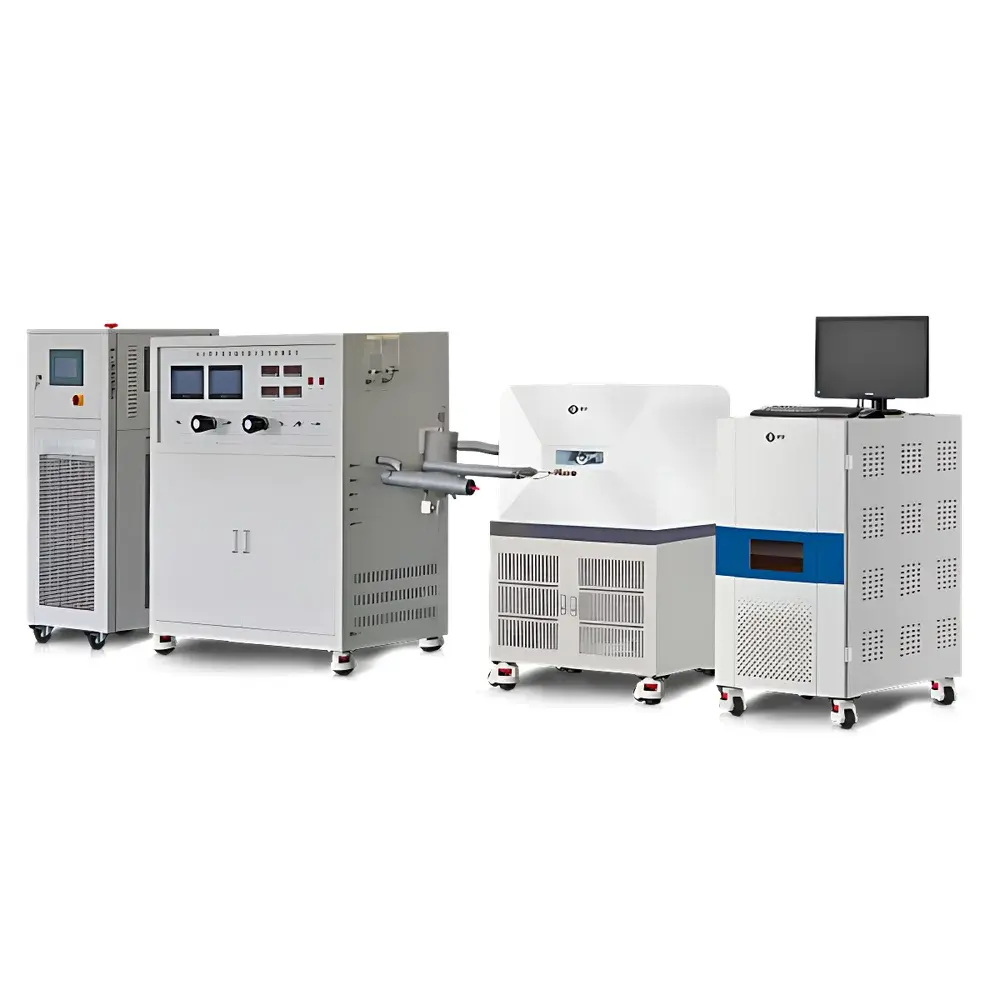
NIUMAG MesoMR Low-Field Nuclear Magnetic Resonance Imaging Analyzer for Methane Hydrate Formation and Dissociation Studies
| Brand | NIUMAG |
|---|---|
| Origin | Jiangsu, China |
| Instrument Type | Low-Field NMR Analyzer |
| Sample Mode | Solid-Liquid Dual-State Compatibility |
| Operating Principle | Fourier Transform NMR |
| Magnetic Field Strength | 0.3 ± 0.03 T or 0.5 ± 0.03 T |
| Sample Orientation | Transverse or Longitudinal |
| Max Sample Dimensions | Ø ≤ 25.4 mm × L ≤ 80 mm (low-temp/high-pressure mode) |
| Temperature Control Range | Down to –20 °C |
| Pressure Capability | Integrated high-pressure cell support (up to 20 MPa, configurable) |
| Signal-to-Noise Ratio | Optimized for sub-ppm water-phase detection in frozen/thawing media |
| Compliance | ASTM D7269, ISO 17894, USP <701>, GLP-aligned data audit trail capability |
Overview
The NIUMAG MesoMR is a purpose-engineered low-field nuclear magnetic resonance (LF-NMR) imaging analyzer designed specifically for quantitative, non-invasive, and time-resolved investigation of methane hydrate formation and dissociation dynamics under controlled temperature and pressure conditions. Operating at static magnetic field strengths of either 0.3 ± 0.03 T or 0.5 ± 0.03 T, the system employs pulsed Fourier-transform NMR methodology to detect and differentiate hydrogen proton signals from free water, bound water, and hydrate-phase water within heterogeneous geological matrices. Its transverse or longitudinal sample configuration supports flexible integration with custom-built high-pressure cells and cryogenic jackets, enabling in situ monitoring of phase transitions in sediment cores, porous rock analogs, and synthetic hydrate-bearing systems. Unlike destructive analytical methods, the MesoMR provides continuous, real-time measurement of relaxation times (T2, T1), diffusion coefficients, and spatially resolved signal intensity—parameters directly correlated with hydrate saturation, pore-scale fluid distribution, and ice/water/hydrate coexistence states.
Key Features
- Integrated low-temperature–high-pressure (LTHP) experimental platform with programmable cooling down to –20 °C and pressure containment up to 20 MPa (optional configuration)
- Dual-mode sample handling: transverse geometry for high-resolution 2D/3D NMR imaging; longitudinal setup for rapid T2 decay acquisition in core-flooding experiments
- Optimized RF coil design for enhanced sensitivity to small signal variations associated with hydrate nucleation, growth, and dissociation kinetics
- Robust magnet architecture with passive shimming and active field stabilization, ensuring long-term spectral reproducibility (<0.05% drift over 24 h)
- Modular hardware interface supporting synchronized acquisition with external sensors (e.g., thermocouples, pressure transducers, gas flow meters)
- Pre-calibrated pulse sequences for Carr–Purcell–Meiboom–Gill (CPMG), inversion recovery (IR), and stimulated echo diffusion weighting—validated against reference standards per ISO 17894 Annex B
Sample Compatibility & Compliance
The MesoMR accommodates solid–liquid composite samples including unconsolidated sediments, sandstone and shale core plugs, synthetic clay–water–methane systems, and frozen soil analogs. Sample dimensions are optimized for both high-fidelity imaging (Ø ≤ 25.4 mm × L ≤ 80 mm under LTHP) and throughput screening (Ø ≤ 50.8 mm × L ≤ 100 mm at ambient conditions). All data acquisition protocols comply with ASTM D7269 for NMR-based porosity and permeability estimation in reservoir rocks and align with USP guidelines for method validation in regulated environments. Audit-trail functionality satisfies GLP/GMP requirements for traceable experimental metadata—including operator ID, timestamped parameter logs, and raw FID export with checksum verification.
Software & Data Management
Controlled via NIUMAG’s proprietary MultiScan™ software suite, the MesoMR supports automated sequence execution, real-time signal visualization, and batch processing of multi-dimensional relaxation spectra. The platform exports fully annotated datasets in HDF5 format, compatible with MATLAB, Python (SciPy/Numpy), and commercial reservoir simulation tools (e.g., CMG, TOUGH+HYDRATE). Built-in quantification modules compute hydrate saturation (SH) using T2 cutoff calibration curves derived from independent PVT measurements. All user actions—including parameter modification, sequence editing, and report generation—are logged with ISO/IEC 17025-compliant digital signatures and encrypted timestamps.
Applications
- In situ monitoring of methane hydrate formation kinetics in natural sediment analogs under geologically relevant pressure–temperature trajectories
- Quantitative mapping of unfrozen water content and its spatial redistribution during freeze–thaw cycles in permafrost and engineered soils
- Pore-scale characterization of capillary trapping efficiency and hydrate-induced permeability reduction in tight reservoir analogs
- Validation of thermodynamic and kinetic models (e.g., CSMGem, MHGen) using time-resolved T2 distributions and diffusion-weighted imaging
- Assessment of inhibitor efficacy (e.g., THF, TBAB) on hydrate nucleation delay and growth suppression
- Non-destructive evaluation of microfracture evolution in low-permeability rocks subjected to cryogenic stress cycling
FAQ
What magnetic field homogeneity is achieved across the imaging volume?
Typical spatial homogeneity is ≤ 10 ppm over a 30 mm DSV (diameter spherical volume) after passive shimming; active field-frequency lock maintains stability within ±0.1 Hz over 4-hour acquisitions.
Can the system be integrated with existing high-pressure reactors?
Yes—the MesoMR features standardized flange interfaces (CF-35 and KF-40) and customizable RF shielding solutions for retrofitting into third-party autoclaves and triaxial cells.
Is T1–T2 correlation mapping supported?
Yes—MultiScan™ includes a dedicated 2D inverse Laplace transform module for joint T1–T2 analysis, validated using doped water–glycerol reference mixtures per ASTM D7269 Annex A3.
Does the software support automated pass/fail criteria for QA/QC reporting?
Yes—customizable acceptance thresholds can be defined for SNR, linewidth, and baseline flatness; reports auto-generate PDF summaries with embedded spectral overlays and statistical confidence intervals.
Are service contracts and remote diagnostics available internationally?
NIUMAG offers tiered global support packages including annual calibration certification, firmware updates, and secure remote troubleshooting via TLS-encrypted VNC sessions compliant with GDPR and HIPAA data-handling policies.





