
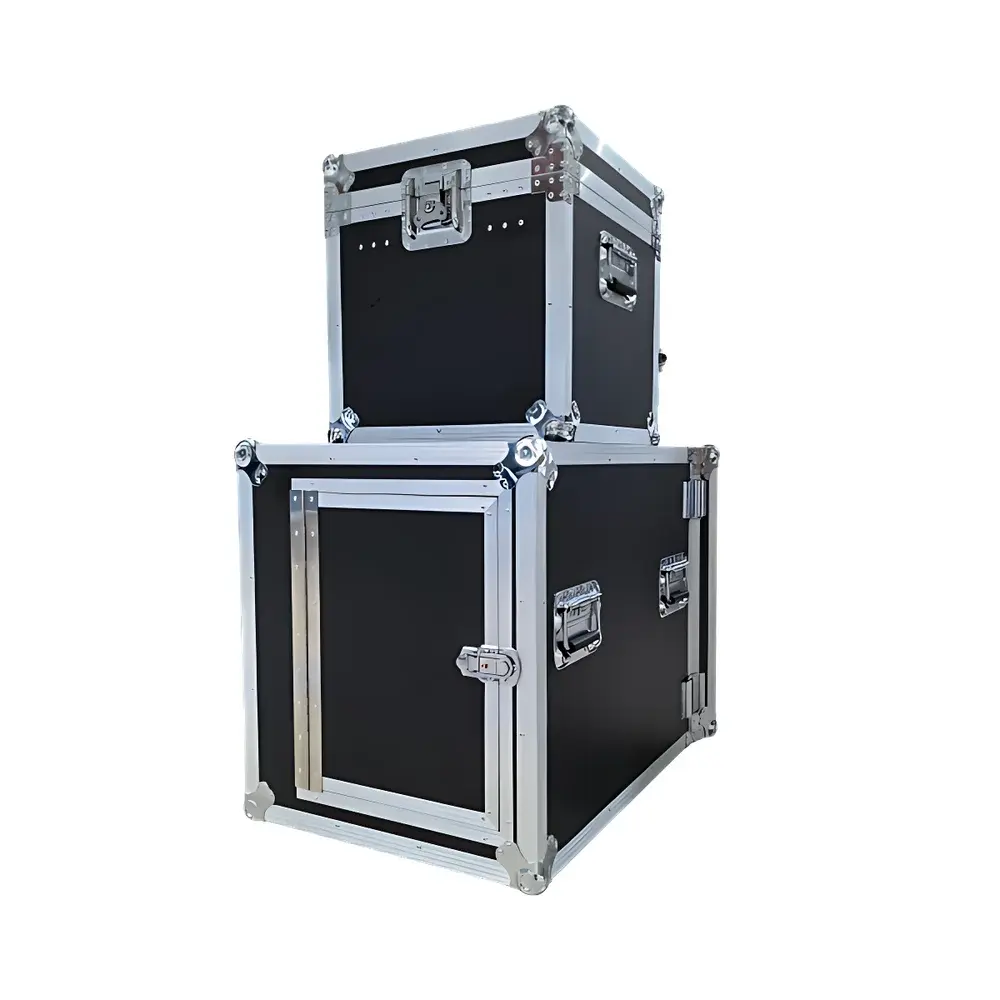
NIUMAG MicroMR06-040V-P1 Portable Low-Field Nuclear Magnetic Resonance Core Analyzer
| Brand | NIUMAG |
|---|---|
| Origin | Jiangsu, China |
| Instrument Type | Low-Field NMR Analyzer |
| Sample Type | Solid-Liquid Dual-Mode |
| Magnet Type | Permanent Magnet |
| Larmor Frequency | 6.17 MHz ± 0.2 MHz |
| Effective Uniform Field Region | Ø38.1 mm × H80 mm |
| Max Sample Dimension | 550 mm (L) × 550 mm (D) × 700 mm (H) |
| Application Scope | Rock Core, Cuttings, Irregular & Standard Cylindrical Samples |
Overview
The NIUMAG MicroMR06-040V-P1 Portable Low-Field Nuclear Magnetic Resonance Core Analyzer is an engineered solution for rapid, non-destructive petrophysical characterization of reservoir rock samples in field-deployable environments. Based on the fundamental principles of pulsed low-field NMR—specifically spin-echo decay (T₂ relaxation) and diffusion-relaxation (D–T₂) correlation—the instrument quantifies critical formation properties including total porosity, clay-bound water (CBW), capillary-bound water (BVI), movable fluid volume (FFI), permeability proxies, and pore-size distribution without chemical alteration or sample destruction. Unlike high-field NMR systems requiring cryogenic infrastructure and vibration-isolated rooms, this analyzer operates at a stable 6.17 MHz Larmor frequency generated by a permanent magnet assembly, enabling robust performance under variable ambient conditions—from offshore drilling platforms to remote desert camps. Its design targets geoscientists, core analysts, and reservoir engineers who require immediate access to quantitative NMR-derived parameters during wellsite operations, core logging, or rapid screening of unconventional formations.
Key Features
- Field-Ready Architecture: Modular “Magic Ring” permanent magnet system with integrated air-cooled thermal management ensures operational stability across −10 °C to +45 °C ambient ranges, eliminating need for liquid nitrogen or external chillers.
- True Dual-Mode Sample Handling: Supports both standard cylindrical cores (up to 1.5″ diameter × variable length) and irregular cuttings or crushed rock fragments via interchangeable RF probes optimized for heterogeneous magnetic susceptibility distributions.
- High-Fidelity T₂ and D–T₂ Mapping: Delivers reproducible transverse relaxation spectra with resolution sufficient to resolve multi-modal pore systems (e.g., micropores 10 µm) and distinguish bound vs. movable fluid fractions using industry-standard T₂cutoff determination protocols.
- Compact Transport System: Fully disassembled unit fits within two IP67-rated aviation cases (< 25 kg per case); reassembly requires no calibration tools or alignment fixtures, enabling full functional readiness within 15 minutes of site arrival.
- Fourth-Generation Digital Spectrometer: FPGA-based pulse programmer with sub-microsecond timing resolution, 16-bit ADC sampling, and real-time signal averaging supports acquisition of high-SNR echo trains even from low-porosity tight sandstones or shales.
Sample Compatibility & Compliance
The MicroMR06-040V-P1 accommodates native-state rock specimens—including untrimmed core plugs, sidewall cores, drill cuttings, and pulverized samples—without drying, saturation, or centrifugation pretreatment. Its homogeneous field region (Ø38.1 mm × 80 mm) complies with ASTM D7171-19 guidelines for NMR-based porosity measurement in sedimentary rocks. Data acquisition workflows are compatible with GLP-compliant documentation requirements; audit trails, user authentication logs, and electronic signatures can be enabled to align with internal QA/QC procedures. While not certified to FDA 21 CFR Part 11 out-of-the-box, the software architecture supports configuration for regulated environments upon customer-specific validation protocol execution.
Software & Data Management
Controlled via NIUMAG’s proprietary MesoMR™ v5.2 software suite, the system provides intuitive sequence selection (CPMG, IR-CPMG, D–T₂, T₁–T₂), automated baseline correction, inverse Laplace transform (ILT) processing using non-negative least squares (NNLS), and customizable report generation. All raw FID data, processed spectra, and metadata are stored in HDF5 format—ensuring long-term readability and interoperability with MATLAB, Python (NumPy/H5Py), and commercial reservoir simulation platforms. Integrated cloud sync (optional) enables secure remote data backup and collaborative analysis across multi-site teams. Software updates follow ISO/IEC 17025-aligned change control procedures, with version history and release notes archived for traceability.
Applications
- Real-time porosity and fluid saturation profiling during coring operations or wireline logging integration.
- Determination of T₂cutoff values via comparative analysis of centrifuged and fully saturated samples—directly supporting reservoir quality classification (RQC) workflows.
- Pore geometry assessment in unconventional reservoirs (shale gas, tight oil) through T₂ distribution deconvolution and D–T₂ correlation mapping.
- Core-flooding experiment monitoring: time-resolved NMR tracking of fluid displacement fronts and residual saturation evolution.
- Geomechanical screening: correlation of NMR-derived clay content and pore throat radius with triaxial compression test results.
FAQ
What sample preparation is required prior to measurement?
No drying, vacuum saturation, or chemical treatment is necessary. Samples may be analyzed in as-received condition—though surface moisture should be gently blotted to avoid signal distortion from free water films.
Can the system quantify hydrocarbon saturation in partially saturated cores?
Yes—when combined with calibrated bulk volume irreducible (BVI) models and known fluid T₂ signatures, the system supports semi-quantitative hydrocarbon saturation estimation using dual-saturation (brine + oil) reference datasets.
Is spectral resolution sufficient to resolve kerogen-bound hydrogen signals?
In organic-rich shales, the instrument resolves broad T₂ components attributable to kerogen-associated protons (typically < 0.1 ms), though differentiation from clay-bound water requires complementary geochemical data (e.g., TOC, XRD) for unambiguous attribution.
How is instrument calibration maintained during extended field deployment?
A built-in reference phantom (doped water gel) enables daily SNR and T₂ recovery verification; factory calibration certificates include temperature-dependent gradient linearity maps validated per ISO 17025-accredited procedures.
Does the system support custom pulse sequence development?
Advanced users may import custom CPMG variants or modified inversion recovery schemes via ASCII-based sequence definition files—subject to hardware timing constraints and spectrometer firmware compatibility.




