
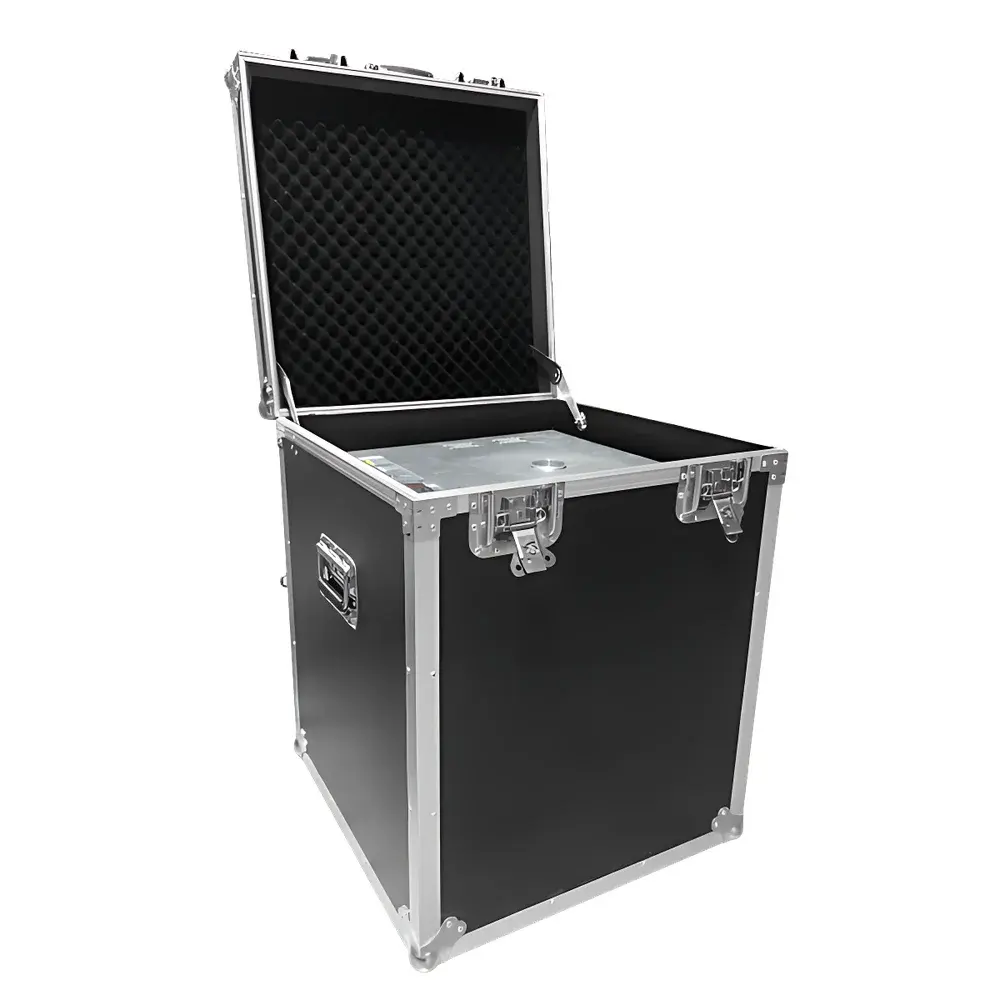
NIUMAG MicroMR06-040V-P Portable Core NMR Analyzer for Oil & Gas Reservoir Characterization
| Brand | NIUMAG |
|---|---|
| Origin | Jiangsu, China |
| Manufacturer Type | Authorized Distributor |
| Regional Classification | Domestic (China) |
| Model | MicroMR06-040V-P-4 |
| Instrument Type | Low-Field Nuclear Magnetic Resonance Analyzer |
| Sample Type | Solid-Liquid Dual-Mode |
| Magnet Type | Permanent Magnet |
| Larmor Frequency | 6.17 MHz ± 0.2 MHz |
| Sample Cavity Dimensions | 550 mm (L) × 550 mm (D) × 700 mm (H) |
| Homogeneous Zone | Ø38.1 mm × H80 mm |
| Maximum Sample Length | 1.5 inches (38.1 mm) |
Overview
The NIUMAG MicroMR06-040V-P Portable Core NMR Analyzer is a purpose-built low-field nuclear magnetic resonance (LF-NMR) system engineered for rapid, non-destructive characterization of reservoir rocks and cuttings in oil and gas exploration and production environments. Unlike high-field superconducting NMR spectrometers used in molecular structure elucidation, this instrument operates at a fixed Larmor frequency of 6.17 MHz—optimized for relaxation-time-based petrophysical analysis (T1, T2, and diffusion-relaxation correlation) in porous media. Its core measurement principle relies on spin-echo decay acquisition under Carr–Purcell–Meiboom–Gill (CPMG) pulse sequences, enabling quantification of fluid saturation, pore-size distribution, permeability estimation, clay-bound water (CBW), free-fluid index (FFI), and movable hydrocarbon volume—all without chemical alteration or sample destruction. Designed for field-deployable operation, the system bridges the gap between laboratory-grade analytical rigor and on-site operational agility, supporting real-time decision-making during well logging integration, coreflooding validation, and enhanced oil recovery (EOR) screening.
Key Features
- Field-Ready Portability: Integrated lightweight “Magic Ring” permanent magnet architecture with modular aviation-grade transport cases enables full system relocation—including magnet, console, RF probe, and power unit—in under 30 minutes. Total system mass is optimized for vehicle-mounted deployment and rig-side installation.
- Dual-Mode Sample Compatibility: Supports both intact cylindrical core plugs (up to 38.1 mm diameter × 38.1 mm length) and loose rock cuttings via interchangeable RF probes with optimized coil geometries and tuning ranges.
- High-Fidelity Signal Acquisition: Fourth-generation digital spectrometer platform with 16-bit ADC resolution, sub-microsecond timing precision, and adaptive noise cancellation ensures robust signal-to-noise ratio (SNR) even under variable ambient temperature and electromagnetic interference conditions typical of drilling sites.
- Thermal Stability Architecture: Active dual-zone cooling system maintains magnet temperature within ±0.1°C over 8-hour continuous acquisition cycles, preserving field homogeneity and spectral reproducibility across extended field campaigns.
- Non-Invasive & Reusable Workflow: Samples remain physically and chemically unaltered post-analysis, permitting sequential testing (e.g., pre- and post-brine saturation, SCAL experiments) and archival re-evaluation using updated inversion algorithms.
Sample Compatibility & Compliance
The MicroMR06-040V-P accommodates heterogeneous geological samples including sandstone, carbonate, shale, and tight reservoir analogs—regardless of mineralogical composition or initial fluid saturation state. It complies with ASTM D7171–19 (Standard Test Method for Determination of Pore-Size Distribution of Rock Core Using Low-Field NMR) and aligns with ISO 10113:2020 (Petroleum and natural gas industries — Core analysis — Part 1: General requirements). While not FDA-regulated, its data acquisition firmware supports audit-trail logging and user-access controls consistent with GLP-compliant laboratory workflows. All raw FID and echo train data are stored in vendor-neutral HDF5 format, facilitating third-party processing and regulatory submission readiness.
Software & Data Management
Controlled by NIUMAG’s proprietary MesoMR software suite (v5.2+), the system delivers integrated pulse sequence design, real-time signal monitoring, automated T2 spectrum inversion (using non-negative least squares with regularization), and 2D T1–T2 correlation mapping. Data export supports CSV, MATLAB .mat, and Bruker ParaVision-compatible formats. The software enforces role-based user permissions, electronic signatures, and time-stamped metadata embedding per analysis session—meeting foundational requirements for 21 CFR Part 11 compliance when deployed in QA/QC-controlled environments. Cloud-synced project libraries enable cross-site collaboration and centralized method validation across regional service centers.
Applications
- Quantitative porosity and effective porosity determination in unconventional reservoirs
- Pore-throat size distribution modeling from T2 spectra using empirical and physics-based calibration models
- Clay typing and bound-fluid identification via multi-exponential T1/T2 contrast
- In-situ saturation monitoring during core flooding experiments (water/oil/gas displacement)
- Rock typing classification using unsupervised clustering of relaxation-diffusion maps
- Pre- and post-acidizing/frac-fluid treatment evaluation of formation damage recovery
FAQ
Is the MicroMR06-040V-P suitable for downhole logging integration?
No—it is a surface-based core and cuttings analyzer. However, its T2 distributions and inversion protocols are directly comparable to wireline NMR log data (e.g., Schlumberger MRIL, Halliburton MR Scanner), enabling robust log-core calibration.
Can it measure diffusion coefficients for fluid typing?
Yes—equipped with pulsed field gradient (PFG) capability, it supports stimulated-echo diffusion-weighted sequences for D–T2 correlation analysis of light hydrocarbons vs. formation water.
What level of technical support is available outside China?
NIUMAG partners with certified regional distributors in Southeast Asia, the Middle East, and Latin America; remote diagnostics and application consulting are provided in English with SLA-backed response windows.
Does the system require liquid cryogens or external chiller units?
No—all subsystems operate air-cooled. The permanent magnet requires no power, and the electronics module uses thermoelectric cooling with redundant thermal shutdown protection.
How is data integrity ensured during extended field deployments?
Each acquisition session writes immutable checksummed data blocks to encrypted SSD storage, with optional RAID-1 mirroring and automatic cloud backup via configurable SFTP endpoints.





