
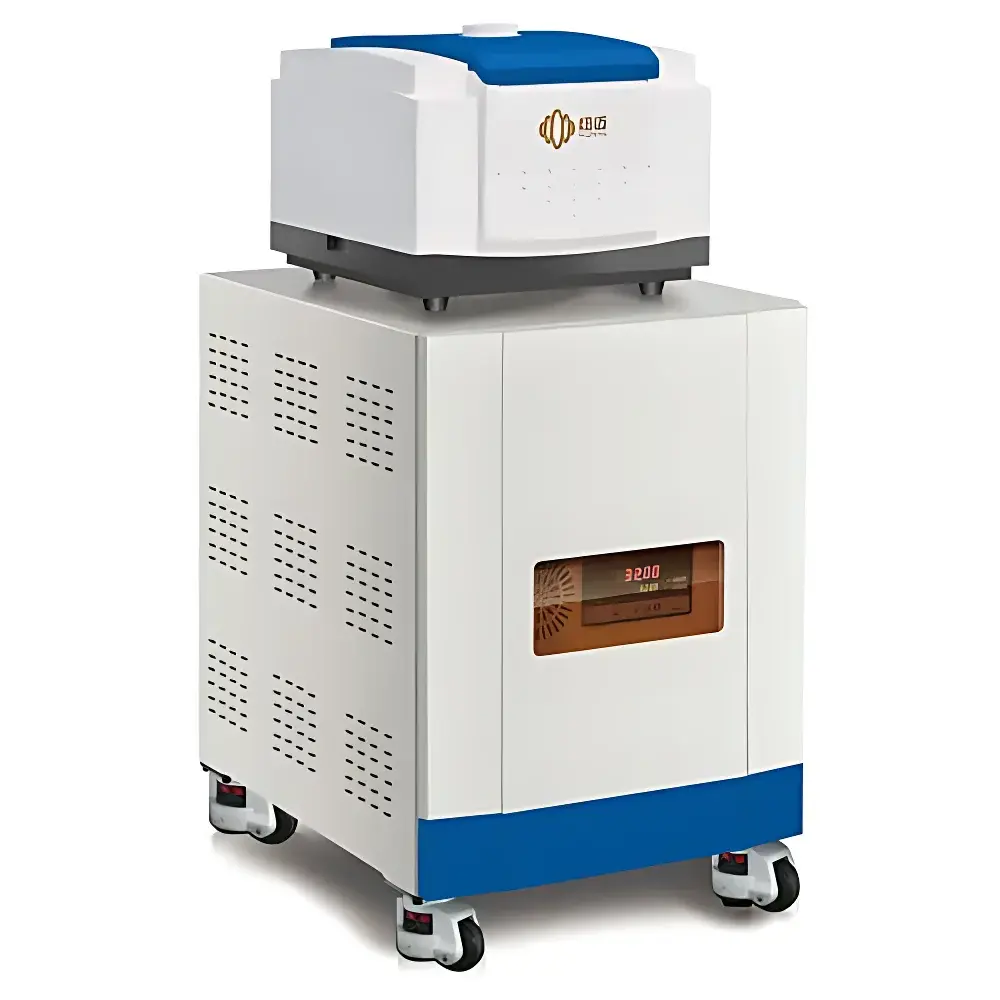
NIUMAG MicroMR12-025V Benchtop Low-Field Nuclear Magnetic Resonance Analyzer
| Brand | NIUMAG |
|---|---|
| Origin | Jiangsu, China |
| Manufacturer Type | Authorized Distributor |
| Origin Category | Domestic (China) |
| Model | MicroMR12-025V |
| Instrument Type | Low-Field NMR Analyzer |
| Operating Frequency | 12 MHz (corresponding to ~0.28 T static magnetic field) |
| Magnet Type | Permanent Magnet |
| Probe Coil Diameter | 25 mm |
| Effective Sample Volume | Ø25.4 mm × H35 mm |
| Sample Compatibility | Solid–Liquid Dual-Mode |
| Optional Upgrade | Diffusion-Weighted NMR (D-T2, D-T1-T2) |
Overview
The NIUMAG MicroMR12-025V is a compact, benchtop low-field nuclear magnetic resonance (LF-NMR) analyzer engineered for quantitative characterization of pore structure, fluid distribution, and dynamic transport properties in geological core samples—particularly unconventional reservoir rocks such as tight sandstone, shale, and mudstone. Operating at a nominal Larmor frequency of 12 MHz (corresponding to a static magnetic field strength of 0.28 ± 0.05 T), the system employs pulsed NMR techniques—including spin-echo (CPMG), inversion-recovery (IR), and diffusion-edited sequences—to extract T2, T1, and apparent diffusion coefficient (D) distributions from hydrogen-bearing fluids (e.g., water, oil, hydrocarbon saturates) within porous media. Unlike high-field superconducting NMR spectrometers optimized for molecular structure elucidation, the MicroMR12-025V is purpose-built for robust, routine, non-destructive analysis under laboratory or core lab conditions, delivering high reproducibility in porosity, bound/free fluid volume, permeability estimation, and saturation contrast without requiring cryogens or RF-shielded rooms.
Key Features
- Compact permanent magnet architecture with passive temperature stabilization—no liquid nitrogen or helium required; operational stability maintained across ambient lab temperatures (15–30 °C).
- Dedicated 25 mm diameter RF probe with homogeneous B1 field over a Ø25.4 mm × 35 mm cylindrical measurement volume—optimized for standard whole-core plugs (ASTM D4542, API RP 40) and trimmed subsamples.
- Integrated CPMG pulse sequence engine supporting echo train lengths up to 16,384 echoes, enabling high-resolution T2 decay analysis with TE adjustable from 0.1 to 2.0 ms.
- Optional diffusion module enables pulsed-field gradient (PFG) capability for D-T2 and D-T1-T2 correlation mapping—critical for distinguishing fluid phases (e.g., capillary-bound vs. movable oil) and assessing pore throat connectivity.
- Modular hardware design compliant with IEC 61000-6-3 (EMC) and IEC 61010-1 (safety), featuring isolated digital I/O for integration into automated core logging workflows.
Sample Compatibility & Compliance
The MicroMR12-025V accommodates both solid rock cores and liquid-phase reference standards (e.g., doped water, mineral oil, n-decane) within the same measurement framework—enabling direct calibration transfer and cross-sample normalization. Sample holders are constructed from PTFE and quartz to minimize magnetic susceptibility artifacts and RF losses. The system supports compliance with industry-standard testing protocols including ASTM D6913 (particle-size distribution via NMR relaxometry), ISO 17892-12 (geotechnical investigation—NMR-based porosity), and internal SOPs aligned with API RP 40 Annex A for core analysis. Data acquisition and processing workflows can be configured to meet GLP/GMP documentation requirements, including user-access controls, electronic signatures, and audit-trail-enabled parameter logging.
Software & Data Management
Control and analysis are performed using NIUMAG’s proprietary MultiQ™ software suite (v4.2+), a Windows-based platform supporting real-time data visualization, batch processing, and customizable report generation. Key modules include T2 inversion (non-negative least squares with regularization), multi-exponential fitting, diffusion coefficient calculation (Stejskal–Tanner formalism), and integrated petrophysical modeling (e.g., SDR, Timur–Coates, Kenyon models). Raw FID and echo train data are stored in HDF5 format with embedded metadata (pulse sequence parameters, temperature, operator ID, timestamp). Export options include CSV, MATLAB .mat, and PDF reports compliant with 21 CFR Part 11 when paired with optional validation package (IQ/OQ/PQ documentation available).
Applications
- Quantification of total, effective, and clay-bound porosity in shale gas and tight oil reservoirs.
- Fluid typing and saturation evaluation in partially saturated cores—distinguishing irreducible water, movable oil, and residual hydrocarbons.
- Pore size distribution derivation via T2 cutoff calibration against mercury intrusion capillary pressure (MICP) or nitrogen adsorption data.
- Monitoring imbibition/drainage dynamics during core flooding experiments using time-resolved NMR.
- Quality control of enhanced oil recovery (EOR) agents by measuring changes in fluid mobility and wettability alteration.
FAQ
What is the minimum sample volume required for reliable T2 measurement?
A minimum sample height of 10 mm within the Ø25.4 mm diameter is recommended to ensure full RF coil coverage and signal-to-noise ratio >30:1 for typical brine-saturated sandstone.
Can the MicroMR12-025V be used for intact core analysis (full-diameter cores)?
No—the maximum axial dimension supported is 35 mm; full-diameter cores (>38 mm) require sectioning or use of larger-bore systems (e.g., MicroMR20 series).
Is the instrument suitable for high-temperature core analysis?
The standard configuration operates at ambient temperature only; high-temperature variants (up to 80 °C) are available as custom-engineered options with heated probe housings and thermal shielding.
How is calibration performed for absolute porosity quantification?
Calibration uses a sealed reference tube containing known-volume deuterated water (D2O) or mineral oil, establishing signal amplitude per unit proton density; rock matrix effects are corrected via bulk fluid relaxation references.
Does the system support remote operation and data access?
Yes—MultiQ™ supports TCP/IP-based remote desktop control and secure file transfer (SFTP); instrument status and queue management are accessible via web dashboard (optional add-on module).




