
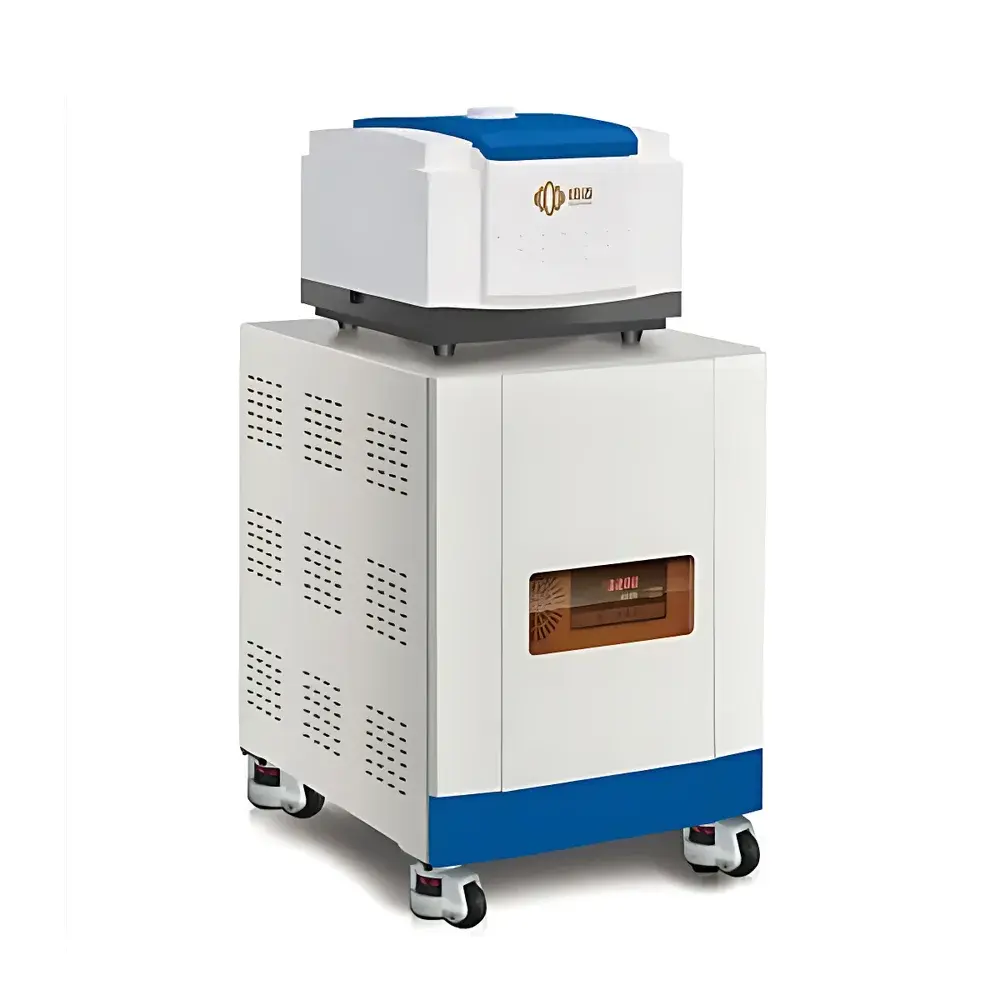
NIUMAG MicroMR12 Low-Field Nuclear Magnetic Resonance (NMR) Logging Analyzer
| Brand | NIUMAG |
|---|---|
| Origin | Jiangsu, China |
| Manufacturer Type | Authorized Distributor |
| Country of Origin | China |
| Model | MicroMR12 |
| Pricing | Available Upon Request |
| Magnet Type | Permanent Magnet |
| Static Magnetic Field Strength | 0.28 ± 0.05 T |
| Larmor Frequency | 12 MHz |
| Probe Coil Diameter | 25.4 mm |
Overview
The NIUMAG MicroMR12 is a benchtop low-field nuclear magnetic resonance (NMR) logging analyzer engineered for quantitative characterization of porous media in geoscience and petroleum engineering laboratories. It operates on the fundamental principles of pulsed NMR spectroscopy—specifically, spin-echo detection via Carr–Purcell–Meiboom–Gill (CPMG) sequences—to non-invasively probe hydrogen-bearing fluids (e.g., water, hydrocarbons) within rock matrices. Unlike high-field NMR systems, the MicroMR12 employs a stable permanent magnet delivering a homogeneous static field of 0.28 ± 0.05 T, corresponding to a proton Larmor frequency of 12 MHz. This low-field configuration ensures robust signal acquisition under ambient conditions while maintaining sufficient sensitivity for routine core analysis, eliminating the need for cryogenic cooling or RF-shielded rooms. The system is designed for direct integration into core analysis workflows, supporting both discrete plug samples and larger-diameter rock specimens up to 25.4 mm in diameter.
Key Features
- Permanent magnet architecture with passive temperature stabilization, enabling long-term field homogeneity (< 50 ppm over 10 cm DSV) and minimal drift during extended CPMG acquisitions.
- Dedicated 12 MHz RF transceiver with broadband tuning range (±1 MHz), optimized for proton signal excitation and echo train acquisition across variable fluid viscosities and pore geometries.
- Modular probe assembly featuring a 25.4 mm inner-diameter solenoid coil, compatible with standard NMR-compatible core holders and calibrated reference standards (e.g., doped water, mineral oil).
- Integrated pulse programmer supporting customizable CPMG, inversion-recovery, and diffusion-weighted sequences with adjustable echo spacing (0.1–20 ms), number of echoes (up to 32,768), and repetition time (TR ≥ 1 s).
- Rugged industrial-grade electronics compliant with IEC 61000-6-3 (EMI emission) and IEC 61000-6-2 (immunity), suitable for shared lab environments adjacent to drilling simulation rigs or petrophysical testing stations.
Sample Compatibility & Compliance
The MicroMR12 accommodates cylindrical rock core plugs (up to 25.4 mm OD × 50 mm length), consolidated sand packs, glass bead models, and synthetic porous media. Sample containment follows ASTM D5977–22 guidelines for NMR-based porosity measurement in reservoir rocks. Data acquisition protocols align with ISO 10113:2021 (petrophysical property determination using NMR) and support traceable calibration against NIST-traceable relaxation standards. System firmware and data handling comply with GLP documentation requirements, including audit trails for sequence parameters, operator ID, and environmental logs (temperature, humidity). While not FDA-regulated, the instrument’s software architecture supports 21 CFR Part 11–compatible electronic signatures when deployed in contract research organizations serving upstream oilfield service providers.
Software & Data Management
Control and analysis are performed via NIUMAG’s proprietary MRStudio v4.x platform—a Windows-based application built on Qt and Python 3.9 libraries. The software provides real-time spectrum preview, automated T2 distribution inversion using non-negative least squares (NNLS) with regularization, and integrated fitting routines for bulk, surface, and diffusion-relaxation correlation (D–T2) mapping. Raw FID and echo train data are stored in HDF5 format with embedded metadata (pulse sequence, hardware settings, sample ID), ensuring FAIR (Findable, Accessible, Interoperable, Reusable) data principles. Export options include CSV, MATLAB .mat, and ASCII for downstream integration with petrophysical modeling tools such as Petrel, Techlog, or custom Python workflows using SciPy and scikit-learn.
Applications
- Quantitative porosity estimation in conventional sandstone and carbonate cores, validated against helium porosimetry per API RP 40.
- Pore-size distribution analysis in unconventional reservoirs—including shale, tight gas sand, and mudstone—via T2 cutoff calibration using centrifuge-derived capillary pressure curves.
- Fluid typing and saturation quantification (Sw, So) through multi-echo T2 spectral deconvolution and amplitude ratio analysis between brine- and hydrocarbon-saturated regions.
- Dynamic imbibition/drainage monitoring using time-resolved NMR, supporting relative permeability modeling and capillary trapping studies.
- Method development for downhole NMR tool validation, including relaxation time benchmarking and magnetic field gradient profiling using glass bead phantoms.
FAQ
What is the typical T2 resolution limit for the MicroMR12 in rock core analysis?
The system achieves effective T2 resolution down to ~0.1 ms in high-surface-area samples (e.g., clays) when using short echo spacing (0.2 ms) and sufficient signal averaging.
Can the MicroMR12 be used for diffusion coefficient measurements?
Yes—via stimulated-echo or bipolar pulse-pair sequences, the system supports diffusion-relaxation (D–T2) correlation experiments for fluid mobility discrimination.
Is hardware calibration required before each experiment?
A daily reference scan using a standardized water phantom is recommended; full magnet shimming is factory-performed and stable for >12 months under controlled lab conditions.
Does the system support automated batch processing of multiple core plugs?
MRStudio includes scriptable macros and queue-based acquisition scheduling, enabling unattended overnight runs across up to 24 samples with programmable sample changer integration.
How does the MicroMR12 compare to high-field NMR systems for petrophysical analysis?
While lower in absolute signal-to-noise ratio, its 12 MHz platform offers superior T2 contrast for bound vs. free fluid differentiation in low-permeability formations and eliminates field-dependent artifacts common in superconducting magnets.






