
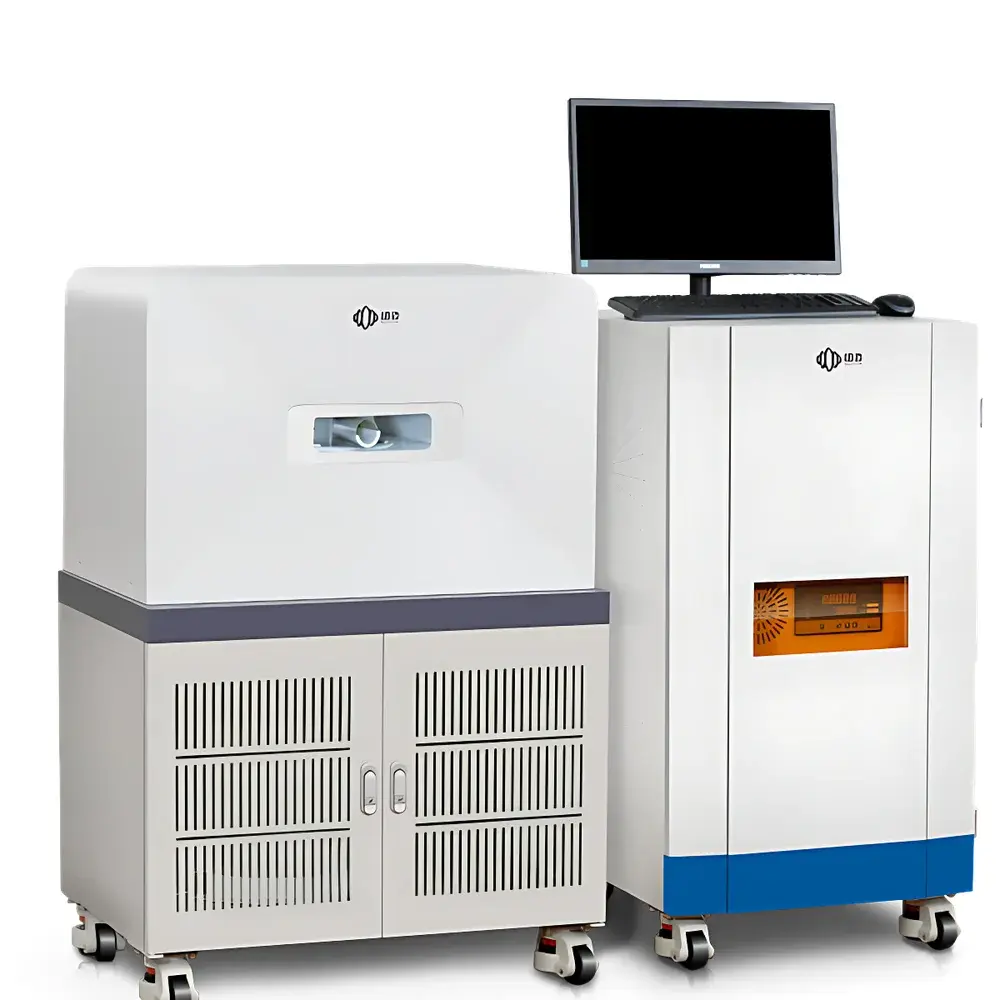
NIUMAG NMI20-060-H Benchtop Low-Field Nuclear Magnetic Resonance (LF-NMR) Analyzer for Water Distribution and Mold-Risk Moisture Profiling in Traditional Chinese Medicinal Herbs
| Brand | NIUMAG |
|---|---|
| Origin | Jiangsu, China |
| Manufacturer Type | Authorized Distributor |
| Product Origin | Domestic (China) |
| Model | NMI20-060-H |
| Pricing | Available Upon Request |
| Magnetic Field Strength | 0.50 ± 0.03 T |
| Magnet Homogeneity | ≤20 ppm |
| Magnet Orientation | Horizontal & Vertical Configurable |
| Max Sample Dimensions | Ø60 mm × H60 mm |
| Measurable Parameters | T₁/T₂ Relaxation Times, Spatial Water Distribution, Bound/Free Water Ratio, Oil/Water Content (Oil: 1–100% |
| Water | 2–10%) |
| Optional Modules | Temperature Control Unit, Humidity Chamber, Microwave Irradiation Module, Vacuum Freeze-Drying Coupling Kit |
Overview
The NIUMAG NMI20-060-H is a purpose-built benchtop low-field nuclear magnetic resonance (LF-NMR) analyzer engineered for non-invasive, quantitative assessment of water distribution, mobility, and binding states in traditional Chinese medicinal (TCM) herbs—critical parameters directly correlated with mold susceptibility and shelf-life stability. Unlike conventional moisture analyzers that report only bulk gravimetric or dielectric values, this system leverages pulsed NMR principles to resolve water populations based on molecular mobility (via transverse relaxation time T₂) and proton exchange dynamics (via longitudinal relaxation time T₁). It operates at a stable 0.50 T permanent magnet field generated by high-coercivity rare-earth magnets, eliminating cryogen dependency and long-term maintenance costs. The instrument supports both horizontal and vertical magnet configurations to accommodate diverse sample geometries—including whole roots, sliced rhizomes, powdered extracts, and packaged herbal granules—without physical disruption or chemical pre-treatment. Its design prioritizes reproducibility in regulated environments, enabling traceable, physics-based moisture profiling aligned with quality-by-design (QbD) frameworks used in herbal product development and GMP-compliant manufacturing.
Key Features
- Simultaneous acquisition of T₁ and T₂ relaxation spectra for multi-component water state discrimination (e.g., bound, immobilized, free water)
- Spatially resolved moisture mapping via single-point imaging (SPI) mode, visualizing water migration during drying, freezing, or storage
- Integrated hardware architecture supporting multi-field coupling: temperature-controlled stages (−40 °C to +80 °C), programmable humidity chambers (10–95% RH), microwave excitation modules (2.45 GHz), and vacuum freeze-drying interfaces
- Permanent magnet system with ≤20 ppm homogeneity over a 60 mm DSV (diameter spherical volume), ensuring high signal-to-noise ratio and measurement repeatability
- Non-destructive analysis: no solvent extraction, grinding, or thermal degradation required—preserving sample integrity for downstream testing or archival
Sample Compatibility & Compliance
The NMI20-060-H accommodates solid, semi-solid, and particulate TCM matrices—including raw herbs (e.g., *Astragalus membranaceus*, *Ginseng*, *Rehmannia glutinosa*), processed slices, granulated formulas, and encapsulated preparations—within its Ø60 mm × H60 mm sample cavity. Its measurement protocol complies with core scientific principles referenced in ISO 18745-1:2016 (water activity and moisture state characterization in botanicals) and aligns with analytical validation expectations under ICH Q2(R2) for quantitative NMR methods. While not a water activity (aw) meter per se, the instrument provides orthogonal, mechanistic insight into water thermodynamic availability—the underlying driver of microbial growth thresholds defined in USP and FDA Guidance for Industry on Microbial Limits Testing. Data output supports audit-ready documentation for GLP and GMP environments, including timestamped raw FID data, processed relaxation curves, and metadata-embedded image stacks.
Software & Data Management
Controlled via NIUMAG’s proprietary MesoMR Studio v4.x software, the system delivers intuitive workflow management—from pulse sequence selection (CPMG, IR, SE, SPI) to automated T₂ inversion and multi-exponential decay fitting using non-negative least squares (NNLS) algorithms. All datasets are stored in vendor-neutral HDF5 format with embedded calibration logs and instrument configuration snapshots. Software supports 21 CFR Part 11-compliant user access controls, electronic signatures, and full audit trail generation—including operator ID, parameter changes, and data export events. Batch processing tools enable comparative analysis across stability studies, while API integration allows direct ingestion into LIMS or ELN platforms via RESTful endpoints.
Applications
- Drying Process Optimization: Real-time monitoring of water loss kinetics and phase transitions during hot-air, vacuum, or freeze-drying—identifying critical moisture thresholds where mold risk escalates
- Cold Chain Integrity Assessment: Quantifying ice crystal formation, recrystallization, and unfrozen water fractions during freeze-thaw cycling to evaluate structural damage in polysaccharide-rich herbs
- Storage Stability Prediction: Correlating T₂ distribution shifts with accelerated aging conditions (40 °C/75% RH) to model shelf-life endpoints per ICH Q1A(R2)
- Excipient Interaction Studies: Characterizing water mobility changes in herbal tablets or pellets containing hygroscopic binders (e.g., PVP, HPMC) to guide formulation robustness
- Authentication Support: Detecting adulteration via anomalous water-binding signatures—e.g., excessive free water indicating improper drying or rehydration
FAQ
Does the NMI20-060-H measure water activity (aw) directly?
No—it measures proton relaxation behavior and spatial water distribution, which inform water thermodynamic availability. Correlation models between T₂ components and aw can be established empirically for specific herb matrices.
Can it differentiate between surface moisture and internal bound water?
Yes—multi-exponential T₂ analysis resolves at least three water populations (e.g., T₂ 100 ms: bulk-like), enabling mechanistic interpretation of moisture localization.
Is method validation support available for regulatory submissions?
NIUMAG provides technical documentation packages—including system suitability protocols, precision/repeatability reports, and IQ/OQ templates—aligned with FDA and EMA expectations for NMR-based analytical methods.
What sample preparation is required?
None beyond standard homogenization or packing into the provided cylindrical sample tube. No drying, grinding, or solvent addition is necessary.
How does it compare to near-infrared (NIR) or Karl Fischer titration?
Unlike NIR (which requires extensive calibration databases) or Karl Fischer (which destroys the sample and measures total water only), LF-NMR delivers intrinsic, calibration-free physical parameters reflecting water functionality—not just quantity.






