
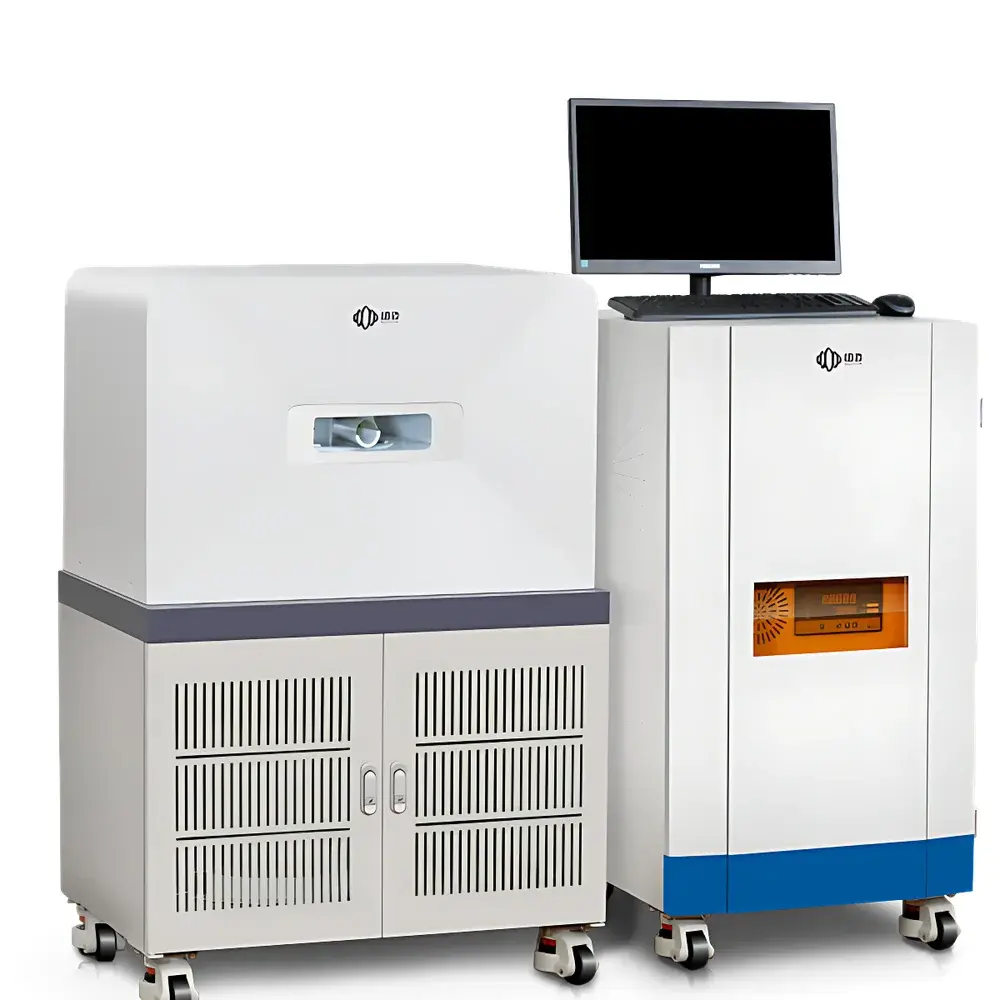
NIUMAG NMI20-060 Low-Field Nuclear Magnetic Resonance Analyzer for Traditional Chinese Medicine Drying Evaluation
| Brand | NIUMAG |
|---|---|
| Origin | Jiangsu, China |
| Manufacturer Type | Authorized Distributor |
| Country of Origin | China |
| Model | NMI20-060 |
| Pricing | Upon Request |
| Magnetic Field Strength | 0.50 ± 0.03 T |
| Magnet Homogeneity | ≤20 ppm |
| Magnet Orientation | Horizontal & Vertical |
| Maximum Sample Dimensions | Ø60 mm × H60 mm |
| Measurable Parameters | T₁ & T₂ relaxation times, spatial water/oil distribution, bound/free water ratio, moisture content (2–10 wt%), oil content (1–100 wt%) |
| Optional Modules | Temperature-controlled stage, humidity chamber, microwave coupling unit, vacuum freeze-drying interface |
Overview
The NIUMAG NMI20-060 Low-Field Nuclear Magnetic Resonance (LF-NMR) Analyzer is an industry-specific instrument engineered for quantitative, non-invasive evaluation of drying dynamics in traditional Chinese medicinal materials. Unlike conventional gravimetric or thermogravimetric methods, this system leverages the physical principles of spin-lattice (T₁) and spin-spin (T₂) relaxation to probe molecular mobility and hydrogen-bonding states of water within complex botanical matrices. The 0.50 T permanent magnet—constructed from rare-earth NdFeB material—provides stable, maintenance-free operation with homogeneity ≤20 ppm across a 60 mm diameter spherical volume (DSV). Its dual-axis magnet orientation supports both horizontal and vertical sample loading, enabling flexible integration into drying ovens, climate chambers, or cryogenic setups. Designed specifically for pharmaceutical-grade herbal processing, the NMI20-060 delivers time-resolved, spatially resolved data on water migration, phase transitions, and binding state evolution during thermal, convective, freeze, or microwave-assisted drying—without chemical extraction, solvent use, or destructive sampling.
Key Features
- Simultaneous acquisition of T₁ and T₂ relaxation spectra to distinguish free, loosely bound, and tightly bound water populations in herbal tissues
- Quantitative mapping of moisture and oil spatial distribution via single-point imaging (SPI) or CPMG-based 2D slice-selective protocols
- Non-destructive, label-free analysis requiring no sample pre-treatment—preserving native microstructure and phytochemical integrity
- Modular multi-field coupling architecture: compatible with external temperature control (−40 °C to +120 °C), relative humidity regulation (10–95% RH), microwave irradiation (2.45 GHz), and vacuum freeze-drying interfaces
- Rugged permanent magnet design eliminates cryogen dependency, power supply fluctuations, and routine shimming—ensuring long-term operational stability in QC laboratories
- Compliant with ISO/IEC 17025 calibration traceability requirements for analytical instrumentation used in GMP-relevant herbal manufacturing environments
Sample Compatibility & Compliance
The NMI20-060 accommodates solid, semi-solid, and powdered herbal samples up to Ø60 mm × 60 mm height—including whole roots (e.g., *Panax ginseng*, *Astragalus membranaceus*), sliced rhizomes (*Rhizoma Atractylodis*), and granulated extracts. Its low-field configuration minimizes susceptibility artifacts common in heterogeneous plant tissues, enabling reproducible quantification even in high-starch or fibrous matrices. All measurement protocols adhere to ASTM E2822–22 (Standard Guide for Low-Field NMR Characterization of Hydration States in Biomaterials) and support alignment with Chinese Pharmacopoeia (ChP) general chapter 0832 “Moisture Determination” and USP “Water Content”. Data audit trails meet FDA 21 CFR Part 11 requirements when operated with validated software configurations under GLP/GMP conditions.
Software & Data Management
Equipped with NIUMAG’s proprietary MesoMR Studio v4.2, the system provides automated relaxation curve fitting (mono-/bi-/tri-exponential models), diffusion-weighted analysis, and voxel-wise parametric mapping. Raw FID and echo train data are stored in vendor-neutral HDF5 format, supporting third-party integration with MATLAB, Python (SciPy/Numpy), or LIMS platforms via RESTful API. All user actions—including pulse sequence selection, parameter modification, and report generation—are logged with timestamps, operator ID, and digital signature for full traceability. Batch processing workflows enable unattended overnight drying monitoring, with configurable alerts for threshold deviations in T₂ decay rate or moisture gradient asymmetry.
Applications
- Real-time tracking of water redistribution during hot-air drying of *Codonopsis pilosula*: identification of critical moisture transition points correlating with polysaccharide denaturation
- In situ quantification of ice recrystallization kinetics during freeze-thaw cycling of *Lycium barbarum* berries—correlating T₂ shortening with cellular rupture and anthocyanin leakage
- Differentiation of surface evaporation vs. internal capillary migration in *Angelica sinensis* slices using depth-resolved T₂ profiling
- Validation of microwave-vacuum drying protocols against conventional methods by comparing residual bound-water fractions and their impact on volatile oil retention (GC-MS cross-verified)
- Stability assessment of enzyme-inactivated *Glycyrrhiza uralensis* under accelerated aging: monitoring hydrolytic degradation via T₁/T₂ ratio shifts in glycyrrhizin microenvironments
FAQ
Does the NMI20-060 require liquid helium or cryogenic cooling?
No. It employs a self-shielded, temperature-compensated rare-earth permanent magnet operating at ambient conditions—zero consumables or cooling infrastructure required.
Can it quantify absolute moisture content without calibration curves?
Yes—via proton density normalization against a sealed reference standard (e.g., deuterated water phantom), achieving ±0.3 wt% repeatability for homogeneous herbal powders per ISO 15502.
Is the system suitable for regulated pharmaceutical production environments?
Yes—when deployed with IQ/OQ/PQ documentation packages and electronic signature-enabled software, it fulfills data integrity expectations under EU Annex 11 and WHO TRS 992.
What sample preparation is needed prior to measurement?
None beyond standard size reduction to fit the 60 mm coil; no drying, grinding, or solvent addition is necessary—preserving native hydration states.
How does LF-NMR compare to Karl Fischer titration for herbal moisture analysis?
While KF measures total extractable water, NMI20-060 distinguishes mobile vs. immobilized water pools—critical for predicting shelf-life, microbial resistance, and extractability of active constituents.





