
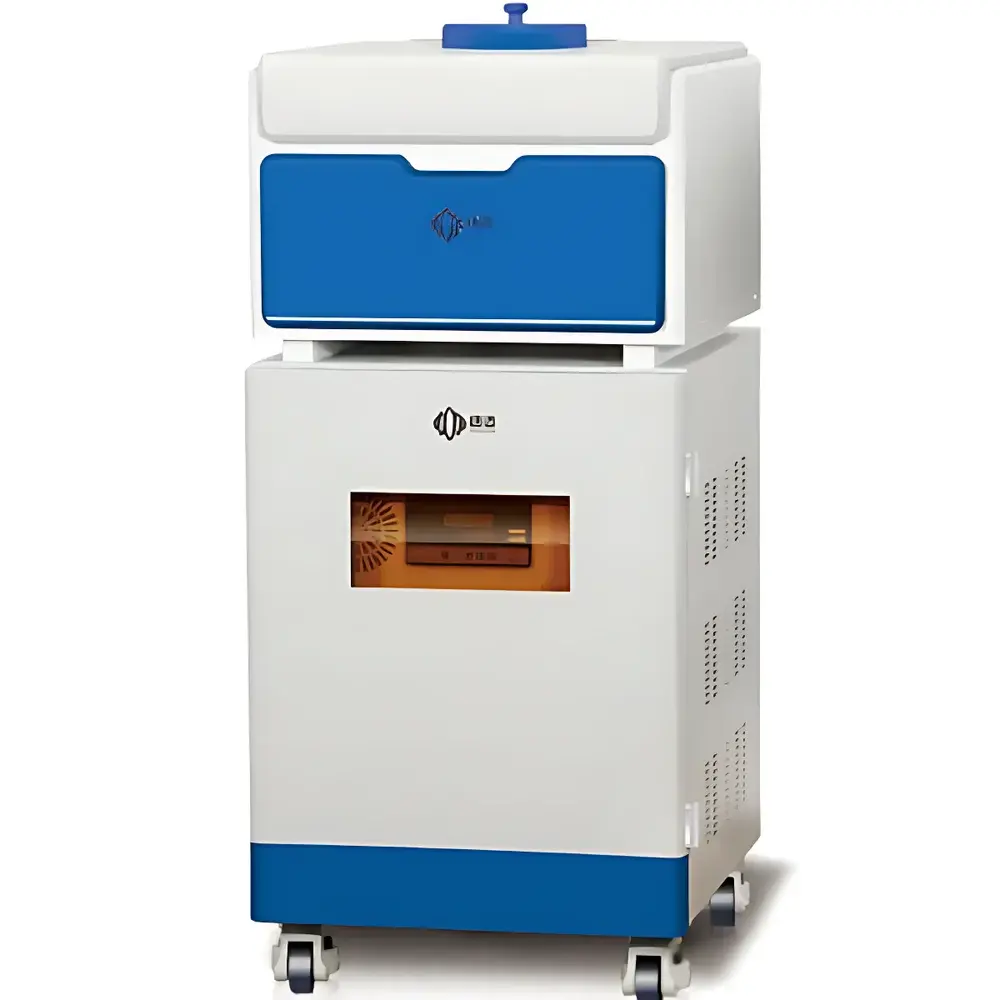
NIUMAG NMI20+ Benchtop Low-Field Nuclear Magnetic Resonance Spectrometer
| Brand | NIUMAG |
|---|---|
| Origin | Jiangsu, China |
| Instrument Type | Low-Field NMR Analyzer |
| Sample Compatibility | Solid-Liquid Dual Mode |
| Operating Principle | Pulsed Fourier Transform NMR |
| Magnet Type | Rare-Earth Permanent Magnet |
| Probe Inner Diameter | 40 mm |
| Core Functionality | T₁/T₂ Relaxometry & MRI (Proton Density, T₁-Weighted, T₂-Weighted Imaging) |
| Software Platform | Proprietary 2nd-Generation NMR Console & Imaging Suite |
| Compliance Context | Designed for GLP-aligned laboratory workflows |
Overview
The NIUMAG NMI20+ is a compact, permanent-magnet-based benchtop nuclear magnetic resonance (NMR) spectrometer engineered for quantitative relaxometry and non-invasive magnetic resonance imaging (MRI) in research and quality control laboratories. Operating at a low static magnetic field (typically ~0.5 T, corresponding to proton Larmor frequency ~21 MHz), it leverages pulsed Fourier transform (PFT) methodology to acquire time-domain spin echo decay signals (e.g., CPMG, IR, SE sequences). Its design prioritizes robustness, operational simplicity, and minimal infrastructure dependency—eliminating cryogens, RF shielding rooms, or high-power utilities. The system is optimized for proton (¹H) detection in organic matrices, enabling direct interrogation of hydrogen-bearing species (e.g., water, oils, proteins, carbohydrates) without chemical derivatization or extraction. This makes it particularly suitable for routine analysis in food science, agricultural research, polymer characterization, and pharmaceutical formulation development—where rapid, non-destructive assessment of molecular mobility, phase distribution, and microstructural heterogeneity is required.
Key Features
- 40 mm Bore Diameter Probe: Accommodates heterogeneous samples—including whole fruits, meat cuts, packaged foods, powders, gels, and emulsions—without size-restrictive truncation or repositioning.
- Rare-Earth Permanent Magnet Architecture: Delivers stable, drift-free field homogeneity over extended operation cycles; zero liquid helium or nitrogen consumption; no scheduled magnet quenching or shimming interventions.
- Integrated Relaxometry & MRI Capability: Simultaneous acquisition of multi-exponential T₂ relaxation spectra and spatially resolved images (proton density, T₁-weighted, T₂-weighted) from the same dataset.
- Three-Step Imaging Workflow: Automated sequence selection, slice positioning, and reconstruction—enabling user-defined axial/coronal/sagittal plane selection, arbitrary slice thickness (1–20 mm), and adjustable field-of-view (FOV) without manual pulse calibration.
- Pre-Configured Pulse Sequences: Includes standard CPMG (T₂), inversion recovery (T₁), stimulated echo (diffusion-weighted), and gradient-echo modules—all accessible via graphical interface with real-time parameter preview.
- Low Total Cost of Ownership (TCO): No consumables, no RF coil tuning, no dedicated HVAC or power conditioning; routine maintenance limited to firmware updates and probe cleanliness checks.
Sample Compatibility & Compliance
The NMI20+ accepts native-state samples across physical states—solids, semi-solids, liquids, suspensions, and multiphase systems—with no requirement for dehydration, filtration, or solvent exchange. It has been validated for use with food-grade materials (e.g., cheese, tofu, cereal grains, nuts, baked goods, dairy emulsions) under ambient or temperature-controlled conditions (optional accessory stage: −10 °C to +60 °C). Data integrity aligns with Good Laboratory Practice (GLP) principles: raw FID/echo train files are stored in vendor-neutral formats (e.g., .dat, .txt), metadata includes timestamp, operator ID, sequence parameters, and hardware status logs. When configured with password-protected user roles and electronic signature modules, the system supports compliance with FDA 21 CFR Part 11 for regulated environments requiring audit trails and data authenticity verification.
Software & Data Management
The proprietary NMI20+ console software provides a unified environment for instrument control, real-time signal monitoring, spectral fitting, image reconstruction, and quantitative reporting. Relaxation data are fitted using non-negative least squares (NNLS) algorithms to resolve multi-component T₂ distributions; MRI datasets undergo k-space filtering, phase correction, and magnitude reconstruction. Built-in tools support ROI-based intensity profiling, pseudo-color mapping, noise suppression (adaptive Wiener filtering), and export to common scientific formats (CSV, PNG, DICOM-compliant NIfTI). Optional application-specific modules include Water/Oil Ratio Quantification, Moisture Migration Tracking, and Structural Heterogeneity Index (SHI) calculation—each documented with traceable calibration protocols and uncertainty estimates per ISO/IEC 17025 guidance.
Applications
- Food Quality Assessment: Shelf-life prediction via T₂ decay kinetics; texture correlation with bound/free water ratios; thermal processing validation through protein denaturation signatures.
- Moisture Dynamics Studies: In situ monitoring of drying, frying, freezing, and rehydration processes; spatial mapping of water redistribution during storage.
- Lipid Phase Characterization: Quantification of oil content and crystallinity state in chocolate, margarine, and plant-based analogs; emulsion stability evaluation via droplet size distribution inference.
- Biological Tissue Analysis: Non-invasive grading of fruit ripeness, bruise detection in apples/potatoes, and myofibrillar fragmentation index estimation in meat products.
- Material Science: Polymer crosslink density assessment, catalyst pore structure analysis, and battery electrolyte wettability imaging.
FAQ
What sample preparation is required prior to measurement?
None. Samples are placed directly into the 40 mm diameter sample tube or holder; no grinding, drying, or chemical treatment is necessary.
Can the NMI20+ distinguish between free, loosely bound, and tightly bound water?
Yes—via multi-exponential T₂ relaxation analysis, where distinct decay components correlate with molecular mobility regimes (e.g., bulk water ≈ 100–1000 ms, capillary-bound ≈ 10–100 ms, hydration-layer water ≈ 0.1–10 ms).
Is MRI data compatible with third-party image analysis platforms?
Yes—reconstructed images are exported in NIfTI format, supporting import into MATLAB, ImageJ/Fiji, 3D Slicer, and commercial PACS systems.
Does the system support temperature-controlled measurements?
An optional temperature-regulated sample stage is available (-10 °C to +60 °C), enabling kinetic studies and phase transition analysis.
How is data security and regulatory compliance ensured?
Role-based access control, electronic signatures, and immutable audit logs are implemented in accordance with FDA 21 CFR Part 11 when operated in validated mode with documented SOPs.





