
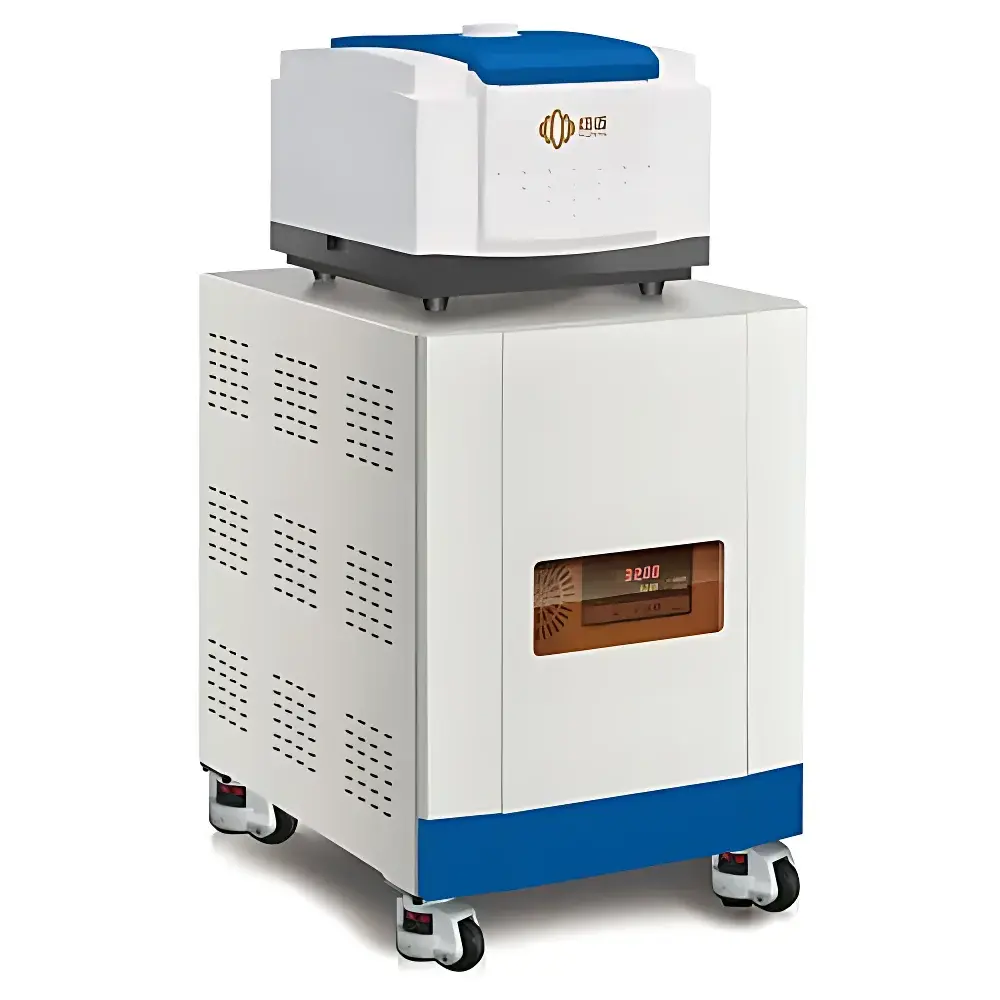
NIUMAG PQ001-015V Benchtop Low-Field Nuclear Magnetic Resonance Relaxometry Analyzer for MRI Contrast Agents
| Brand | NIUMAG |
|---|---|
| Origin | Shanghai, China |
| Model | PQ001-015V |
| Instrument Type | Low-Field NMR Analyzer |
| Sample Compatibility | Solid-Liquid Dual-Phase |
| Magnetic Field Strength | 0.5 T |
| RF Coil Configuration | Solenoid Transceiver |
| Signal Processing | Fully Digital Spectrometer with FPGA-Based Architecture |
| Software Platform | Delphi-Based Relaxometry Suite with Guided Workflow |
Overview
The NIUMAG PQ001-015V is a dedicated benchtop low-field nuclear magnetic resonance (NMR) relaxometer engineered for the quantitative characterization of MRI contrast agents. Unlike clinical MRI scanners that infer longitudinal (T₁) and transverse (T₂) relaxation times indirectly from image contrast—introducing ambiguity due to sequence-dependent weighting and spatial heterogeneity—the PQ001-015V performs direct, non-imaging NMR relaxometry using standardized inversion-recovery (for T₁) and Carr–Purcell–Meiboom–Gill (CPMG) pulse sequences (for T₂). Operating at a stable 0.5 T permanent magnet field, it delivers high reproducibility in relaxation time measurements across aqueous suspensions, colloidal dispersions, and semi-solid biological matrices—including ex vivo tumor tissues and cell lysates. Its compact footprint and self-shielded magnet design enable deployment in chemistry labs, pharmaceutical QC environments, and preclinical imaging core facilities without requiring RF shielding rooms or cryogenic infrastructure.
Key Features
- 0.5 T permanent magnet with long-term field homogeneity (< 5 ppm over 20 mm DSV) and passive temperature stabilization for drift-free operation over multi-hour acquisitions.
- Solenoid transceiver RF coil optimized for uniform B₁ excitation and high signal-to-noise ratio (SNR) across standard 10–15 mm OD sample tubes; supports both proton (¹H) detection and optional frequency-tuning for other nuclei (e.g., ¹⁹F in perfluorocarbon-based agents).
- Integrated low-noise preamplifier located within the coil housing minimizes cable-induced signal degradation and thermal noise, enabling detection of weak relaxation signals from dilute paramagnetic solutions.
- FPGA-accelerated digital spectrometer with 16-bit ADC sampling at up to 100 MS/s, real-time CPMG echo train acquisition, and on-board exponential decay fitting algorithms for rapid T₂ distribution analysis.
- Modular hardware architecture compliant with industrial IEC 61000-6-3 EMC standards; CE-marked for laboratory use in EU-regulated environments.
Sample Compatibility & Compliance
The PQ001-015V accommodates diverse contrast agent formulations including Gd³⁺-chelates (e.g., Gd-DTPA, Gd-DOTA), iron oxide nanoparticles (SPIONs), Mn²⁺ complexes, and emerging manganese-based nanoagents. It accepts samples in standard 10 mm glass NMR tubes or custom-insertable vials (0.5–2 mL volume), supporting both liquid-phase solutions and hydrated solid-state specimens such as minced tumor tissue or centrifuged cell pellets. All measurement protocols adhere to ASTM E2827–22 “Standard Practice for Determining Longitudinal and Transverse Relaxation Times of Paramagnetic Contrast Media Using Low-Field NMR,” and raw data files include embedded metadata required for GLP-compliant documentation. Audit trails, user access logs, and electronic signature support are implemented in accordance with FDA 21 CFR Part 11 when operated under validated software configurations.
Software & Data Management
The Delphi-based relaxometry suite provides an intuitive, workflow-driven interface with step-by-step protocol wizards for T₁/T₂ mapping, relaxivity (r₁/r₂) calculation, and concentration-dependent linear regression. Each acquisition generates time-domain FID or CPMG echo trains alongside fitted exponential decays, T₂ distributions (via non-negative least squares), and tabulated r₁/r₂ values (mM⁻¹s⁻¹) referenced to standardized MnCl₂ and GdCl₃ solutions. Data export formats include CSV, ASCII, and HDF5 for integration with MATLAB, Python (SciPy/Numpy), or LIMS platforms. Version-controlled software updates are distributed via secure HTTPS portal; all calibration records and instrument performance verification (IPV) reports are stored locally with SHA-256 checksum integrity validation.
Applications
- Quantitative relaxivity screening of novel chelate architectures during early-stage contrast agent development.
- Batch-to-batch consistency assessment of commercial Gd- or Fe-based agents under ISO 10993-18 biocompatibility testing workflows.
- Correlation of T₁/T₂ shifts with nanoparticle aggregation state, surface coating density, or pH-responsive conformational changes.
- Ex vivo relaxometric profiling of resected tumor tissues to assess endogenous contrast potential and microenvironmental heterogeneity.
- Cellular uptake quantification via T₂ shortening in macrophage-incubated SPION suspensions, normalized to iron content measured by ICP-MS.
FAQ
What pulse sequences are pre-installed for T₁ and T₂ measurement?
Inversion-recovery (IR) for T₁ and Carr–Purcell–Meiboom–Gill (CPMG) for T₂ are factory-calibrated and fully automated; users may adjust τ (inversion delay) and echo spacing (TE) within defined ranges.
Is temperature control available for variable-temperature relaxometry studies?
The base system operates at ambient temperature (20–25 °C); optional air-cooled Peltier stage (±0.1 °C stability) can be integrated upon request for kinetic or thermodynamic relaxivity profiling.
Can the PQ001-015V measure r₁ and r₂ simultaneously from a single sample run?
Yes—sequential IR and CPMG acquisitions are scriptable within one session, with automatic concentration normalization and relaxivity calculation against internal reference standards.
Does the system support regulatory submission-ready reporting?
When deployed with IQ/OQ/PQ documentation packages and 21 CFR Part 11-compliant software configuration, raw data, processing logs, and final reports meet requirements for IND-enabling preclinical dossiers.
What maintenance is required for long-term magnet stability?
The permanent magnet requires no cryogens or power; annual field homogeneity verification using a calibrated NMR probe is recommended, with full service support available through NIUMAG’s global technical network.
Related Products






