
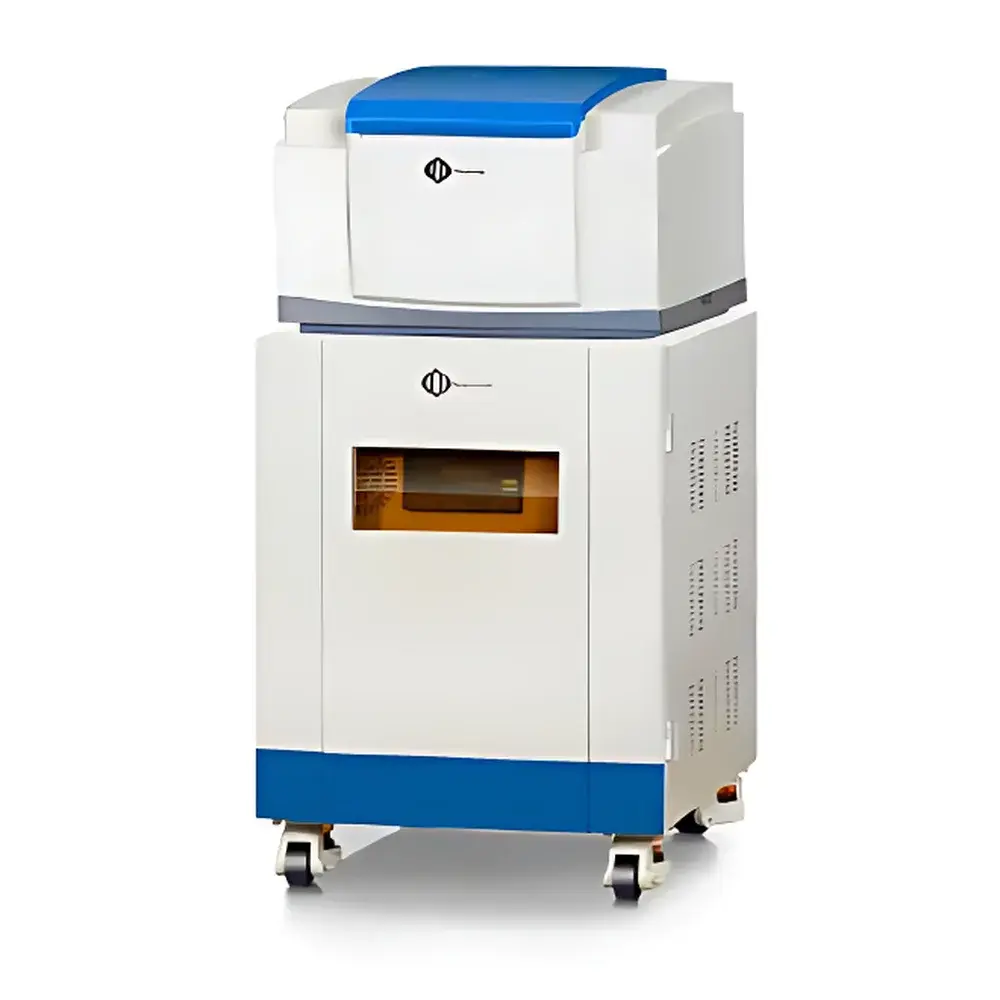
NIUMAG PQ001-2 Benchtop Low-Field NMR Oil Content Analyzer for Seed Testing
| Brand | NIUMAG |
|---|---|
| Origin | Jiangsu, China |
| Manufacturer Type | Authorized Distributor |
| Country of Origin | China |
| Model | PQ001-2 |
| Pricing | Available Upon Request |
Overview
The NIUMAG PQ001-2 is a compact, single-unit benchtop low-field nuclear magnetic resonance (NMR) analyzer engineered specifically for rapid, non-destructive quantification of oil and moisture content in agricultural seeds. Operating at a static magnetic field strength of 0.5 ± 0.08 T (corresponding to a proton Larmor frequency of 21.3 MHz), the instrument leverages time-domain NMR (TD-NMR) principles—specifically transverse relaxation (T₂) decay analysis—to differentiate and quantify mobile lipid and water phases within intact seed samples. Unlike destructive chemical extraction methods, this system requires no solvent, grinding, drying, or derivatization; samples remain fully recoverable post-analysis. Introduced in 2008 and continuously refined through field deployment across seed processing facilities, breeding programs, and agricultural research institutes, the PQ001-2 delivers high reproducibility (RSD < 1.2% for repeated peanut seed measurements) and measurement throughput of ≤ 3 minutes per sample under standard operating conditions.
Key Features
- Permanent magnet architecture ensures long-term field stability with zero cryogen or power consumption for magnet maintenance
- 25 mm diameter RF probe coil optimized for heterogeneous seed geometries—including whole peanuts, soybeans, rapeseeds, sunflower kernels, and corn kernels—enabling uniform excitation and signal reception
- Integrated self-locking frequency tuning algorithm eliminates manual shimming and operator-dependent calibration drift
- Ruggedized industrial enclosure rated IP54 for operation in ambient laboratory or QC floor environments with moderate electromagnetic interference
- Modular hardware configuration supports optional upgrades including temperature-controlled sample staging (±0.1 °C) and automated sample loader integration
- Compliance-ready firmware architecture with configurable audit trails, user access levels, and electronic signature support aligned with GLP and ISO/IEC 17025 documentation requirements
Sample Compatibility & Compliance
The PQ001-2 accepts intact, unprocessed seeds ranging from 0.5 g to 25 g per measurement—covering major oilseed species such as Arachis hypogaea (peanut), Glycine max (soybean), Brassica napus (rapeseed), Sesamum indicum (sesame), Zea mays (corn), and Helianthus annuus (sunflower). It simultaneously resolves oil content (wt%), moisture content (wt%), and provides T₂ distribution profiles to infer water mobility states (bound vs. free water) and oil phase homogeneity. Method validation studies demonstrate correlation coefficients >0.995 against reference ASTM D6304 (Karl Fischer titration for moisture) and AOCS Am 2-93 (Soxhlet extraction for oil) across ten validated seed matrices. The system supports method transfer protocols compliant with FDA 21 CFR Part 11 when deployed with optional secure software licensing and networked data archiving.
Software & Data Management
Controlled via NIUMAG’s proprietary NMI-Studio v4.x platform, the PQ001-2 offers guided workflow navigation with context-sensitive prompts, real-time spectral preview, and automatic baseline correction. All raw FID data, processed T₂ spectra, and quantitative reports are stored in vendor-neutral HDF5 format. Export options include CSV, PDF, and XML for integration into LIMS or ERP systems. Customizable report templates accommodate internal QA documentation standards—including batch ID, operator ID, instrument serial number, calibration timestamp, and uncertainty estimation per ISO/IEC Guide 98-3 (GUM). Data encryption and role-based permissions ensure alignment with GDPR and internal data governance policies.
Applications
- High-throughput oil content screening in seed breeding programs for trait selection and varietal certification
- In-line quality assurance during oilseed crushing and refining operations to monitor kernel consistency pre-processing
- Moisture phase analysis to assess storage stability and predict rancidity onset in bulk seed lots
- Non-invasive evaluation of post-harvest drying efficacy and hydration uniformity across heterogeneous batches
- Support for regulatory submissions requiring rapid, repeatable, and auditable compositional data (e.g., USDA AMS, EU Regulation (EC) No 834/2007)
- Cross-disciplinary use in food science (oil oxidation kinetics), biofuel feedstock assessment (Jatropha, Camelina), and fiber crop quality control (cottonseed linters)
FAQ
What is the minimum and maximum sample mass supported for reliable oil quantification?
The recommended mass range is 2–15 g for most oilseeds; optimal signal-to-noise ratio is achieved at ≥5 g for low-oil-content seeds (e.g., wheat) and ≥3 g for high-oil seeds (e.g., sesame).
Does the instrument require routine magnet recalibration?
No—permanent magnet design ensures intrinsic field stability; only annual verification using certified reference standards (e.g., doped water phantom) is recommended per ISO/IEC 17025.
Can the PQ001-2 distinguish between triglyceride and free fatty acid content?
Standard TD-NMR cannot chemically resolve molecular species; it quantifies total mobile proton signal from non-aqueous lipids. Complementary FTIR or GC-FID is required for speciation.
Is remote diagnostics and software update capability available?
Yes—optional Ethernet-enabled remote maintenance mode allows secure technician access for firmware updates and parameter validation without on-site intervention.
How does the system handle samples with high iron content or metallic contaminants?
Ferromagnetic impurities distort local field homogeneity and suppress signal amplitude; users must screen samples for metal debris prior to analysis per AOCS Ca 5a-40 protocol.





