
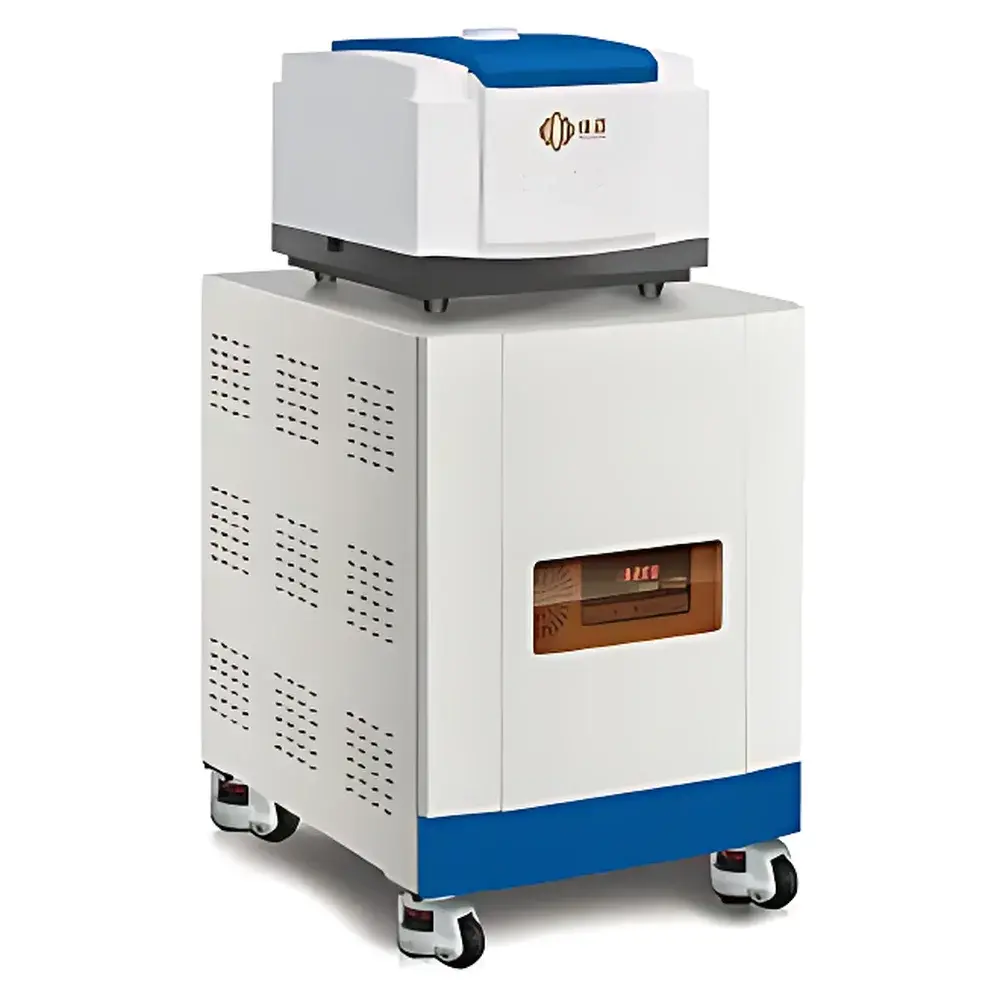
NIUMAG PQ001-4 Benchtop Low-Field NMR Oil Content Analyzer for Seeds
| Brand | NIUMAG |
|---|---|
| Origin | Jiangsu, China |
| Manufacturer Type | Authorized Distributor |
| Country of Origin | China |
| Model | PQ001-4 |
| Pricing | Upon Request |
| Magnet Type | Permanent Magnet |
| Magnetic Field Strength | 0.5 ± 0.08 T |
| Larmor Frequency | 21.3 MHz |
| Probe Coil Diameter | 25 mm |
Overview
The NIUMAG PQ001-4 is a compact, single-unit benchtop low-field nuclear magnetic resonance (LF-NMR) analyzer engineered specifically for rapid, non-destructive quantification of oil and moisture content in agricultural seeds. Operating at a Larmor frequency of 21.3 MHz—corresponding to a static magnetic field strength of 0.5 ± 0.08 T—the instrument leverages the fundamental principle of transverse relaxation time (T2) decay analysis to differentiate proton signals from oil (long T2) and water (short T2) components within intact seed samples. Unlike destructive chemical extraction methods, this NMR-based approach requires no solvent, grinding, or thermal treatment, preserving sample integrity while delivering high reproducibility (RSD < 1.5% for repeated measurements on homogeneous seed batches). First commercialized in 2008, the PQ001-4 has been validated across ISO/IEC 17025-accredited seed testing laboratories and integrated into routine QC workflows in breeding programs, grain procurement, and feed formulation facilities.
Key Features
- Integrated permanent magnet system with passive temperature stabilization—enabling stable operation without cryogens or active cooling infrastructure
- 25 mm diameter radiofrequency probe optimized for heterogeneous seed matrices including peanut, soybean, rapeseed, sunflower, sesame, corn, cottonseed, and olive kernels
- Self-locking frequency tuning algorithm—automatically compensates for minor field drifts during extended runs, eliminating manual shimming
- Intuitive touch-enabled interface with guided workflow prompts; measurement initiation requires ≤3 user actions
- Robust electromagnetic shielding design—certified for reliable performance in industrial environments with variable EMI profiles (e.g., near grain dryers or conveyor systems)
- Modular hardware configuration support—optional upgrades include multi-sample trays, automated sample loaders, and external barcode integration
Sample Compatibility & Compliance
The PQ001-4 accepts whole, halved, or ground seeds (maximum dimension ≤ 20 mm) without pre-treatment. Its non-invasive measurement protocol aligns with ASTM D7467–22 (“Standard Practice for Determination of Oil Content in Oilseeds by Low-Field NMR”) and supports compliance with national seed quality standards (e.g., GB/T 10360–2022 in China, EN ISO 10520:2021 in EU). Data traceability meets GLP and GMP documentation requirements: audit trails record operator ID, timestamp, calibration status, and raw FID data for every test. While not FDA 21 CFR Part 11–certified out-of-the-box, the firmware architecture supports electronic signature modules and secure user role management when deployed in regulated QA/QC settings.
Software & Data Management
NIUMAG’s proprietary NMIQ software (v4.2+) provides full spectral acquisition, T2 distribution deconvolution, and multivariate calibration modeling. Users can import reference datasets from gravimetric or Soxhlet assays to build species-specific PLS regression models. All results export in CSV, PDF, or XML formats—with customizable report templates supporting lab-specific headers, pass/fail thresholds, and statistical summaries (mean, SD, CV%, confidence intervals). Raw FID data and processed spectra are stored locally or exported via USB 3.0; network connectivity enables optional integration with LIMS platforms through standard OPC UA or RESTful API interfaces.
Applications
- Routine oil content screening of incoming seed lots prior to crushing or storage—reducing turnaround time from hours (Soxhlet) to under 90 seconds per sample
- Moisture content and bound/free water ratio analysis using multi-exponential T2 fitting—critical for predicting storability and germination viability
- Longitudinal studies of lipid oxidation kinetics during accelerated aging trials—tracking changes in T2 shortening rates as proxy indicators
- Supporting marker-assisted selection (MAS) in oilseed breeding programs by enabling high-throughput phenotyping of F2–F5 populations
- Cross-validation of NIR calibrations where spectral interference from pigments or fiber confounds prediction accuracy
FAQ
How does the PQ001-4 differentiate oil from water signals?
It exploits differences in spin–spin relaxation times: triglyceride protons exhibit longer T2 values (typically >100 ms) than water protons (<50 ms), allowing clear separation in the inverse Laplace transform of the free induction decay.
Can the instrument be calibrated for new seed species not in the default library?
Yes—users may develop custom calibration models using ≥20 reference samples with certified oil content values obtained via AOAC 920.39 or ISO 659.
What maintenance is required beyond routine cleaning?
No scheduled magnet servicing is needed; annual verification of RF coil impedance and signal-to-noise ratio (SNR > 80 dB at 21.3 MHz) is recommended using the built-in diagnostic suite.
Is temperature control necessary for accurate results?
Ambient temperature stability within ±2°C over the measurement period is sufficient; the magnet’s passive thermal mass minimizes field drift under typical lab conditions (18–28°C).




