
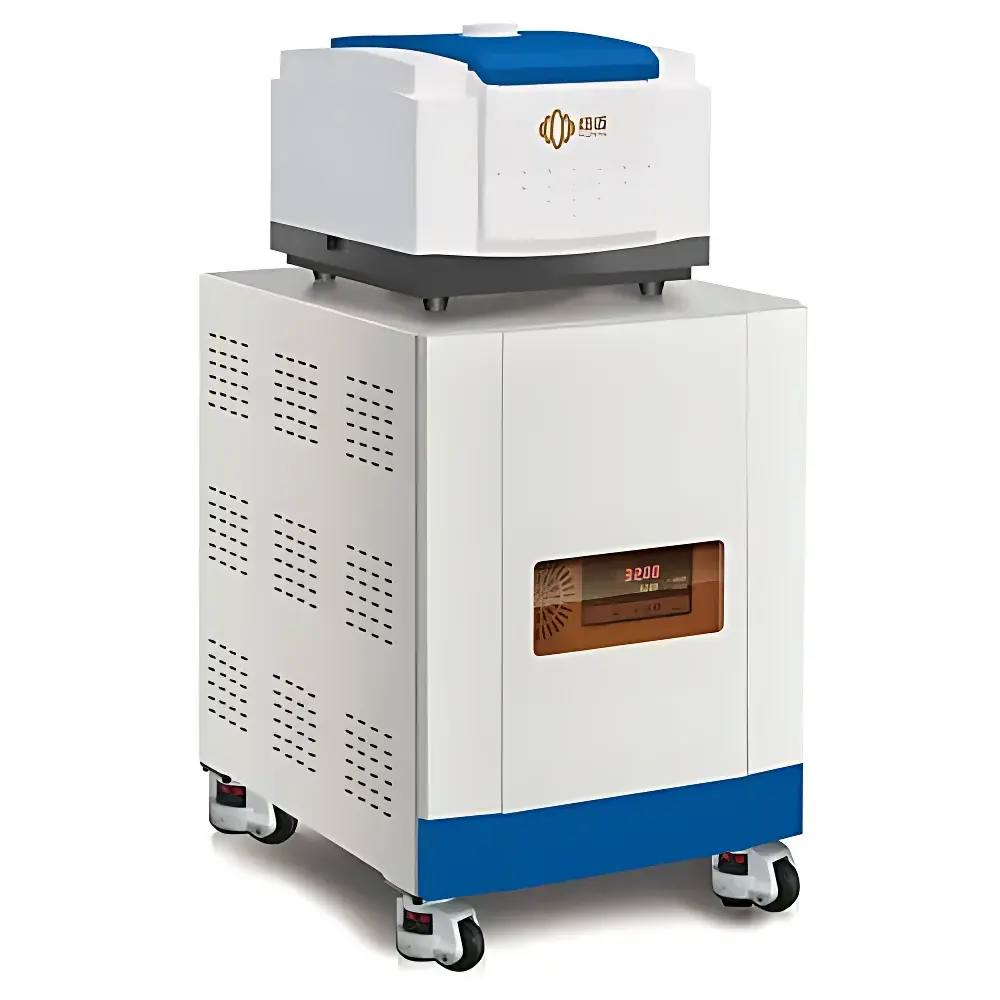
NIUMAG PQ001-hy Time-Domain Nuclear Magnetic Resonance Analyzer for Hydrogel Swelling Behavior and Microstructure Characterization
| Brand | NIUMAG |
|---|---|
| Origin | Jiangsu, China |
| Manufacturer Type | Authorized Distributor |
| Regional Classification | Domestic (China) |
| Model | PQ001-hy |
| Instrument Type | Low-Field Time-Domain NMR Analyzer |
| Sample Compatibility | Solid-Liquid Hybrid Samples |
| Magnet Type | Permanent Magnet |
| Static Magnetic Field Strength | 0.5 ± 0.08 T |
| Larmor Frequency | 21.3 MHz |
| Probe Coil Diameter | 15 mm |
Overview
The NIUMAG PQ001-hy is a benchtop time-domain nuclear magnetic resonance (TD-NMR) analyzer engineered for quantitative, non-invasive investigation of hydrogel swelling kinetics and microstructural evolution in situ. Unlike high-resolution NMR spectrometers designed for molecular identification, the PQ001-hy operates on the principle of spin-spin (T₂) and spin-lattice (T₁) relaxation time measurement under low-field conditions (0.5 ± 0.08 T, 21.3 MHz). It detects changes in proton mobility—primarily from water molecules—within polymeric networks, enabling discrimination between bound, intermediate, and bulk-like water populations based on their distinct transverse relaxation times (T₂). This capability allows direct correlation of T₂ distribution profiles with network mesh size, crosslink density, and hydration heterogeneity—parameters critical to hydrogel performance in drug delivery, tissue engineering, and soft robotics.
Key Features
- Permanent magnet system offering stable, maintenance-free operation with no cryogen or power supply requirements for the magnetic field
- Optimized 15 mm diameter RF probe coil for high signal-to-noise ratio (SNR) in small-volume hydrogel samples (e.g., discs ≤ 12 mm Ø × 5 mm thick)
- Integrated pulse sequence library including CPMG (Carr–Purcell–Meiboom–Gill), IR (Inversion Recovery), and saturation recovery for robust T₂, T₁, and diffusion-weighted analysis
- Real-time acquisition mode supporting continuous monitoring of swelling dynamics without sample removal or disruption
- Temperature-controlled sample compartment (optional accessory) enabling kinetic studies across physiologically relevant ranges (4–40 °C)
- Compact footprint (< 600 × 400 × 350 mm) suitable for standard laboratory benches and QC environments
Sample Compatibility & Compliance
The PQ001-hy accepts solid-liquid hybrid specimens—including intact hydrogel films, beads, injectable precursors, and composite scaffolds—without requiring dehydration, labeling, or contrast agents. Its non-destructive nature supports longitudinal studies compliant with GLP-aligned experimental protocols. While not an imaging system, its relaxation-based quantification satisfies method validation criteria outlined in ASTM D8147–20 (Standard Guide for Low-Field NMR Characterization of Polymer Hydration) and ISO 18497:2017 (Plastics — Determination of water content in hydrogels by TD-NMR). Data integrity is maintained via timestamped raw FID storage and audit-trail-enabled parameter logging, aligning with basic FDA 21 CFR Part 11 readiness for regulated environments.
Software & Data Management
NIUMAG’s proprietary MultiQ software provides full control over acquisition parameters, real-time spectral preview, and automated multi-exponential T₂ decay fitting using non-negative least squares (NNLS) algorithms. Export formats include CSV, TXT, and HDF5 for downstream statistical analysis in MATLAB, Python (SciPy), or JMP. The software supports batch processing of time-series datasets, generation of T₂ distribution heatmaps, and calculation of derived metrics such as swelling ratio (Q), effective mesh size (ξ), and fractional water populations. All processing steps are scriptable and reproducible, facilitating method transfer between laboratories.
Applications
- Quantifying swelling ratio (Q = mswollen/mdry) and equilibrium water content (EWC) without gravimetric interference from surface moisture
- Mapping spatially resolved hydration gradients in asymmetric or layered hydrogels via vertical sample positioning and sequential axial profiling
- Correlating T₂ shifts with crosslinking density variations induced by UV dose, chemical initiator concentration, or monomer feed ratios
- Monitoring solvent exchange kinetics during hydrogel deswelling in ethanol/water mixtures or pH-responsive collapse transitions
- Validating structure–property relationships in stimuli-responsive hydrogels (e.g., PNIPAM, alginate, chitosan) under physiological buffer conditions
- Supporting formulation development for transdermal patches, wound dressings, and bioink rheology pre-characterization
FAQ
Is the PQ001-hy capable of imaging hydrogel internal structures?
No. It is a relaxometry-only analyzer; it does not perform MRI or generate spatial maps. Structural inference is derived exclusively from T₂ distribution analysis.
Can it distinguish between free water and bound water in hydrogels?
Yes—via multi-component T₂ decay analysis. Typically, components with T₂ 10 ms to bulk-like water.
What sample preparation is required?
Minimal: samples must fit within the 15 mm probe and be placed centrally. No drying, freezing, or labeling is needed. For swelling studies, samples may be loaded directly into custom holders immersed in buffer.
Does the system require external cooling or shielding?
No. The permanent magnet is self-shielded and operates at ambient temperature. Optional vibration isolation is recommended for high-precision T₂ measurements.
How is calibration performed?
Using standardized reference samples (e.g., doped water phantoms with known T₁/T₂ values) traceable to NIST SRM 1921b. Routine verification is conducted before each experimental series.



