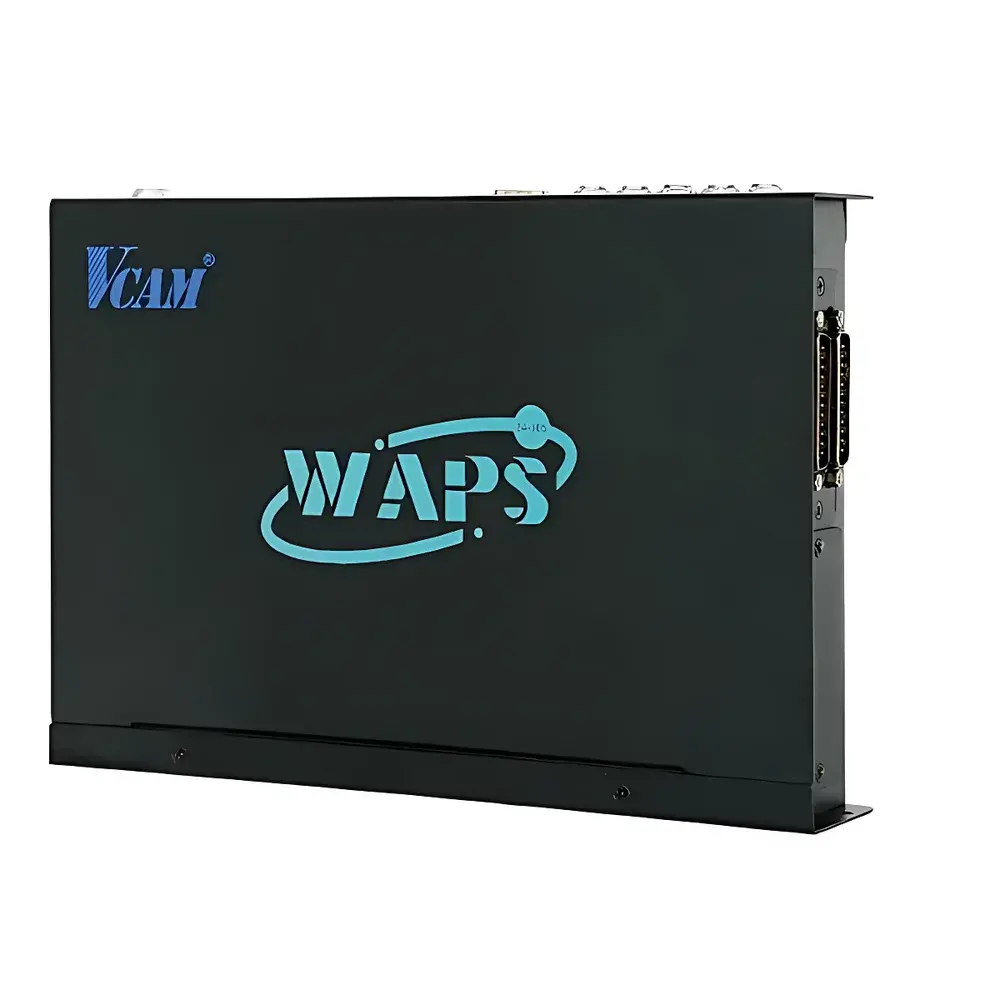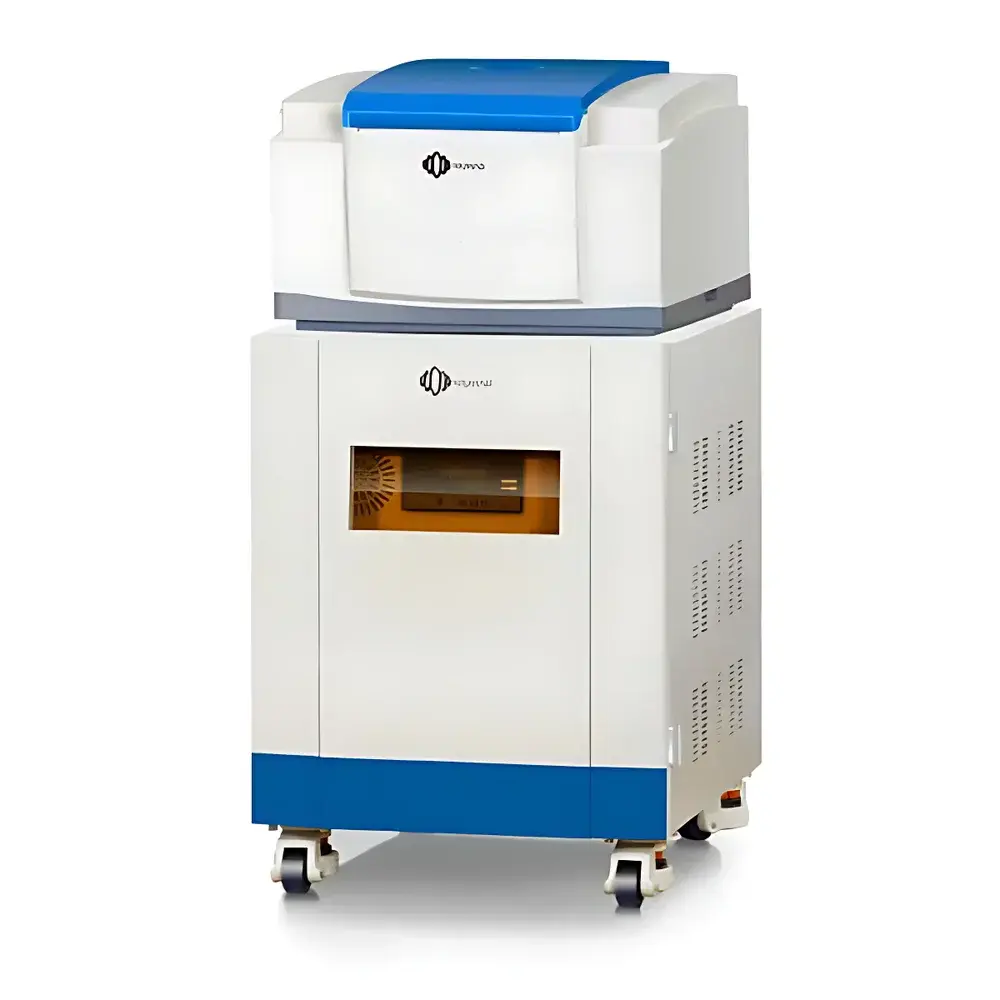
NIUMAG PQ001 Low-Field NMR Resin Content Analyzer for Prepregs
| Brand | NIUMAG |
|---|---|
| Origin | Jiangsu, China |
| Manufacturer Type | Authorized Distributor |
| Country of Origin | China |
| Model | PQ001 |
| Pricing | Available Upon Request |
Overview
The NIUMAG PQ001 Low-Field NMR Resin Content Analyzer is a dedicated benchtop instrument engineered for rapid, non-destructive quantification of resin content in fiber-reinforced prepreg materials. Unlike conventional destructive methods—such as solvent extraction (ASTM D3171), pyrolytic combustion (ISO 1172), or acid digestion—the PQ001 leverages low-field nuclear magnetic resonance (NMR) spectroscopy to detect and quantify hydrogen-bearing protons exclusively from the polymer matrix. Since carbon fibers, glass fibers, and aramid reinforcements contain negligible mobile hydrogen nuclei, their NMR signal contribution is effectively null; thus, the measured transverse relaxation decay (T₂) and integrated echo amplitude are directly proportional to the mass fraction of resin. This physical principle enables absolute quantification without calibration against reference standards for each batch—provided a single, traceable calibration curve is established using representative prepreg samples with known resin content (e.g., via gravimetric ASTM D3171 validation). The system operates at a static magnetic field strength of 0.05–0.1 T (corresponding to ¹H Larmor frequencies of ~2–4 MHz), ensuring robustness against environmental vibration and temperature drift while maintaining sufficient signal-to-noise ratio for industrial-grade repeatability.
Key Features
- Non-destructive, non-contact measurement: preserves sample integrity for downstream mechanical testing or process validation
- Single-point analysis time of 30–120 seconds per specimen, enabling real-time QC during tape laying, autoclave preform inspection, or roll-to-roll production monitoring
- Integrated temperature-controlled sample chamber (±0.5 °C stability) to minimize thermal drift of T₂ relaxation times across ambient fluctuations
- Dual-mode acquisition: optimized for both high-throughput screening (fast T₂ mapping) and high-precision quantification (multi-echo CPMG sequence with ≥32 echoes)
- Automated baseline correction and exponential fitting algorithm compliant with ISO/IEC 17025 data reduction requirements
- Modular probe design accommodating standard 15 mm OD cylindrical sample tubes or custom flat-surface holders for uncured prepreg plies up to 3 mm thickness
Sample Compatibility & Compliance
The PQ001 supports a broad range of fiber-resin systems including carbon fiber/epoxy, glass fiber/vinyl ester, basalt fiber/polyester, and thermoplastic prepregs (e.g., PA6, PEEK). It is validated for use with partially cured B-staged resins and fully uncured A-stage systems. All measurement protocols align with the method validation framework outlined in ICH Q2(R2) and support GLP/GMP documentation requirements—including full audit trails, user access control (role-based permissions), and electronic signature capability per FDA 21 CFR Part 11. Instrument performance verification follows NIUMAG’s internal PQ protocol, which includes daily sensitivity checks using a reference quartz–water phantom and annual field homogeneity mapping per ASTM E2829.
Software & Data Management
Controlled via NIUMAG’s proprietary NMIQ v3.2 software suite, the PQ001 delivers intuitive workflow management—from method setup and calibration curve generation to batch reporting and statistical process control (SPC) charting. Raw FID and T₂ decay datasets are stored in vendor-neutral HDF5 format with embedded metadata (operator ID, timestamp, instrument serial number, pulse sequence parameters). Export options include CSV, PDF reports compliant with ISO 10012, and direct integration with LIMS platforms via OPC UA or RESTful API. Software validation packages (IQ/OQ/PQ documentation) and 21 CFR Part 11 compliance kits are available upon request.
Applications
- Routine QC of prepreg resin content across manufacturing shifts to ensure consistency within ±0.3 wt% tolerance
- Resin flow characterization during hot-melt impregnation process development
- Verification of resin depletion after debulking or vacuum hold cycles
- Supporting DOE studies on cure kinetics by tracking resin mobility changes via T₂ distribution analysis
- Pre-qualification of incoming prepreg rolls prior to automated fiber placement (AFP) or tape laying
- Correlation with composite laminate void content (per ASTM D2734) and interlaminar shear strength (ILSS)
FAQ
Is the PQ001 suitable for measuring resin content in thermoplastic prepregs?
Yes—provided the thermoplastic matrix contains mobile hydrogen protons above its glass transition temperature (Tg). Measurements should be conducted at temperatures ≥Tg + 20 °C to ensure adequate molecular mobility and measurable NMR signal.
Does the instrument require liquid helium or cryogenic cooling?
No—the permanent magnet system operates at ambient temperature and requires no consumables or external cooling infrastructure.
Can the PQ001 distinguish between different resin chemistries (e.g., epoxy vs. phenolic)?
Not inherently via resin content alone; however, multi-exponential T₂ analysis combined with principal component analysis (PCA) of decay spectra can support resin-type classification when trained on reference libraries.
What sample preparation is required?
Minimal: cut a representative 10 × 10 mm² ply segment, place flat on the RF coil surface, and initiate measurement—no drying, weighing, or chemical handling needed.
How is calibration traceability maintained?
Calibration curves must be generated using at least five prepreg standards with certified resin content values obtained via primary gravimetric methods (e.g., ASTM D3171), with annual revalidation and documented uncertainty budgets per ISO/IEC 17025.