
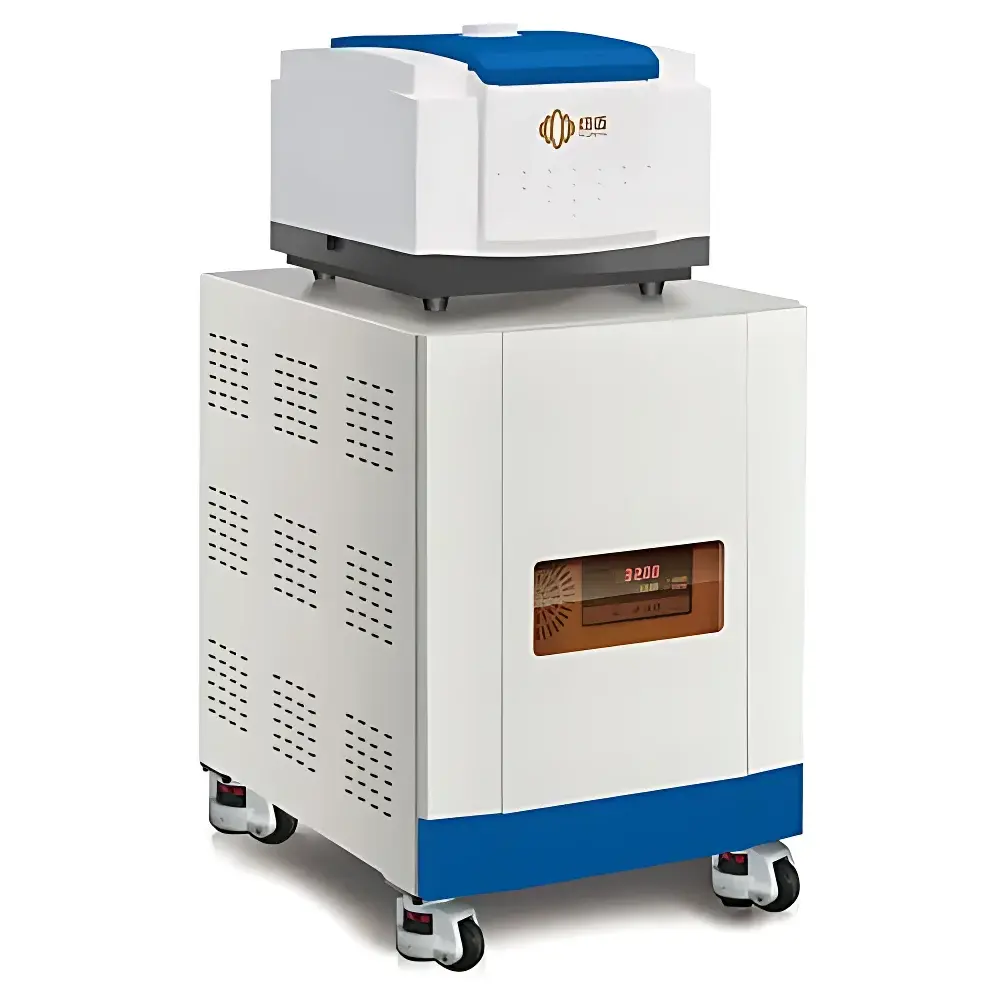
NIUMAG PQ001-b Low-Field Nuclear Magnetic Resonance Analyzer for Fiber-Reinforced Composite Oil Content Measurement
| Brand | NIUMAG |
|---|---|
| Origin | Jiangsu, China |
| Manufacturer Type | Authorized Distributor |
| Country of Origin | China |
| Model | PQ001-b |
| Quotation | Upon Request |
| Magnetic Field Strength | 0.5 ± 0.03 T / 0.25 ± 0.03 T |
| Sample Dimensions | Ø25 mm × H25 mm |
Overview
The NIUMAG PQ001-b is a dedicated low-field nuclear magnetic resonance (LF-NMR) analyzer engineered for non-destructive, quantitative determination of oil, resin, or volatile organic content in fiber-reinforced composite materials. Operating at fixed static magnetic field strengths of either 0.5 ± 0.03 T or 0.25 ± 0.03 T—generated by permanent magnets—the system exploits the spin relaxation behavior (T2 and T1) of hydrogen nuclei (1H) in mobile phases (e.g., uncured resin, absorbed oil, or plasticizer) to distinguish them from bound protons in solid polymer matrices or reinforcing fibers. Unlike high-field NMR spectrometers requiring cryogenic operation and complex shimming, the PQ001-b employs a robust, self-shielded magnet architecture with integrated RF coil and temperature-stabilized probe, enabling stable signal acquisition under ambient laboratory conditions. Its design targets routine QC/QA workflows in composites manufacturing, aerospace component verification, and R&D labs where rapid, operator-independent assessment of impregnation uniformity, curing state, or post-processing solvent retention is critical.
Key Features
- Non-invasive measurement: No sample cutting, drying, extraction, or chemical dissolution required—preserves structural integrity for longitudinal monitoring.
- High-throughput capability: Typical analysis time per sample is under 2 minutes, supporting batch screening of >50 specimens per 8-hour shift.
- Operator-agnostic interface: Touchscreen-driven workflow with preconfigured methods for glass fiber, carbon fiber, and organic fiber composites; minimal training required.
- Zero consumables: No solvents, calibration standards, or replacement coils—reducing total cost of ownership and eliminating hazardous waste disposal.
- Thermally compensated probe: Integrated temperature sensor and real-time pulse sequence adjustment maintain measurement repeatability across ambient fluctuations (15–35 °C).
- Modular sample chamber: Accommodates cylindrical specimens up to Ø40 mm × 60 mm height (GLA configuration), compatible with standard composite test coupons per ASTM D3039 and ISO 527-4.
Sample Compatibility & Compliance
The PQ001-b is validated for use with non-metallic, diamagnetic composite systems including E-glass and S-glass fiber-reinforced plastics, carbon fiber laminates (epoxy, phenolic, BMI), aramid and basalt fiber composites, and thermoplastic matrix systems (PP, PA6, PEEK). It excludes ferromagnetic, paramagnetic, or highly conductive samples that distort B0 homogeneity or induce eddy currents. While not an imaging system, its quantitative T2 distribution analysis aligns with principles referenced in ASTM D8143 (Standard Guide for Low-Field NMR Characterization of Polymer Composites) and supports GLP-compliant data recording when paired with optional audit-trail-enabled software. Instrument calibration is traceable to internal reference standards (dodecane, silicone oil) and verified quarterly using certified NIST-traceable phantoms.
Software & Data Management
Control and analysis are executed via NIUMAG’s proprietary MesoMR Studio v4.x platform, running on an embedded industrial PC. The software provides real-time FID acquisition, inverse Laplace transformation (ILT) for T2 spectrum deconvolution, multi-exponential fitting, and customizable report generation (PDF/CSV). All raw FID data, processed spectra, and metadata (operator ID, timestamp, sample ID, instrument parameters) are stored in encrypted SQLite databases compliant with FDA 21 CFR Part 11 requirements when configured with user authentication, electronic signatures, and immutable audit logs. Export modules support integration into LIMS environments via OPC UA or RESTful API endpoints.
Applications
- Quality control of prepreg resin content in glass fiber tapes prior to layup.
- In-process monitoring of oil retention in fiberglass filter media after impregnation.
- Quantification of residual solvent in carbon fiber/epoxy laminates post-autoclave cure.
- Assessment of aging-induced plasticizer migration in flexible PVC-reinforced composites.
- Validation of cleaning efficacy in recycled carbon fiber recovery processes (e.g., pyrolysis residue detection).
- Correlation studies between NMR-derived oil content and mechanical properties (flexural strength, interlaminar shear) per ASTM D7264/D2344.
FAQ
What sample preparation is required before measurement?
None—samples are placed directly into the probe without drying, cutting, or chemical treatment. Surface moisture should be gently blotted if excessive.
Can the PQ001-b distinguish between different types of oils or resins?
No—it quantifies total mobile 1H signal amplitude correlated with volatile/liquid phase content. Compound identification requires coupling with FTIR or GC-MS.
Is the instrument suitable for metal-containing composites?
Not recommended. Metallic reinforcements or fillers cause severe magnetic field distortion and signal attenuation, compromising accuracy and reproducibility.
How often does the system require recalibration?
Annual factory recalibration is recommended; daily performance verification uses built-in reference standards and is documented within the audit trail.
Does the PQ001-b meet ISO/IEC 17025 requirements for accredited testing laboratories?
Yes—when operated with validated methods, trained personnel, and full documentation (including uncertainty budgets per GUM), it supports scope accreditation for oil/resin content testing in composites.




