
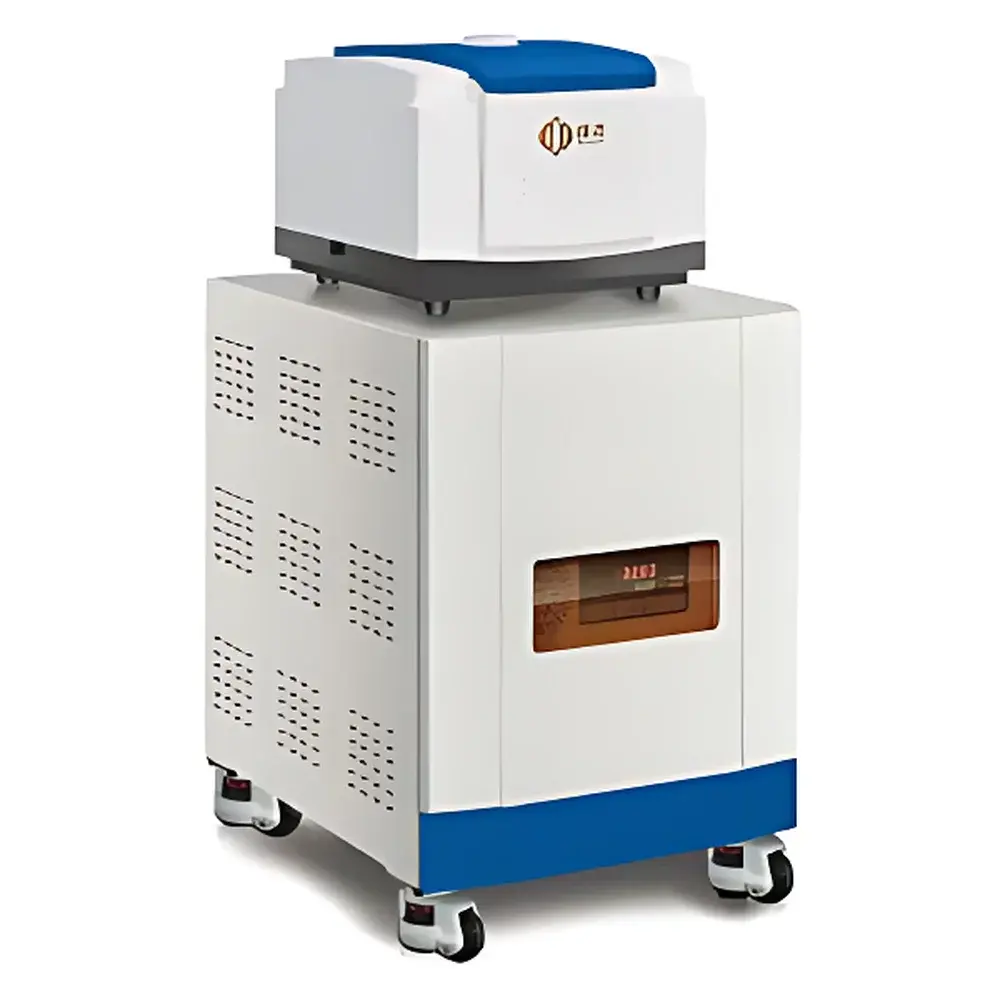
NIUMAG PQ001 Low-Field Nuclear Magnetic Resonance (LF-NMR) Oil Content Analyzer for Seeds and Plant Oils
| Brand | NIUMAG |
|---|---|
| Origin | Jiangsu, China |
| Model | PQ001 |
| Instrument Type | Seed Oil & Moisture Analyzer |
| Oil & Moisture Measurement Principle | Time-Domain NMR (TD-NMR), Spin-Echo Relaxometry (CPMG sequence) |
| Magnetic Field Strength | 0.5 ± 0.08 T (Permanent Magnet) |
| Probe Coil Diameter | 25 mm |
| Moisture Range | 0.1–14 wt% |
| Compliance | ASTM D7423, ISO 10565 (indirect correlation), GB/T 14489.1–2018, GB/T 10360–2022 |
| Software | NIUMAG NMR-Analyzer v4.2 with GLP-compliant audit trail, data export (CSV, XML), calibration curve management, and multi-sample batch processing |
Overview
The NIUMAG PQ001 is a benchtop low-field nuclear magnetic resonance (LF-NMR) analyzer engineered specifically for non-destructive, rapid quantification of oil content and moisture in intact seeds and plant-based oil-bearing materials. Unlike conventional solvent-extraction or near-infrared (NIR) methods, the PQ001 leverages time-domain NMR spectroscopy—specifically the Carr–Purcell–Meiboom–Gill (CPMG) pulse sequence—to detect hydrogen proton relaxation signals (T₂ decay) originating from mobile triglyceride and water protons within the sample matrix. Because oil and water exhibit distinct transverse relaxation times (T₂) under a fixed magnetic field (0.5 T), the instrument resolves their relative contributions via multi-exponential fitting of the decay curve, enabling simultaneous, calibration-based quantification without chemical reagents, grinding, or extraction. Its permanent magnet architecture ensures operational stability, minimal drift, and zero cryogen dependency—making it suitable for routine QC labs, seed certification centers, and agricultural research facilities where robustness, repeatability, and method traceability are critical.
Key Features
- Non-invasive analysis: Measures oil and moisture content directly on whole, unprocessed seeds (e.g., soybean, peanut, rapeseed, sunflower, olive) without homogenization or solvent use.
- Dual-parameter output: Simultaneously reports oil content (wt%) and moisture content (wt%) in a single 2–3 minute measurement cycle.
- Calibration flexibility: Supports user-defined calibration models using reference standards traceable to gravimetric or Soxhlet extraction methods; includes pre-loaded models compliant with GB/T 14489.1–2018 (oil) and GB/T 10360–2022 (moisture).
- Robust hardware design: 25 mm diameter RF probe optimized for heterogeneous seed samples; temperature-stabilized permanent magnet (0.5 ± 0.08 T) with <0.05% field drift over 8 h.
- GLP-ready software: NMR-Analyzer v4.2 provides electronic signatures, audit trail logging, version-controlled calibration files, and 21 CFR Part 11–compatible user access control (role-based permissions).
Sample Compatibility & Compliance
The PQ001 accepts solid, granular, or semi-solid biological samples up to 15 g in standard 25 mm OD glass tubes. Validated for intact oilseeds (including shelled and unshelled peanuts, soybeans, corn kernels, sesame, flaxseed, and olive pits), as well as pressed cake residues and crude vegetable oils. It complies with national standards for seed quality testing in China (GB/T 14489.1–2018 for oil content; GB/T 10360–2022 for moisture) and aligns with international methodologies referenced in ASTM D7423 (standard guide for NMR moisture analysis in agricultural products) and ISO 10565 (oil and protein content in oilseeds—indirect determination via NMR correlation). While not a primary reference method per ISO, its performance meets repeatability requirements (<0.3% RSD for oil, <0.15% RSD for moisture across triplicate measurements) required for routine screening and process monitoring under GMP/GLP frameworks.
Software & Data Management
NIUMAG NMR-Analyzer v4.2 delivers integrated acquisition, processing, and reporting functionality. Raw FID data is acquired at 100 kHz sampling rate with 64k points; T₂ distribution is reconstructed via singular value decomposition (SVD) and inverse Laplace transform. The software supports batch processing of up to 96 samples with auto-peak integration, outlier detection, and statistical summary (mean, SD, CV%, min/max). All calibration curves are stored with metadata (date, operator, standard lot number), and raw data files include embedded instrument configuration logs. Export formats include CSV (for LIMS integration), XML (for regulatory submission), and PDF reports with embedded spectra and metadata—fully compliant with internal QA documentation protocols.
Applications
- Seed breeding programs: High-throughput phenotyping of oil yield traits across generations without destructive sampling.
- Grain receival & storage QA: Rapid verification of contractual oil/moisture specifications prior to silo entry or crushing.
- Oilseed processing optimization: Real-time feedback on pressing efficiency and residual oil in meal by analyzing cake samples.
- Research into seed desiccation tolerance: T₂ component analysis distinguishes bound vs. free water phases, supporting studies on seed longevity and hydration dynamics.
- Regulatory compliance testing: Supporting documentation for organic certification, export phytosanitary reports, and feed ingredient labeling (e.g., guaranteed analysis statements).
FAQ
Does the PQ001 require sample grinding or solvent extraction?
No. The instrument analyzes intact seeds or bulk oil samples directly—no preparation beyond weighing and tube loading is necessary.
Can it differentiate between oil and moisture in high-moisture seeds (e.g., freshly harvested soybeans)?
Yes. The CPMG-derived T₂ spectrum resolves overlapping proton pools; software deconvolution separates short-T₂ (bound water), intermediate-T₂ (oil), and long-T₂ (free water) components with validated accuracy up to 14% moisture.
Is method validation support available for regulatory submissions?
NIUMAG provides IQ/OQ documentation templates, linearity/range/precision test protocols aligned with ICH Q2(R2), and assistance in establishing in-house method equivalence studies against AOAC or ISO reference methods.
What maintenance is required for the permanent magnet system?
None beyond routine cleaning and annual RF coil impedance verification. The magnet requires no power, cooling, or shimming—field homogeneity is factory-optimized and stable over >10 years under normal lab conditions.
Can the PQ001 be integrated into a laboratory information management system (LIMS)?
Yes. Through configurable CSV/XML export and optional OPC UA interface, the analyzer supports automated data transfer to major LIMS platforms including LabWare, STARLIMS, and Thermo Fisher SampleManager.




