
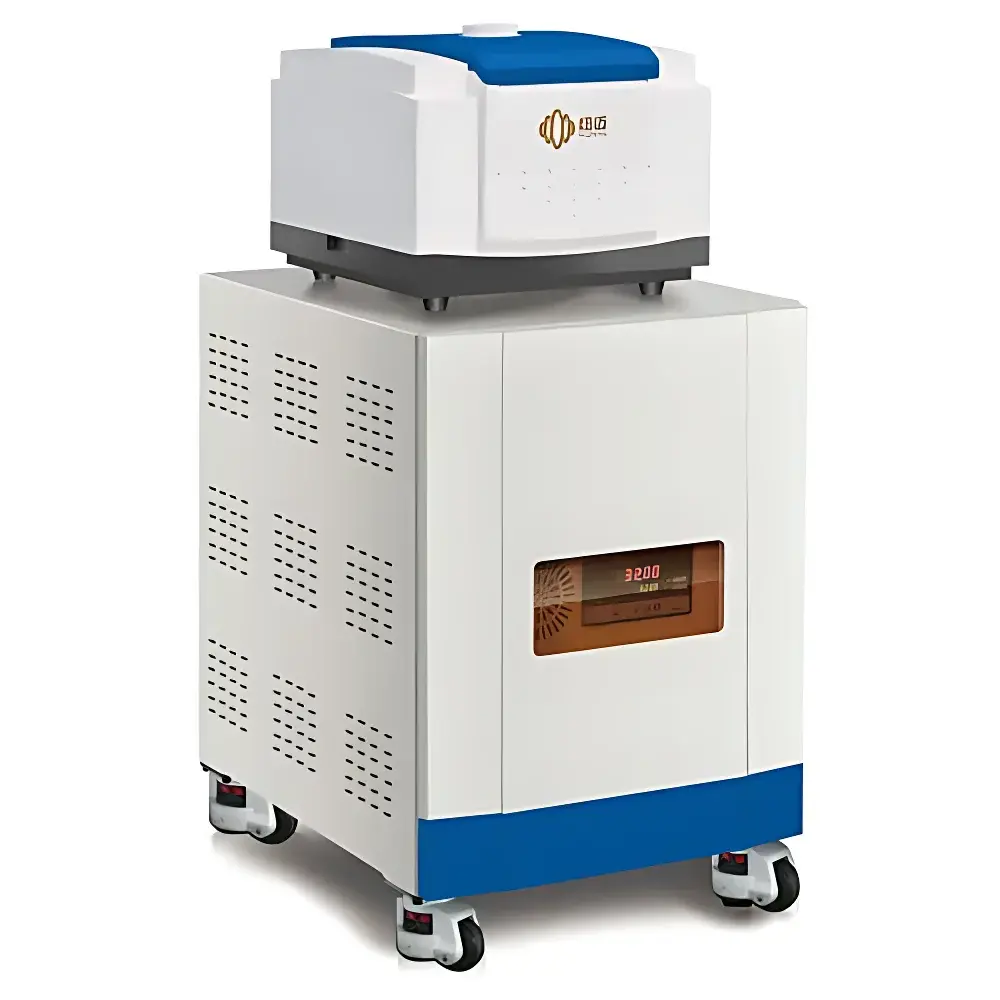
NIUMAG PQ001 Series Benchtop Low-Field NMR Analyzer (Time-Domain Nuclear Magnetic Resonance Spectrometer)
| Brand | NIUMAG |
|---|---|
| Origin | Jiangsu, China |
| Manufacturer Type | Authorized Distributor |
| Product Origin | Domestic (China) |
| Model | PQ001 Series |
| Instrument Type | Low-Field NMR Analyzer |
| Sample Compatibility | Solid-Liquid Dual-Mode |
| Operating Frequency | 21 MHz |
| Operation Mode | Pulsed NMR |
| Field Strength Options | 0.046 T (2 MHz), 0.14 T (6 MHz), 0.3 T (12 MHz), 0.5 T (21 MHz), 1.0 T (42 MHz) |
Overview
The NIUMAG PQ001 Series Benchtop Low-Field NMR Analyzer is a time-domain nuclear magnetic resonance (TD-NMR) spectrometer engineered for quantitative, non-invasive analysis of hydrogen-1 (1H) nuclei in heterogeneous and complex samples. Operating at a fundamental Larmor frequency of 21 MHz (corresponding to a static magnetic field strength of 0.5 T), the system employs pulsed RF excitation and free induction decay (FID) or spin-echo acquisition to measure transverse (T2) and longitudinal (T1) relaxation times. Unlike high-field NMR systems optimized for molecular structure elucidation, the PQ001 is purpose-built for industrial and applied research environments where rapid, reproducible quantification—rather than spectral resolution—is the primary objective. Its robust permanent magnet architecture eliminates cryogen dependency, enabling stable, maintenance-light operation in QC laboratories, production floors, and field-deployable settings. The instrument complies with core principles of ISO/IEC 17025 for testing laboratories and supports method validation aligned with ASTM D6493 (for solid fat content), ASTM D7251 (for polymer crosslink density), and USP (for moisture and solvent content in pharmaceuticals).
Key Features
- Benchtop footprint with integrated magnet, RF probe, and console—no external chillers, liquid nitrogen, or helium required.
- Pulsed NMR operation supporting CPMG (Carr–Purcell–Meiboom–Gill), inversion-recovery, and stimulated-echo sequences for T1, T2, and diffusion-weighted analysis.
- Multi-frequency platform: configurable magnet options spanning 2–42 MHz (0.046–1.0 T), allowing optimization for sample viscosity, molecular mobility, and signal-to-noise ratio.
- Modular probe design accommodating sample volumes from 0.1 mL to 50 mL; interchangeable coil geometries support tubes, vials, flat cells, and irregular solids.
- Integrated temperature control module (–40 °C to +120 °C) enabling real-time monitoring of phase transitions, curing kinetics, and hydration dynamics.
- Calibration-free operation using reference standards traceable to NIST-certified materials; built-in drift compensation ensures long-term measurement stability.
- Non-destructive, non-contact analysis: no sample preparation (e.g., drying, extraction, or dissolution) is required; measurements are insensitive to color, opacity, ionic strength, or particulate dispersion.
Sample Compatibility & Compliance
The PQ001 accepts diverse physical forms—including liquids, emulsions, gels, powders, granules, films, foams, and intact solids—without geometric restriction. It is routinely deployed in GLP-compliant environments for routine QC under FDA 21 CFR Part 11–enabled software configurations (audit trail, electronic signatures, user access control). Regulatory alignment includes ASTM D6493-22 (SFC in fats/oils), ASTM D7251-18 (crosslink density in elastomers), ISO 10564:2020 (water content in soils), ISO 17250:2015 (polymer crystallinity), and USP (residual solvents in APIs). All firmware and data handling protocols support ALCOA+ (Attributable, Legible, Contemporaneous, Original, Accurate, Complete, Consistent, Enduring, Available) data integrity requirements.
Software & Data Management
The proprietary MesoMR Studio software provides full sequence control, real-time signal processing, multi-exponential T2 inversion (using NNLS or SVD algorithms), and automated model fitting against pre-validated calibration curves. Raw FID/echo data are stored in vendor-neutral HDF5 format with embedded metadata (timestamp, operator ID, pulse sequence parameters, temperature log). Export options include CSV, MATLAB .mat, and PDF reports compliant with ISO/IEC 17025 documentation standards. Optional 21 CFR Part 11 compliance package delivers role-based permissions, electronic signature workflows, and immutable audit trails for regulated industries.
Applications
- Materials Science: Crosslink density mapping in rubber compounds; polymer curing kinetics; phase separation in block copolymers; pore-size distribution in membranes and aerogels; water uptake in hydrogels and wood.
- Food & Agriculture: Solid fat content (SFC) profiling in cocoa butter and margarines; oil/water content in seeds and snacks; droplet size distribution in emulsions; glass transition (Tg) monitoring during freeze-drying.
- Pharmaceuticals: Excipient hydration state; tablet coating uniformity; residual solvent quantification in lyophilized products; in vitro relaxivity assessment of contrast agents.
- Geoscience & Construction: Porosity and bound/free fluid saturation in shale cores; moisture migration in concrete and mortar; unfrozen water content in permafrost analogs.
- Chemical & Petrochemical: Hydrogen index (HI) and oil saturation in cuttings; wax content in crude fractions; fluorine quantification in fluorochemicals via 19F mode (optional).
FAQ
What sample types can be analyzed without preparation?
Liquids, pastes, powders, granules, gels, films, and solid blocks—no drying, grinding, or solvent extraction is required.
Is the PQ001 suitable for regulatory submissions?
Yes—when configured with 21 CFR Part 11 software and operated under validated SOPs, it meets data integrity requirements for FDA, EMA, and PMDA submissions.
How does T2 relaxation correlate with physical properties?
T2 decay reflects local molecular mobility: short T2 components correspond to immobilized protons (e.g., crystalline regions, bound water); longer components reflect mobile phases (e.g., bulk oil, free water). Calibration models translate T2 distributions into quantitative metrics (e.g., % crystallinity, pore radius, SFC).
Can the system perform diffusion measurements?
Yes—using pulsed field gradient (PFG) spin-echo sequences, the PQ001 supports diffusion coefficient (D) determination for particle sizing, emulsion stability assessment, and polymer chain entanglement analysis.
What maintenance is required?
Annual magnet homogeneity verification and RF coil performance check; no cryogens, vacuum pumps, or high-voltage service intervals are needed.
Related Products




