
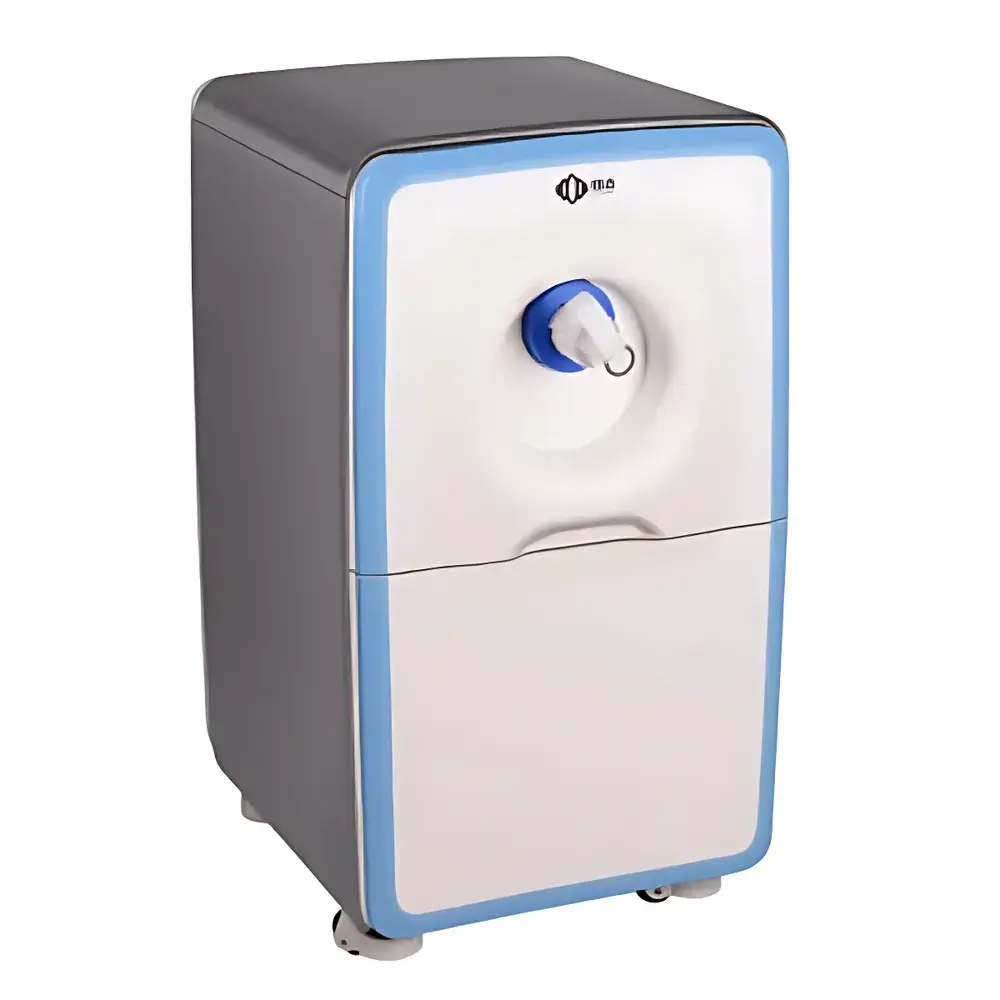
NIUMAG QMR- Series Low-Field Nuclear Magnetic Resonance Analyzer for In Vivo Body Composition Analysis in Murine NAFLD Models
| Brand | NIUMAG |
|---|---|
| Origin | Jiangsu, China |
| Magnet Type | Permanent Magnet |
| Animal Compatibility | Live mice, rats, rabbits |
| Measurement Time | < 60 s per subject |
| Output Parameters | Fat Mass, Lean Body Mass, Total Body Water |
| Regulatory Compliance | Designed for GLP-compliant preclinical research environments |
| Software | Proprietary NMR quantification suite with audit trail capability |
Overview
The NIUMAG QMR- Series Low-Field Nuclear Magnetic Resonance (LF-NMR) Analyzer is a dedicated, non-invasive instrument engineered for quantitative in vivo body composition assessment in murine models of non-alcoholic fatty liver disease (NAFLD). Based on the physical principle of proton density differential relaxation (T₂-weighted signal decay), the system exploits the distinct transverse relaxation times (T₂) of hydrogen nuclei in adipose tissue versus lean tissue and free water. Adipose tissue exhibits significantly longer T₂ values due to its high triglyceride content and low molecular mobility, enabling robust spectral separation without ionizing radiation or contrast agents. Unlike terminal histological methods (e.g., Oil Red O staining) or destructive biochemical assays (e.g., tissue triglyceride extraction), this LF-NMR platform delivers absolute fat mass (g), lean body mass (g), and total body water (g) from intact, conscious animals—eliminating anesthesia-related metabolic confounders and enabling longitudinal monitoring across disease progression or therapeutic intervention timelines.
Key Features
- Non-invasive, anesthesia-free operation: Animals remain fully conscious and unrestrained during measurement, preserving physiological homeostasis and minimizing stress-induced hormonal artifacts.
- Rapid single-subject acquisition: Full-body composition quantification completed within 60 seconds, supporting high-throughput screening in preclinical NAFLD cohorts.
- High reproducibility: Coefficient of variation (CV) for repeated fat mass measurements in same-animal sessions is ≤ 2.1% under standardized positioning protocols.
- Robust permanent magnet architecture: Stable field homogeneity (±0.05% over 30 mm DSV) ensures consistent signal fidelity across multi-week longitudinal studies.
- Broad small-animal compatibility: Optimized RF coil geometry accommodates mice (15–40 g), rats (100–500 g), and rabbits (1–3 kg) without hardware reconfiguration.
Sample Compatibility & Compliance
The QMR- analyzer is validated for use with live, unanesthetized rodents maintained under standard IACUC-approved housing conditions. It complies with foundational requirements for Good Laboratory Practice (GLP) in preclinical pharmacology: raw NMR signal data are time-stamped, digitally signed, and stored in immutable binary format; user access logs and parameter change histories are retained for audit readiness. While not a clinical MRI device, its measurement methodology aligns with ASTM E2987-14 (Standard Practice for Quantitative Fat–Lean Separation in Small Animals via NMR) and supports regulatory submissions where non-destructive endpoint metrics are required—particularly in FDA- or EMA-reviewed NAFLD/NASH drug development programs.
Software & Data Management
The proprietary QMR Control Suite v4.2 provides real-time signal acquisition, automated peak deconvolution, and standardized body composition reporting. All datasets include embedded metadata (animal ID, weight, date/time, operator, coil calibration status). The software supports 21 CFR Part 11-compliant electronic signatures, role-based user permissions, and encrypted database backups. Export formats include CSV (for statistical packages such as SAS or R), PDF reports with traceable calibration certificates, and DICOM-compatible volumetric projection files for spatial fat distribution visualization—enabling correlation with ex vivo MRI or micro-CT datasets.
Applications
- Longitudinal tracking of hepatic steatosis progression in diet-induced (e.g., high-fat, high-fructose) or genetic (e.g., ob/ob, db/db) murine NAFLD models.
- Quantitative evaluation of anti-steatotic drug efficacy: measuring dose-dependent reductions in total fat mass or visceral-to-subcutaneous fat ratio shifts.
- Assessment of lifestyle interventions: caloric restriction, exercise regimens, or circadian disruption effects on whole-body lipid partitioning.
- Integration with metabolic phenotyping platforms: synchronized acquisition of body composition data alongside indirect calorimetry, glucose tolerance tests, or telemetry-derived activity metrics.
- Pre-screening tool for cohort stratification prior to terminal endpoints—reducing animal use per OECD Guideline 452 (Chronic Toxicity Studies).
FAQ
Does the QMR- require animal sedation or restraint?
No. The system uses a low-noise, open-bore magnet design and rapid pulse sequences that allow reliable acquisition from freely positioned, awake animals. A soft, adjustable cradle minimizes movement without physical constraint.
How does LF-NMR compare to dual-energy X-ray absorptiometry (DEXA) for murine fat quantification?
Unlike DEXA—which estimates fat mass indirectly via X-ray attenuation and suffers from bone mineral density interference in growing mice—LF-NMR directly measures proton signal amplitude and relaxation dynamics specific to lipid vs. aqueous phases, yielding higher specificity for adipose tissue in small, heterogeneous subjects.
Can the QMR- distinguish between visceral and subcutaneous fat depots?
While it provides total body fat mass with high accuracy, spatial compartmentalization requires integration with anatomical imaging (e.g., high-resolution MRI or micro-CT). However, longitudinal %fat change trends strongly correlate with histopathological NAS scores in NAFLD models.
Is routine magnet recalibration required?
The permanent magnet is factory-shimmed and thermally stabilized. Daily system checks (using reference phantoms) verify field homogeneity and RF gain stability; full recalibration is recommended only after mechanical shock or ambient temperature excursions exceeding ±5°C.
Related Products



