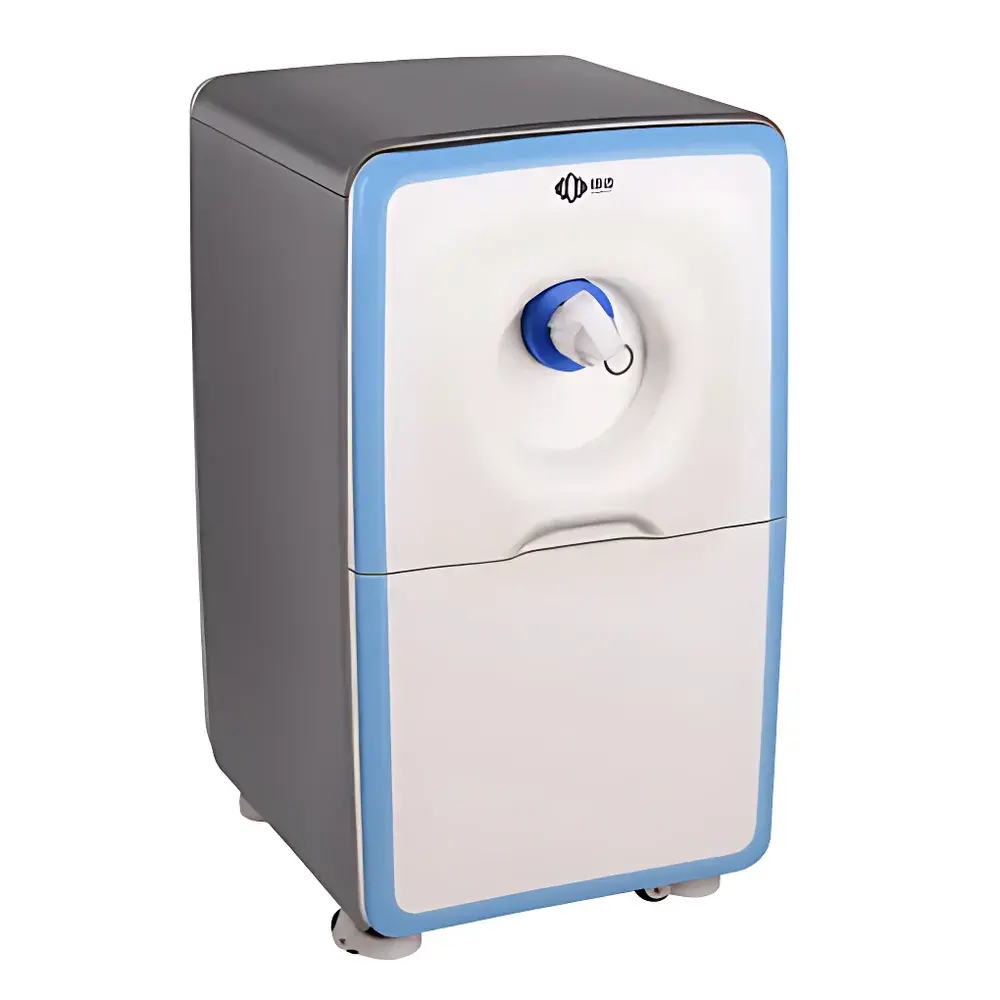
NIUMAG QMR Series Low-Field Nuclear Magnetic Resonance (LF-NMR) Body Composition Analyzer for Conscious Mice
| Brand | NIUMAG |
|---|---|
| Origin | Jiangsu, China |
| Manufacturer Type | Authorized Distributor |
| Product Category | Domestic |
| Model | QMR Series |
| Instrument Type | Research-Grade Small Animal (Mouse/Rat) Analyzer |
| Core Magnet | Permanent Magnet |
| Measurement Principle | Quantitative Low-Field NMR Relaxometry |
| Software | NIUMAG Proprietary Mouse Body Composition Analysis Suite |
| Compliance | Designed for GLP-aligned preclinical metabolic studies |
Overview
The NIUMAG QMR Series Low-Field Nuclear Magnetic Resonance (LF-NMR) Body Composition Analyzer is a non-invasive, quantitative instrument engineered for longitudinal, in vivo assessment of body composition in conscious small laboratory animals—primarily mice and rats. It operates on the physical principle of proton relaxation time differentiation in distinct tissue compartments: adipose tissue exhibits longer T₂ relaxation times compared to lean tissue and free water, enabling robust discrimination and quantification of fat mass, lean body mass, and total body water without ionizing radiation or contrast agents. Unlike terminal histomorphometric analysis or destructive gravimetric methods, the QMR system delivers absolute, operator-independent volumetric measurements within seconds, supporting repeated assessments on the same subject across weeks or months. This capability is critical for evaluating dynamic physiological responses in chronic disease models—including streptozotocin (STZ)-induced diabetic mice—where longitudinal tracking of adiposity, lean mass loss, and fluid shifts serves as a functional biomarker of metabolic dysregulation, therapeutic efficacy, and systemic complications.
Key Features
- Non-anesthetic, non-restraint operation: Animals remain fully conscious and unrestrained during measurement, eliminating confounding stress-induced hormonal fluctuations (e.g., corticosterone elevation) that compromise metabolic data integrity.
- Sub-minute acquisition: Full-body composition quantification completed in ≤ 60 seconds per animal, enabling high-throughput screening in cohort-based pharmacological or nutritional intervention studies.
- Permanent magnet architecture: Stable, maintenance-free 0.3–0.5 T field strength optimized for murine-scale signal-to-noise ratio and reproducible T₂ decay profiling; no cryogens or RF shielding required.
- Dedicated mouse RF coil: Custom-tuned quadrature volume coil ensures homogeneous excitation and reception across typical C57BL/6 or BALB/c body dimensions (18–30 g), minimizing partial-volume artifacts.
- Quantitative output: Absolute mass values (grams) for fat mass, lean mass, and total body water—traceable to calibration standards validated against reference carcass analysis (e.g., ether extraction + Kjeldahl nitrogen).
Sample Compatibility & Compliance
The QMR Series accommodates live, unanesthetized mice (18–45 g), rats (100–500 g), and rabbits (< 2.5 kg) with minimal acclimation. Its non-ionizing, low-energy RF pulses (≤ 1 µT peak B₁) comply with international safety guidelines for repeated exposure (ICNIRP 2020, IEEE C95.1-2019). While not FDA-cleared for human use, the system is routinely deployed in GLP-compliant preclinical facilities under SOPs aligned with OECD Test Guidelines 407 (Repeated Dose 28-Day Oral Toxicity) and 452 (Chronic Toxicity Studies). Data outputs support audit-ready documentation for regulatory submissions where body composition endpoints are specified (e.g., EMA CHMP Guideline on Non-Clinical Investigation of Medicinal Products for the Treatment of Diabetes Mellitus).
Software & Data Management
NIUMAG’s proprietary QMR Analysis Suite (v5.x) provides automated acquisition control, multi-exponential T₂ decay fitting (using NNLS or SVD algorithms), and compartmental mass calculation via pre-validated calibration curves. Raw FID data and processed T₂ distributions are stored in HDF5 format with embedded metadata (animal ID, date/time, operator, protocol version). The software supports batch processing, group statistics (ANOVA, RM-ANOVA), and export to CSV, Excel, or MATLAB-compatible formats. Audit trails log all parameter modifications and report generations, fulfilling basic requirements for 21 CFR Part 11 compliance when deployed with institutional electronic signature workflows.
Applications
- Diabetes research: Monitoring progressive adipose redistribution, lean mass catabolism, and extracellular fluid expansion in STZ-induced, db/db, or diet-induced obese (DIO) mouse models.
- Obesity pharmacology: Quantifying dose-dependent reductions in fat mass and preservation of lean mass during anti-obesity compound evaluation.
- Nutritional science: Assessing long-term effects of dietary interventions (e.g., high-fat, ketogenic, or protein-restricted diets) on body compartment dynamics.
- Aging and sarcopenia: Tracking age-related lean mass decline and fat infiltration into muscle tissue over 12–24 month murine lifespans.
- Toxicology: Detecting early-onset metabolic toxicity (e.g., drug-induced lipodystrophy or edema) prior to histopathological manifestation.
FAQ
Is anesthesia required for measurement?
No. The QMR system is specifically designed for conscious, unrestrained animals; anesthesia is neither necessary nor recommended, as it alters basal metabolic rate and fluid distribution.
How does QMR compare to DEXA or MRI for small animal body composition?
Unlike DEXA (which estimates soft-tissue composition indirectly from X-ray attenuation) or high-field MRI (which requires anesthesia and extensive scan time), QMR provides direct, quantitative, and rapid measurement of proton-dense compartments using relaxometry—without radiation or sedation.
Can the system distinguish subcutaneous from visceral fat?
Standard QMR protocols yield whole-body fat mass. Regional fat partitioning (e.g., visceral vs. subcutaneous) requires complementary imaging (e.g., micro-CT or high-resolution MRI); however, longitudinal QMR trends strongly correlate with visceral adiposity changes in validated diabetic models.
What is the minimum interval between repeated measurements on the same animal?
No recovery period is needed. Animals may be scanned multiple times per day, provided behavioral observation confirms normal activity and feeding post-scan.
Does the system require routine recalibration?
Calibration is performed at factory installation using standardized phantoms. Field homogeneity and RF gain stability are verified quarterly via built-in diagnostic sequences; full recalibration is only required after magnet relocation or major hardware service.