
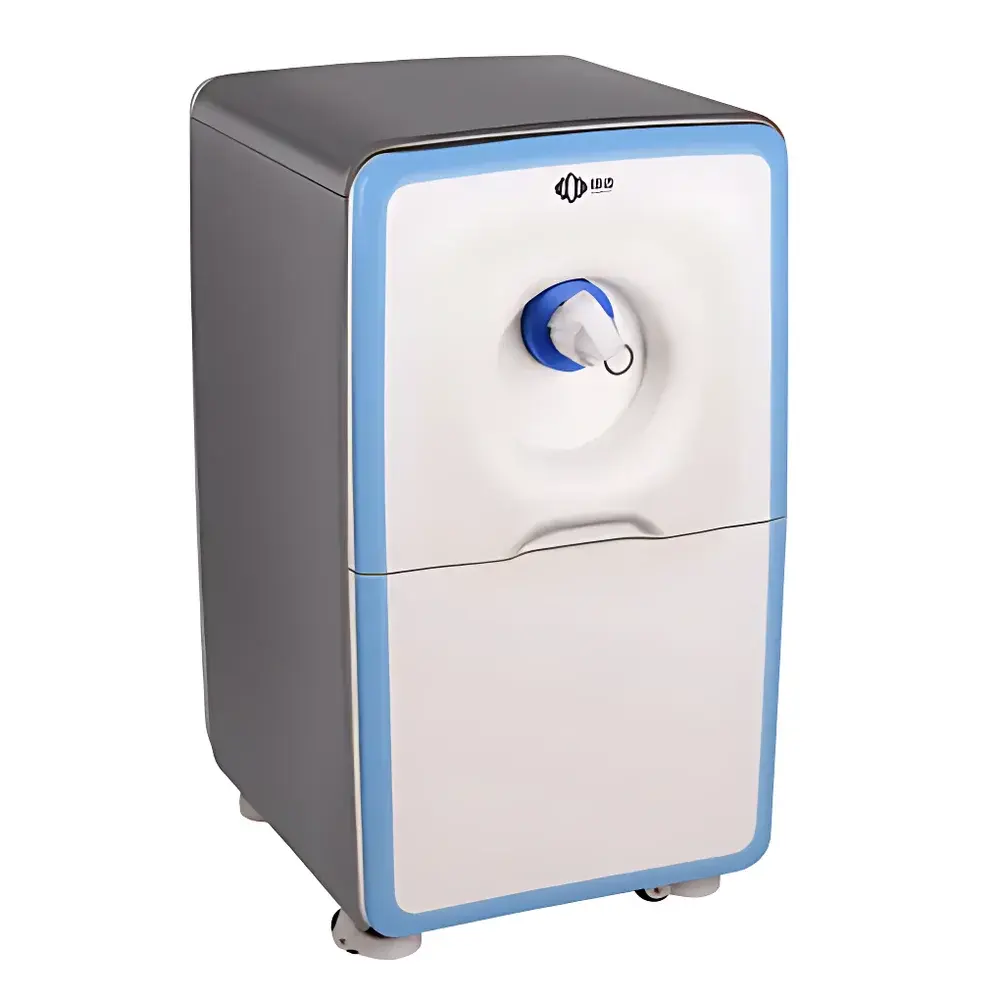
NIUMAG QMR Series Low-Field Nuclear Magnetic Resonance Metabolism Analysis System
| Brand | NIUMAG |
|---|---|
| Origin | Jiangsu, China |
| Magnet Type | Permanent Magnet |
| Application | In Vivo Rodent Metabolism Quantification (Mice, Rats, Rabbits) |
| Measurement Time | 1–3 min per scan |
| Sample State | Conscious, Non-Invasive, No Anesthesia or Sacrifice Required |
| Core Output Parameters | Fat Mass, Lean Body Mass, Total Body Water (TBW) |
| Compliance Context | Designed for GLP-aligned preclinical research workflows |
Overview
The NIUMAG QMR Series Low-Field Nuclear Magnetic Resonance (LF-NMR) Metabolism Analysis System is a dedicated benchtop instrument engineered for rapid, non-invasive, and quantitative assessment of body composition in live small laboratory animals. It operates on the physical principle of spin-lattice (T₁) and spin-spin (T₂) relaxation time differentiation among major tissue compartments—specifically adipose tissue, lean muscle mass, and free/bound water pools. Unlike high-field NMR or MRI systems requiring cryogenic magnets and RF shielding, this system employs a stable, self-shielded permanent magnet generating a homogeneous static field (typically 0.3–0.5 T), enabling robust signal discrimination based on inherent proton relaxation contrasts without spatial encoding. The absence of ionizing radiation, gradient coils, or superconducting infrastructure ensures operational simplicity, low maintenance, and suitability for routine longitudinal studies in core animal facilities. Its primary functional output consists of absolute mass estimates (in grams) of total fat, lean body mass, and total body water—parameters directly traceable to metabolic homeostasis, energy partitioning, and fluid balance.
Key Features
- Non-invasive & conscious-animal compatible: Animals remain fully awake and unrestrained during measurement; no anesthesia, sedation, fasting, or surgical preparation is required—minimizing physiological stress artifacts and enabling repeated measurements over time.
- High-throughput quantification: Single-scan acquisition completes in ≤90 seconds; throughput supports >20 animals per hour with automated positioning and software-triggered sequence execution.
- Calibration traceability: Factory-calibrated against gravimetric reference standards using validated phantoms containing known proportions of triglyceride, protein, and aqueous solutions; calibration stability verified biweekly via internal quality control protocols.
- Robust permanent magnet architecture: Temperature-compensated NdFeB magnet assembly ensures field homogeneity <±50 ppm over 40 mm DSV (Diameter Spherical Volume); zero helium consumption, no quench risk, and minimal site infrastructure requirements (standard 230 V/50 Hz power, ambient cooling).
- Integrated safety interlocks: Automatic magnetic field shutoff upon door opening; RF exposure below ICNIRP occupational limits; compliant with IEC 61000-6-3 for electromagnetic compatibility in laboratory environments.
Sample Compatibility & Compliance
The QMR Series accommodates live rodents (mice: 15–50 g; rats: 100–500 g; rabbits: up to 2.5 kg) placed in standardized acrylic restraint tubes aligned coaxially with the magnet bore. The system does not require species-specific coil tuning—probe geometry and pulse sequence parameters are pre-optimized for murine and lagomorph anatomy. Data generated meet foundational requirements for regulatory preclinical documentation: raw FID (Free Induction Decay) files are stored in vendor-neutral binary format with embedded metadata (timestamp, operator ID, animal ID, acquisition parameters). While not certified for FDA 21 CFR Part 11 compliance out-of-the-box, the software architecture supports audit trail configuration (user login logs, parameter change history, report generation timestamps) when deployed on validated Windows OS platforms under institutional IT governance. Method validation aligns with principles outlined in OECD TG 443 (Extended One-Generation Reproductive Toxicity Study) and ASTM E2915-22 (Standard Practice for Statistical Analysis of NMR Relaxometry Data).
Software & Data Management
Acquisition and analysis are managed via NIUMAG’s proprietary QMR-Analysis Suite v4.x, a Windows-based application featuring modular workflow design. Key modules include: (i) AutoScan, enabling batch scheduling with weight-integrated triggering; (ii) RelaxoFit, applying multi-exponential T₂ decay modeling (non-negative least squares) to resolve fat/lean/water components; (iii) Longitudinal Tracker, supporting animal ID-linked time-series visualization with statistical overlay (ANOVA, mixed-effects modeling export to CSV/Excel). All processed data export includes ISO/IEC 17025-aligned uncertainty estimation derived from repeatability studies across three independent operators. Raw data archives comply with FAIR principles (Findable, Accessible, Interoperable, Reusable) through embedded JSON metadata headers describing pulse sequence, hardware configuration, and environmental conditions.
Applications
- Preclinical evaluation of anti-obesity therapeutics: Quantitative tracking of fat mass reduction kinetics and lean mass preservation during chronic dosing regimens.
- Nutritional intervention studies: Assessment of dietary lipid absorption efficiency, muscle catabolism under caloric restriction, or hydration status shifts in metabolic syndrome models.
- Toxicology endpoints: Detection of early-onset hepatic steatosis or sarcopenia prior to histopathological manifestation.
- Genetic model phenotyping: High-throughput screening of transgenic/knockout lines for baseline metabolic divergence (e.g., leptin-deficient ob/ob mice, db/db rats).
- Pharmacokinetic-pharmacodynamic (PK-PD) correlation: Integration of QMR-derived body composition metrics with plasma biomarker time courses (e.g., insulin, adiponectin, FGF21).
FAQ
Does the system require liquid nitrogen or helium cooling?
No. The permanent magnet operates at ambient temperature and requires no cryogens.
Can it distinguish intramuscular fat from subcutaneous fat?
No. The QMR Series provides whole-body compartmental quantification only; regional fat distribution requires high-field MRI.
Is method validation support available?
Yes—NIUMAG provides IQ/OQ documentation templates, reference phantom sets, and on-site installation qualification services.
What is the minimum animal weight for reliable measurement?
12 g for mice; accuracy degrades below this threshold due to signal-to-noise limitations in the detection volume.
How often must the system be recalibrated?
Factory calibration remains valid for 12 months under normal use; quarterly verification with supplied QC phantom is recommended.





