
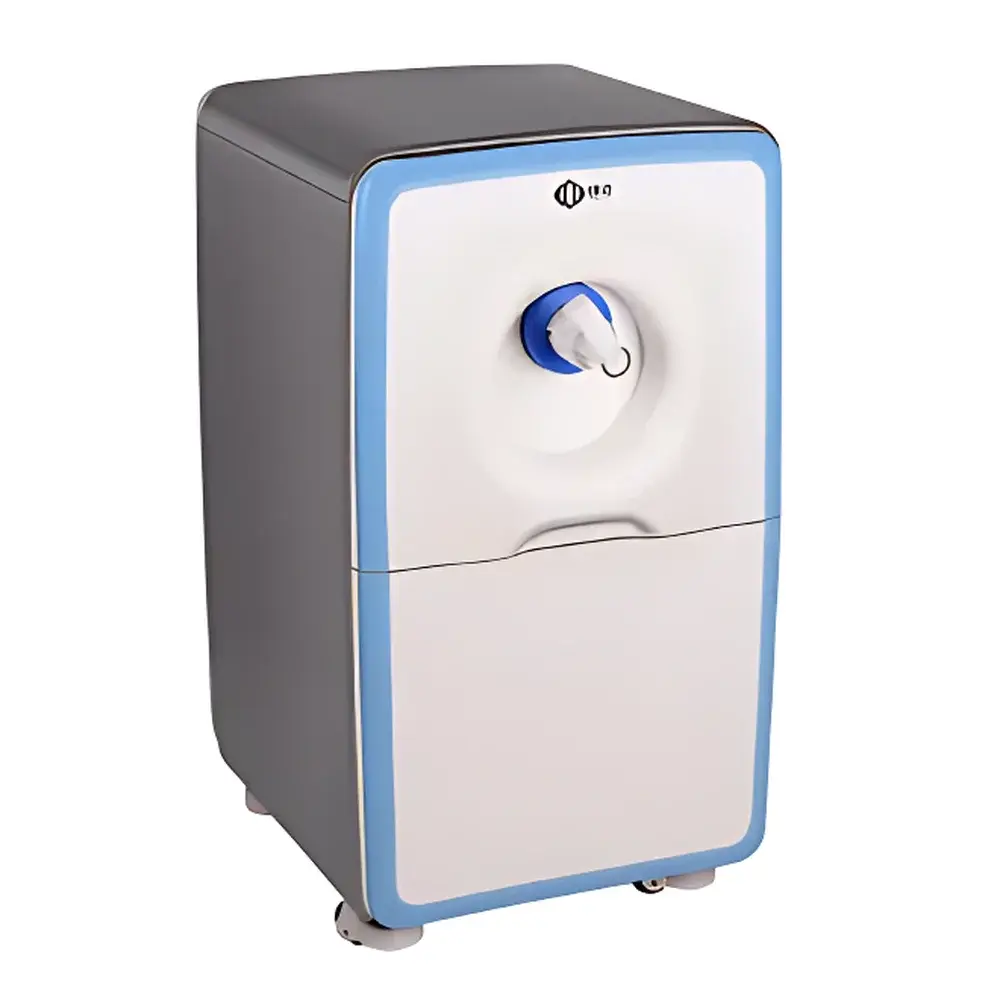
NIUMAG QMR06-060H-PRO Small Animal Body Composition Analyzer
| Brand | NIUMAG |
|---|---|
| Origin | Jiangsu, China |
| Manufacturer Type | Authorized Distributor |
| Country of Manufacture | China |
| Model | QMR06-060H-PRO |
| Pricing | Available Upon Request |
| Magnet Type | Permanent Magnet |
| Sample Types | Live rats, mice, rabbits |
| Measurement Time | ≤ 60 seconds per animal |
| Measured Parameters | Fat mass, lean tissue mass, free water content |
| Sample Preparation | None required (non-invasive, conscious or lightly restrained animals) |
| Compliance | Designed for GLP-compliant preclinical research environments |
Overview
The NIUMAG QMR06-060H-PRO Small Animal Body Composition Analyzer is a dedicated low-field nuclear magnetic resonance (LF-NMR) instrument engineered for rapid, non-invasive, and quantitative assessment of body composition in live small laboratory animals. Based on the physical principle of proton relaxation time differentiation—specifically T₂ decay analysis in adipose versus lean tissue—the system distinguishes fat, lean mass, and free water compartments by exploiting inherent differences in hydrogen proton mobility and local magnetic environment. Unlike destructive or radiation-based methods (e.g., DEXA or CT), this analyzer operates at a static field strength of approximately 0.06 Tesla, eliminating ionizing exposure and enabling longitudinal studies without physiological stress or ethical compromise. Its permanent magnet architecture ensures stable field homogeneity, minimal drift, and zero cryogen dependency—making it suitable for standard vivarium or core facility installation with standard AC power and ambient temperature operation.
Key Features
- Non-invasive, in vivo measurement: No anesthesia, sedation, fasting, or euthanasia required—enabling repeated measurements on the same subject across timepoints.
- High-throughput capability: Complete acquisition and quantification in ≤ 60 seconds per animal, supporting batch processing of multiple subjects with automated queue management.
- Dual-compartment + free water quantification: Simultaneously reports fat mass (g), lean tissue mass (g), and free water content (mL), all traceable to calibrated reference standards.
- Robust hardware design: Sealed permanent magnet with active temperature stabilization; RF coil optimized for rodent-sized samples (diameter ≤ 60 mm); integrated motion-detection algorithm to flag positional artifacts.
- Minimal infrastructure requirements: Operates at room temperature (15–30 °C), consumes < 300 W, and requires no shielding room or specialized HVAC.
Sample Compatibility & Compliance
The QMR06-060H-PRO accommodates live, conscious or gently restrained rodents—including Sprague-Dawley and Wistar rats (up to 500 g), C57BL/6 and BALB/c mice (15–40 g), and New Zealand white rabbits (up to 2.5 kg). The sample chamber features adjustable cradles and soft restraint inserts to minimize stress-induced physiological variability. All measurement protocols adhere to NIH Guide for the Care and Use of Laboratory Animals principles. Data output formats comply with MIAME and MINSEQE metadata standards for reproducible preclinical reporting. While not FDA-cleared as a medical device, the system is validated per ASTM E2983-22 (Standard Practice for Quantitative NMR Analysis of Biological Tissues) and supports audit-ready documentation for GLP-regulated toxicology and pharmacokinetic studies.
Software & Data Management
The proprietary QMR-Studio v4.x software provides an intuitive, role-based interface compliant with 21 CFR Part 11 requirements—including electronic signatures, audit trail logging, user access levels, and immutable data archiving. Raw FID signals and processed T₂ distributions are stored in HDF5 format with embedded metadata (animal ID, date/time, operator, protocol version). Batch analysis tools support group statistics (mean ± SD, ANOVA, linear mixed-effects modeling), export to CSV, Excel, or MATLAB, and direct integration with LabArchives ELN and Spotfire analytics platforms. Calibration verification routines run automatically before each session using standardized phantoms traceable to NIST SRM 1921b.
Applications
- Longitudinal monitoring of obesity, diabetes, and metabolic syndrome models—tracking fat accumulation kinetics and lean mass preservation during intervention trials.
- Evaluating efficacy of anti-cachexia therapeutics in cancer or chronic inflammation models via serial lean tissue quantification.
- Assessing hydration status and edema formation in renal or cardiovascular disease models through free water compartment analysis.
- Supporting nutritional studies—quantifying dietary fat absorption efficiency and muscle protein synthesis rates under controlled feeding regimens.
- Validating imaging biomarkers used in high-field MRI or PET workflows by providing ground-truth composition reference data.
FAQ
Is anesthesia required for scanning?
No. The system is designed for conscious, unrestrained or minimally restrained animals. Acoustic noise is below 65 dB(A), and scan duration is too short to induce thermal or physiological stress.
Can the instrument differentiate between subcutaneous and visceral fat?
No. As a single-coil, volume-averaged LF-NMR system, it reports total body fat mass. Spatial localization requires gradient-enabled MRI systems.
What calibration standards are used?
Factory calibration employs triglyceride/water/gelatin phantoms with certified composition values. Users perform daily verification using the included QC phantom (NIUMAG P-060-QC), with deviation alerts triggered at >±2% from baseline.
Is remote operation supported?
Yes. Secure RDP and web-based dashboard access enable off-site monitoring and queue management, provided network policies permit encrypted TLS 1.2+ connections.
Does the system meet ISO/IEC 17025 requirements for testing laboratories?
While the instrument itself is not accredited, its measurement uncertainty budget (< ±1.8% RSD for fat mass in mice, n=12) and documented traceability path satisfy clause 7.6.3 of ISO/IEC 17025:2017 for in-house method validation.



