
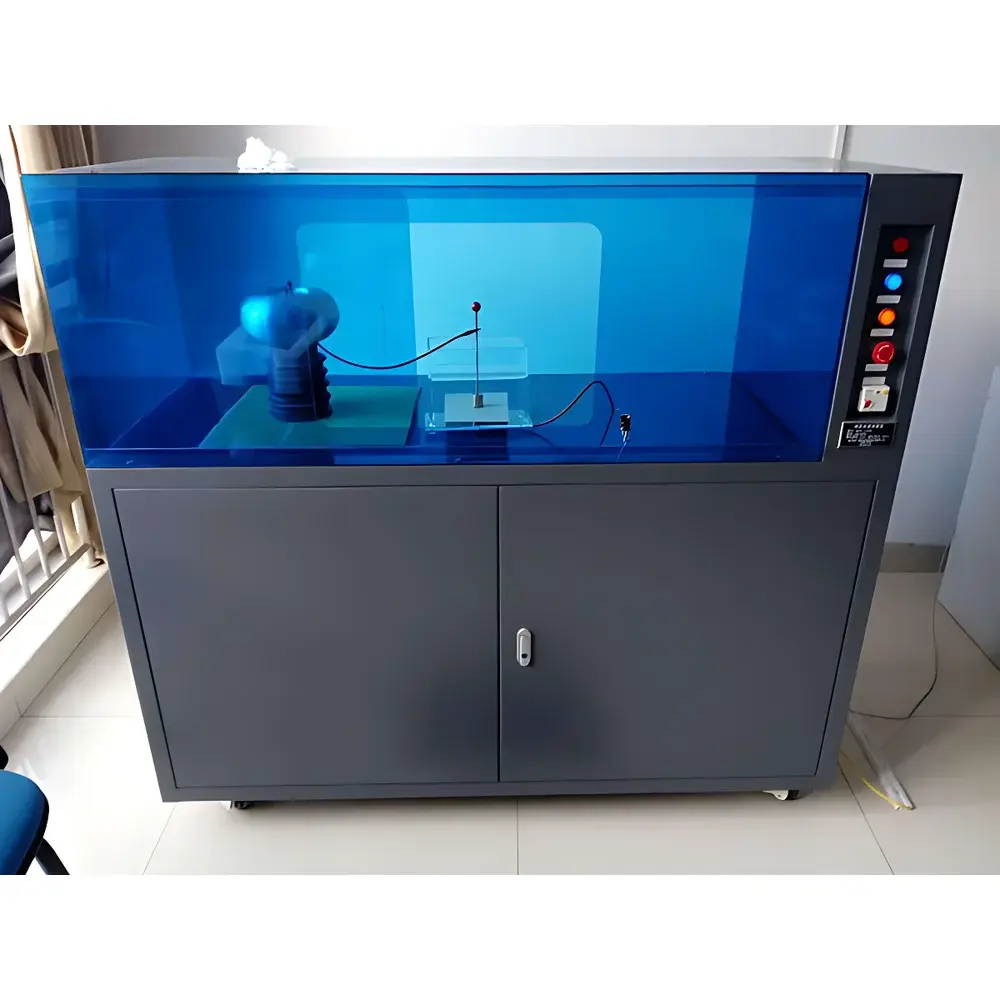
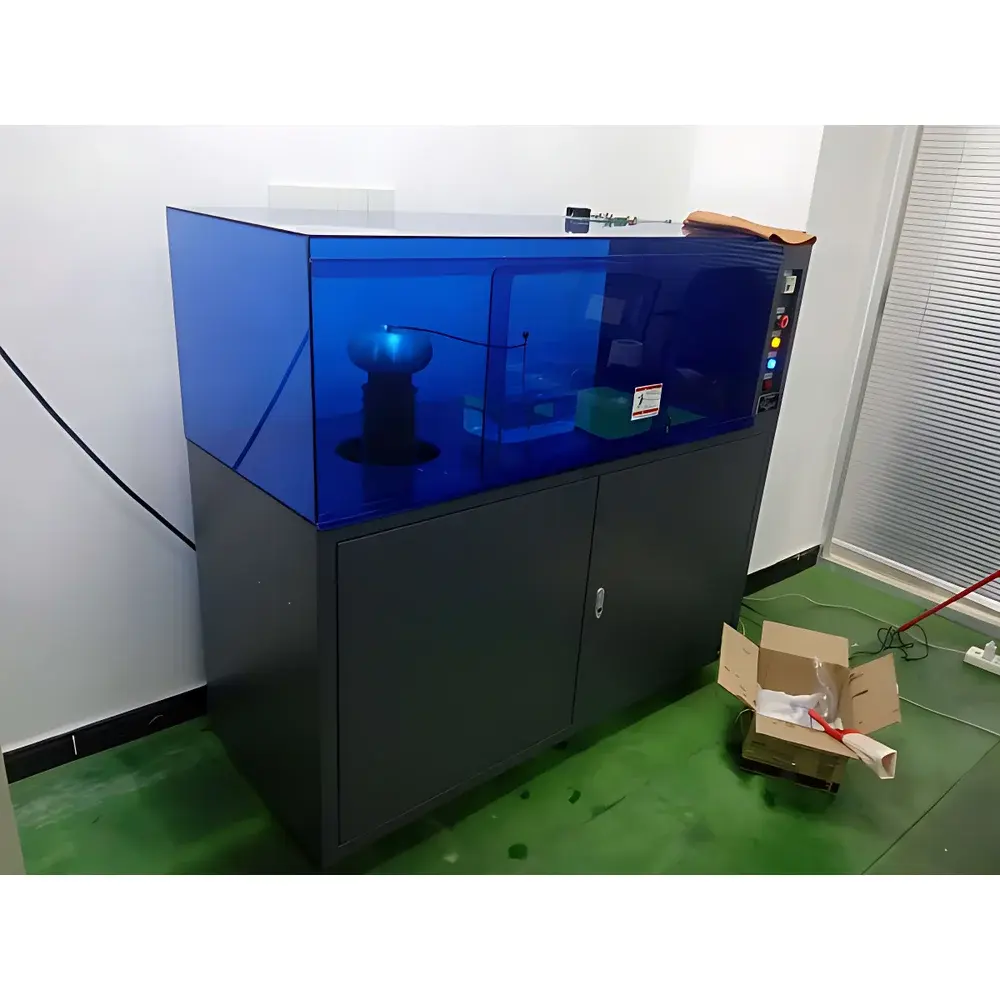
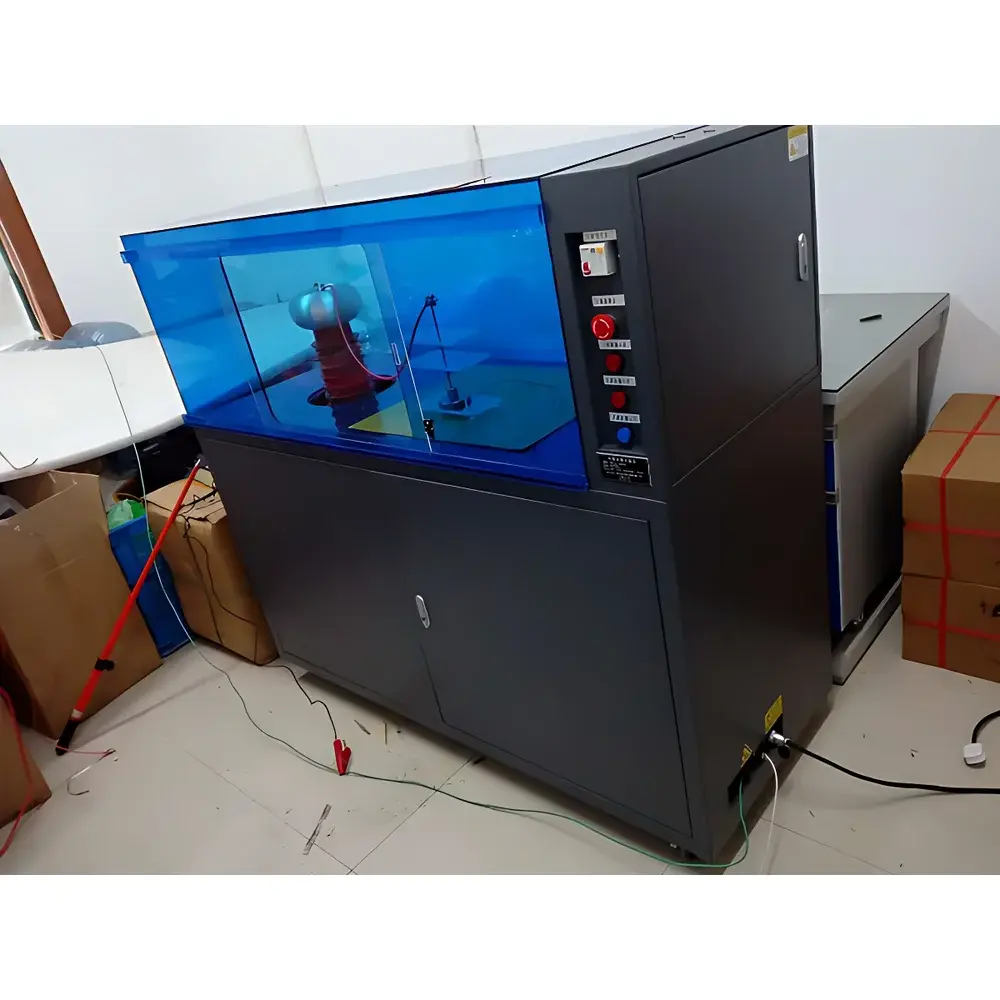
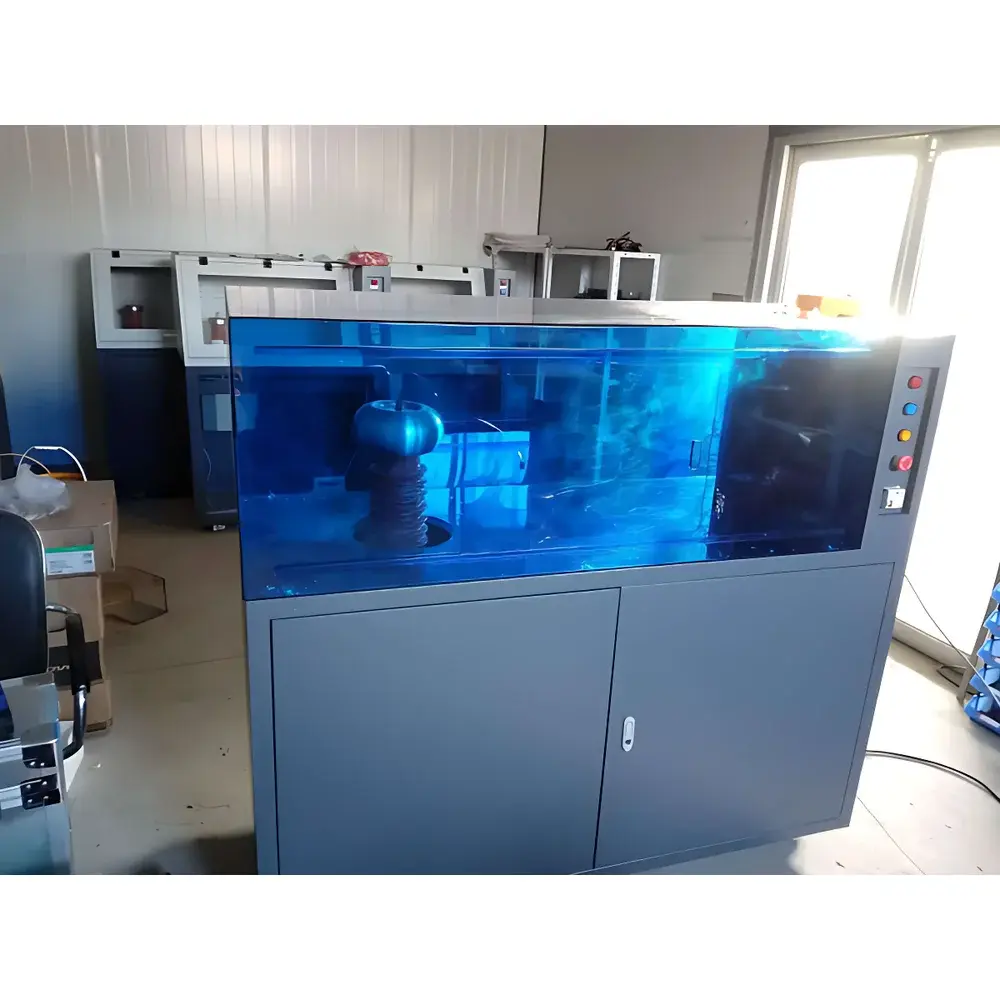
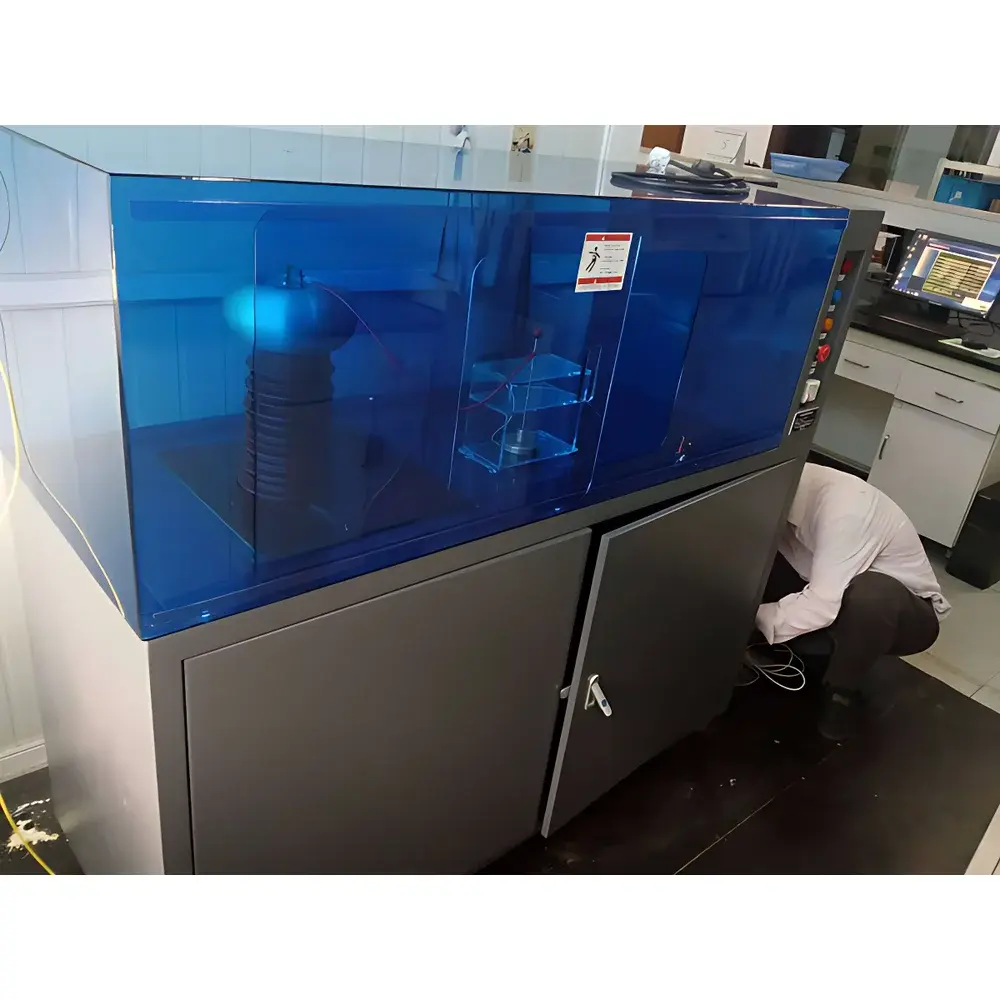
North Guang Precision BDJC-100 High-Voltage Dielectric Strength Tester
| Brand | North Guang Precision Instrument |
|---|---|
| Origin | Beijing, China |
| Manufacturer Type | Direct Manufacturer |
| Model | BDJC-100 |
| Maximum Output Voltage | 100 kV AC/DC |
| Voltage Accuracy | ≤2% |
| Voltage Ramp Rate | 0.1–5 kV/s (adjustable) |
| Test Medium | Air or Insulating Oil |
| Test Modes | Short-Time, Stepwise (20 s / 60 s), Slow Ramp (120–240 s / 300–600 s), and Withstand Testing |
| Sample Types | Solid and Liquid Dielectrics |
| Input Power | 220 V ±10%, 50 Hz ±1% |
| Rated Capacity | 10 kVA |
| Leakage Current Range | 0–100 mA |
| Hold Time Range | 0–7 hours (software-configurable) |
| Control Interface | Bluetooth Wireless, RS-232, USB, Regional Ethernet Port |
| Breakdown Detection | Dual-criteria (voltage threshold + leakage current threshold) |
| Safety Protections | Arc suppression, automatic pressure release, integrated fuse & RCD, electrostatic shielding, bidirectional EMI suppression |
Overview
The North Guang Precision BDJC-100 High-Voltage Dielectric Strength Tester is an engineered solution for determining the dielectric breakdown strength and withstand voltage performance of insulating materials under standardized AC and DC electric fields. Based on the fundamental principle of controlled voltage ramping across a defined electrode gap, the instrument applies precisely regulated high-voltage stress to specimens until electrical failure—manifested as a conductive path through the material—is detected via simultaneous voltage collapse and leakage current surge. Designed in strict alignment with international test standards—including ASTM D149, IEC 60243-1, GB/T 1408.1–2006, GB/T 1695–2005, GB/T 3333, HG/T 3330, and GB 12656—the BDJC-100 supports full traceability and regulatory compliance for quality assurance, R&D validation, and certification testing in electrical insulation manufacturing, power equipment qualification, and polymer development laboratories.
Key Features
- True dual-mode capability: Validated for both solid specimens (e.g., polymer films, laminates, rubber sheets, insulating papers) and liquid dielectrics (e.g., transformer oils, silicone fluids, ester-based insulants), eliminating the need for separate test platforms.
- Siemens CPU-based central control unit ensures stable data acquisition at ≥10 kHz sampling rate, enabling precise temporal resolution of breakdown onset and transient arc behavior.
- Patented bidirectional electromagnetic interference (EMI) suppression architecture prevents false triggering during breakdown events—critical for maintaining communication integrity and protecting serial/USB interfaces from voltage transients.
- Wireless Bluetooth operation enables operator separation up to 15 m, significantly enhancing personnel safety during high-voltage testing without compromising real-time monitoring or control fidelity.
- Dual-criteria breakdown detection: Simultaneous evaluation of voltage drop and leakage current rise (0–100 mA range), reducing misclassification risk compared to voltage-only detection used in legacy systems.
- Integrated arc suppression and automatic pressure-release mechanism mitigates thermal and mechanical hazards associated with post-breakdown energy discharge in oil-immersed tests.
- Modular safety subsystems include replaceable fast-blow fuses, residual-current devices (RCDs), and grounded metallic leakage guard mesh—fully compliant with IEC 61010-1:2012 safety requirements for laboratory high-voltage equipment.
Sample Compatibility & Compliance
The BDJC-100 accommodates standard-compliant electrode configurations per ASTM D149 (disk electrodes, 6.4 mm diameter; cylindrical electrodes, 25 mm diameter) and GB/T 1408.1 (plate-to-plate, needle-to-plane, and sphere-to-sphere geometries). Specimen thickness ranges from 0.1 mm to 12 mm for solids; liquid samples are tested in ASTM D877-compliant oil cups with calibrated gap distances (1.0–5.0 mm). The system meets essential conformity criteria for GLP and GMP environments: full audit trail logging (user ID, timestamp, parameter set, result, pass/fail flag), electronic signature support, and password-protected role-based access control. All firmware and software modules adhere to FDA 21 CFR Part 11 principles for electronic records and signatures where applicable.
Software & Data Management
The Windows-native control platform provides intuitive workflow navigation, real-time dynamic plotting of voltage vs. time and leakage current vs. time, and synchronized dual-axis visualization during ramping. Test reports are fully customizable—users define header metadata, select units (kV, kV/mm, mA), apply statistical filters (median, ±15% outlier rejection per GB/T 1408), and export raw datasets directly to CSV or Excel-compatible formats. Built-in self-diagnostic routines verify HV circuit continuity, grounding integrity, sensor calibration status, and communication handshake stability prior to each test sequence. Remote maintenance mode allows secure technician access via encrypted network port for firmware updates, log retrieval, and configuration backup—minimizing instrument downtime.
Applications
- Quality conformance testing of insulating papers, pressboards, and laminated composites per IEC 60641 and GB/T 5594.
- Evaluation of dielectric fluids for power transformers, switchgear, and HV cables per ASTM D877 and D1816.
- Development screening of high-k polymer blends, nanocomposites, and ceramic-polymer hybrids under accelerated aging conditions.
- Validation of coating integrity on magnet wires, busbars, and printed circuit board substrates.
- Regulatory submission support for UL 746C, IEC 60216, and RoHS-compliant material declarations requiring certified breakdown data.
FAQ
What standards does the BDJC-100 support out-of-the-box?
The system includes preloaded test templates for ASTM D149, GB/T 1408.1–2006, GB/T 1695–2005, GB/T 3333, HG/T 3330, and GB 12656—with editable ramp profiles, hold times, and pass/fail logic.
Can the BDJC-100 perform both AC and DC breakdown tests?
Yes. The unit delivers programmable AC (50/60 Hz) and DC output up to 100 kV, with independent waveform conditioning and ripple suppression optimized for each mode.
Is remote software update supported?
Yes—via secure Ethernet connection using authenticated firmware upload protocols with SHA-256 signature verification.
How is operator safety ensured during wireless operation?
Bluetooth control enforces mandatory proximity authentication, auto-disconnect on signal loss >3 s, and hardware-enforced interlock that terminates HV output within 20 ms upon command timeout or emergency stop activation.
Does the system provide raw data for third-party statistical analysis?
All acquired voltage, current, time, and event-flag timestamps are logged at 10 kHz and exportable in IEEE C37.118-compliant CSV format with column headers and SI unit annotations.



